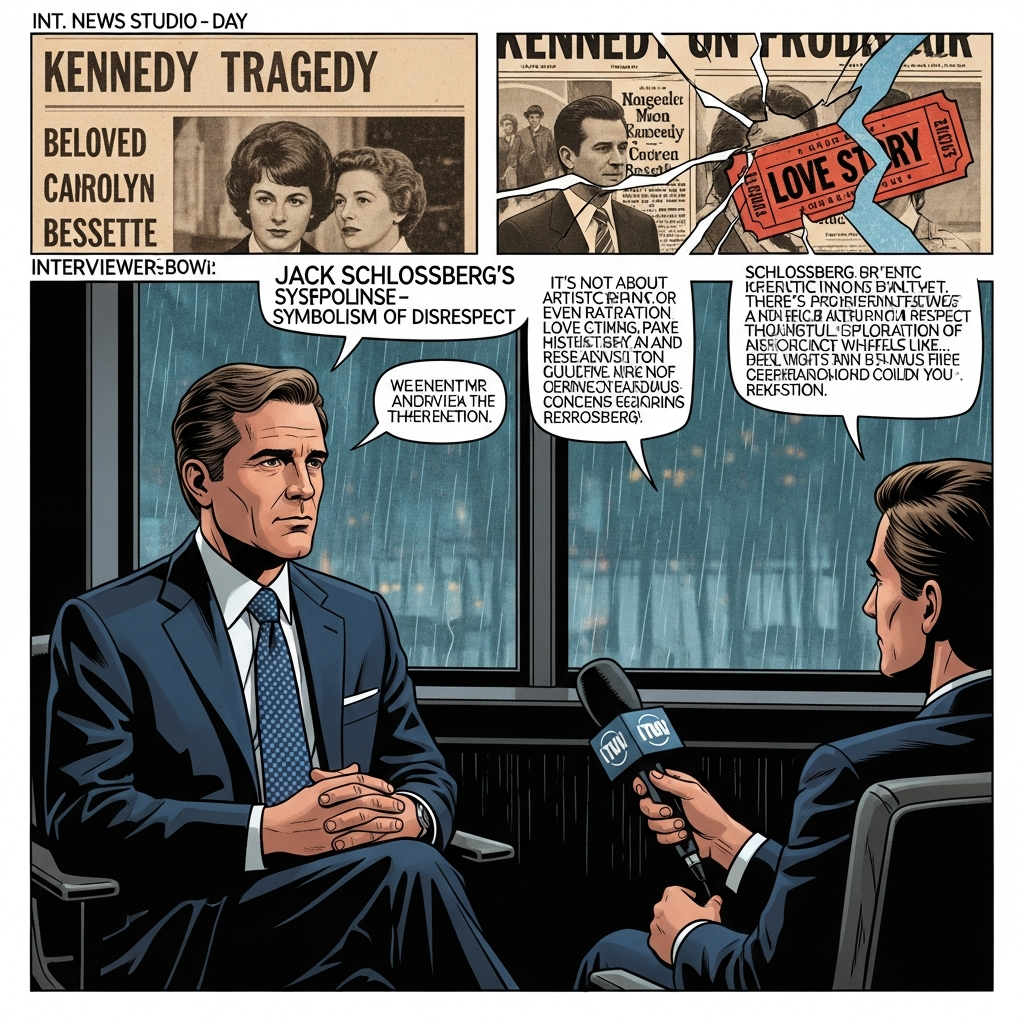
The new FX series, “Love Story: John F. Kennedy Jr. and Carolyn Bessette,” has ignited a fierce debate, particularly from within the iconic Kennedy family itself. Jack Schlossberg, the only grandson of former President John F. Kennedy, has unequivocally condemned the Ryan Murphy-produced drama. He warns viewers to approach the series with “a capital ‘F’ for fiction” in mind, raising serious concerns about its historical accuracy and the ethical implications of profiting from his family’s private life.
A Fiery Condemnation: Jack Schlossberg’s Stance
Jack Schlossberg, 33, wasted no words in expressing his profound disapproval of “Love Story” during an interview on CBS Sunday Morning. He stated unequivocally that series creator Ryan Murphy “knows nothing about” the Kennedy family. Schlossberg emphasized that Murphy has never met any family members nor consulted them during the show’s production. He deemed Murphy’s portrayal “grotesque” and even called him a “pervert” for financially benefiting from what Schlossberg perceives as a distorted view of intimate lives.
Schlossberg’s core message to potential viewers is simple yet potent: acknowledge the show’s highly dramatized nature. He wants audiences to understand that the series is a fictionalized interpretation, drawing from secondary sources like biographies and news articles rather than direct family insight. His “F for Fiction” mantra underscores his belief that the show presents a warped reality.
The Timing: A Resurgent Kennedy Name & Political Climate
The timing of “Love Story” further fueled Schlossberg’s criticism. He noted a recent resurgence of the Kennedy family name in popular culture, which he attributes to several factors. One key reason, according to Schlossberg, is his first cousin, Robert F. Kennedy Jr., being appointed Secretary of Health and Human Services. The political landscape also plays a role, with Donald Trump reportedly using JFK “as sort of a human punching bag.”
Schlossberg lashed out at Trump for alleged actions like “renaming the Kennedy Center after himself.” He also cited a “false reinvestigation into the assassination” and “dismantling all the programs that [JFK] fought for.” Schlossberg, who is currently running for a congressional seat in Manhattan, argued that confusing the public with fictionalized accounts of his family is especially detrimental when “a lot of misinformation now and iconography [is] being used about the Kennedy family.”
Ryan Murphy & FX Respond: Balancing Artistry with Sensitivity
Ryan Murphy initially dismissed Schlossberg’s anger, calling it an “odd choice to be mad about your relative that you really don’t remember.” However, the show’s executive producers, Brad Simpson and Nina Jacobson, offered a more nuanced defense. They acknowledged Schlossberg’s emotional reaction, recognizing that the series delves into a family tragedy. Simpson stressed the production’s “ethical obligation” to approach the subject with “love and kindness,” aiming to celebrate the complex and flawed lives of JFK Jr. and Carolyn Bessette. He invited Schlossberg to watch the series to gauge their sincerity.
Jacobson clarified the production company’s general policy: they avoid direct engagement with public figures or their relatives for true-event stories. This approach, she explained, helps maintain a “research posture.” It allows for a “more dimensional view” without feeling pressured into specific portrayals. Actress Sarah Pidgeon, who plays Carolyn Bessette, also affirmed the team’s commitment to “integrity and respect” for the couple and their living relatives.
Recreating a Legend: The “Love Story” Series Unpacked
“Love Story” seeks to imagine the intensely private lives of John F. Kennedy Jr. and Carolyn Bessette. The series recreates well-known public moments, including the launch of JFK Jr.’s political magazine, George, and their frequently photographed argument in Central Park. Inspired primarily by Elizabeth Beller’s biography, Once Upon a Time, the show focuses on the couple’s courtship and marriage. The creative team aims to handle their inevitable tragedy with “grace and sensitivity,” celebrating their lives together.
The series makes a conscious effort to honor Lauren Bessette, Carolyn’s sister, who tragically died alongside the couple in the plane crash. This inclusion serves to highlight the importance of their sibling relationship and remind viewers of the immense loss suffered by Carolyn’s mother. The decision to open the series on the day of their passing was intentional. It provides a poignant contrast between the iconic, publicly adored Carolyn and the more anonymous woman she was before extensive public fame.
The Real-Life Saga: JFK Jr. & Carolyn Bessette’s Enduring Fascination
John F. Kennedy Jr. and Carolyn Bessette captivated public imagination with their fiery, yet short-lived, romance. Despite their intense desire for privacy, their relationship generated immense media scrutiny. They tragically died in a plane accident just three years into their marriage. Carolyn, a former fashion publicist, found the sudden leap into public life deeply unsettling. This discomfort contributed to her profound loss of anonymity and constant paparazzi intrusion.
Conflicting narratives surround their marriage. Edward Klein’s controversial 2004 book, The Kennedy Curse, alleged marital distress and cocaine addiction. However, Elizabeth Beller’s biography, Once Upon a Time, disputes these harsh claims, presenting a more sympathetic view. Beller’s account, while acknowledging marital issues, paints them as “soul mates,” as described by JFK Jr.’s mentor, George Plimpton. The book reveals strains included Kennedy’s consuming focus on his magazine, George, and Bessette feeling trapped by constant media presence. They reportedly began couples’ therapy late in their relationship. The tragic end came in 1999 when Kennedy Jr.’s plane, carrying Carolyn and her sister Lauren, crashed into the Atlantic. An NTSB investigation attributed the accident to pilot error and disorientation in poor visibility.
Stepping into History: Portraying the Kennedys on Screen
The enduring public fascination with the Kennedy family presents unique challenges for actors. Jessica Harper, who portrays Ethel Kennedy in “Love Story,” described her preparation. She watched Rory Kennedy’s 2012 documentary Ethel extensively, studying the matriarch’s posture and bearing. Harper found portraying Ethel’s fierce protectiveness of her nephew, John F. Kennedy Jr., especially compelling. The series depicts Ethel subjecting Carolyn Bessette to a “trial by fire” during her first family visit, testing her on current events and enforcing strict household rules.
Harper highlighted a commonality between Ethel and Carolyn: both were “non-Kennedys” entering a family “lionized by the public.” This shared experience as outsiders within such a prominent dynasty, Harper believes, ultimately drew them together. For Baby Boomers like Harper, the Kennedy assassination marked a profound moment, demonstrating that “on the global stage, things could go terribly wrong.” She sees “Love Story” as an important educational tool for younger audiences, helping them “meet [Ethel] and understand her own connection to history and to the tragic through line of the Kennedy’s family.” The universal appeal of a “great love story that ends so tragically” ensures continued interest in the JFK Jr. and Carolyn Bessette narrative across generations.
Schlossberg’s Challenge: A Call for Philanthropy and Political Action
Jack Schlossberg concluded his interview with a direct challenge to Ryan Murphy. He expressed hope that Murphy would donate “some of the millions of dollars of profits” from “Love Story” to causes championed by his uncle, John F. Kennedy Jr. Schlossberg tied this call for philanthropy to a broader imperative to “make things better.” He even suggested that if Murphy “really cares so much about the Kennedy family,” he might “try to do something about getting Trump out of power,” aligning charitable efforts with specific political goals. This underscores the deep personal and political convictions driving Schlossberg’s criticisms.
Frequently Asked Questions
What is Jack Schlossberg’s main criticism of the “Love Story” series?
Jack Schlossberg, JFK’s grandson, primarily criticizes “Love Story” for its perceived historical inaccuracy and the show’s creators for profiting from his family’s private life without their consultation. He insists the series is “fiction” and described its portrayal as “grotesque,” arguing that Ryan Murphy “knows nothing about” the Kennedys. Schlossberg views the show as ill-timed, especially given recent public attention on the Kennedy name and current political narratives involving Donald Trump.
Where can viewers stream the “Love Story” series?
The “Love Story: John F. Kennedy Jr. and Carolyn Bessette” series is available to stream on Hulu in the United States. The initial five episodes were released together, with the remaining four episodes scheduled for weekly release on Thursdays. In the UK, the series is expected to launch on Disney Plus. Viewers interested in the dramatized account of JFK Jr. and Carolyn Bessette’s lives can find it on these platforms.
Why is the “Love Story” series controversial among the Kennedy family?
The “Love Story” series is controversial within the Kennedy family primarily because it dramatizes intensely private lives without family input. Jack Schlossberg argues this leads to a “grotesque” and fictionalized account, asserting that the show profits from tragedy. The timing also adds to the controversy, coinciding with a resurgence of the Kennedy name in public discourse. The family’s objections highlight the tension between artistic interpretation of historical figures and familial privacy, especially concerning a legacy as prominent as the Kennedys’.
The Unfolding Narrative: A Legacy Under the Lens
The public back-and-forth between Jack Schlossberg and the creators of “Love Story” highlights the complex relationship between pop culture, historical narrative, and family legacy. While the series aims to celebrate the lives of John F. Kennedy Jr. and Carolyn Bessette through a dramatic lens, Schlossberg’s fervent objections underscore the enduring protectiveness and deep-seated concerns of the Kennedy family regarding their public image and private tragedies. As the series unfolds, it will undoubtedly continue to spark conversations about historical accuracy, artistic license, and the responsibility that comes with portraying one of America’s most iconic dynasties.