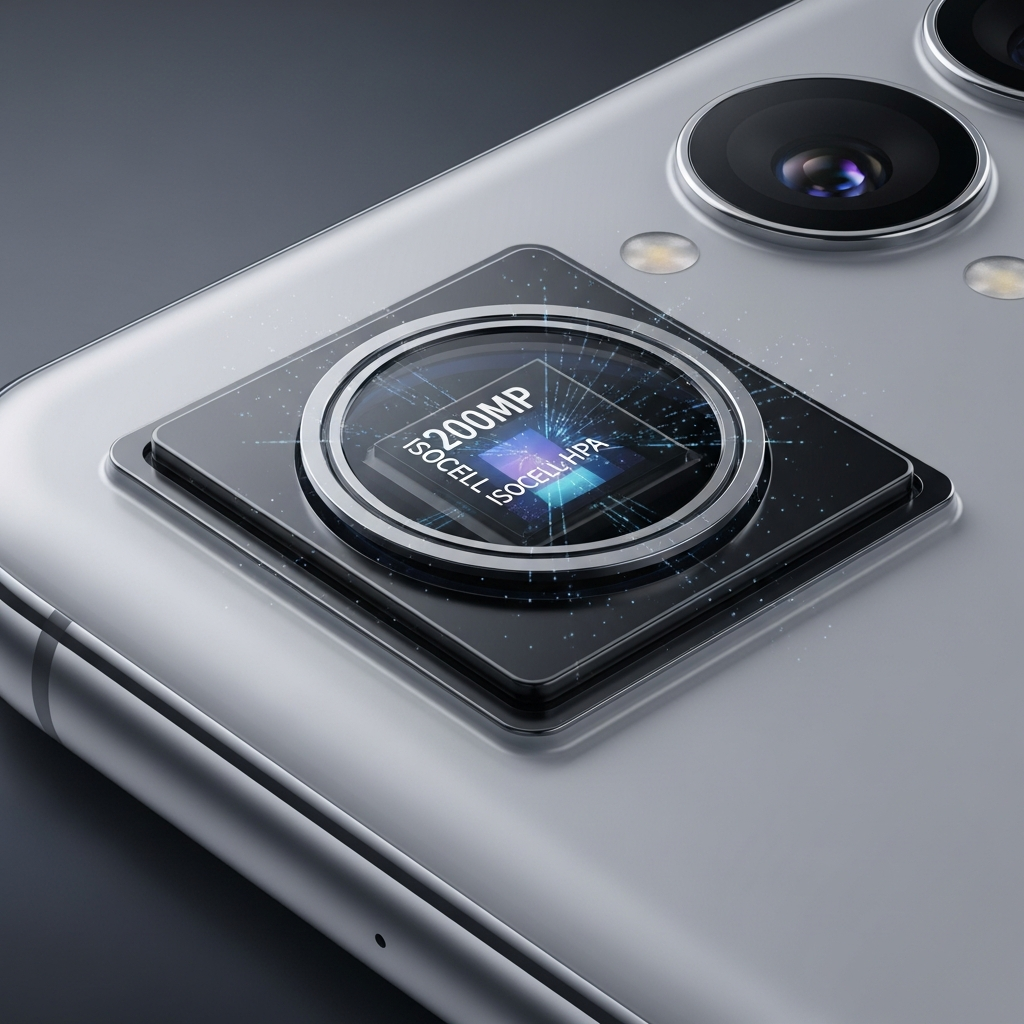
The future of smartphone photography is rapidly evolving, and Samsung appears poised to lead the charge with groundbreaking sensor technology. Whispers from reliable industry insiders point to Samsung developing an advanced 200-megapixel camera sensor, codenamed ISOCELL HPA, set to redefine imaging capabilities in 2027 flagship devices. This isn’t just a bump in megapixels; it’s a strategic pivot towards larger physical sensors and revolutionary hardware-level enhancements designed to capture breathtaking detail and unparalleled dynamic range. Get ready for a monumental leap in mobile photography that could reshape how we capture the world.
The Race for Camera Dominance
The smartphone camera market is intensely competitive, with manufacturers constantly pushing boundaries. For years, Samsung has delivered exceptional camera experiences, but some critics argue its flagship S series has relied on similar sensor hardware for too long, focusing primarily on software refinements. Meanwhile, rivals, particularly leading Chinese brands, have aggressively pursued larger, “1-inch type” sensors, which inherently capture more light. This strategic shift by Samsung, signaled by the ISOCELL HPA, aims to not only close this perceived gap but potentially set a new benchmark for image quality. The development underscores Samsung’s commitment to innovation in fundamental sensor physics, moving beyond solely computational photography.
Unpacking the ISOCELL HPA: A Near 1-Inch Revolution
Digital Chat Station, a well-regarded Chinese leaker, first tipped the world off to the ISOCELL HPA. This isn’t just any sensor; it’s reportedly Samsung’s largest 200MP smartphone camera sensor to date. It boasts an impressive 1/1.12-inch optical format, a significant jump from the 1/1.3-inch sensors like the ISOCELL HP2 and HP3 found in recent high-end models. While technically not a full 1-inch sensor, this design brings Samsung squarely into the “1-inch class.” This category has become a coveted marketing and performance benchmark among premium Android devices.
The Power of Size: Why Larger Sensors Matter
A larger sensor surface area offers fundamental advantages in photography. It acts like a bigger bucket, capable of gathering significantly more light. This directly translates to several key improvements for users:
Superior Low-Light Performance: More light means less digital noise and greater detail retention in dimly lit environments.
Enhanced Detail and Texture: The sensor can capture finer nuances, leading to sharper, more lifelike images.
Natural Depth Rendering: A larger sensor helps achieve a more pleasing, natural bokeh (background blur) for better subject separation without heavy computational processing.
The ISOCELL HPA’s larger format promises to elevate the core image quality directly from the hardware, providing a robust foundation for Samsung’s future flagships.
LOFIC Technology: Elevating Dynamic Range to New Heights
Beyond its impressive physical size, the ISOCELL HPA is set to incorporate another groundbreaking feature: Lateral Overflow Integration Capacitor (LOFIC) technology. This isn’t merely a software trick; LOFIC is a hardware-level innovation designed to dramatically increase the sensor’s dynamic range. It allows each individual pixel to store substantially more electrical charge through an additional capacitor. This expanded capacity means the sensor can simultaneously capture extremely bright highlights and deep shadows within a single exposure without either area becoming “clipped” or losing detail.
LOFIC vs. Traditional HDR: A Game-Changing Difference
Currently, most High Dynamic Range (HDR) processing in smartphones relies on multi-frame bracketing. The camera captures multiple images at different exposures (often 3-9 frames) and then software merges them. While effective, this approach has limitations:
Ghosting Artifacts: Moving subjects can appear blurred or have ghostly trails, especially in video.
Inconsistent HDR: Software merging can sometimes lead to unnatural-looking images or inconsistent results.
Challenges in Video: Multi-frame blending is technically difficult for real-time video, leading to compromises.
LOFIC, by capturing a vast dynamic range in a single exposure, sidesteps these issues. This could mean:
Cleaner, More Natural Images: Improved highlight and shadow detail without the aggressive processing look.
Reduced Ghosting: Significantly fewer artifacts around moving subjects, especially crucial for candid shots.
Accurate Skin Tones: Better preservation of natural skin tones, even in challenging backlit scenarios.
Stable Video HDR: More consistent and high-quality HDR performance in video recording, delivering richer 4K footage with fewer artifacts.
Sony’s documentation of LOFIC-based automotive sensors achieving over 120 dB of dynamic range showcases the immense potential for surpassing conventional mobile sensors. This technological leap by Samsung could fundamentally change how our phones handle high-contrast scenes.
The Galaxy S27 Ultra’s Camera Vision: ISOCELL HP6
While the ISOCELL HPA is slated for a 2027 debut, potentially first appearing in flagship devices from Chinese manufacturers, there’s a specific twist for Samsung’s own Galaxy lineup. Prominent leaker Ice Universe suggests that the Galaxy S27 Ultra might instead feature a related, yet slightly different, 200MP sensor: the ISOCELL HP6. This HP6 variant is tipped to maintain the familiar 1/1.3-inch sensor size seen in current Ultra models.
However, the key takeaway is that the HP6 is also expected to integrate LOFIC technology and other advanced refinements. The goal? To deliver performance comparable to the larger HPA sensor, even with a marginally smaller physical footprint. This suggests Samsung is pursuing a dual strategy: offering larger sensors to external clients while rigorously optimizing its proprietary form factor for its own flagships, leveraging groundbreaking tech like LOFIC to bridge any performance gap. This focus on maximizing performance within a proven size could offer distinct advantages in terms of device thickness, thermal management, and power efficiency for the Galaxy S27 Ultra.
Samsung’s Strategic Shift: Catching Up to Competitors
For years, Samsung’s primary 200MP sensor has held its ground at around 1/1.3-inch. While competitors like Xiaomi and Vivo have increasingly adopted physically larger “1-inch type” sensors (which offer approximately 60% more active area than Samsung’s current main sensors), Samsung has largely relied on its computational photography prowess to compensate. While Samsung maintains a lead in areas like sustained zoom quality and stabilization, its highlight roll-off and HDR consistency in complex scenes have sometimes lagged behind rivals.
The introduction of the ISOCELL HPA and HP6, both featuring LOFIC, signals a significant strategic shift. It’s Samsung’s proactive answer to these criticisms, aiming to address inherent hardware weaknesses. By implementing LOFIC, Samsung can achieve superior dynamic range at the sensor level, reducing the heavy reliance on multi-frame software processing. This isn’t just about matching competitors; it’s about fundamentally improving the raw data captured by the sensor itself.
Beyond Megapixels: The Quest for True Image Quality
With a 200MP, 1/1.3-inch HP6-class sensor, the Galaxy S27 Ultra will almost certainly deploy deep 16-in-1 pixel-binning. This process combines data from 16 pixels into one, resulting in 12.5MP photos with an effective pixel size of around 2 μm. This significantly boosts low-light performance and reduces noise. Other expected features include ultra-fast readout speeds, advanced phase-detect autofocus across the entire sensor array, and multi-gain read circuits that naturally complement LOFIC. To fully harness this on-sensor HDR, next-generation devices will require more powerful Image Signal Processors (ISPs), whether Snapdragon or Exynos, capable of processing the wider dynamic range with minimal latency, improving tone mapping, reducing chroma noise in shadows, and ensuring better color stability.
What This Means for You: Real-World Photography Benefits
The potential introduction of LOFIC and larger sensors in the Galaxy S27 Ultra represents a meaningful leap for Samsung users. If these technological integrations are executed successfully, the practical benefits for everyday mobile photographers will be substantial:
Resolved Highlight Issues: Say goodbye to “blown-out” skies and bright areas losing all detail.
Consistent HDR: More natural and reliable High Dynamic Range in all your photos and videos.
Superior Low-Light: Cleaner, more vibrant images in challenging low-light conditions.
Enhanced Video: Cleaner 10-bit video capture, reduced flicker, and more consistent high-frame-rate 4K recording without aggressive noise reduction artifacts.
- Improved Subject Isolation: More appealing and natural background blur for portraits.
- <a href="https://www.gsmarena.com/samsunggalaxys27ultramayfeatureanear1inch200mprear_camera-news-71782.php”>www.gsmarena.com
- www.findarticles.com
- sammyguru.com
- www.gizmochina.com
- <a href="https://www.gsmarena.com/samsungisrumoredtobeworkingonabigger200mpsensor-news-71696.php”>www.gsmarena.com
These upgrades address long-standing desires of power users and casual photographers alike. Given that camera quality remains a primary driver for smartphone purchases, this innovation positions Samsung to reassert its leadership in mobile imaging.
It’s important to remember that these details stem from early leaks. Roadmaps can shift due to factors like sensor yields, thermal limits, and power budgets. Samsung doesn’t always debut its newest ISOCELL parts in its own Galaxy phones first. However, the strong track record of the tipsters and Samsung’s public investments in sensor-level HDR technologies lend significant credibility to these rumors. The anticipation for the Galaxy S27 Ultra’s camera overhaul is already building, promising a truly transformative experience.
Frequently Asked Questions
What is the ISOCELL HPA sensor, and how does it improve smartphone camera performance?
The ISOCELL HPA is Samsung’s reportedly largest 200-megapixel smartphone camera sensor under development. It features a 1/1.12-inch optical format, making it significantly larger than current 1/1.3-inch sensors. This increased physical size allows it to capture substantially more light, leading to improved low-light performance, greater detail retention, and more natural depth rendering in photos. It’s designed to provide a fundamental hardware boost to image quality for future flagship phones.
When can we expect to see Samsung’s new 200MP sensors like the HPA or HP6 in flagship smartphones?
Leaks suggest that the ISOCELL HPA sensor is slated for a debut in 2027. It may first appear in flagship devices from Chinese manufacturers before potentially making its way into Samsung’s own Galaxy lineup. The ISOCELL HP6, a variant optimized for the Galaxy S27 Ultra, is also expected around 2027, coinciding with the likely launch of the S27 series. Given the Galaxy S26 series has just launched, these developments are still over a year away.
How will LOFIC technology in Samsung’s new sensors enhance everyday mobile photography?
LOFIC (Lateral Overflow Integration Capacitor) technology is a hardware-level innovation that dramatically increases a sensor’s dynamic range. Unlike traditional multi-frame HDR, LOFIC captures extreme contrast within a single exposure, preventing highlights from blowing out and shadows from being crushed. This translates to cleaner, more natural-looking images, reduced ghosting around moving subjects, more accurate skin tones, and significantly more stable, high-quality HDR in video recording. It will lead to clearer skies, better exposure in night cityscapes, and richer 4K footage.
The Future of Mobile Photography is Bright
The rumored development of the ISOCELL HPA and HP6, coupled with the revolutionary LOFIC technology, paints an exciting picture for Samsung’s future in mobile imaging. This isn’t just about incremental upgrades; it represents a fundamental commitment to enhancing the core capabilities of smartphone cameras. As the 2027 launch window approaches, all eyes will be on Samsung to deliver on this promise, potentially ushering in a new era of ultra-dynamic, high-fidelity mobile photography for everyone.