Unleash a new era of digital productivity on your Mac with Claude Cowork, Anthropic’s revolutionary AI agent designed to transform how you manage files and automate tasks. This groundbreaking tool, currently in research preview, extends the power of AI beyond coding, empowering everyday users to streamline complex workflows, organize data, and create documents with unprecedented efficiency. Discover how Claude Cowork is setting a new standard for AI-powered file management and Mac productivity.
What is Claude Cowork? Your Personal AI File Assistant
Claude Cowork represents Anthropic’s innovative leap into general-purpose AI agents, evolving from its highly successful Claude Code. While Claude Code quickly gained a following among developers for its ability to automate programming tasks, Anthropic observed users repurposing it for a broader range of administrative and organizational chores. Recognizing this demand, the company engineered Claude Cowork to explicitly cater to these non-coding needs, making sophisticated AI file management accessible to a wider audience.
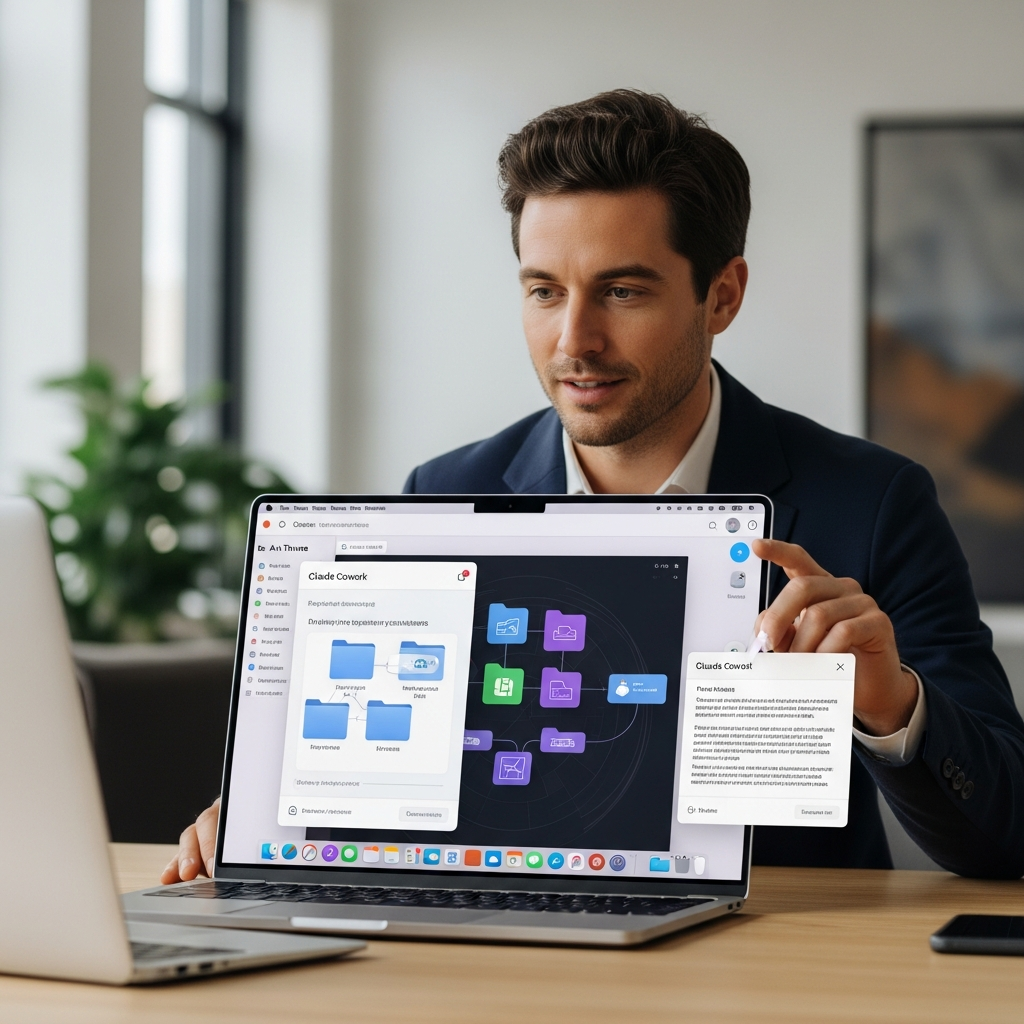
This new AI assistant is built directly into the Claude macOS desktop application. It allows users to grant Claude specific access to folders on their Mac computers. Once permissions are set, users can simply chat with Claude, issuing plain-language commands to organize, modify, or create content within those designated areas. It’s designed to be intuitive, functioning less like a complex coding interface and more like delegating tasks to a highly capable virtual coworker.
Beyond Code: General Office Work
The core aim of Claude Cowork is to democratize advanced AI capabilities for knowledge workers across various sectors. Tasks that once consumed hours – like sifting through receipts, organizing a cluttered downloads folder, or compiling reports from disparate notes – can now be automated. This makes the tool invaluable for professionals in finance, marketing, administration, and anyone seeking to optimize their digital workspace.
macOS Exclusive: Early Access
As a “research preview” feature, Claude Cowork is currently in its early stages of development. Access is exclusive to subscribers of Anthropic’s premium Claude Max plan, which typically costs $100 per month. Additionally, it requires a Mac computer with the Claude macOS app installed, signaling a focused initial rollout to a specific user base.
How Claude Cowork Works: Seamless Integration & Control
Interacting with Claude Cowork is straightforward. Users begin by granting the AI agent explicit access to a specific folder on their Mac. This controlled access ensures Claude only operates where permitted, addressing initial security concerns. From there, all interaction happens through a chat interface, where users provide prompts detailing the desired actions.
File Management & Organization
Claude Cowork excels at digital housekeeping. Imagine a downloads folder overflowing with unlabeled documents and images. You can instruct Claude to rename files systematically, sort them into subfolders based on content, or delete duplicates. For instance, a common use case involves organizing all files within a folder or renaming items according to a specific convention, such as adding dates to documents.
Creating New Documents & Projects
Beyond mere organization, Claude Cowork can generate entirely new content from existing files. It can read through a collection of digital notes and synthesize them into a first draft of a report. A highly practical example includes feeding the AI a folder full of receipt screenshots and then prompting it to create a detailed expense spreadsheet, saving significant time on manual data entry. This “less like a back-and-forth and more like leaving messages for a coworker” approach allows for continuous work.
Expanding Capabilities with Connectors & Chrome
Claude Cowork’s utility extends further through “connectors,” which enable it to link with other applications. This allows the AI to produce documents or presentations using third-party tools like Canva. Moreover, integration with the Claude in Chrome extension empowers the agent to handle tasks that require browser access, expanding its reach into web-based workflows. This means Claude can perform research or gather information from the internet as part of a broader task, enhancing its value as a comprehensive digital assistant.
The AI Behind the AI: Built by Claude Itself
One of the most remarkable aspects of Claude Cowork is its genesis. Anthropic proudly announced that the tool was largely “mostly built by AI itself,” specifically by Claude. This self-referential development process underscores the advanced capabilities of Anthropic’s large language models. Human developers primarily focused on foundational architectural decisions and product vision. However, the bulk of implementation, feature development, bug fixing, and solution research was managed by human engineers overseeing multiple Claude instances.
A Sprint of Innovation
This AI-driven development model dramatically accelerated the product’s creation. According to Boris Cherny, head of Claude Code, the project came together in a rapid sprint of just a week and a half. This fast-paced, AI-assisted development cycle highlights a potential future where complex software applications can be prototyped and built with unprecedented speed, challenging traditional development paradigms. The efficiency gained by leveraging AI to build AI demonstrates a profound shift in how technology companies approach product creation.
Benefits of Integrating Claude Cowork into Your Workflow
Adopting Claude Cowork can unlock significant advantages for professionals and individuals navigating digital complexities. Its intelligent automation capabilities promise to streamline daily operations and enhance overall productivity.
Streamlined Productivity
The primary benefit is a massive boost in productivity. By offloading time-consuming organizational and data-entry tasks to Claude, users can free up valuable time to focus on more strategic or creative work. The ability to queue multiple tasks and receive continuous feedback without waiting for each one to complete ensures a fluid workflow. This parallel processing capability allows for greater efficiency than manual, sequential task completion.
Simplified Task Automation
Claude Cowork democratizes advanced automation. Users no longer need deep technical knowledge or scripting skills to automate complex processes. Simple, natural language prompts are enough to initiate sophisticated actions. This ease of use makes advanced AI tools accessible to a broader audience, fostering a more efficient and less technically demanding work environment. From expense reports to desktop clean-ups, the simplification of task automation is a game-changer for Mac productivity.
Navigating the Risks: Safety and Security Concerns
Despite its powerful capabilities, Anthropic issues crucial safety precautions regarding Claude Cowork, especially given its “research preview” status. The company emphasizes that while Claude can only edit files and folders to which it has been explicitly granted access, users must exercise caution.
Understanding Prompt Injection Attacks
A significant concern is the potential for “prompt injection attacks.” These involve malicious commands embedded in internet content that could trick the AI into unintended actions. For example, if Claude is browsing the web via its Chrome extension and encounters such a hidden command, it could inadvertently act on it. The risk is severe if Claude simultaneously has access to sensitive computer folders via Claude Cowork, potentially leading to data manipulation or deletion without explicit user intent. Anthropic has built defenses, but acknowledges this remains an active area of development in the industry.
Best Practices for Safe Use
Users are strongly advised to provide “very clear guidance” to Claude to mitigate the risk of misinterpretation. Vague or poorly formulated instructions could inadvertently lead the agent to perform destructive actions, such as unintended file deletion. Due to its early-access beta nature, Anthropic recommends using Cowork only on non-sensitive items and taking precautions while learning how the tool operates. Limiting access to trusted sites when using the Chrome extension is also a crucial security measure.
The Rise of Agentic AI: Claude Cowork in the Broader Landscape
Claude Cowork’s launch aligns with a significant industry trend: the increasing development of “agentic capabilities” in AI models. This evolution moves AI beyond simple conversational interfaces, enabling them to autonomously perform complex tasks on behalf of users. These tasks range from booking travel and compiling reports to ordering food online and managing extensive data sets.
Competing in the AI Agent Market
Anthropic is not alone in this race. Competitors like ChatGPT Agent and Google’s Gemini Agent are already offering similar functionalities. Google’s Gemini 2.5 Computer Use model even allows AI direct access to and interaction with a computer’s interface. The broader shift towards agentic AI is expanding into various sectors, with companies like Google announcing open standards for AIs to function across diverse online retailers and payment systems. Anthropic’s entry with Claude Cowork positions it directly against established tools like Microsoft Copilot, aiming to capture a share of the burgeoning enterprise productivity market.
Impact on AI Startups
The introduction of Claude Cowork has also sparked apprehension among AI startups. Its wide-ranging capabilities—encompassing file organization, document generation, and data extraction—directly overlap with the core offerings of numerous niche AI startups that have secured significant funding. This trend is a common challenge for startups building on foundational AI models, as major AI labs integrate similar functionalities into their core products. While some startups argue that deep domain expertise or superior user experience in niche workflows could still offer a defensible position, the competitive landscape is rapidly intensifying.
Frequently Asked Questions
What is Claude Cowork and what does it primarily do?
Claude Cowork is an advanced AI agent developed by Anthropic, integrated into its Claude macOS desktop application. It allows users to grant Claude access to specific computer folders, enabling the AI to perform a wide array of file management, organization, and document creation tasks. This includes renaming files, sorting data, generating spreadsheets from receipts, and drafting reports from notes, all through natural language prompts. It aims to streamline workflows and boost Mac productivity for non-developers.
Who can currently use Claude Cowork and how is it accessed?
Currently, Claude Cowork is available as a “research preview” exclusively to subscribers of Anthropic’s premium Claude Max plan, which typically costs $100 per month. Users must also have a Mac computer with the Claude macOS desktop app installed to access and utilize this feature. This initial rollout focuses on a specific user group for early testing and feedback before any potential wider release.
What are the key safety considerations when using Claude Cowork for file management?
Anthropic emphasizes critical safety precautions for Claude Cowork. Users must provide explicit access to folders, understanding that Claude can only edit what it’s granted permission for. However, risks include “prompt injection attacks,” where malicious code could trick the AI into unintended actions, especially if it has file access. Users are advised to give “very clear guidance,” use Cowork only on non-sensitive items, and limit web access through the Chrome extension to trusted sites to prevent potentially destructive actions like accidental file deletion.
Conclusion: The Future of Mac Productivity
Claude Cowork represents a significant step forward in the realm of AI-powered Mac productivity. By democratizing the advanced agentic capabilities previously associated with Claude Code, Anthropic is empowering a broader audience to automate, organize, and create with unprecedented ease. From intelligent file management to automated document generation, this AI assistant promises to redefine our interaction with personal computers. While its “research preview” status and crucial safety considerations, particularly regarding prompt injection risks, necessitate a cautious approach, the potential for vastly improved efficiency and streamlined workflows is undeniable. As agentic AI continues to evolve and mature, tools like Claude Cowork will increasingly become an indispensable part of our digital lives, transforming how we work and interact with our data. Users interested in pioneering the future of productivity should certainly consider exploring its capabilities while adhering to Anthropic’s safety guidelines.