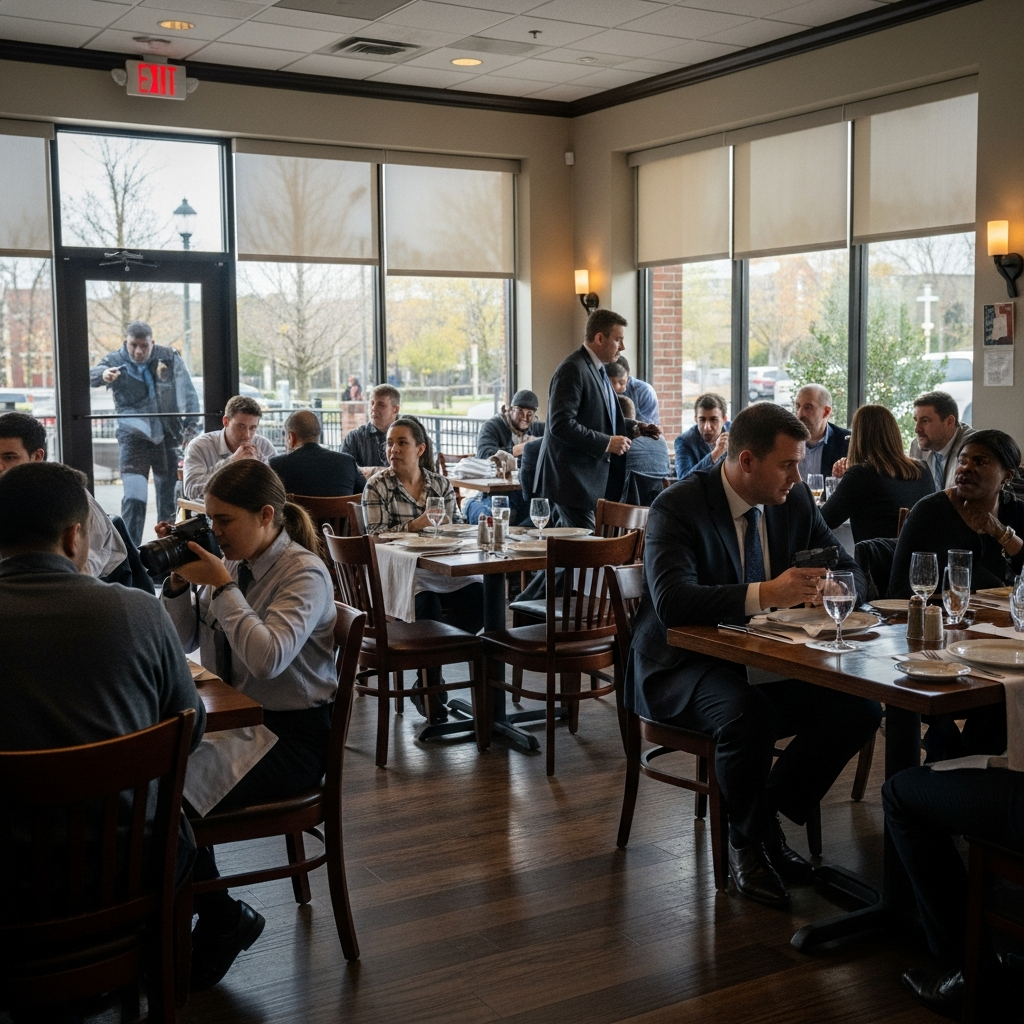
A shocking incident unfolded recently in a crowded metro Atlanta restaurant, where an armed assailant opened fire, only to be met by a courageous response from customers who returned gunfire. This harrowing event highlights not only the growing concerns about public safety in communal spaces but also ignites critical conversations around self-defense, Georgia’s specific firearm laws, and the complex role of armed citizens in active threat situations. The rapid escalation and immediate counteraction by patrons turned a potential massacre into a testament to quick thinking and personal protection.
Breaking News: Intense Shootout at Metro Atlanta Restaurant
The tranquil atmosphere of a bustling metro Atlanta eatery was shattered by sudden violence. Reports indicate a lone gunman entered the crowded establishment and began firing, creating immediate panic among diners and staff. In a dramatic turn of events, several customers, presumably licensed to carry firearms, drew their weapons and returned fire, neutralizing the threat. This swift and unexpected civilian intervention prevented further harm and underscored the unpredictable nature of modern security challenges. Such incidents force communities to confront the reality of preparedness and the critical decisions individuals make under extreme duress.
Initial Attack and Public Response
Eyewitness accounts, though not exhaustive in the initial reports, paint a picture of sudden terror followed by decisive action. The assailant’s initial shots sent shockwaves through the dining area, creating a chaotic scene. However, before widespread casualties could occur, patrons acted. Their immediate response, though risky, demonstrated a profound commitment to self-preservation and the protection of others nearby. This kind of spontaneous self-defense, while rare, raises profound questions about the role of ordinary citizens in extraordinary circumstances. The incident unfolded rapidly, emphasizing the milliseconds available for life-altering decisions.
Law Enforcement Arrives on Scene
Following the exchange of gunfire, local law enforcement swiftly responded to numerous emergency calls. Officers arrived to secure the perimeter, manage the chaotic scene, and investigate the circumstances surrounding the shooting. Their priority involved ensuring the safety of all remaining patrons and staff, providing medical attention where needed, and commencing a thorough investigation. Police officials confirmed the initial reports of an armed individual and the subsequent self-defense by customers. This prompt response from authorities is crucial in de-escalating such volatile situations and gathering vital evidence for legal proceedings.
Georgia’s Self-Defense Laws: Understanding the Context
The actions of the armed customers in the metro Atlanta restaurant fall squarely within the scope of Georgia’s robust self-defense statutes. Understanding these laws is paramount for comprehending the legal ramifications of such an incident. Georgia is a “Stand Your Ground” state, meaning individuals are not required to retreat from a threat before using deadly force if they reasonably believe it is necessary to prevent death or great bodily harm to themselves or others. This legal framework empowers citizens to defend themselves in life-threatening scenarios.
Stand Your Ground and Beyond
Georgia’s self-defense laws, codified in O.C.G.A. § 16-3-21, are broad. They permit the use of force, including deadly force, against another person when there is a reasonable belief that such force is necessary to prevent death or great bodily injury to oneself or a third person, or to prevent the commission of a felony. The “Stand Your Ground” provision specifically removes the duty to retreat, a concept central to many self-defense arguments. This legal principle acknowledges that individuals have a right to defend themselves without first attempting to flee a dangerous situation, particularly in public spaces where retreat may be impossible or even more dangerous.
Legal Ramifications for Those Who Intervened
While the actions of the customers were in self-defense, every incident involving the use of deadly force is subject to intense scrutiny. Prosecutors will evaluate whether the force used was reasonable and proportionate to the threat. Factors like the immediacy of the danger, the perceived intent of the aggressor, and the actions of the defenders will all be weighed. Generally, under Georgia law, individuals acting in lawful self-defense are protected from criminal prosecution. This incident serves as a real-world application of complex legal theories regarding personal protection and public safety.
The Broader Conversation: Public Safety and Armed Citizens
This metro Atlanta incident inevitably fuels broader discussions about public safety, the prevalence of gun violence, and the role of armed citizens in mitigating harm. For many, the customers’ actions validate the importance of the Second Amendment and the right to carry firearms for protection. For others, it underscores the inherent dangers of more guns in public spaces. The incident prompts a crucial examination of community resilience and individual responsibility in an increasingly unpredictable world.
Rising Concerns in Public Spaces
The unfortunate reality is that active shooter incidents are a growing concern in various public venues, from schools to workplaces to restaurants. This trend forces businesses and communities to re-evaluate their security protocols and emergency response plans. Patrons, too, are becoming more aware of their surroundings and considering personal safety measures. The incident in Atlanta serves as a stark reminder that vulnerability exists even in everyday environments, necessitating a proactive approach to safety from all angles.
The Role of Civilian Intervention
The customers’ intervention in Atlanta presents a compelling case study on civilian involvement during active threats. While law enforcement agencies often advise civilians to “Run, Hide, Fight,” the “Fight” component, particularly with a firearm, is highly controversial. Supporters argue that an armed citizen can act as an immediate deterrent, saving lives before police can arrive. Critics express concerns about mistaken identity, crossfire, and the potential for increased chaos. This incident will undoubtedly be cited by both sides of the debate, adding significant weight to ongoing discussions about civilian armament and public protection strategies.
Navigating Future Threats: Preparedness and Awareness
In the wake of such an event, many individuals and communities seek guidance on how to better prepare for or respond to similar threats. Developing a proactive mindset and understanding basic safety protocols can significantly enhance one’s ability to navigate dangerous situations. Being situationally aware and knowing what steps to take can make a critical difference when seconds count.
Expert Advice: Run, Hide, Fight
The universally recognized protocol for active shooter situations is “Run, Hide, Fight.” This simple framework offers actionable steps:
Run: If there is an escape path, leave immediately. Evacuate regardless of whether others agree to follow.
Hide: If escape is not possible, find a place to hide. Block entry, turn off lights, silence your phone.
- Fight: As a last resort, if your life is in imminent danger, attempt to incapacitate the shooter. Act with aggression and commit to your actions.
Understanding and practicing these principles can empower individuals to react effectively rather than freeze in fear during a crisis.
Community Resilience and Support
Beyond individual preparedness, community resilience plays a vital role in recovering from and preventing future tragedies. This involves supporting victims, fostering open dialogue about safety measures, and collaborating with law enforcement to enhance security. Local businesses may consider implementing enhanced security features or training staff in emergency response. Building a strong, informed community is essential for collective safety and well-being.
Frequently Asked Questions
What happened during the Atlanta restaurant shooting incident?
During a recent incident in a crowded metro Atlanta restaurant, an armed individual began firing shots. In a dramatic act of self-defense, several customers who were reportedly armed returned fire, neutralizing the initial threat. This rapid intervention by patrons helped prevent further casualties, although the full extent of the incident’s impact and any injuries are subject to ongoing investigation by local law enforcement.
Where can I find information on Georgia’s self-defense laws?
Information regarding Georgia’s self-defense laws can be found within the Georgia Code, specifically O.C.G.A. § 16-3-21, which outlines the use of force in defense of self or others, including the “Stand Your Ground” provision. For detailed legal interpretations, it’s advisable to consult official state legal resources, reputable legal aid websites, or qualified legal professionals in Georgia, as laws can be complex and specific to individual circumstances.
How can individuals prepare for or respond to an active shooter situation in a public place?
Individuals can prepare for active shooter situations by practicing situational awareness and familiarizing themselves with the “Run, Hide, Fight” protocol. This involves identifying potential escape routes (Run), seeking secure cover if escape is impossible (Hide), and as a last resort, attempting to incapacitate the threat (Fight). Staying calm, calling emergency services (911) when safe to do so, and following law enforcement instructions are crucial steps in managing such a crisis.
This intense event in metro Atlanta serves as a stark reminder of the unpredictable nature of public safety threats and the profound impact of individual actions during a crisis. It underscores the critical importance of understanding self-defense laws, fostering situational awareness, and engaging in proactive safety discussions within our communities. While tragic, such incidents also highlight moments of incredible courage and the inherent human drive to protect oneself and others. Moving forward, continued dialogue, informed preparedness, and robust legal frameworks will be essential in navigating an evolving landscape of public safety concerns.