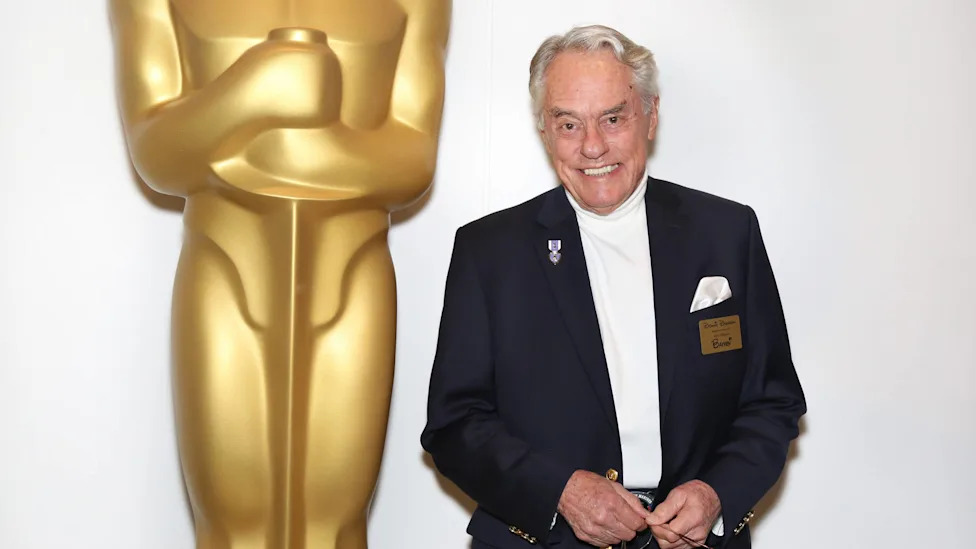
The legendary Donnie Dunagan Bambi voice actor and highly decorated United States Marine Major has passed away at the age of 92. According to reports from film historian Tom Weaver, Dunagan died on Wednesday, November 4, 2026, following a battle with lung cancer. His death marks the end of a life defined by a striking duality: a childhood spent in the whimsical, high-stakes World of Hollywood animation and a distinguished adulthood characterized by decades of disciplined military service and combat leadership.
Key Takeaways
- Iconic Legacy: Dunagan provided the original voice for the title character in the 1942 Disney classic, Bambi.
- Military Distinction: He served 25 years in the U.S. Marine Corps, retiring as a Major after three tours in Vietnam.
- Decorated Service: His military honors include three Purple Hearts and a Bronze Star.
- Dual Identity: For much of his military career, Dunagan kept his Hollywood background a secret to avoid being mocked by peers.
- Passing: He died at age 92 on November 4, 2026, due to lung cancer.
What Happened: The Passing of a Dual Icon
On November 4, 2026, the entertainment and military communities lost a figure of unique historical significance. Donnie Dunagan, born Donald Roan Dunagan on August 16, 1934, in San Antonio, Texas, died of lung cancer at the age of 92. His passing was first brought to light by film historian Tom Weaver, as noted in reports by The Hollywood Reporter and Parade.
While many in the public recognize him as the tender, youthful voice of the deer in Walt Disney’s Bambi, those within the military community knew him as a steadfast leader and combat veteran. Dunagan’s life was not a singular path but two distinct journeys that rarely intersected in the eyes of his contemporaries. After a brief but impactful tenure as a child actor in the late 1930s and early 1940s, he enlisted in the United States Marine Corps in 1952 at the age of 18, embarking on a 25-year career that would take him from the drill instructor podium to the jungles of Vietnam.

Why It Matters: A Legacy of Resilience and Secrecy
Dunagan’s life matters because it embodies a rare form of compartmentalization and personal discipline. In an era where celebrity often leads to a lifelong public persona, Dunagan chose to step away from the limelight to serve his country, often hiding his most famous achievement to maintain his standing among his fellow Marines.
His story provides a window into two critical eras of American history: the Golden Age of Hollywood animation and the intense, transformative years of the Vietnam War. Furthermore, his ability to transition from the emotional vulnerability required for voice acting to the stoic leadership required of a Force Recon Commander highlights a remarkable psychological versatility. For fans of Disney, he remains a permanent part of childhood memory; for the military, he remains a respected officer who earned his stripes through service and sacrifice.
The Hollywood Years: From Memphis to the Disney Lot
Dunagan’s journey to Hollywood began not in a studio, but on a stage in Memphis, Tennessee. As a three-year-old, he participated in a tap-dancing competition, winning a $100 prize—a significant sum for the era. According to biographical records, this performance caught the eye of an RKO talent scout, who subsequently arranged for the Dunagan family to move from Memphis to Los Angeles.
His professional film debut came in 1938 with Mother Carey’s Chickens, directed by Rowland V. Lee. Under Lee’s direction, Dunagan began to build a filmography that included notable roles in Universal horror classics. In 1939, he appeared in Son of Frankenstein, playing Peter von Frankenstein, the son of the character portrayed by Basil Rathbone. During production, Dunagan shared anecdotes of playing checkers with the legendary Boris Karloff, who was often in full monster makeup.
His career reached its zenith through a personal connection to the studio’s founder. Dunagan recalled in a 2025 interview that his mother received a direct phone call from Walt Disney himself. The studio chief wanted the young boy to help an artist capture a “child’s expression on a deer.” This led Dunagan to the Burbank lot, where he would spend more than a year working on the production of Bambi (1942).
The Emotional Weight of Bambi
Recording the voice for Bambi was a task that required more than just youthful tones; it required genuine emotional depth. Dunagan famously recounted the difficulty of the film’s most harrowing sequence—the death of Bambi’s mother.
“I remember this well,” Dunagan said in a 2011 interview. “When I was told to say, with some stress, ‘Mother … Mother,’ I must have not had the tone of fear that the story needed. A coach, I think it was a nice lady at the studio, asked me how I would cry out loud if my own real mother was lost and in great danger. That made it easy.”
This emotional resonance helped Bambi become a cornerstone of animation history, even as the film faced challenges. The release was delayed for months due to the onset of World War II following the attack on Pearl Harbor, and the studio reportedly received significant backlash from hunters who felt the film’s depiction of nature was too traumatic.
The Military Career: From Drill Instructor to Major
In 1952, Dunagan made a pivot that few would have predicted. At age 18, he joined the U.S. Marine Corps, beginning a career that would span a quarter-century. He did not merely serve; he excelled, becoming the youngest drill instructor in the history of the Corps.
Dunagan’s service was marked by high-stakes assignments and significant combat experience. He served three separate tours in the Vietnam War, where he operated in demanding roles, including Counterintelligence officer and Force Recon Commander. His bravery and leadership in the field were recognized with several of the military’s highest honors, including:
- Three Purple Hearts
- One Bronze Star
- Navy and Marine Corps Commendation Medal (with V device)
- Army Commendation Medal
- Two Navy and Marine Corps Achievement Medals

The “Major Bambi” Secret
One of the most compelling aspects of Dunagan’s military life was his decision to withhold his Hollywood past. He expressed a deep-seated dislike for “showoffs” and those who boasted about their previous lives. More practically, he feared that his colleagues would mock him with the nickname “Major Bambi.”
This secrecy was so effective that even his close friends in the Marine Corps were unaware of his Disney connection. Dunagan later admitted that one of his greatest regrets was not having the courage to share his history with his fellow service members. However, this compartmentalization allowed him to forge a reputation based solely on his merit as a Marine officer.
Comparative Analysis of Dunagan’s Two Lives
To understand the sheer breadth of Dunagan’s experience, one can compare the two primary phases of his life:
References
- Donnie Dunagan, Voice of Bambi, Dies at 92 from Lung Cancer — yahoo.com
- Original voice of Disney’s Bambi dies as tributes pour in for Hollywood star — dailystar.co.uk
- Donnie Dunagan Dies at 92: Bambi Voice Actor’s Cause of Death, Wife, Parents and Family — poptvculture.com
- Donnie Dunagan, Original Voice of Bambi, Dies at 92 — hollywoodreporter.com
Featured image: Image via Yahoo Entertainment