The voyager 1 signal loss that occurred in mid-October 2026 briefly left NASA engineers wondering if the historic mission had finally reached its end. For several days, the Deep Space Network (DSN) was unable to detect any signal from the veteran spacecraft, sparking fears that the decades-long journey into interstellar space had come to an abrupt halt.
Key Takeaways
- Communication Interruption: NASA’s Deep Space Network (DSN) lost contact with Voyager 1 on October 18, 2026.
- Signal Restoration: After two days of silence, communication was successfully restored on October 20, 2026.
- Probable Cause: Engineers suspect a group of thrusters went offline, triggering the spacecraft to enter a protective safe mode.
- Aging Hardware: The incident highlights the “knife’s edge” operation of the spacecraft as it approaches its 50th anniversary.
- Critical Milestone: Voyager 1 is approaching a distance where signal travel time will reach 24 hours one-way.
- Power Management: The mission recently underwent a “Big Bang” procedure to extend its operational lifespan.
- Is the thruster issue recurring? If the thruster failure was caused by hardware fatigue, the likelihood of a similar event occurring again is high.
- Is the safe mode triggering prematurely? There is a risk that the spacecraft’s onboard logic might be overly sensitive to minor fluctuations, leading to unnecessary power-saving modes that could complicate science operations.
- Can the power reserves sustain the “Big Bang” benefits? While the procedure is designed to extend the mission, the actual longevity gained remains an estimate based on aging components that are behaving unpredictably.
- www.theregister.com
What Happened
The silence began on October 18, 2026, when NASA’s Deep Space Network (DSN) attempted to establish contact with the probe but could not detect any signal. The uncertainty deepened the following day, October 19, when the next scheduled communication attempt also yielded no results. For mission controllers, the lack of signal raised the possibility that the spacecraft’s decades-long galactic venture had finally concluded.
However, relief arrived on October 20, 2026, when the signal unexpectedly reappeared. While the connection was restored, the cause of the interruption remains a subject of intense investigation. Preliminary analysis suggests that a group of onboard thrusters may have gone offline, prompting the spacecraft’s onboard computers to activate backup thrusters and potentially transition the probe into a safe mode to protect its systems.
Kareem Badaruddin, the Voyager mission manager at NASA’s Jet Propulsion Laboratory (JPL), addressed the incident by noting the unprecedented nature of the event. “This is the first time we’ve seen the spacecraft do something like this, but we are also at a point in the mission where we have to expect the unexpected,” Badaruddin stated. He added that while the team is relieved to be back in contact, they remain eager to understand the underlying cause of the temporary silence.
Why It Matters
The brief lapse in communication is significant because it underscores the extreme fragility of the Voyager program. As the twin spacecraft approach their half-century milestone next year, they are operating on what engineers describe as a “knife’s edge.” The mission is no longer just about scientific discovery; it is a constant battle against hardware degradation and power depletion.
Both Voyager spacecraft have faced significant technical hurdles in recent years. Voyager 2 experienced an antenna pointing issue in 2023, and Voyager 1 previously dealt with a low power condition that forced the unexpected shutdown of one of its two radio transmitters. This recent event serves as a reminder that even with the most sophisticated engineering, the physical reality of aging hardware in the harsh environment of interstellar space is an inescapable factor.
The Engineering of Survival: The “Big Bang” Procedure
To combat the inevitable decline of power and hardware functionality, the Voyager team has implemented aggressive power-management strategies. One such strategy is a procedure known as the “Big Bang.”
This procedure involves mission controllers intentionally turning off certain onboard devices and switching to lower-power alternatives. The goal is to extend the functional life of the spacecraft by postponing the necessity of further instrument deactivation. This process was completed first on Voyager 2, followed by Voyager 1 approximately six weeks later in September 2026.
By carefully managing the dwindling power reserves, NASA hopes to keep the scientific instruments operational for as long as possible, even as the spacecraft moves further into the cosmic void. The “Big Bang” is a calculated risk, trading certain functionality for the hope of extended mission duration.
The Challenges of Deep Space Communication
Communicating with a probe as distant as Voyager 1 presents unique logistical and physical challenges. The Deep Space Network (DSN) is the primary tool used by NASA to maintain this link, but as the spacecraft moves further away, the difficulty of maintaining a stable connection increases exponentially.
The One-Light-Day Milestone
In a few weeks, Voyager 1 will reach a distance from Earth known as the “one-light-day” milestone. This is a critical threshold in deep-space navigation and command.
| Distance Metric | Command Travel Time | Response Travel Time | Total Round Trip |
|---|---|---|---|
| Current Distance | Less than 24 hours | Less than 24 hours | Variable |
| One-Light-Day Milestone | 24 hours | 24 hours | 48 hours |
Once this milestone is passed, it will take a full 24 hours for a command sent from Earth to reach the spacecraft, and another 24 hours for any response or telemetry to return to the DSN. This massive latency means that real-time troubleshooting is impossible. If a problem like the recent Voyager 1 signal loss occurs, engineers will be operating with information that is nearly two days old by the time they receive it.

What It Means for the Future of the Mission
For the scientific community and space enthusiasts, the continued operation of Voyager 1 and 2 is vital. These probes provide data from the interstellar medium that no other human-made object can reach. However, the mission is fundamentally finite.
Suzanne Dodd, the Project Manager for the Voyager project, has been transparent about the eventual conclusion of the mission. In 2026, Dodd explained that the end will not be a dramatic event but rather a gradual fade. “We’re just going to one day not hear the signal from the DSN, and we’re going to rush around and make sure that it’s not something on the ground,” Dodd said.
When the signal finally ceases, NASA engineers will likely spend months listening and verifying that the silence is truly due to the spacecraft’s status and not a terrestrial technical error. Once the end is confirmed, the final act may be a farewell message sent to the spacecraft’s last known location, marking the conclusion of one of humanity’s greatest technical achievements.
Counterpoints and Open Questions
While the restoration of the signal is a positive development, several questions and risks remain unaddressed:
What Happens Next
In the immediate future, the focus for the JPL team will be on telemetry analysis. Engineers will examine the data collected during the period when the signal returned to pinpoint exactly why the thrusters failed and whether the safe mode was a necessary or accidental response.
As the spacecraft approaches its 50th anniversary next year, the mission will continue to monitor the health of the remaining instruments and the stability of the power systems. The primary signal to watch will be the stability of the communication link as Voyager 1 approaches the one-light-day distance. Any further unexpected silences will serve as a critical indicator of the spacecraft’s remaining operational life.
Frequently Asked Questions
Why did Voyager 1 stop communicating?
While the exact cause is still being investigated, the current leading theory is that a group of thrusters went offline. This likely triggered the spacecraft’s onboard computers to enter a “safe mode,” a protective state designed to preserve the probe’s health by prioritizing essential systems over science instruments.
How far away is Voyager 1?
Voyager 1 is currently approaching the “one-light-day” milestone. This means that the spacecraft is so distant that radio signals traveling at the speed of light take approximately 24 hours to travel from Earth to the probe, and another 24 hours for any signal from the probe to return to Earth.
What is the “Big Bang” procedure?
The “Big Bang” is a power-management strategy implemented by NASA mission controllers. It involves turning off non-essential onboard devices and switching to lower-power alternatives. This is intended to conserve the spacecraft’s limited energy and extend the overall duration of the mission.
What is the Deep Space Network (DSN)?
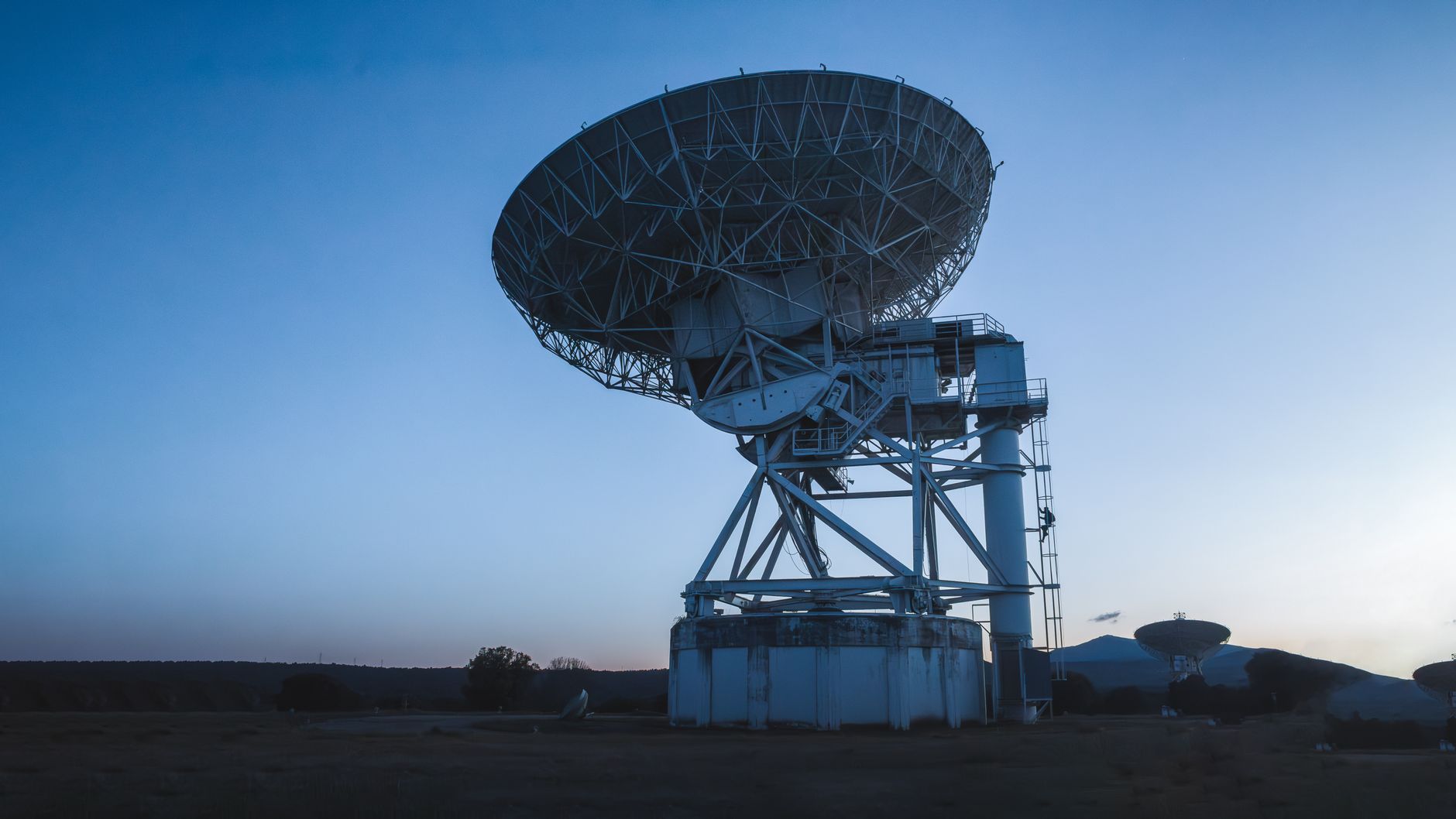
The Deep Space Network is a global array of massive radio telescopes and antennas operated by NASA. It is the primary method used to communicate with spacecraft located deep in space, allowing engineers to send commands and receive scientific data from across the solar system and beyond.
Despite the recent Voyager 1 signal loss, the spacecraft remains a testament to human ingenuity. As it continues its lonely trek through the stars, the mission remains a vital link between Earth and the mysteries of the interstellar medium.
References
Featured image: Photo by Yiğit KARAALİOĞLU on Pexels