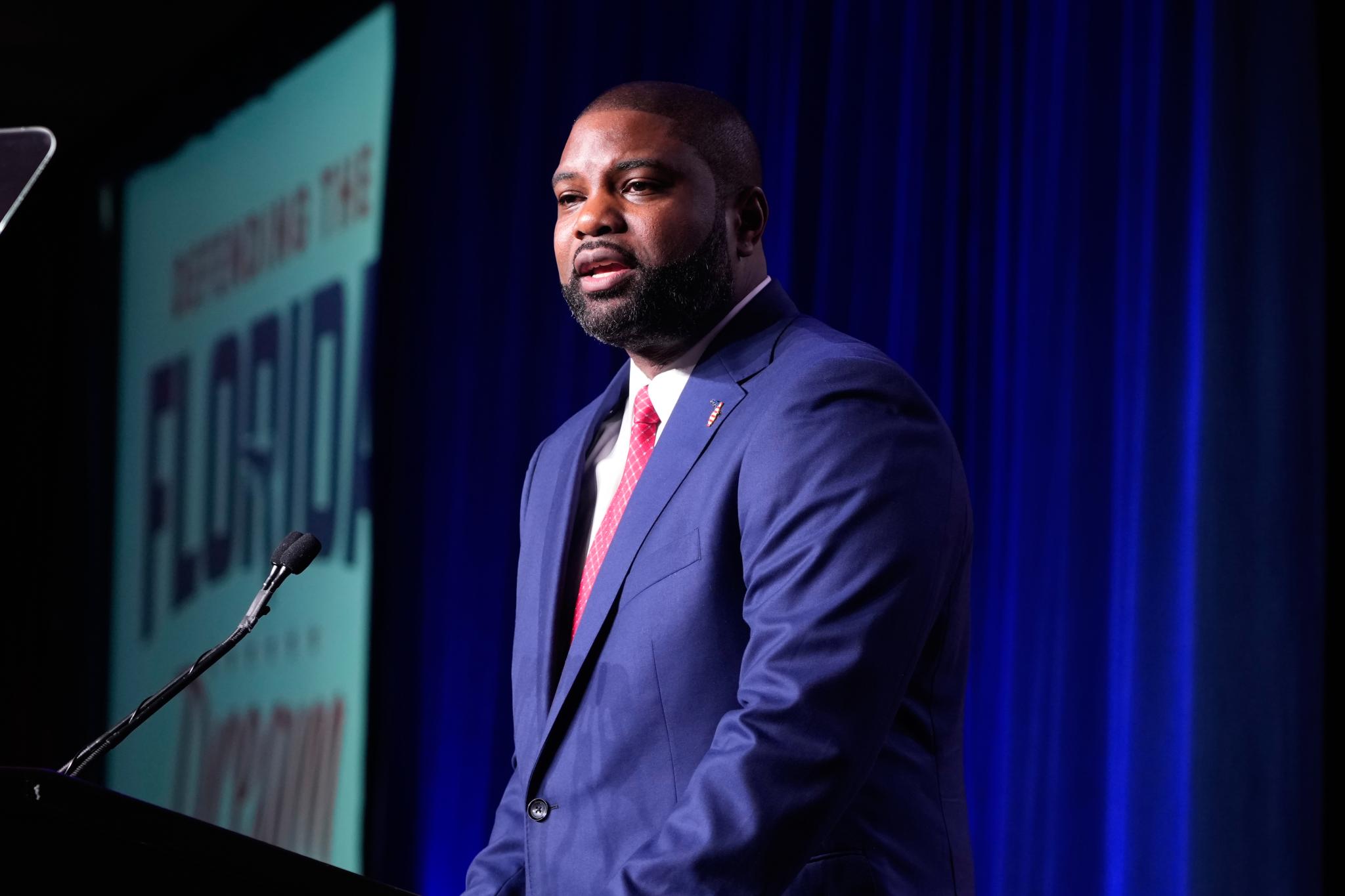
Byron donalds is aggressively courting skeptical black voters as he seeks to become Florida’s first Black governor in a high-stakes general election that has become unexpectedly tight. As the republican nominee for Florida governor, Byron Donalds has shifted his campaign strategy, moving from a focus on national partisan alignment toward a localized message of economic “affordability” to appeal to a broader electorate.
Key Takeaways
- Byron Donalds secured the Republican nomination in August 2026 with 47.8% of the vote, defeating several high-profile challengers.
- The Republican nominee is targeting over 20% of the Black vote, a significant increase from previous Republican performances in the state.
- The general election features a stark ideological divide between Donalds and Democratic nominee David Jolly, a former Republican and Forward Party member.
- The campaign has undergone a strategic messaging pivot, reducing the prominence of Donald Trump on its digital platforms to focus on policy-driven themes.
- Recent polling suggests a much closer race than typical for a state that has seen Republican dominance since the late 1990s.
- For Voters: The choice between Donalds and Jolly represents a choice between two distinct visions of governance. Voters must decide if they prefer the aggressive, spending-cut approach of the current GOP leadership or the libertarian-leaning, “culture war”-avoidant approach offered by Jolly.
- For Policy Advocates: The focus on “affordability” suggests that economic issues, specifically the cost of living and market stability, will dominate the legislative agenda regardless of who wins. If Donalds wins, expect significant restructuring of state agencies through his proposed “DOGE” model.
- For Political Strategists: The results of this race will serve as a blueprint for how Republican candidates can expand their reach into minority communities, and whether a “pivot to the center” on economic issues is an effective way to win general elections in blue-leaning or swing districts.
- The Loyalty Question: Can Donalds successfully distance himself from Trump‘s polarizing influence to win moderates without losing the base that provides his primary strength?
- The Authenticity Gap: Will the criticisms from leaders like Burney-Clark regarding “pandering” stick, or will the policy-focused “affordability” message be seen as genuine?
- The Jolly Factor: Can David Jolly successfully leverage his history as a former Republican to peel away moderate conservatives who are wary of the far-right rhetoric seen during the GOP primary?
- The Economic Reality: Will the promise of “affordability” be enough to overcome the historical trend of Democratic dominance in certain urban centers like Miami and Broward County?
- Polling Shifts in Urban Counties: Watch for changes in support levels within Miami-Dade and Broward counties, particularly among Black and Hispanic voters.
- General Election Debates: These will be the first real tests of how Donalds and Jolly handle direct confrontation on policy versus personality.
- Fundraising Totals: As both candidates enter the final stretch, the ability to deploy their massive war chests in targeted media buys will be decisive.
- The November General Election: The final verdict on whether Florida remains a Republican stronghold or returns to Democratic control.
- nypost.com
- www.cbsnews.com
- www.cbsnews.com
What Happened: The Path to the General Election
In mid-August 2026, the Florida political landscape underwent a major shift during the gubernatorial primary elections. Byron Donalds, a three-term Republican Congressman, emerged as the decisive winner of the Republican primary, capturing 47.8% of the vote. His victory came after a bruising campaign that saw him face off against several prominent figures, including the sitting Lieutenant Governor, Jay Collins, who secured 25.2% of the vote.
Other notable Republican candidates included James Fishback, a 31-year-old former investor who garnered 10.5%, and former state House Speaker Paul Renner, who received 8.5%. In total, Donalds defeated 10 other opponents to secure his place on the November ballot. The victory was bolstered by a massive fundraising effort, with Donalds and his supporting committees raising more than $100 million, a windfall that provides significant momentum heading into the general election.
On the Democratic side, the primary concluded with the nomination of David Jolly. Jolly‘s political journey has been a central talking point of the election; he served in the U.S. House of Representatives as a Republican from 2014 to 2017, later registered as an independent in 2018, joined the Forward Party in 2022, and finally registered as a Democrat by 2025. His victory sets the stage for a November confrontation between a high-octane Republican platform and an “old-school,” libertarian-leaning Democratic message.
Why It Matters: A Historic Political Crossroads
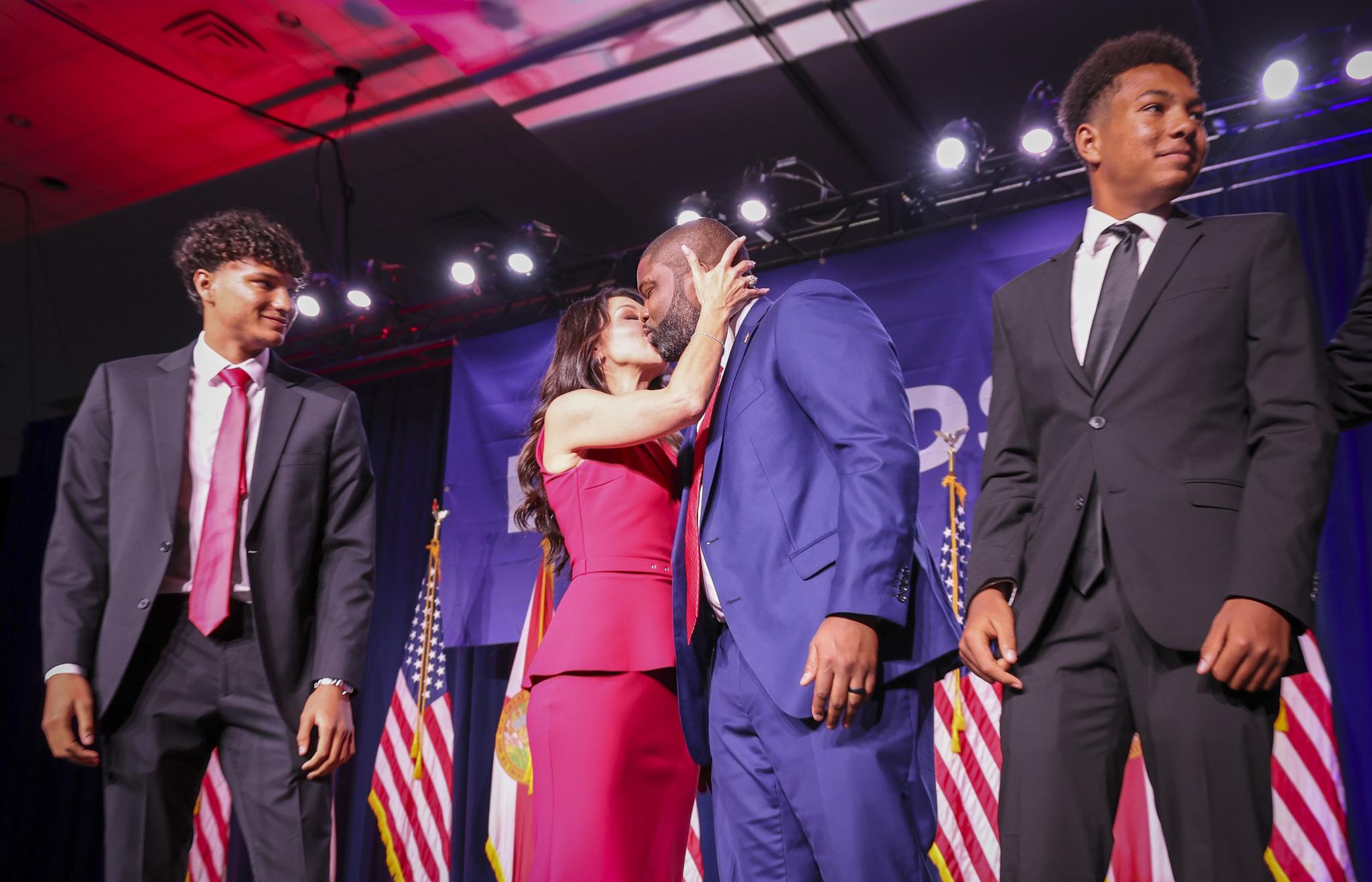
The upcoming election represents more than just a change in leadership; it is a potential turning point for Florida’s political identity. If elected, Byron Donalds would enter an exclusive club of Black state executives, as only three Black governors have been elected in U.S. history. Furthermore, he would be the first Black Republican governor ever elected in the United States.
For the Democratic Party, the stakes are equally high. The last time a Democrat held the Florida governorship was in 1999, when Buddy MacKay left office. Since then, the state has trended heavily Republican, with Jeb Bush defeating MacKay in the 1998 election. A victory for David Jolly would represent the first Democratic return to the governor’s mansion in nearly three decades, potentially signaling a shift in the state’s long-standing Republican dominance.
For the Republican Party, the race is about maintaining and expanding their hold. Donalds is running on a platform of aggressive government spending cuts—using the term “DOGE” to describe his plan to overhaul local governments and state agencies—and fiscal transparency. He has stated, “Taxpayers deserve to know their hard-earned dollars are being spent with transparency and hard-earned integrity.”
Deep-Dive: The Strategy of Black Voter Outreach
Throughout his nine years in Congress and the Florida state House, Byron Donalds rarely made his race a central part of his political identity. However, as the gubernatorial campaign intensified in October 2026, he began a series of targeted outreach events across the Miami area. During a string of events, including a stop at the Black Professionals Summit’s Legacy Con, Donalds expressed his intention to capture “north of 20%” of the Black vote.
This target is ambitious when compared to recent historical data. According to CBS News exit polls from 2022, approximately 13% of Black voters backed the reelection of Governor Ron DeSantis. In the 2024 presidential election, Donald Trump won roughly 15% of the Black vote in Florida. By attempting to increase this share, Donalds aims to make the Democratic path to victory significantly more difficult.
Donalds has defended his approach, arguing that Black voters are no longer a monolith tied to the Democratic Party. “I think there’s a lot of Black voters who are looking at my campaign because they’re just trying to figure out who’s going to be the best person to lead Florida into the future,” Donalds told CBS News in an interview. He further emphasized a meritocratic vision, stating at Legacy Con, “Florida is a meritocracy… What they really care about now is: Can you get the job done?”
However, this outreach has not been without friction. During a meet-and-greet in the Overtown neighborhood of Miami, resident Kalyn James protested the event with a “Vote Blue” sign, telling CBS News that while a Donalds win would be historic, she believed he would be “on the wrong side of history.”
Primary Election Results Comparison
| Candidate | Party | Vote Percentage |
|---|---|---|
| Byron Donalds | Republican | 47.8% |
| Jay Collins | Republican | 25.2% |
| James Fishback | Republican | 10.5% |
| Paul Renner | Republican | 8.5% |
| Other Opponents | Republican | 10.5% |
Deep-Dive: The Messaging Pivot and the Trump Factor
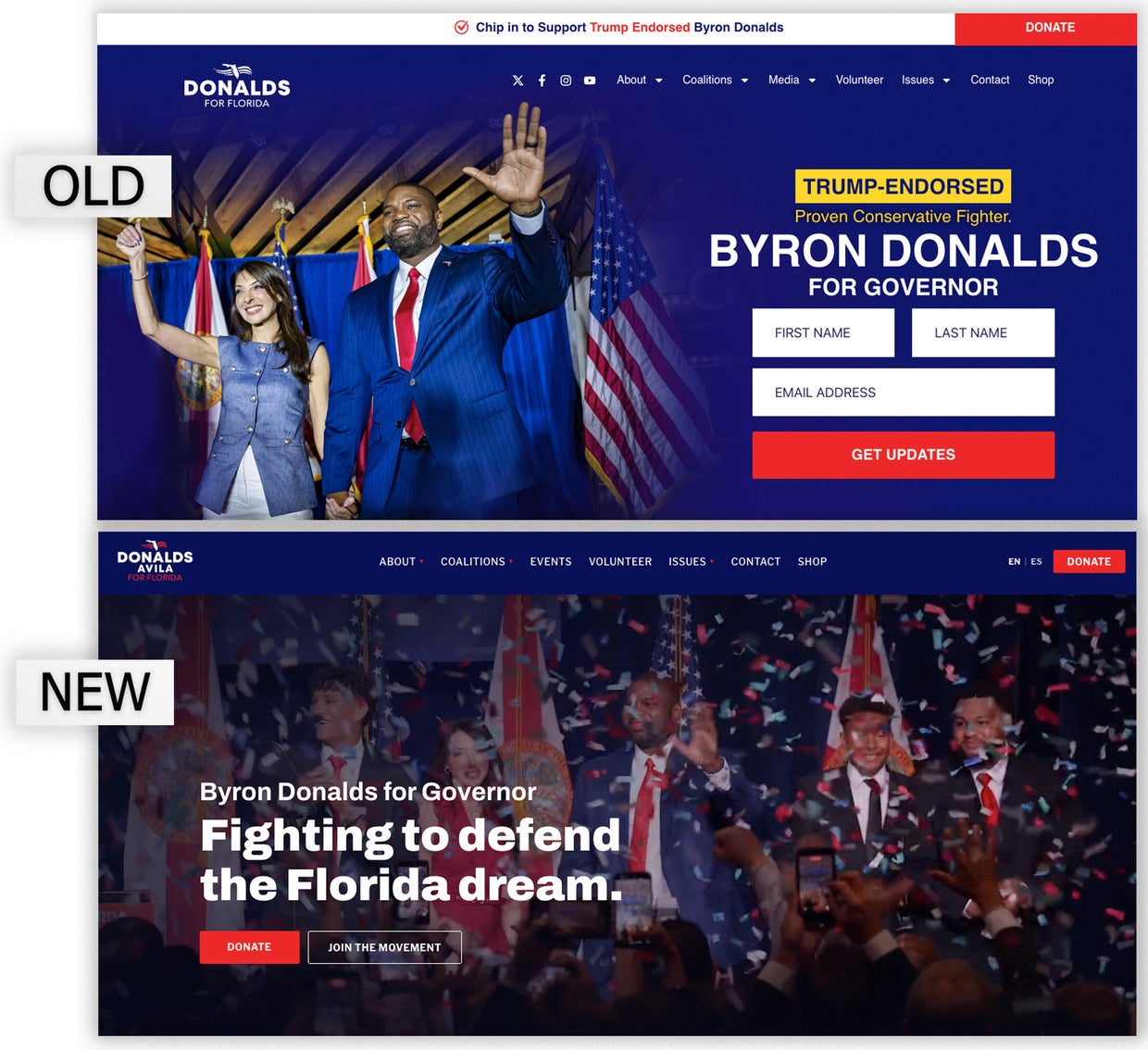
One of the most discussed aspects of the Donalds campaign is a recent modification to his official campaign website. Following reports by the Miami Herald, observers noted that prominent references to Donald Trump had been reduced or “scrubbed” from the site. Previously, the website featured heavy branding such as “Enact the Trump Agenda” and imagery of Trump and Donalds together. The current iteration emphasizes the slogan “Accountable, Achievable, Affordable!”
During an interview at the Sunshine Economy Summit with Tom Hudson of WLRN, Donalds addressed these changes directly. He explained that the campaign has been working on these updates for approximately two months as part of a strategic pivot toward the general election. “For the general election, the voters of Florida want to know the policies you’re going to implement to make their lives better,” Donalds said. He maintained that the changes do not represent a departure from his core values, describing the Trump agenda as a “common-sense agenda” focused on law and order, border security, and market stability.
This pivot is a delicate balancing act. While the “affordability” message is designed to appeal to moderate and independent voters concerned with the cost of living, there is a risk of alienating the core MAGA base that views the Trump endorsement as a primary reason for support. Donalds remains a prominent figure in the Republican orbit, having served as one of Trump‘s most visible surrogates during the 2024 cycle, notably co-headlining the “Congress, Cigars & Cognac” tour.
Stakeholders and Reactions
The diverse reactions to Donalds‘ candidacy highlight the ideological fractures within Florida’s electorate.
The Skeptics and Critics
Many Black community leaders and voters have expressed concern that the outreach is more tactical than transformative. Jasmine Burney-Clark, founder of the nonpartisan voting rights group Equal Ground, criticized the campaign’s efforts as “manipulation tactics to pander.” She noted that Donalds declined to sign her organization’s pledge to support a Democratic-backed state voting rights bill—a pledge that David Jolly did sign.
Internal Republican friction was also evident during the primary. Far-right challenger James Fishback launched aggressive rhetorical attacks against Donalds, labeling him a “token black” and a “slave to his donors.” Fishback even used the inflammatory term “AIPAC Shakur” to describe the Congressman, highlighting the intense competition for the soul of the Florida GOP.
The Open-Minded and the Supporters
Not all skepticism is absolute. At a retail stop in Miami Gardens at Lorna’s Caribbean Restaurant, voter Jermaine Woodside admitted he was initially reluctant to support Donalds due to his close association with Trump. However, after an hour-long conversation, Woodside noted he felt more open to the Congressman, even while maintaining that the Trump connection remains a potential political liability.
Meanwhile, Jay Collins, the Republican runner-up, offered a measured response to the primary results, stating on X (formerly Twitter) that he congratulates Donalds and vows to continue fighting to ensure Florida remains a “free state” in November.
What It Means for You
As the election approaches, the implications of this race will be felt across various sectors of Florida society:
Counterpoints and Open Questions
Despite the momentum of the Donalds campaign, several significant risks remain:
What Happens Next
With less than a month of campaigning remaining, the race is entering its most critical phase. Key indicators to watch include:
Frequently Asked Questions
Who are the main candidates in the 2026 Florida governor race?
The primary candidates are Byron Donalds, the Republican nominee and three-term Congressman, and David Jolly, the Democratic nominee and former Republican/Forward Party member. The race is characterized by a significant ideological divide between the two candidates.
How did Byron Donalds win the Republican primary?
Byron Donalds won the Republican primary on August 18, 2026, with 47.8% of the vote. He defeated several challengers, most notably Lieutenant Governor Jay Collins (25.2%) and James Fishback (10.5%), largely due to his massive fundraising advantage and the endorsement of Donald Trump.
Why is Byron Donalds targeting Black voters?
Donalds is aiming to capture more than 20% of the Black vote in Florida. Historically, Republican candidates in Florida have struggled to reach this threshold, with Ron DeSantis receiving 13% and Donald Trump receiving 15% in recent cycles. Increasing this share is seen as a key mathematical requirement for a Republican victory in the general election.
What is the “affordability” pivot in the Donalds campaign?
Following the Republican primary, the Donalds campaign has shifted its digital messaging to focus on “affordability” rather than purely on the “Trump agenda.” This is intended to appeal to a broader range of voters concerned with the cost of living and economic stability, as explained by Donalds during an interview at the Sunshine Economy Summit.
Closing
The Florida gubernatorial election of 2026 stands as a pivotal moment for the state’s political future. As Byron Donalds attempts to navigate the complexities of race, party loyalty, and economic messaging, he faces a formidable opponent in David Jolly. Whether the result is a historic first for a Black governor or a return to Democratic leadership, the outcome will redefine the political landscape of the Sunshine State for years to come.
References
Featured image: AP Photo/John Raoux — via New York Post