The UK youth parliament funding crisis has reached a critical turning point as the government signals it will no longer commit to the program’s current structure, leaving the future of youth democracy in significant doubt.
Key Takeaways
- Funding Uncertainty: The Department for Culture, Media and Sport (DCMS) has declined to commit to further grants for the UK Youth Parliament beyond its current cycle.
- Potential Closure: Insiders warn that without continued government support, the 25-year-old institution is likely to close within months.
- A Divided Debate: Supporters argue the program is a vital training ground for future leaders, while critics label it a “woke” project and a waste of taxpayer money.
- Legislative Context: The potential dissolution occurs as Parliament debates a Bill to lower the voting age from 18 to 16.
- New Model Pending: The government plans to announce a new youth democracy scheme this autumn, with a focus on under-represented groups.
- Low Public Awareness: Only 25% of young people in the UK are aware of the existence of the UK Youth Parliament.
- Exclusionary Practices: Some schools reported feeling “excluded from the process,” suggesting the program may not be reaching the very demographics it intends to serve.
- For Young People (Ages 11-18): If the program is axed, the structured opportunity to participate in national debates and influence policy at a grassroots level may disappear. Those currently in the program may see their roles dissolved by the end of the current funding cycle.
- For Parents and Educators: The loss of a recognized, non-partisan platform for political education could mean fewer resources for teaching civic responsibility and engagement in schools.
- For Future Political Candidates: The “pipeline” that has historically helped young people transition into roles like those held by Keir Mather may be severed, potentially changing the makeup of future parliamentary cohorts.
- For Taxpayers: The decision represents a choice between funding a specialized democratic institution or redirecting those funds toward different, perhaps more localized, youth initiatives.
- Can a “new scheme” replace the current one? The government has promised a new model this autumn, but it is unclear whether this will be a centralized national body or a decentralized collection of local youth councils.
- Is voluntary funding a viable alternative? While Jack Rankin suggests the group should rely on donations, it is unproven whether a political organization can maintain neutrality and reach while relying on private contributors.
- How will the government address the “awareness gap”? If only one in four young people knows about the parliament, simply changing the funding model may not solve the fundamental issue of engagement.
- What is the impact on devolved nations? Similar schemes exist in the Scottish, Welsh, and Northern Irish parliaments. It remains to be seen if the UK-wide decision will influence these devolved models.
- Autumn 2025: The government is expected to make formal announcements regarding the design and implementation of the new youth democracy scheme.
- Ongoing Parliamentary Debate: The progress of the Bill to lower the voting age to 16 will serve as a barometer for how much the government values youth political involvement.
- March 2027: This remains the final hard deadline for the current funding cycle, though the “within months” timeline suggested by the BBC implies a decision may be reached much sooner.
- www.bbc.co.uk
- www.gbnews.com
- www.bbc.com
What Happened: A Program at the Brink
In February 2025, news broke that the UK Youth Parliament, a cornerstone of British political engagement for a quarter-century, is facing an existential threat. According to reports from BBC News, the Department for Culture, Media and Sport (DCMS) is not committing to providing any more grants to the organization in its current form.
While no final decision has been reached regarding funding beyond March 2027, the immediate outlook is grim. UK Youth Parliament insiders have told the BBC that the organization will likely be forced to close if the government does not secure its financial future. The parliament, which consists of more than 300 elected members aged between 11 and 18, has long served as a national platform for young people to engage with decision-makers and develop leadership skills.
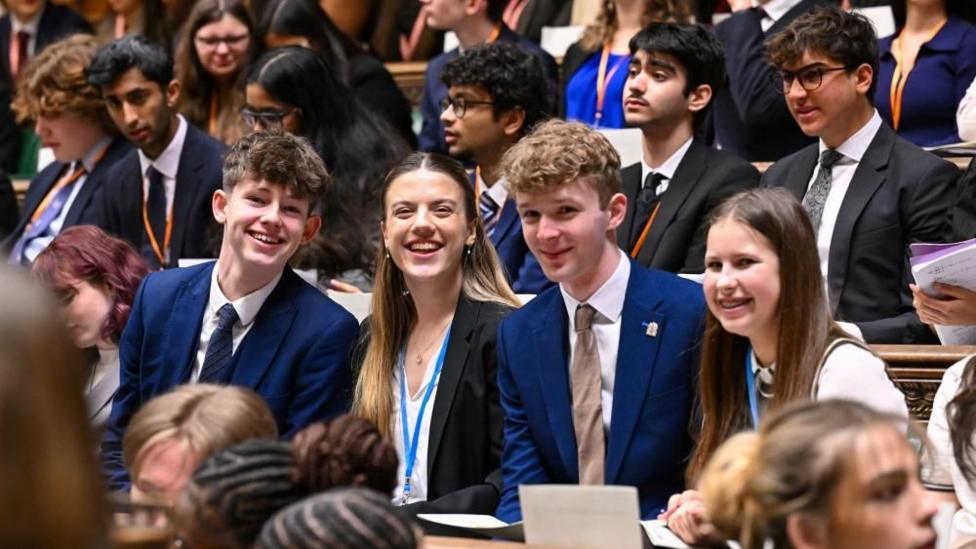
Historically, the parliament has been granted the unique privilege of holding annual debates within the House of Commons chamber on days when Members of Parliament (MPs) are not sitting. However, the financial stability of this tradition is now being questioned by policymakers and fiscal hawks alike.
Why It Matters: The Stakes for Youth Democracy
The potential loss of the UK Youth Parliament is not merely a budgetary decision; it is a question of how the United Kingdom engages its next generation of citizens. The program was launched in 2000 during the government of Tony Blair with the explicit goal of boosting political interest among the youth.
For many, the parliament acts as a vital pipeline for political talent. High-profile alumni include Keir Mather, a Labour minister who became the youngest MP in 2023 at the age of 25, and other figures across the political spectrum, including Alicia Kearns (Conservative) and Lloyd Russell-Moyle (Green Party).
Beyond individual careers, the parliament serves a systemic function. At a time when trust in democratic institutions is reportedly low, the program provides a structured way for teenagers to scrutinize the government. If the program is dismantled, the primary mechanism for thousands of young people to have a direct voice in Westminster may vanish.
The Financial Landscape: A Breakdown of Public Investment
The debate over the UK Youth Parliament is heavily centered on the use of public money. Critics argue the program does not provide sufficient “value for money,” while supporters point to the long-term societal benefits of a politically literate citizenry.
| Financial Metric | Detail |
|---|---|
| Recent Annual Funding | £453,000 (provided by DCMS) |
| Total Expenditure (2017–2024) | Approximately £2.4 million |
| Primary Use of Funds | Annual conferences, travel, communication, and support staff |
| Last Major Conference Location | Brighton, UK |
| Current Management | National Youth Agency |
While the DCMS has praised the parliament’s “important legacy,” the refusal to pledge future funds suggests a shift in how the government views the ROI (return on investment) of such youth-focused initiatives. The funding is primarily utilized for the organization’s annual conference, travel for members, communication efforts, and the essential support staff required to manage a national network of 300+ representatives.
Stakeholders and the Battle of Perspectives
The controversy surrounding the UK Youth Parliament has polarized political commentators and lawmakers. The debate can be categorized into two distinct camps: those who see a democratic necessity and those who see an unnecessary ideological expenditure.
The Advocates: Building Future Leaders
Supporters emphasize the developmental and democratic value of the program. Bobby Forbes, the recently departed chair of the UK Youth Parliament’s Youth Select Committee, argued that the group provides teenagers with a “direct way to scrutinize government and hold decision-makers to account.” Forbes warned that scrapping the institution would be a “huge mistake and detrimental to youth voice across the UK.”
Peter Swallow, the Labour MP for Bracknell, who himself participated in the Youth Parliament at age 14, echoed these concerns. Swallow highlighted the program’s success in campaigning for significant issues, such as lowering the voting age. He argued that cutting funding would be “short-sighted” given the current climate of political skepticism. “I cannot imagine a more important time for young people to be invited into the heart of our democracy,” Swallow stated.
The Critics: Fiscal Responsibility and Ideological Skepticism
On the other side of the aisle, critics argue that the program is an inefficient use of taxpayer funds. Jack Rankin, the Conservative MP for Windsor, has been a vocal opponent, stating that the group “should not receive taxpayers’ money and should not sit in the Chamber of the House of Commons.” Rankin has suggested that the organization should instead seek support through voluntary donations.
Adding to the fiscal critique, Dia Chakravarty, the former political director of the TaxPayers’ Alliance, described the UKYP as a “colossal waste of potential to engage bright young people” and suggested it serves as a vehicle for lobbying the government to spend more money on “progressive policies.” Some critics have even gone so far as to label the program a “woke” project, arguing that its focus is more on progressive social lobbying than on neutral democratic education.
The Awareness and Inclusivity Gap
One of the primary drivers behind the government’s hesitation to continue funding the current model is a recent review published in October 2024. The review reached two troubling conclusions that have given ammunition to those seeking to reform or abolish the program:
These findings suggest that while the parliament may be delivering on some of its intended goals, it is failing to achieve the widespread, inclusive impact required to justify its current budget. The government has indicated that any successor scheme will have a “particular focus on under-represented groups” to address these specific failings.
The Voting Age Intersection
The timing of this funding crisis is particularly significant due to ongoing legislative shifts. A Bill to lower the voting age from 18 to 16 for all UK elections is currently making its way through Parliament.
If the Bill passes, the UK will see a massive influx of new voters within the 16-18 age bracket. This creates a paradoxical situation: the government may be preparing to enfranchise a demographic while simultaneously dismantling the primary platform designed to prepare that demographic for democratic participation. Proponents of the voting age change argue that the UK Youth Parliament is the perfect training ground for these new voters, whereas critics of the parliament argue that the voting age change should be handled through different, perhaps less expensive, educational channels.
Organizational Shifts: From BYC to NYA
The instability facing the UK Youth Parliament is also tied to broader shifts in the landscape of youth organizations. For much of its history, the parliament operated under the umbrella of the British Youth Council (BYC). However, the BYC faced significant financial challenges and eventually closed in 2024.
Following the collapse of the BYC, the UK Youth Parliament transitioned to being run by the National Youth Agency. This period of organizational transition has coincided with the current funding uncertainty, leaving the program in a state of administrative and financial limbo. The loss of the BYC’s infrastructure likely contributed to the challenges in maintaining the program’s reach and awareness.
What It Means for You
How this development affects different groups depends on their relationship to the democratic process:
Counterpoints and Open Questions
While the arguments for and against the UK Youth Parliament are well-defined, several questions remain unanswered:
What Happens Next
Several key milestones will determine the fate of youth political engagement in the UK:
Frequently Asked Questions
What is the UK Youth Parliament?
The UK Youth Parliament is a democratic body established in 2000 that allows young people aged 11 to 18 to represent their peers. Members are elected every one to two years by local authorities and have the opportunity to debate issues in the House of Commons chamber once a year.
Why is the UK Youth Parliament facing a funding cut?
The Department for Culture, Media and Sport (DCMS) has indicated it will not commit to further grants for the program in its current form. This follows a 2024 review that found low awareness of the program among young people and issues with inclusivity in certain schools.
How does the UK Youth Parliament relate to the voting age?
The parliament has been a key campaigner for lowering the voting age from 18 to 16. As a Bill to implement this change is currently moving through Parliament, the future of the UK Youth Parliament is seen by many as being directly linked to the engagement of these new voters.
Who is currently running the UK Youth Parliament?
The organization is currently managed by the National Youth Agency, having previously been overseen by the British Youth Council before that organization closed due to financial difficulties in 2024.
Conclusion
The potential axing of the UK Youth Parliament represents a significant moment for British democracy. As the government weighs the costs of taxpayer-funded political engagement against the need for a robust, inclusive, and well-known democratic platform, the decision made this autumn will set the tone for how the United Kingdom integrates its youngest citizens into the halls of power for decades to come.
References
Featured image: Image via BBC News