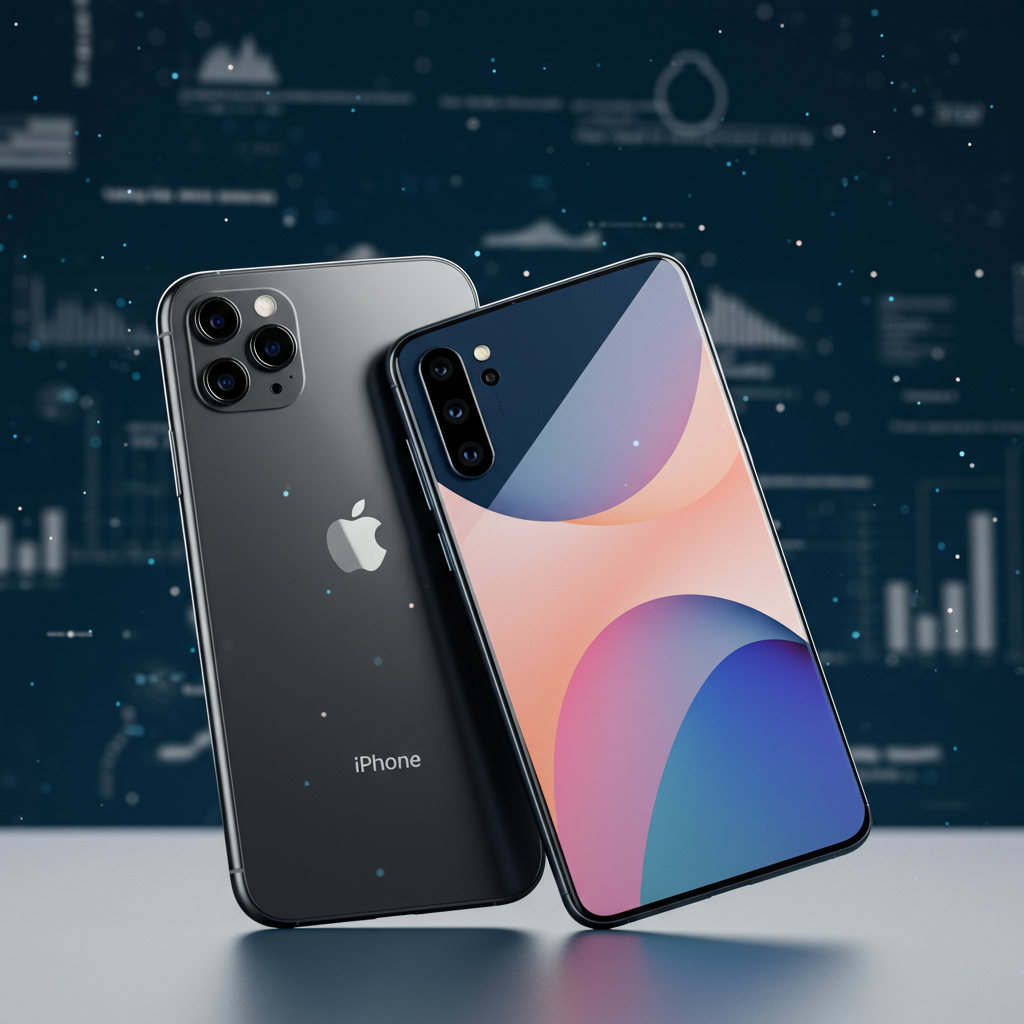
Rumors swirling around the upcoming iphone 17 series suggest Apple is planning a significant addition to its lineup, potentially replacing the Plus model with a new, ultra-thin variant dubbed the “iPhone 17 Air.” Early leaks paint a picture of a device pushing the boundaries of smartphone slimness, directly challenging competitors like Samsung’s rumored Galaxy S25 Edge. However, achieving this svelte design appears to come with notable trade-offs, particularly concerning photography capabilities. This comparison dives into the leaked specifications, highlighting where the iPhone 17 Air is tipped to win in the thinness race and where it might fall short against its main rival.
The Quest for Extreme Thinness
The most striking rumor surrounding the iPhone 17 Air is its potential dimensions. Leaked information suggests an incredible thickness of just 5.5mm. To put that into perspective, this would make it noticeably thinner than the rumored Samsung Galaxy S25 Edge, which is tipped to measure 5.8mm thick. While the difference is only 0.3mm on paper, industry analysis suggests that even a gap of around 1.4mm is enough to make a phone feel significantly thinner in the hand. The iPhone 17 Air’s potential 0.3mm advantage over the S25 Edge could be just enough for Apple to claim the title of the slimmest premium phone, a potentially big win in a market increasingly focused on design aesthetics.
This focus on a super-slim profile isn’t merely cosmetic. Reports indicate that achieving such a thin form factor requires extensive internal re-engineering. Every component, from the camera module to the battery and logic board, must be carefully packaged and potentially redesigned to fit within the limited space. Some tipsters even suggest a seemingly minor detail, like the rumored repositioning of the front camera to the left of the Dynamic Island, could be a clue to this complex internal layout overhaul. Beyond thickness, the iPhone 17 Air is also rumored to be exceptionally light, potentially weighing in at around 145g compared to the S25 Edge’s rumored 163g, further enhancing its tactile appeal.
A Camera Sacrifice for Slimness
While extreme thinness is the rumored headline feature, it appears to necessitate a significant compromise. Leaks consistently suggest the iPhone 17 Air will feature only a single rear camera. This is in stark contrast to the Samsung Galaxy S25 Edge, which is expected to sport a dual-lens setup, potentially including a high-resolution 200MP main sensor and a 12MP ultrawide lens. Other premium phones in this price bracket typically offer multiple lenses, often including a telephoto for optical zoom.
This rumored limitation points towards Apple prioritizing the svelte design over advanced photography features. Competitors like the S25 Edge have also reportedly made camera compromises (like omitting a telephoto lens) to achieve slimness, but the iPhone 17 Air’s potential single-lens system suggests an even greater sacrifice in camera versatility. For users who value photography prowess, this could be a major drawback compared to the competition.
Beyond Thinness: Other Key Spec Leaks
Besides the headline-grabbing design and camera setup, other rumored specifications for the iPhone 17 Air provide a clearer picture of the device. It’s expected to be powered by the A19 chipset, likely the standard variant rather than a ‘Pro’ version. Reports also suggest it will come with 12GB of RAM, offering solid multitasking performance. The display is tipped to be a 6.6-inch screen featuring a 120Hz refresh rate, bringing smoother scrolling and animations previously reserved for Pro models to a non-Pro iPhone variant, potentially enhancing the perceived premium feel of the device despite the camera limitation.
Battery Life: A Major Concern & Potential Solutions
Packing sufficient battery capacity into an ultra-thin chassis is a significant engineering challenge. Leaks indicate the iPhone 17 Air might house a relatively small 2800mAh battery. This figure is considerably less than the rumored 3900mAh in the S25 Edge and the 3561mAh found in the current iPhone 15. A smaller battery naturally raises concerns about all-day endurance.
However, rumors offer potential mitigation strategies Apple might employ. There’s talk of using advanced high-density silicon-anode battery technology, which could provide more power from a smaller physical volume compared to traditional battery tech. Combined with an efficient modem and the A19 chipset, some analysts predict the iPhone 17 Air’s real-world battery life could still be comparable to current iPhone models. Furthermore, there are whispers that Apple plans to reintroduce its official iPhone battery case this year, potentially offering a lifeline for users who find the internal battery insufficient, although this would be an additional purchase.
Pricing and Positioning in the Lineup
The iPhone 17 Air is widely rumored to replace the current iPhone 16 Plus in Apple’s annual lineup. Leaks suggest it will carry a similar price tag, starting around $899 / £899 / AU$1,599. This positioning places it above the standard iPhone 17 but below the Pro models.
While sharing the Plus’s price bracket, the 17 Air’s design focus on extreme thinness and lightness, possibly combined with premium materials hinted at by competitor designs like the S25 Edge’s titanium frame, could give it a distinctly more “Pro” feel in the hand than the Plus model it replaces.
However, this strategy isn’t without its risks. Some market watchers argue that positioning a phone with potentially fewer key features (like a single camera and possibly compromised battery endurance) at a price point similar to or slightly below higher-spec rivals, and indeed above the likely more feature-rich standard iPhone 17, could mirror the commercial struggles faced by the niche iPhone mini and the higher-priced iPhone Plus models in recent years. Apple’s motivation for pursuing such an aggressively slim design might stem partly from competitive pressure, wanting to offer something unique in response to slim rivals like the S25 Edge.
Frequently Asked Questions
How does the rumored iPhone 17 Air thickness compare specifically to the Samsung Galaxy S25 Edge?
The rumored iPhone 17 Air is expected to be remarkably thin at just 5.5mm. This measurement is slightly thinner than the rumored Samsung Galaxy S25 Edge, which is tipped to be 5.8mm thick. While the difference is small (0.3mm), even slight variations in thickness can make a significant tactile difference, potentially allowing the iPhone 17 Air to feel notably more slender in hand.
What compromises are expected in the iPhone 17 Air’s features due to its focus on slimness?
The primary rumored compromise for the iPhone 17 Air’s ultra-thin design is in its camera system. Leaks strongly suggest it will feature only a single rear camera, in contrast to the dual or triple camera setups found on competing premium phones like the rumored S25 Edge. Additionally, its slim profile is expected to house a relatively small 2800mAh battery, which could raise concerns about battery life compared to other models, although potential high-density tech might help mitigate this.
Where is the iPhone 17 Air expected to fit in Apple’s lineup, and what are the battery life prospects?
The iPhone 17 Air is rumored to replace the iPhone 16 Plus, slotting into the lineup above the standard iPhone 17 but below the iPhone 17 Pro models. Its rumored starting price is around $899. Despite a potentially small 2800mAh battery dictated by its thinness, leaks mention the use of high-density battery technology and efficient components. Analyst predictions suggest its real-world battery life could still be comparable to current iPhone models, and Apple is also rumored to bring back its official battery case, offering an optional boost.
Apple’s rumored iPhone 17 Air is shaping up to be a device defined by its extreme thinness, potentially becoming one of the slimmest premium smartphones on the market, even beating the rumored Samsung Galaxy S25 Edge in that regard. However, achieving this design goal appears to involve clear trade-offs, most notably a single rear camera setup and a potentially smaller battery capacity. While advanced battery tech could help endurance, the overall package – ultra-thin design, limited cameras, and an expected premium price point – raises questions about its market reception. As with all leaks, these details should be taken with a pinch of salt until Apple officially unveils the iPhone 17 series, likely in September.