
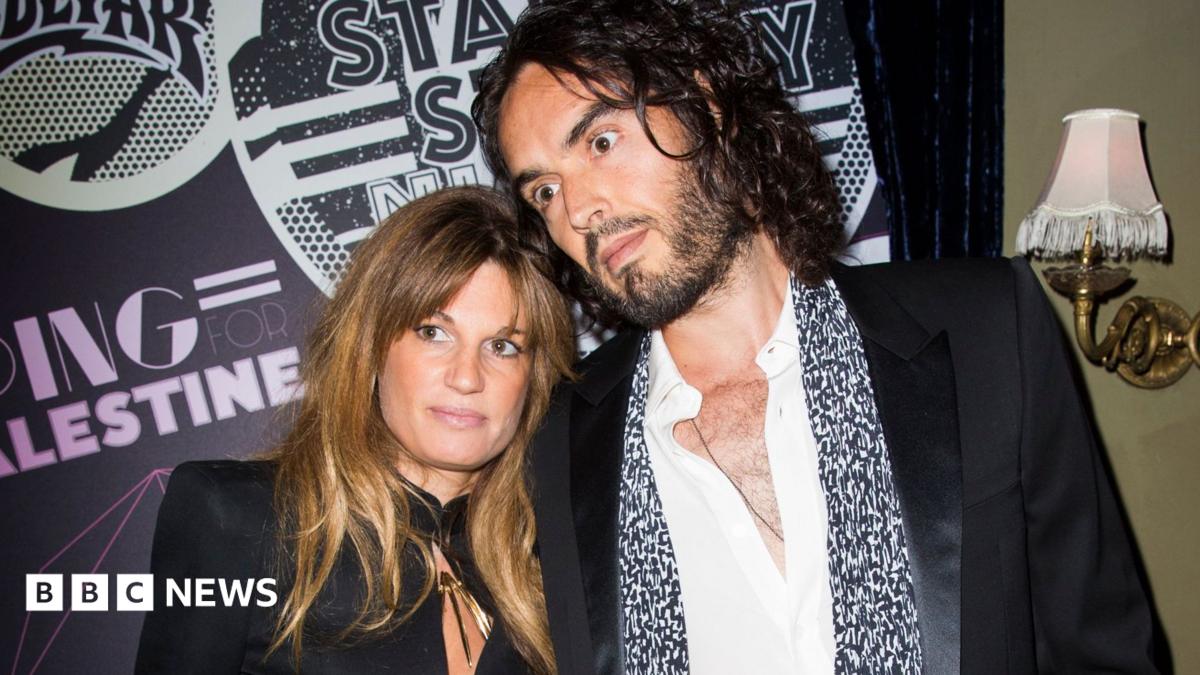
The relationship between Jemima Goldsmith and Russell Brand has moved from private history to public testimony as the former partner has broken her long-standing silence to allege a history of “violence, coercive control and abuse.”
Key Takeaways
- Russell Brand has been sentenced to 10.5 years in prison following convictions for one count of rape and three counts of sexual assault.
- Jemima Goldsmith alleges she experienced personal violence from Brand in 2014, requiring police intervention to remove him from her home.
- The disclosure clarifies the context of a 2015 legal injunction involving massage therapist Szilvia Berki.
- Goldsmith stated she declined to press charges in 2014 primarily to protect her then-teenage children from intense media scrutiny.
- The sentencing follows a four-week trial at Southwark Crown Court that examined offenses occurring between 2004 and 2009.
What Happened: The Sentencing of Russell Brand
On Monday, November 9, 2026, the legal proceedings against entertainer Russell Brand reached a definitive conclusion at Southwark Crown Court. Following a intensive four-week trial, the 51-year-old was sentenced to 10.5 years in prison. The court found Brand guilty of raping a woman at his home in 2009 and of three separate counts of sexual assault against three other women. These offenses were part of a series of criminal charges involving four women spanning the period between 2004 and 2009.
While the convictions were significant, the trial also saw Brand acquitted of two counts of rape and one count of attempted indecent assault. Following the sentencing hearing, Brand was transported to HMP Wandsworth in London to begin his term. The presiding judge, in a stern address during the sentencing, noted that Brand’s significant fame had fostered a sense of impunity, stating that he harbored a “casual arrogant disregard to any woman’s right to say no to you” and believed his celebrity status allowed him to “act when you liked and how you liked.”

Why the Jemima Goldsmith Accusations Matter
Concurrent with the sentencing, Jemima Goldsmith, the 52-year-old TV producer and former partner of Brand, issued a lengthy and unprecedented statement via the social media platform X. For years, Goldsmith had remained largely private regarding her mid-2010s relationship with the comedian, but the conclusion of the criminal trial prompted a shift in her public stance.
In her statement, Goldsmith asserted that she had personally experienced Brand’s “violence, coercive control and abuse.” She specifically detailed a violent incident in 2014 at her residence, during which she was forced to call the police to have Brand removed from her home. Goldsmith clarified that her decision not to pursue legal recourse at that time was a calculated choice made to shield her then-teenage children from the potential impact of aggressive press attention.
“Whilst my pain in relation to this pales in comparison to what the women have testified in court have suffered, this was a difficult period in my life which has had a lasting impact,” Goldsmith wrote on Monday evening.
This testimony is significant because it provides a contemporary corroboration of a pattern of behavior that was central to the prosecution’s case against Brand. It also reframes the public understanding of the Jemima Goldsmith Russell Brand relationship, moving it from a standard celebrity breakup to a documented period of domestic instability.
Deep Dive: The Szilvia Berki Injunction and Legal Complexity
One of the most complex elements of the Brand and Goldsmith history involves a legal dispute with Szilvia Berki, a Hungarian massage therapist. The resurfacing of this dispute has been a catalyst for Goldsmith’s decision to speak out, as she claims recent media reporting has created an “untrue narrative.”
In October 2015, Goldsmith and Brand were granted a High Court injunction to prevent Berki from harassing them or making specific allegations regarding an incident at Goldsmith’s home. The dispute originated from a scheduled massage session on June 7, 2014, at Goldsmith’s Oxfordshire estate. According to Goldsmith, Berki arrived for a session that Brand ultimately decided not to proceed with. Following the encounter, Berki alleged to police that Brand had pushed her and that she had been attacked by Goldsmith’s dog.
However, Goldsmith maintains that she was present for the duration of the interaction and “did not see anything untoward.” After reviewing CCTV footage and statements, the police concluded there was “no case to answer.” The court subsequently ordered Berki to pay £50,000 in legal costs, a decision that Berki has unsuccessfully challenged in multiple appeals.
Summary of Legal and Criminal Data
| Category | Detail |
|---|---|
| Total Prison Sentence | 10.5 years |
| Expected Release Point | Approximately 7 years (two-thirds rule) |
| Rape Convictions | 1 |
| Sexual Assault Convictions | 3 |
| Acquitted Charges | 2 counts of rape; 1 count of attempted indecent assault |
| Injunction Legal Costs | £50,000 (ordered against Szilvia Berki) |
| Offense Timeline | 2004–2009 |

Stakeholders and Reactions
The fallout from the trial and Goldsmith’s statement involves several key figures, each representing a different facet of the case.
The Victims
During the sentencing, the court heard harrowing victim impact statements. One woman testified to being “upset and traumatised” for years, stating she felt like “damaged goods” and feared giving off signals that could be misinterpreted. Another victim described the trauma of the rape as something she has to “carry every day.” Goldsmith expressed profound respect for these women, stating she was “in awe of the courageous women who came forward.”
Media and Investigative Journalists
Rosamund Urwin, the chief news correspondent for the Sunday Times, was a central figure in the 2023 media investigation that helped bring these allegations to light. Urwin defended Goldsmith’s decision to speak out, noting that the situation was far more complicated than public perception suggested. “I wish people would remember women that come forward are brave people and that is what she has done tonight,” Urwin told the BBC.
Law Enforcement
Sir Mark Rowley, the Metropolitan Police Commissioner, has suggested that the conviction of a high-profile figure like Brand may encourage other victims to come forward. The police investigation into the Berki allegations concluded years ago, but the current climate of accountability may lead to a re-examination of historical claims.
Analysis: The Tension Between Privacy and Transparency
The Jemima Goldsmith Russell Brand situation highlights a growing tension in the digital age: the use of legal injunctions to protect privacy versus the perception that such orders serve to suppress the truth.
Goldsmith’s defense of the 2015 injunction is that it was a tool to stop Berki from targeting her and her family with “vicious antisemitic and threatening” messages. However, the media scrutiny regarding the injunction has led to Goldsmith being subjected to significant online abuse, including death threats and antisemitic vitriol. This creates a secondary layer of harm for women who utilize legal mechanisms to manage harassment, as those very mechanisms can be weaponized by online mobs to paint them as complicit in a cover-up.
What It Means for You
Depending on your connection to the legal or social landscape, the implications of this case vary:
- For survivors of domestic abuse: The case underscores the importance of personal agency and the reality that many victims choose not to press charges immediately due to complex factors like family protection or fear of media scrutiny.
- For legal professionals: The case serves as a study on the efficacy and the unintended consequences of high-profile injunctions in the era of social media-driven public opinion.
- For media consumers: It serves as a reminder of the complexity behind “headline” stories and the necessity of looking at the long-term legal and personal histories that inform current events.
Counterpoints and Open Questions
While the convictions are settled, several questions remain unresolved. The most prominent is whether the existing injunction against Szilvia Berki can be varied to allow her to speak to the police regarding her 2014 allegations. Goldsmith has expressed a desire to do this, but such a move would likely require the approval of Russell Brand, with whom she has had no contact since 2014.
Furthermore, there is the debate regarding the “gagging order” perception. Critics argue that injunctions like the one seen in this case can create a vacuum of information that allows for the spread of misinformation. Conversely, supporters argue that without such protections, high-profile individuals and their families are vulnerable to targeted, unfounded harassment that can be devastating to children and private citizens.
What Happens Next
As Russell Brand begins his sentence at HMP Wandsworth, several developments are anticipated:
- Potential for Further Allegations: Following the comments from Commissioner Sir Mark Rowley, the Metropolitan Police may be prepared to receive and investigate further claims from women regarding the 2004–2009 period.
- Legal Challenges to the Injunction: There may be renewed legal attempts to vary or dissolve the 2015 injunction involving Berki, particularly if Goldsmith continues her push for transparency.
- Brand’s Appeal Process: While not yet confirmed, the legal team for Brand may explore grounds for appeal regarding the specific counts of rape and sexual assault.
Frequently Asked Questions
How long is Russell Brand’s prison sentence?
Russell Brand was sentenced to 10.5 years in prison. Under current sentencing guidelines for serious violent or sexual offenses, he is expected to be released on license after serving approximately two-thirds of his sentence, which would be roughly seven years.
What did Jemima Goldsmith specifically allege about Russell Brand?
Jemima Goldsmith alleged that during their relationship in 2014, Brand subjected her to “violence, coercive control and abuse.” She specifically stated that she had to call the police to have him removed from her home following a violent incident.
What was the Szilvia Berki injunction?
The injunction was a legal order granted in October 2015 to prevent Szilvia Berki from harassing Jemima Goldsmith and Russell Brand or making certain allegations about an incident that occurred at Goldsmith’s home in June 2014. Berki was also ordered to pay £50,000 in legal costs.
When did the crimes for which Brand was convicted occur?
The criminal charges for which Brand was found guilty involved offenses committed between the years 2004 and 2009, including a rape that took place at his home in 2009.
The sentencing of Russell Brand and the subsequent public statement by Jemima Goldsmith mark a significant moment in a years-long saga of legal battles, investigative journalism, and personal trauma. As the legal system processes his incarceration, the social implications of his actions and the bravery of those who spoke out continue to resonate.
References
- Jemima Goldsmith accuses ex Russell Brand of ‘violence, coercive control and abuse’ after it emerged she and comic gagged massage therapist for a decade over mansion ‘assault’ — dailymail.com
- Jemima Goldsmith accuses Russell Brand of violence and abuse against her — bbc.co.uk
- Jemima Goldsmith accuses Russell Brand of violence and abuse against her — ca.news.yahoo.com
- Jemima Goldsmith accuses ex Russell Brand of ‘violence, coercive control and abuse’ — gbnews.com
- Jemima Goldsmith accuses ex Russell Brand of ‘violence and abuse’ — standard.co.uk
- Jemima Goldsmith accuses Russell Brand of violence and abuse against her — bbc.com
Featured image: Image via BBC News