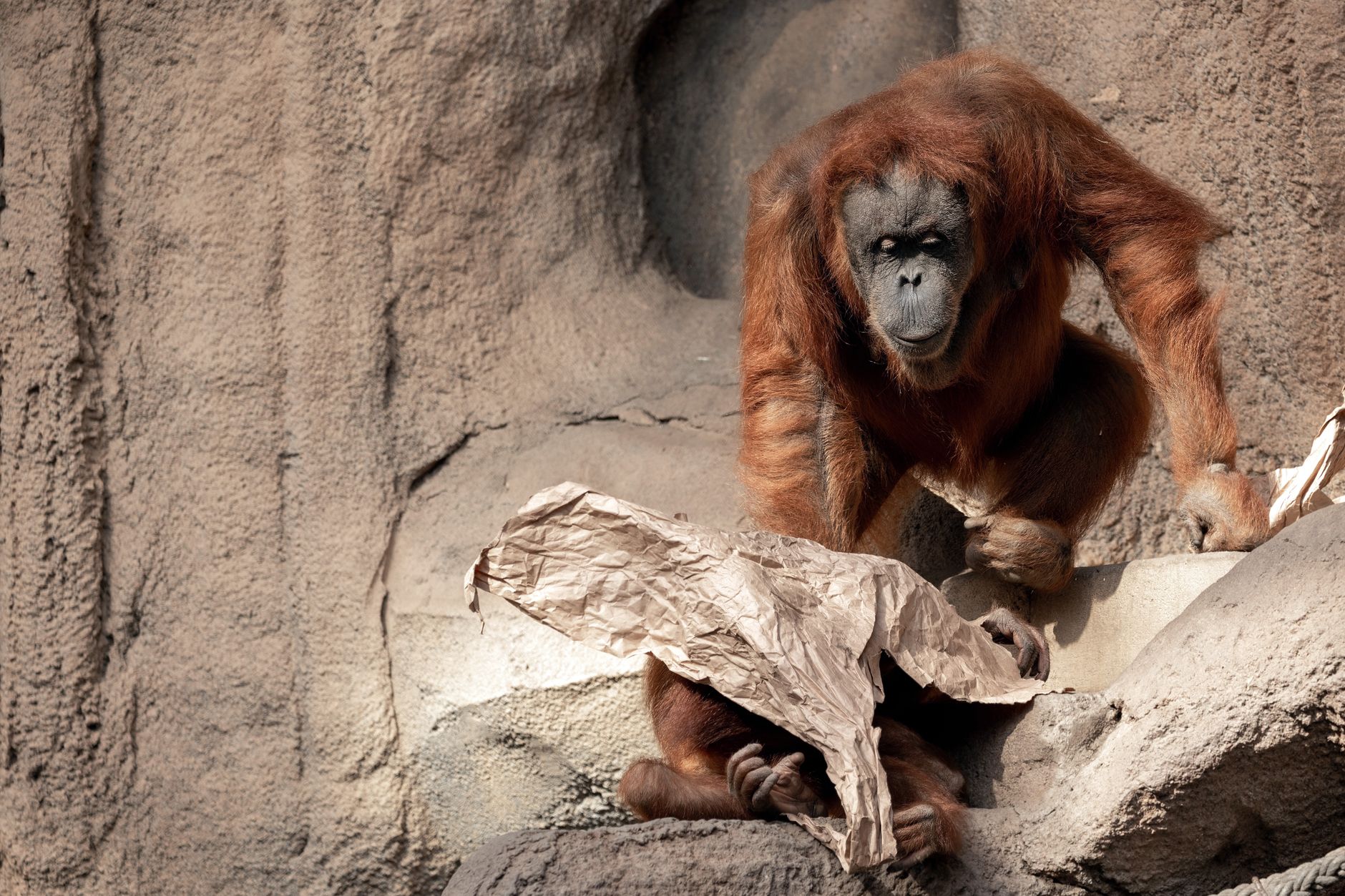
Orangutan emotional learning is significantly influenced by the presence of positive social cues, according to a new study published in the international journal Biology Letters. Researchers have discovered that these great apes show a distinct preference for food rewards when those rewards are associated with the sounds of their peers experiencing joy, such as laughter, rather than neutral environmental sounds.
Key Takeaways
- Socially-driven preference: Four out of six orangutans studied preferred food rewards that were associated with the sound of laughter during the learning process.
- Emotion-cognition link: The research supports the theory that emotions and rational thought are not separate, but rather deeply interconnected in the learning process.
- Evolutionary significance: The findings suggest that the link between emotional states and memory may be an ancient trait shared across many species.
- Human applications: The study offers insights into human education, suggesting that a student’s emotional state can dictate how much they value and retain information.
- Research limitations: Due to a small sample size of six primates, scientists note that the results should be viewed as a foundational step rather than a definitive conclusion for the entire species.
- For Teachers: Creating a joyful, low-stress environment may not just make students “happier,” but may actually change how they perceive the importance of the subjects they are studying.
- For Students: Understanding that emotions like anxiety can impact your preference for certain subjects—such as mathematics—could help students approach learning with more self-awareness. If a student feels anxious while learning a specific topic, they may develop a long-term aversion to it, not because of the subject matter, but because of the emotional state tied to the learning process.
- Enrichment Programs: Incorporating social sounds and positive social interactions into cognitive enrichment tasks can enhance the effectiveness of these programs.
- Animal Welfare: Positive emotional states can be leveraged to improve how animals interact with their environment and how they respond to training and husbandry protocols.
- Expanding Species Research: Scientists will likely look to see if these findings apply to other great apes, such as chimpanzees or bonobos, or even smaller primates.
- Neurological Mapping: Future studies may attempt to use non-invasive brain imaging to see which parts of the orangutan brain activate when they hear social sounds versus neutral sounds.
- Long-term Memory Studies: Researchers want to know how long these emotional associations last and whether they can be used to influence long-term behavioral changes in captive settings.
- Educational Psychology Integration: Human psychologists may use these findings to further explore the “emotional climate” of learning environments, potentially leading to new pedagogical strategies that prioritize emotional well-being to improve information retention.
- www.dongascience.com
- www.theguardian.com
What Happened: The Indiana University Study
In a groundbreaking study led by Dan Lameris, a postdoctoral researcher at Indiana University, scientists investigated how the emotional atmosphere of a learning environment affects the way animals evaluate rewards. The research, which included Erica Cartmill, a professor of anthropology and cognitive science at Indiana University and the study’s senior author, focused on the intersection of social stimuli and cognitive associations.
Working with six captive orangutans housed at two different zoological institutions in Belgium and the United States, the team designed a multi-phase experiment to test if auditory cues could alter long-term food preferences. The study was conducted over several days, transitioning from basic training to a complex testing phase designed to measure the lasting impact of emotional context.
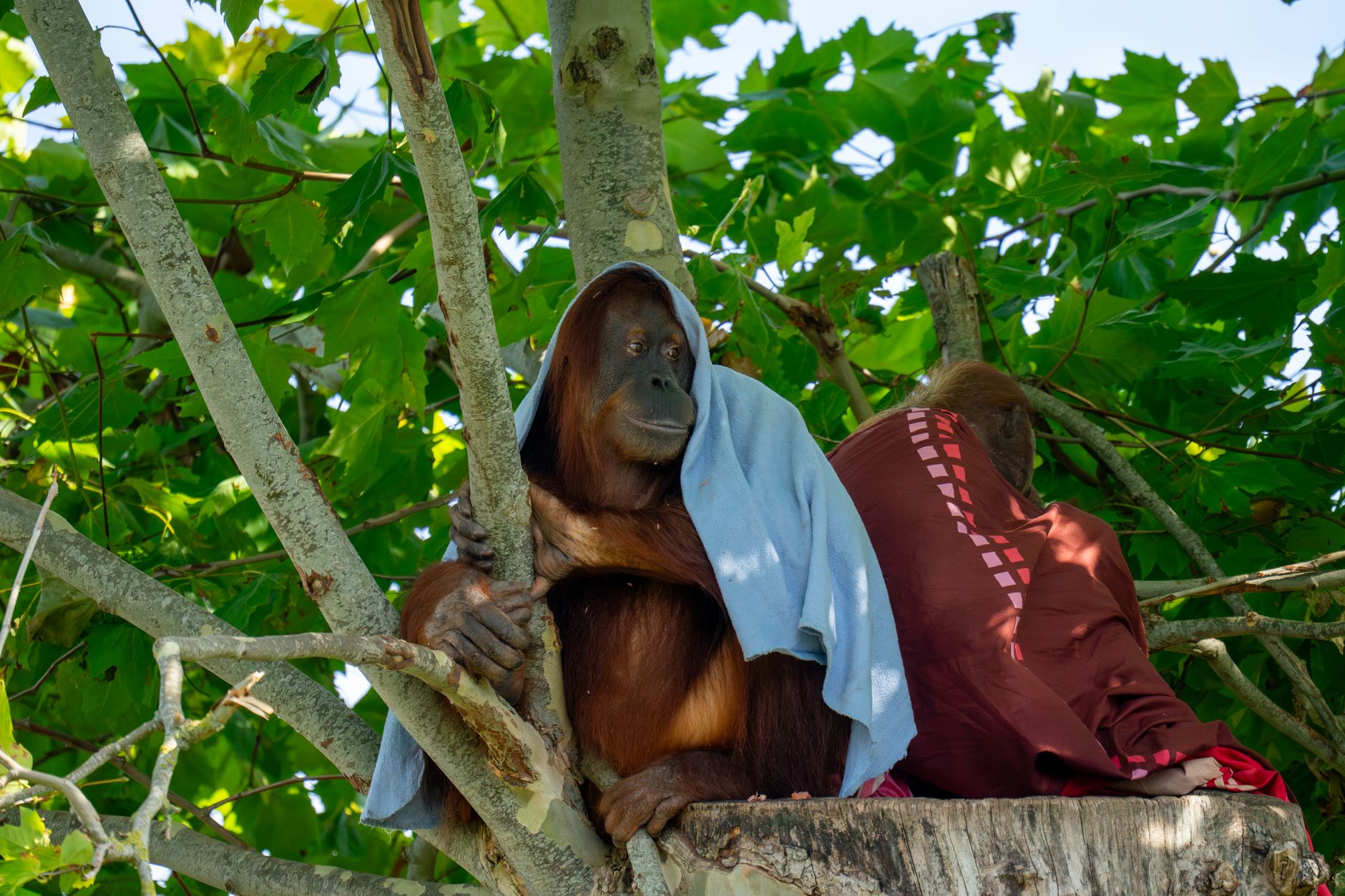
During the initial phase, the orangutans were trained to search through various bowls to find specific food treats, namely almonds and cashew nuts. Once the basic task was mastered, the researchers introduced a conditioning period. During this stage, the apes were exposed to one of two distinct auditory stimuli for five minutes while they interacted with different bowl materials. The first stimulus was the sound of laughter, recorded during periods of play among orangutans. The second was a neutral control consisting of wind sounds.
On the fifth day of the experiment, the researchers conducted the final testing phase. They presented the orangutans with two bowls, each containing a treat buried under a different material—either sawdust or wooden pieces. Crucially, the choice of which material was associated with laughter and which was associated with wind had been established during the previous conditioning sessions. After 30 trials per subject, the results were clear: the majority of the apes chose the bowl containing the material that they had previously encountered while hearing laughter.
Why It Matters: The Connection Between Emotion and Reason
This research is significant because it challenges the traditional view that learning and decision-making are purely rational, data-driven processes. Instead, it suggests that the “state” of the learner plays a critical role in how information is processed and valued.
Erica Cartmill emphasized that one of the primary motivations for this research was to build upon human psychological studies which demonstrate that emotion has profound effects on rational thought. “We wanted to extend that to animals – in this case to orangutans,” Cartmill stated. The study suggests that emotions and cognition are not two separate entities but are instead deeply intertwined.
From an evolutionary perspective, the ability to link social cues—like the sound of a peer’s joy—with potential rewards may have provided a survival advantage. By recognizing positive social environments, primates can more effectively navigate social hierarchies and identify safe, resource-rich areas. This ability to integrate emotional context into memory could be an ancient biological mechanism designed to enhance social cohesion and survival.
Deep-Dive: Experimental Data and Methodology
To understand the scope of the study, it is essential to look at the specific demographics and the controlled variables used by the Indiana University team. The researchers maintained strict controls to ensure that the only significant variable changing between sessions was the auditory stimulus.
Subject Demographics and Trial Parameters
| Parameter | Study Details |
|---|---|
| Total Subjects | 6 orangutans |
| Gender Breakdown | 2 females, 4 males |
| Age Range | 8 to 51 years |
| Average Age | 31.7 years |
| Locations | Zoological institutions in Belgium and the U.S. |
| Food Rewards | Almonds and cashew nuts |
| Concealment Materials | Sawdust and wooden pieces |
| Exposure Duration | 5 minutes per session |
| Testing Volume | 30 trials per subject |
| Primary Result | 4 out of 6 subjects preferred laughter-associated bowls |

The Mechanics of Association
The core of the experiment relied on the concept of associative learning. In the conditioning phase, the researchers did not just play sounds; they paired specific textures with specific emotions. When an orangutan searched through sawdust while hearing laughter, the brain began to form a link between the texture of the sawdust, the reward of the nut, and the positive emotional state induced by the laughter.
When the testing occurred on the fifth day, the orangutans were not just choosing a nut; they were choosing a context. Dr. Adriano Lameira, a primatologist and evolutionary psychologist at the University of Warwick who was not involved in the study, noted the social nature of this behavior. He suggested that the orangutans were essentially placing a “food order” based on what they perceived their peers were enjoying: “I will have what they are having, please!”
The Intersection of Emotion and Rational Thought
One of the most profound takeaways from the study is the idea that the value of a reward is not fixed. In many classical learning models, a reward (like a cashew) has a set value. However, this research suggests that the value of that reward is subjective and context-dependent.
According to the researchers, the emotional state of the animal during the learning process can carry over into how they remember and value that information later. This means that the “who you are in that moment”—your internal context, your feelings, and your thoughts—can fundamentally change the outcome of a decision. This shifts the focus of cognitive science from the what of learning (the stimulus and the response) to the how (the emotional state of the learner).
What It Means for You
The implications of orangutan emotional learning extend far beyond the walls of a zoo or a laboratory. The findings provide a biological basis for several real-world applications, particularly in fields involving human development and animal care.
For Educators and Students
If the findings in primates hold true for humans, the emotional climate of a classroom could be just as important as the curriculum itself. Cartmill noted that while students might learn at similar rates regardless of their mood, they are likely to value information more highly if they are in a positive emotional state when they encounter it.
For Zoo Professionals and Conservationists
The study suggests that social enrichment is not just a luxury for captive animals but a cognitive necessity.
Counterpoints and Open Questions
While the results are fascinating, the scientific community maintains a degree of caution. The study, while robust in its design, faces two primary limitations that prevent it from being a definitive proof of emotional cognition in all great apes.
The Small Sample Size
The most significant critique is the sample size. With only six orangutans participating in the study, it is difficult to generalize these findings to the entire species. Individual personalities, previous experiences in captivity, and specific temperaments could heavily influence the results. To truly understand if this is a species-wide trait, much larger studies involving diverse populations of orangutans would be required.
The Causality Gap
There remains a “causality gap” in the research. While the researchers observed a correlation between laughter sounds and a preference for certain materials, they were unable to directly measure the internal emotional shifts of the orangutans. Because the researchers cannot “see” the joy or the emotional state of the ape, they cannot definitively prove that the laughter caused a positive emotional shift, only that the preference occurred alongside the sound. Future research will need to find ways to more accurately measure physiological or neurological markers of emotion in non-human primates to bridge this gap.
What Happens Next
The publication of this study in Biology Letters is likely to trigger further investigation into the emotional lives of primates. Researchers are now looking toward several key areas of development:
Frequently Asked Questions
How did the orangutan study work?
The study involved six orangutans who were trained to find food (almonds and cashews) hidden under materials like sawdust or wood. During a conditioning phase, they heard either laughter or wind sounds while searching. Later, they were given a choice between two bowls: one containing a treat under a material associated with laughter, and one under a material associated with wind. Most preferred the laughter-associated material.
Does this mean orangutans are “happy” when they hear laughter?
While the researchers cannot definitively prove the internal emotional state, the preference for the laughter-associated material suggests that the sound of laughter created a positive association. The researchers hypothesize that the sound puts the apes in a more positive emotional state, which in turn makes them value the associated reward more highly.
Can this research be applied to human learning?
Yes. The researchers, including Erica Cartmill, suggest that the findings have direct implications for human education. The study suggests that people value information more if they are in a good mood when they learn it. This could explain why students might develop a preference for or an aversion to certain subjects based on the emotional context in which they were first learned.
What were the limitations of the research?
The primary limitations were the small sample size (only six orangutans) and the inability to directly measure the internal emotions of the subjects. This means the researchers can show a correlation between laughter and preference, but they cannot strictly prove that the laughter caused a specific internal emotional change.
Conclusion
The discovery that orangutan emotional learning is shaped by social stimuli provides a vital link between the worlds of emotion and cognition. By demonstrating that the sound of laughter can influence the perceived value of a reward, this study underscores the profound impact that social and emotional contexts have on how living beings learn, remember, and make decisions. As research continues to bridge the gap between animal behavior and human psychology, our understanding of the fundamental drivers of intelligence will continue to evolve.
References
Featured image: Photo by Antonio Friedemann on Pexels