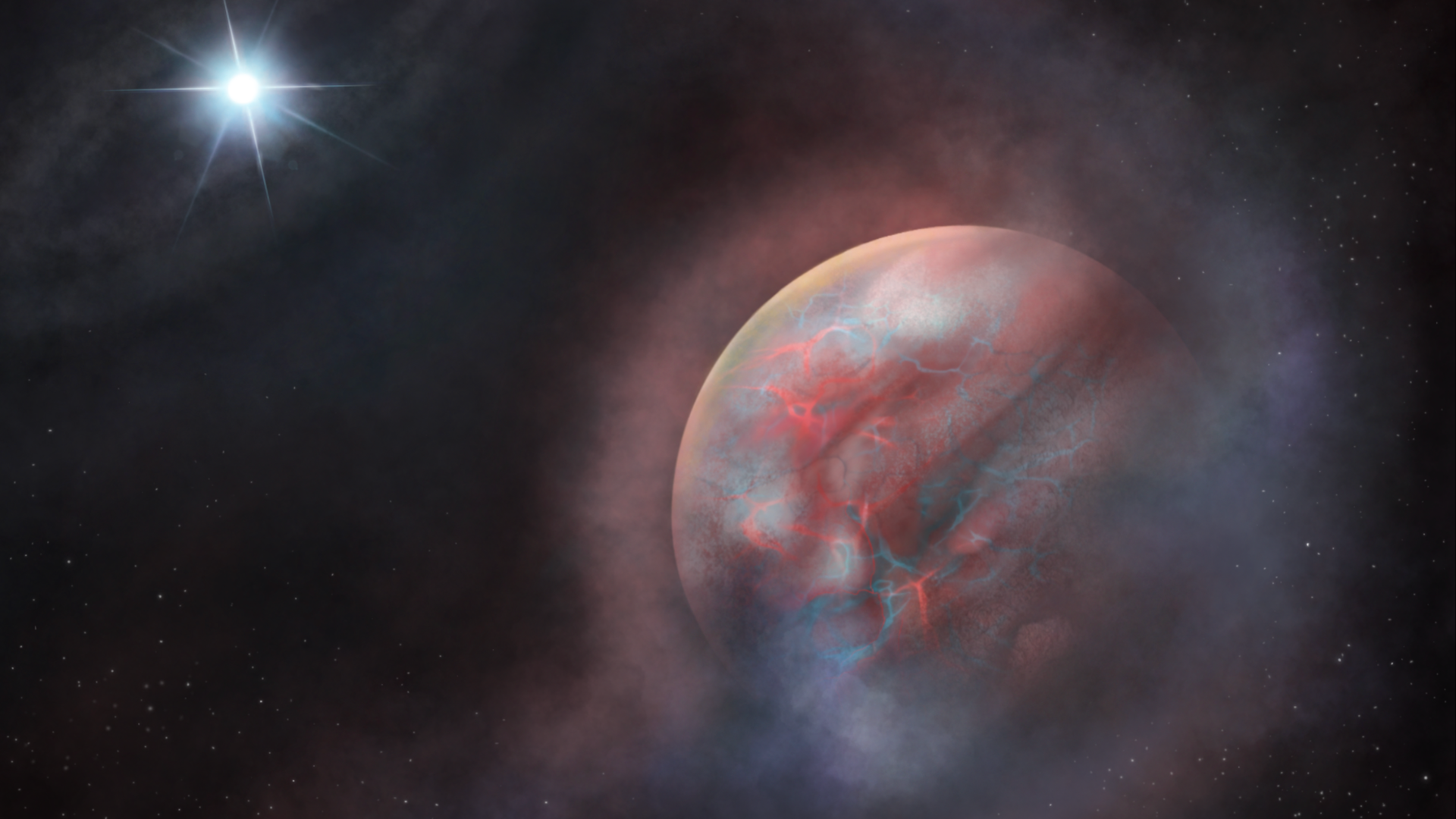
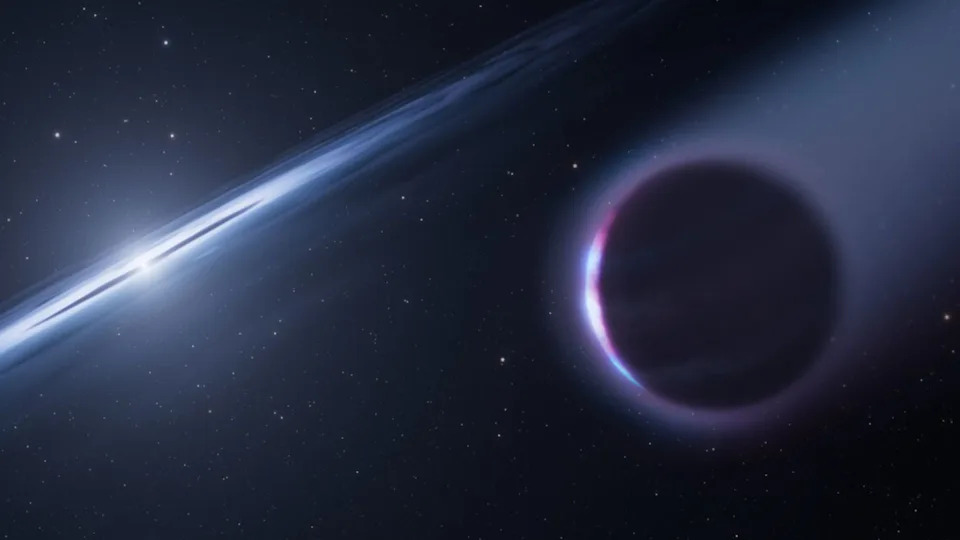
The Phoenix planet discovery has fundamentally shifted our understanding of how planetary systems evolve, proving that the death of a star does not necessarily signal the end of its planetary potential. Astronomers have identified a “second-generation” planet orbiting the white dwarf HS 0209+0832, a celestial body that appears to have formed from the recycled ashes of its own progenitor star. This landmark finding, published in the journal Nature Astronomy, suggests that planetary formation is not a one-time event occurring only at a star’s birth, but a process that can potentially repeat following a stellar death.
Key Takeaways
- A Reborn World: Scientists have found evidence of a “second-generation” planet, or “phoenix planet,” formed from the debris of a dying star.
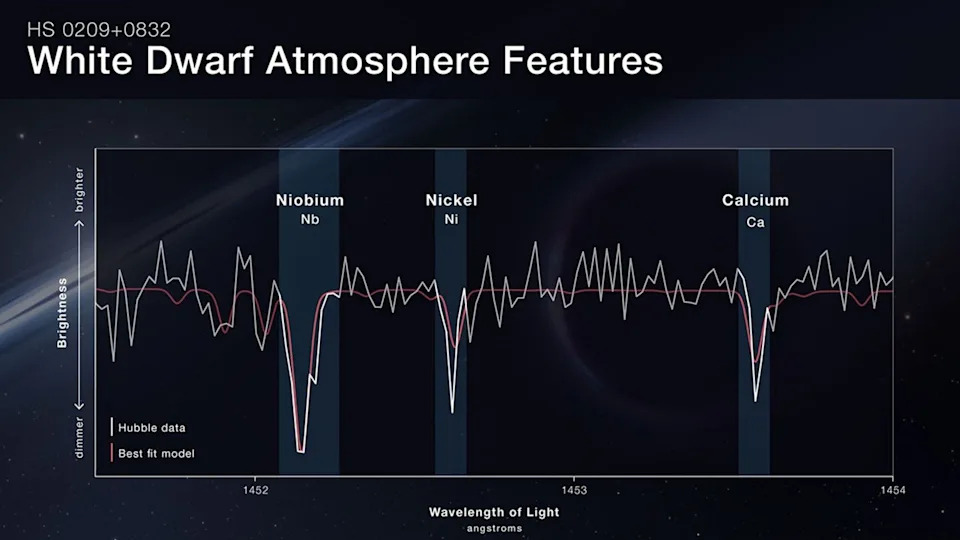
- Chemical Smoking Gun: The presence of heavy elements like niobium, zinc, and copper in the white dwarf’s atmosphere points to the “s-process” nuclear reaction.
- Unprecedented Context: While second-generation planets were theorized around pulsars, this is the first evidence of such a world orbiting a white dwarf.
- Orbital Details: Data from NASA’s TESS indicates a Jupiter-sized gas giant with a tight, 4.4-day orbital period.
- Solar System Implications: The discovery suggests that our own Sun could potentially host a second-generation planetary system after it becomes a white dwarf in approximately 6 billion years.
- The fate of the planet: Due to the intense radiation from the white dwarf, the planet’s atmosphere is likely “boiling away.” How long can such a planet survive before it is entirely consumed by its host?
- The frequency of s-process enrichment: How many other white dwarfs carry these specific chemical signatures, and how many of them host reborn worlds?
- High-resolution spectroscopy: Using advanced telescopes to more precisely map the chemical layers of the white dwarf’s atmosphere.
- Continued TESS monitoring: To confirm the mass and density of the planet candidate.
- Searching for companion stars: Identifying whether other white dwarfs with similar chemical signatures also possess the gravitational companions necessary to form protoplanetary discs.
- erc.europa.eu
- www.space.com
- thedebrief.org
- tech.yahoo.com
- www.ndtv.com
What Happened: The Discovery of HS 0209+0832
In a study led by the University of Warwick and funded by the European Research Council (ERC), an international team of astronomers announced the identification of a unique planetary system orbiting the white dwarf HS 0209+0832. Unlike “first-generation” planets, which form from the original protoplanetary disc during a star’s initial birth, this new world is believed to have condensed from the material the host star cast off during its transition from a red giant to a white dwarf.
According to Jamie Williams, a PhD student at the University of Warwick and the study’s first author, the discovery was “completely unexpected.” Williams described the phenomenon as finding a planet that has “risen from the ashes of the very star it once orbited.”
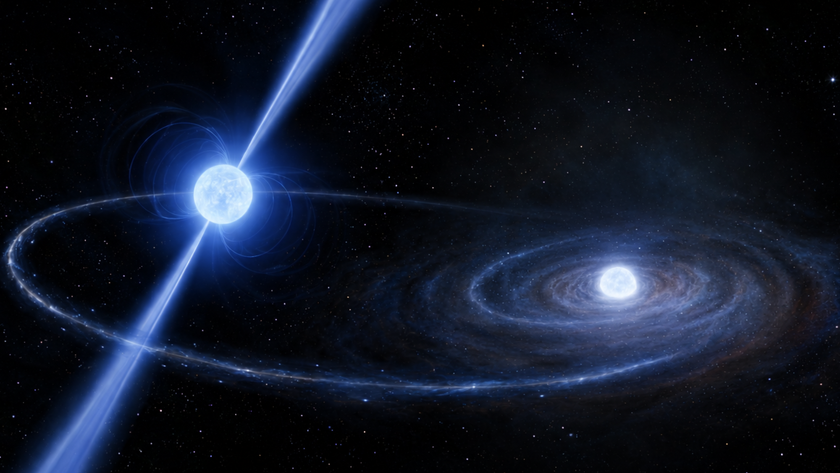
Researchers utilized data from NASA’s Transiting Exoplanet Survey Satellite (TESS) to detect a regular, repeating dip in the star’s brightness. This signal, occurring every 4.4 Earth days, is consistent with a large, Jupiter-sized gas giant in a very close orbit. The team’s analysis suggests that this planet is likely “tidally locked,” meaning one side perpetually faces the star while the other remains in darkness.
Why It Matters: Challenging Stellar Evolution Models
This discovery is transformative because it provides the first direct observational evidence that planetary systems can be cyclical. For decades, the death of a star—particularly the expansion into a red giant and the subsequent shedding of outer layers—was viewed as a terminal event for any orbiting planets. While scientists had previously hypothesized that second-generation planets might exist around pulsars (the remnants of much more violent supernova explosions), finding one around a white dwarf, which is a much more common stellar remnant, changes the scale of the phenomenon.
If these “phoenix planets” are more common than previously thought, it necessitates a complete revision of how astrophysicists model the long-term evolution of planetary systems. It suggests that the “end” of a solar system might actually be a period of intense chemical enrichment and potential rebirth.
The Chemical “Smoking Gun” of the S-Process
The most compelling evidence for the planet’s second-generation status lies in the chemical composition of the white dwarf’s atmosphere. Typically, when a white dwarf accretes material from surrounding debris, that material is composed of common rock-forming elements such as silicon and iron. However, the atmosphere of HS 0209+0832 presented a startling anomaly.
Astronomers detected unusually high concentrations of heavy metals, specifically zinc, copper, and niobium. Most significantly, the level of niobium was found to be more than 1,000 times higher than the levels found in our own Sun.
Dr. Nicholas Stone of the University of Wisconsin-Madison explained that this specific elemental pattern is the hallmark of the “s-process.” This is a series of nuclear reactions that occur within the bloated, dying shells of red giant stars, synthesizing heavy elements.
“It’s a chemical signature no ordinary, ‘first-generation’ planet should carry, which told us that this new planet was something different,” Dr. Stone said. Because these elements are forged deep within a dying star, their presence in the white dwarf’s atmosphere proves the star is consuming material that was created during its own death throes.
| Feature | First-Generation Planet | Second-Generation (Phoenix) Planet |
|---|---|---|
| Formation Timing | During the star’s initial birth | From debris of a dying star |
| Primary Elements | Silicon, Iron, Oxygen | Niobium, Zinc, Copper |
| Nuclear Origin | Original stellar nebula | The “s-process” in red giants |
| System Context | Survives the star’s life | Reborn from the star’s death |
How a Dying Star Creates a New World
To understand how a planet can be “reborn,” one must look at the violent lifecycle of a star similar to our Sun. As a star exhausts its hydrogen fuel, it expands into a massive red giant. During this phase, it sheds its outer layers of gas and dust into space.
In an isolated system, this material would typically dissipate into the interstellar medium, scattering into the void. However, the researchers propose that HS 0209+0832 likely possessed a companion star. This companion would have provided the necessary gravitational influence to prevent the expelled gas from escaping, instead pulling it back into a stable, spinning protoplanetary disc around the remaining white dwarf core.
Within this dusty, heavy-element-rich nursery, new rocks and gases could begin to clump together. Over time, this material coalesced into the Jupiter-sized gas giant detected by TESS.
What It Means for You: The Future of the Solar System
While this discovery occurs in a system located hundreds of light-years away, its implications reach much closer to home. It provides a theoretical framework for the eventual fate of our own Solar System.
In approximately 6 billion years, the Sun is projected to exhaust its hydrogen fuel. It will expand into a red giant, likely consuming the inner planets like Mercury and Venus, and eventually shedding its mass to become a white dwarf. For a long time, this was viewed as the definitive end of our cosmic neighborhood.
However, the existence of the phoenix planet suggests that if our Sun has a companion star or sufficient gravitational turbulence, the material it sheds could potentially coalesce into a “Solar System 2.0.” This could lead to the formation of a new generation of planets, potentially orbiting the white dwarf remnant of our Sun. While this is far beyond the timescale of human civilization, it changes the narrative of our solar system from one of inevitable extinction to one of potential recycling and renewal.
Counterpoints and Open Questions
Despite the excitement, the scientific community remains cautious. The primary caveat is that the planet is currently classified as a “planet candidate.” While the 4.4-day brightness signal is highly consistent with a transiting planet, further observations are required to definitively rule out other celestial phenomena that could cause similar periodic dips in light.
Furthermore, the formation of a second-generation planet is described by researchers as an “extremely rare” and difficult process. The requirement of a companion star to corral the expelled material into a disc adds a significant layer of complexity. This suggests that while phoenix planets are possible, they may be exceptional outliers rather than a common stage of stellar evolution.
Other open questions include:
What Happens Next
Moving forward, the discovery of HS 0209+0832 provides a new roadmap for exoplanet hunting. Astronomers will no longer look solely for planets orbiting young, stable stars; they will now target white dwarfs that exhibit anomalous concentrations of niobium, zinc, and copper.
Upcoming research will likely focus on:
Frequently Asked Questions
What is a “second-generation” planet?
Most planets we know, including Earth, are “first-generation” planets. They formed from the original cloud of gas and dust that collapsed to create a star. A “second-generation” planet, or phoenix planet, is one that forms much later, using the recycled material (the “ashes”) that a star ejects as it dies.
How did scientists know the planet was made of different material?
Scientists looked at the light coming from the white dwarf star. They found that the star’s atmosphere contained much higher levels of heavy elements like niobium and zinc than is normal. Because these elements are produced during a star’s death phase (the “s-process”), their presence indicates the star is eating material from a planet made of that specific stellar debris.
Is this planet similar to Earth?
No. Based on the data from NASA’s TESS, the detected object is a Jupiter-sized gas giant. Because it orbits extremely close to its white dwarf star (completing an orbit in just 4.4 days), it is likely a hot, massive world with an atmosphere that is constantly being stripped away by stellar radiation.
Will our Sun create a new planet one day?
It is possible. The research suggests that if the Sun’s mass is captured into a disc rather than escaping into space during its red giant phase, new planets could form from the remains. However, this would only happen in about 6 billion years.
Closing
The discovery of the phoenix planet orbiting HS 0209+0832 serves as a profound reminder of the universe’s capacity for renewal. By proving that planetary systems can be rebuilt from the remnants of stellar death, astronomers have opened a new chapter in our understanding of cosmic evolution, suggesting that even in the twilight of a star’s life, the seeds of new worlds may still be sown.
References
Featured image: (Image credit: Snehalata Sahu/University of Warwick.) — via Space