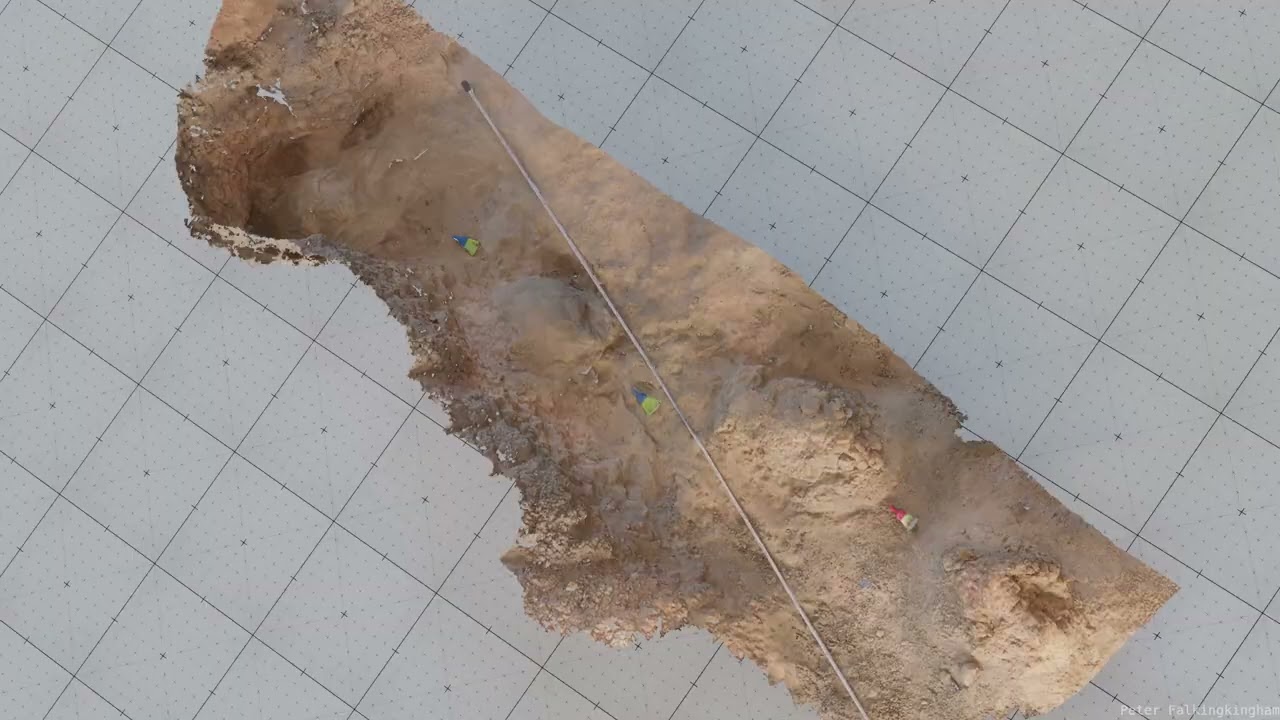
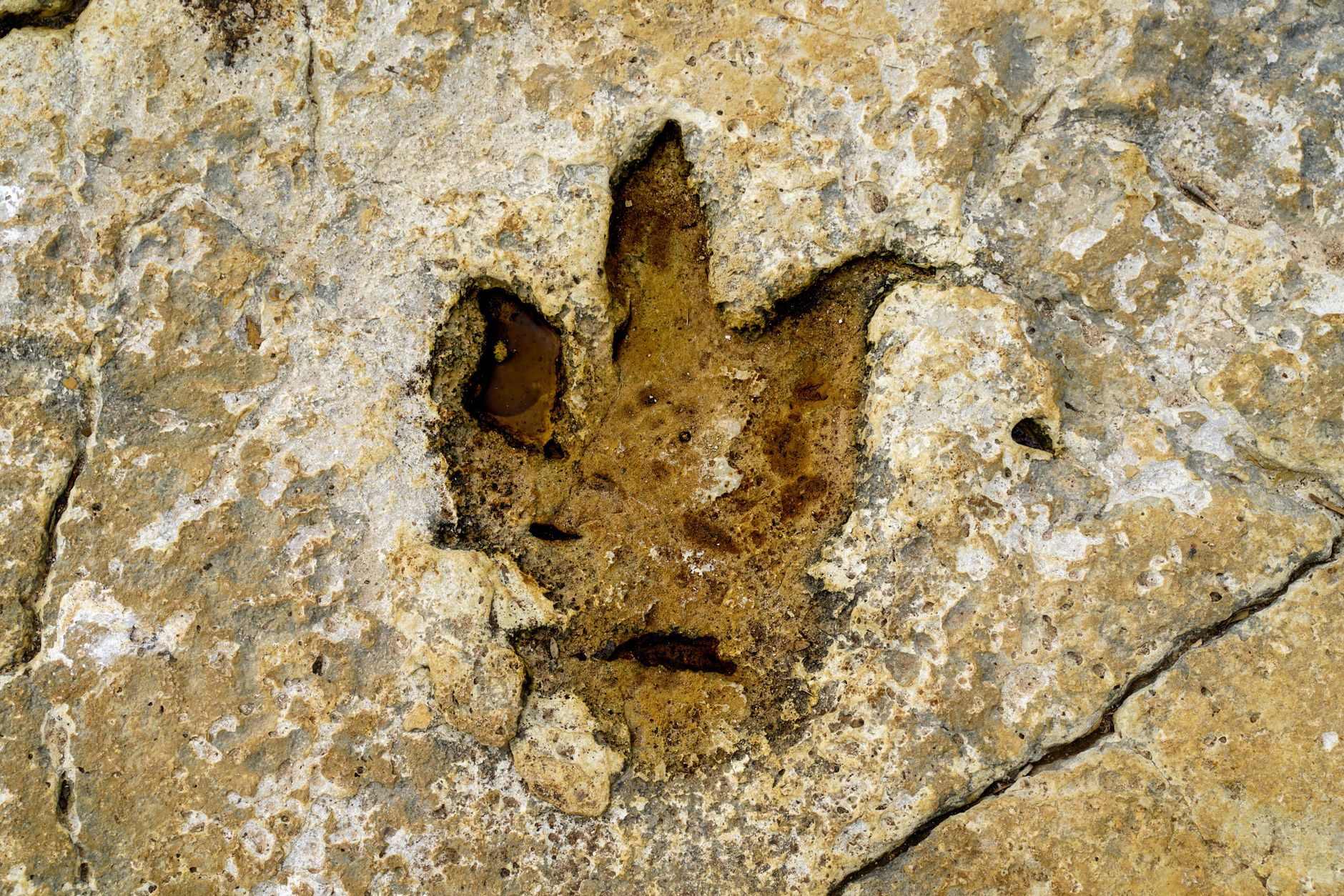
The discovery of a massive T. rex trackway in southwestern North Dakota is providing paleontologists with a rare, direct glimpse into the movement and behavior of one of history’s most famous apex predators. Researchers announced that the sequence of four enormous, three-toed footprints, which span more than 23 feet, represents what they believe is the first-ever documented trackway left by an adult Tyrannosaurus rex. Found near Marmarth, North Dakota, the tracks were preserved approximately 66 to 68 million years ago, offering a biological snapshot that skeletal remains alone cannot provide.
Key Takeaways
- First of its kind: While isolated T. rex prints have been found before, this is the first time a continuous trackway from an adult specimen has been described.
- Massive scale: The trackway consists of at least four prints, each roughly 3 feet long, indicating an adult predator.
- Behavioral insight: Based on the stride, researchers estimate the dinosaur was walking at a speed of 3.4 to 4.5 miles per hour.
- Unique preservation: Scientists believe bacteria-laden water and mineral accumulation allowed these tracks to survive in the Hell Creek Formation.
- High-tech recovery: The team used 3D scanning for documentation and is using helicopters to airlift the physical fossils out of the Badlands.
- www.smithsonianmag.com
- www.foxnews.com
What Happened
In 2025, a volunteer named Kent Hups, a high school teacher from Northglenn, Colorado, spotted an unusual protrusion while working on a dig in the Hell Creek Formation. The excavation was being led by Tyler Lyson, the senior curator of vertebrate paleontology at the Denver Museum of Nature & Science. Initially, Lyson expressed skepticism regarding the find. According to Lyson, when Hups first identified a single print, the researcher was not immediately convinced it was a dinosaur track, noting that rocks can often erode into shapes that mimic biological structures.
“Initially I wasn’t convinced because it was only one print,” Lyson told Fox News Digital. “I thought, well, if there’s three, that’s a pattern. If we can find a third print, then I’ll be a true believer.”
That belief was confirmed within 30 minutes of further digging. The team uncovered a sequence of four footprints—two left and two right—stretching over 23 feet. The findings were officially published on September 8, 2025, in the Journal of Vertebrate Paleontology, though some reports regarding the announcement surfaced in September 2026. The discovery site is located on federal land administered by the U.S. Forest Service in the rugged terrain near Marmarth.
Why It Matters
This discovery is scientifically significant because it shifts the focus from anatomy to behavior. While the fossil record is rich with T. rex bones, bones only tell us about the physical structure of the animal. A trackway, however, captures a specific moment in time—a “moment of behavior,” as Lyson described it. By analyzing the distance between prints and the depth of the impressions, scientists can reconstruct how the animal moved, how it navigated its environment, and its likely gait.
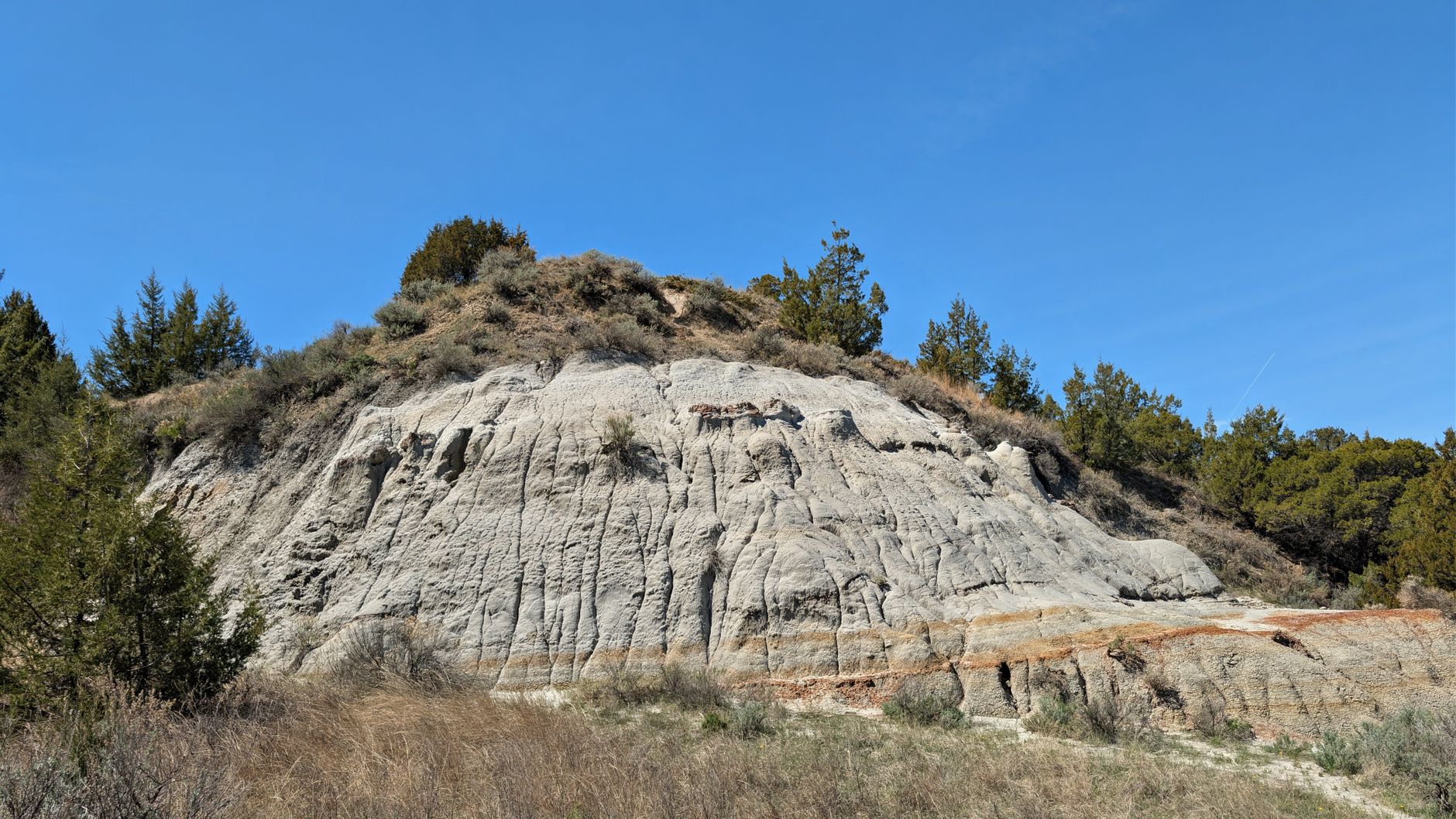
Furthermore, the Hell Creek Formation is a well-known geologic layer spanning parts of Montana, Wyoming, and the Dakotas, famous for its abundance of T. rex fossils. However, large theropod trackways are exceptionally rare in this region. The environmental conditions of the Hell Creek Formation were typically riparian, consisting of floodplains and braided streams where footprints would normally erode quickly due to water movement and sediment shifts. The existence of this trackway suggests a highly specific and unusual set of preservation conditions that allowed these impressions to survive for tens of millions of years.
The Science of Fossil Preservation
To understand how these massive prints survived 66 million years of erosion, researchers point to a complex chemical process involving water and microbiology. The leading hypothesis suggests that the footprint depressions were initially filled with water that was heavily laden with bacteria.
This biological presence created a unique chemical environment. As the water sat in the depressions, dissolved minerals—specifically calcium carbonate and sandstone—began to accumulate in layers within the prints. Over millions of years, these minerals solidified, forming a dense mass that was significantly harder than the surrounding mud and sediment. As the softer material around the tracks eventually eroded away, it left behind the hardened mineral deposits as raised, three-dimensional casts. This process is why the tracks appear as distinct, physical objects rather than mere hollow indentations in the rock.
Detailed Data and Comparisons
To provide context for the scale of this find, it is helpful to compare the North Dakota discovery with other significant dinosaur finds and the known characteristics of the T. rex.
| Feature | T. rex Trackway (ND) | Sauropod Trackway (CO) | T. rex Skeleton (“Stan”) |
|---|---|---|---|
| Location | Marmarth, North Dakota | Colorado | N/A |
| Age | ~66–68 Million Years | ~150 Million Years | ~66 Million Years |
| Type | Trackway (4+ prints) | Trackway (134 prints) | Skeletal Remains |
| Key Detail | 23 feet long; 3ft prints | Longest continuous trackway | Sold for $31.8M in 2020 |
| Primary Value | Behavioral analysis | Movement patterns | Anatomical study |
Stakeholders and Reactions
The discovery has elicited profound reactions from both the scientific community and the amateur enthusiasts who facilitate much of the field’s groundwork. Kent Hups, the volunteer who first spotted the prints, emphasized the emotional weight of the find.
“As a teacher, I’m always telling my students that science starts with curiosity, passion and careful observation,” Hups said. “I never imagined that could lead me to a discovery like this. Everybody hopes that they find that thing… But you never think you’re going to find something that is the only one in the world.”
For the Denver Museum of Nature & Science, the discovery is a major win for their vertebrate paleontology department. The museum is now tasked with the delicate process of recovering and preserving the tracks. The project involves high-level coordination with the U.S. Forest Service to ensure the federal land is protected during the extraction process.
Analysis: The Role of Technology in Modern Paleontology
The investigation of the T. rex trackway highlights how much the field has changed through the integration of digital technology. Because the site is located in a rugged, difficult-to-access part of the Badlands, researchers could not rely solely on physical measurements.
Instead, the team employed high-resolution 3D surface scanning to create incredibly detailed digital models of the footprints. This allowed Peter Falkingham, a paleobiology professor at Liverpool John Moores University, to conduct a thorough analysis remotely. Even without being physically present at the site in North Dakota, Falkingham was able to examine the morphology of the toes and the depth of the prints using the 3D data. This remote collaboration is becoming a standard in global paleontology, allowing experts to study fossils without the logistical burden of international travel and the risk of damaging fragile specimens.
What It Means for You
For students, educators, and aspiring scientists, this discovery serves as a practical case study in the scientific method. The story of Kent Hups—moving from a casual observation to a discovery that changes the scientific understanding of an apex predator—underscores the importance of persistence and careful observation in field research.
For the general public and dinosaur enthusiasts, this find signals a shift in how we interact with prehistoric history. We are moving beyond looking at “monsters” in museums and starting to understand them as living, breathing animals that moved, walked, and perhaps even limped through their environments. If you follow paleontological news, expect more discoveries to focus on these “behavioral snapshots” rather than just finding more bones.
Counterpoints and Open Questions
Despite the excitement, several questions remain unanswered. While the size and shape of the prints strongly suggest an adult Tyrannosaurus rex, some skeptics in the field might argue that size alone is not a definitive indicator of age, as extreme variations in individual growth or species-specific traits can occur.
Additionally, the preservation of these tracks is a double-edged sword. While the mineralized casts are more durable than mud, they are still subject to the relentless forces of erosion in the North Dakota Badlands. There is an ongoing risk that the very process of excavating the tracks could damage the fine details that make them so valuable, such as potential skin impressions.
Another open question involves the exact speed of the animal. The estimate of 3.4 to 4.5 miles per hour is based on the stride length and the size of the feet, but factors such as the terrain’s slope or the animal’s weight distribution could influence these calculations. Researchers will need to refine their models as more data becomes available from the physical specimens.
What Happens Next
The immediate future of the T. rex trackway involves a complex logistical operation. In October, crews are scheduled to begin the physical recovery of three of the footprints. Due to the rugged nature of the terrain, the team cannot simply drive vehicles to the site. Instead, the footprints will be wrapped in plaster and burlap to stabilize them, then placed into a helicopter net to be airlifted out of the Badlands.
Once the tracks arrive at the Denver Museum of Nature & Science, a meticulous cleaning process will begin. Tyler Lyson has expressed hope that this cleaning process might reveal even more granular details, including preserved skin impressions. If skin impressions are found, it would provide unprecedented data regarding the integument of the T. rex, potentially settling long-standing debates about whether these animals possessed scales, feathers, or a combination of both.
Frequently Asked Questions
How fast was the T. rex walking when it left these tracks?
Based on the stride length and the size of the footprints, researchers estimate the dinosaur was walking at a speed of between 3.4 and 4.5 miles per hour. This is comparable to the walking pace of a human today.
Why is this trackway so rare in the Hell Creek Formation?
The Hell Creek Formation was a riparian environment with floodplains and streams. In such settings, footprints in soft mud are usually washed away or eroded by water and sediment movement. This specific trackway survived due to a unique chemical process involving bacteria and mineral accumulation that turned the prints into hard, stone-like casts.
Is this the first time a T. rex footprint has been found?
No, isolated T. rex footprints have been identified in the past, including in locations like Montana and New Mexico. However, this is the first time scientists have described a continuous trackway—a sequence of multiple footprints—left by an adult T. rex.
How are the scientists moving such large fossils?
Because the tracks are located in a rugged, remote area of the North Dakota Badlands, the team plans to use helicopters. The footprints will be encased in plaster and burlap for protection and then airlifted to the museum for further study.
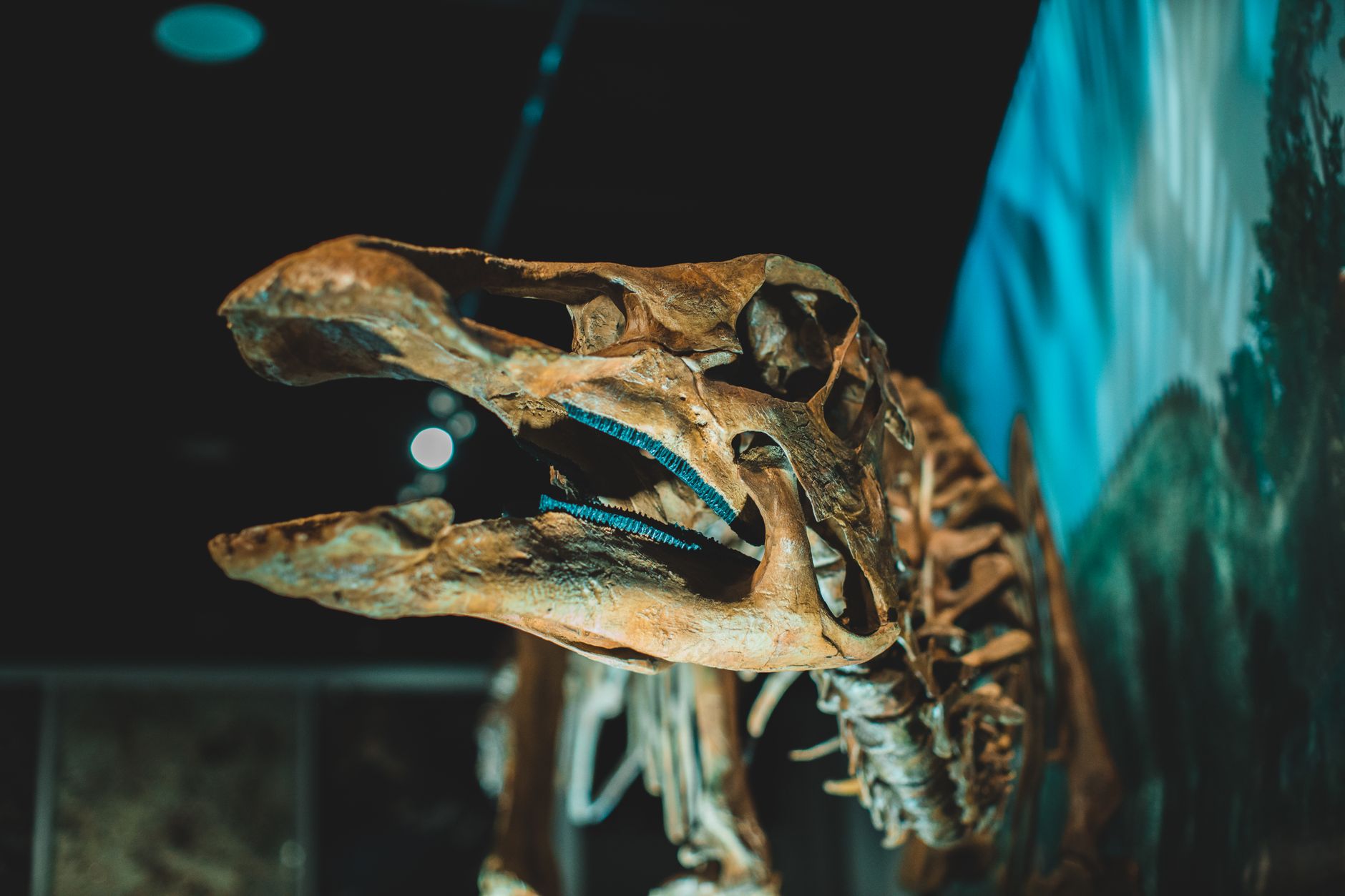
The discovery of the T. rex trackway near Marmarth marks a significant milestone in North American paleontology
References
Featured image: Image via Smithsonian Magazine