
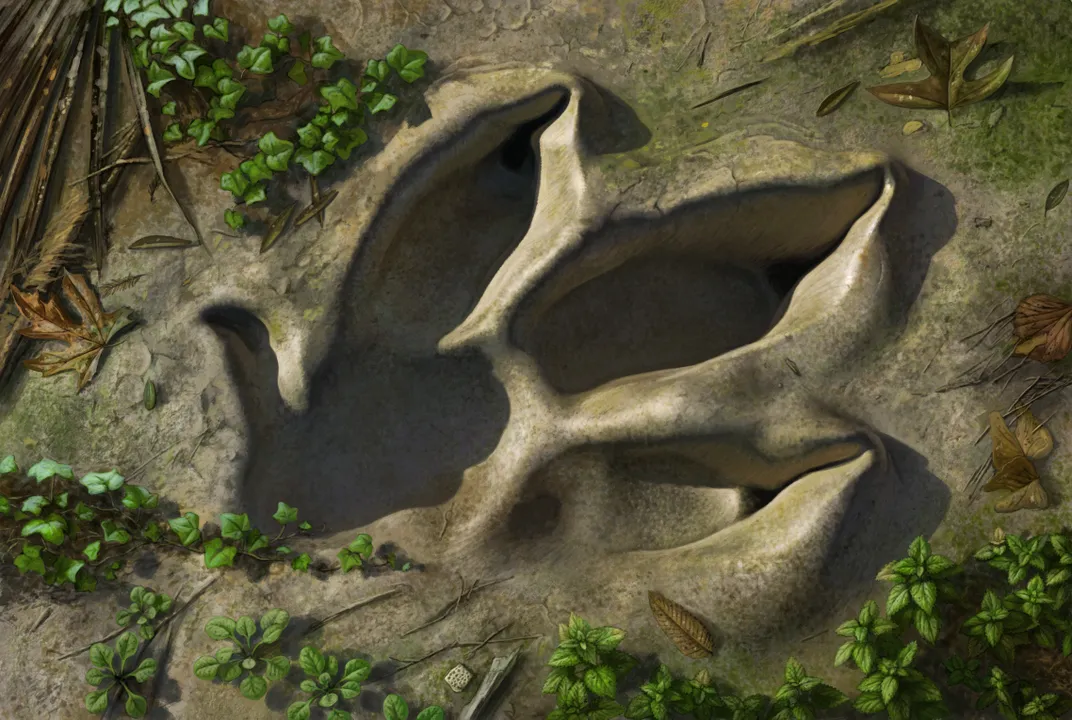
The discovery of an unprecedented T. rex trackway in southwestern North Dakota is providing scientists with a rare, dynamic look at the movements and behavior of the world’s most famous apex predator.
Key Takeaways
- First of its kind: Researchers believe this is the first-ever documented sequence of tracks—a trackway—left by an adult Tyrannosaurus rex.
- Massive scale: The trackway spans more than 23 feet and consists of at least four, and potentially five, enormous three-toed prints.
- Behavioral insights: Unlike skeletal fossils, these tracks allow scientists to estimate the dinosaur’s walking speed, calculated at between 3.4 and 4.5 miles per hour.
- Location: The find was located in the Hell Creek Formation near Marmarth, North Dakota, on federal land managed by the U.S. Forest Service.
- Extraction underway: Three of the massive footprints are slated for airlift via helicopter in October to undergo preservation at the Denver Museum of Nature & Science.
- For Students and Educators: This find serves as a real-world case study in how curiosity and meticulous observation can lead to global scientific breakthroughs.
- For Science Enthusiasts: The ability to study “behavioral fossils” opens new doors for reconstructing entire ecosystems, not just individual animals.
- For Future Generations: The preservation of these tracks through 3D scanning ensures that even if the physical site is lost to natural erosion, the data remains available for digital study indefinitely.
- Cleaning and Refinement: Carefully removing sediment to see if skin textures or more fine-grained anatomical details are present.
- Advanced Modeling: Using the physical specimens to validate and expand upon the initial 3D scans.
- Comparative Studies: Comparing these prints to the few other known adult T. rex tracks in New Mexico and Montana to see if there are regional variations in gait or foot structure.
- www.smithsonianmag.com
- www.foxnews.com
What Happened: A Discovery in the Badlands
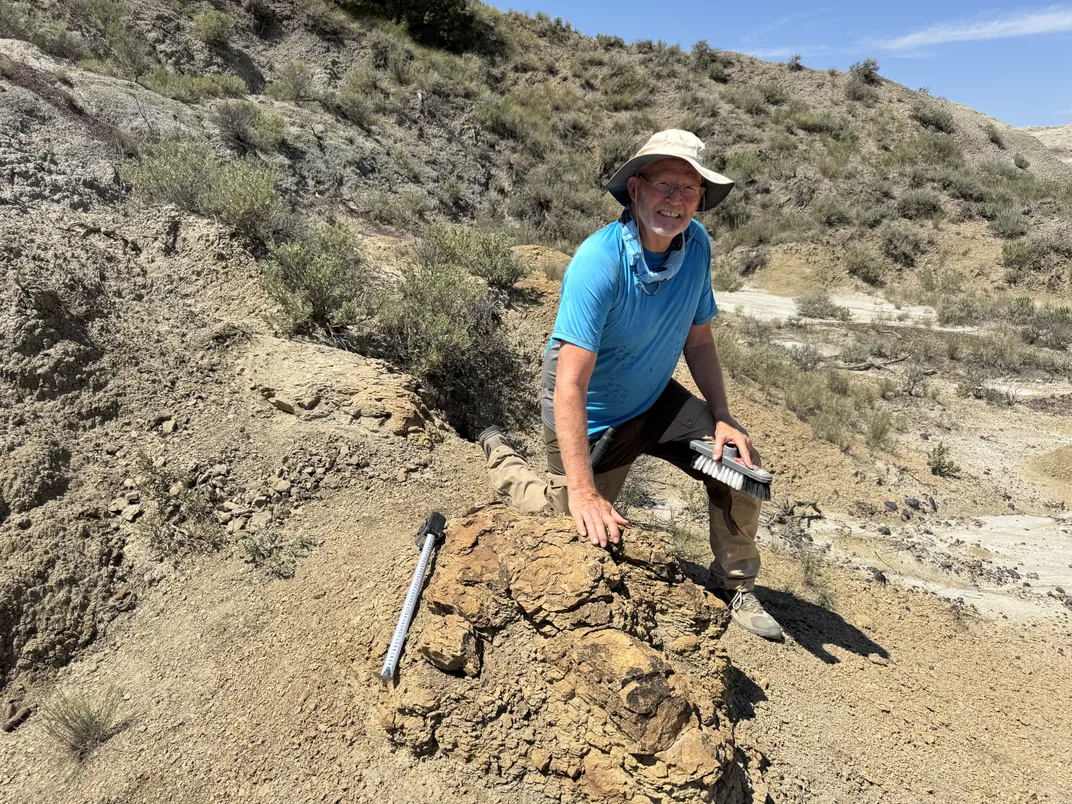
In a finding published in the Journal of Vertebrate Paleontology in early September 2026, paleontologists announced the identification of a significant T. rex trackway in the Hell Creek Formation. The discovery, which centers on the rugged terrain near Marmarth, North Dakota, was first made in 2025 by Kent Hups, a high school teacher and amateur fossil hunter from Northglenn, Colorado.
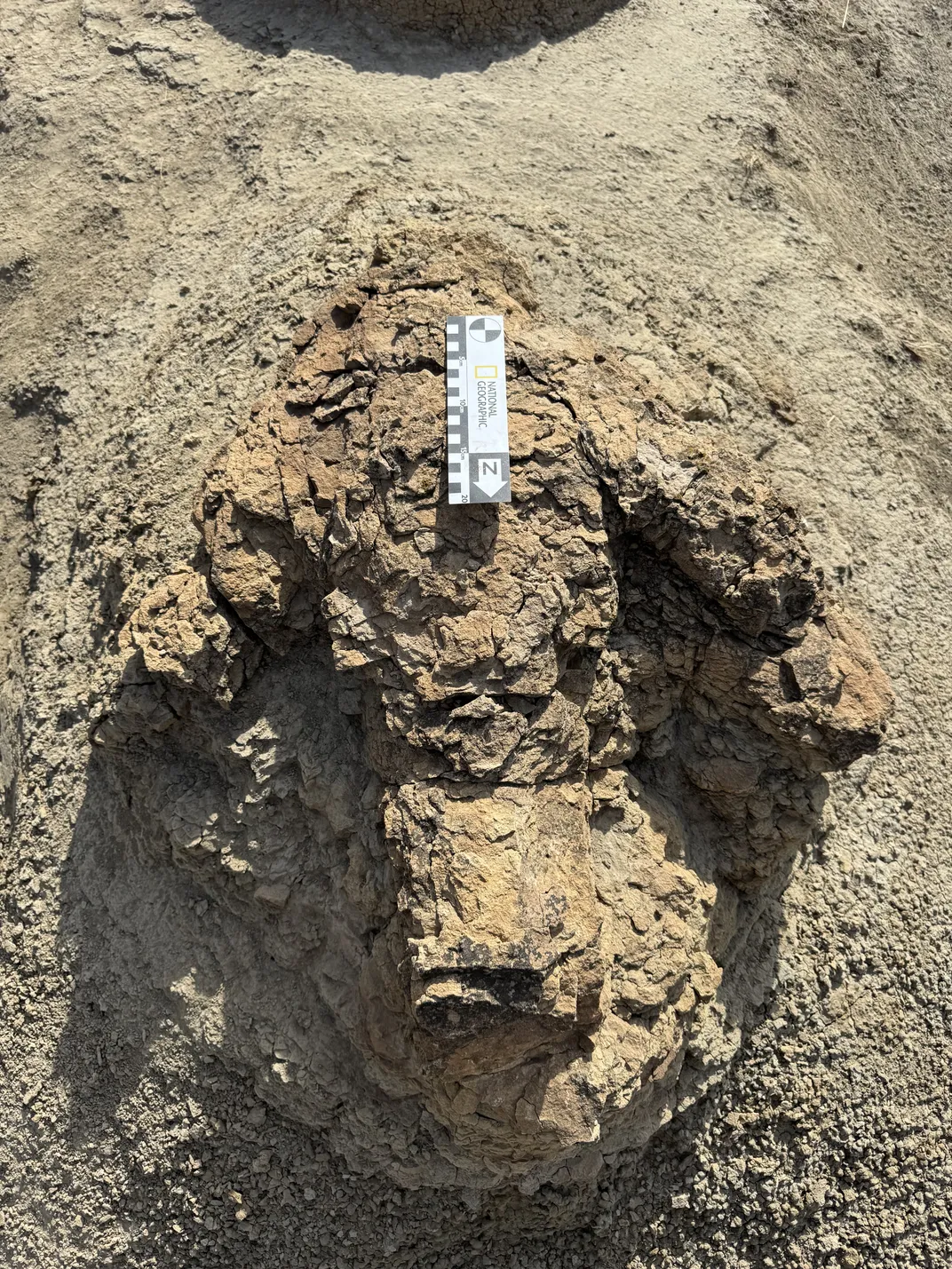
While volunteering on a dig, Hups spotted what appeared to be a single, massive indentation in the rock. Initially, the discovery seemed isolated, but as researchers began to investigate the site more closely, a pattern emerged. Tyler Lyson, the senior curator of vertebrate paleontology at the Denver Museum of Nature & Science and a co-author of the study, admitted to initial skepticism.
“Initially I wasn’t convinced because it was only one print,” Lyson told Fox News Digital. He noted that rocks can often erode into shapes that mimic biological structures. “I thought, well, if there’s three, that’s a pattern. If we can find a third print, then I’ll be a true believer.”
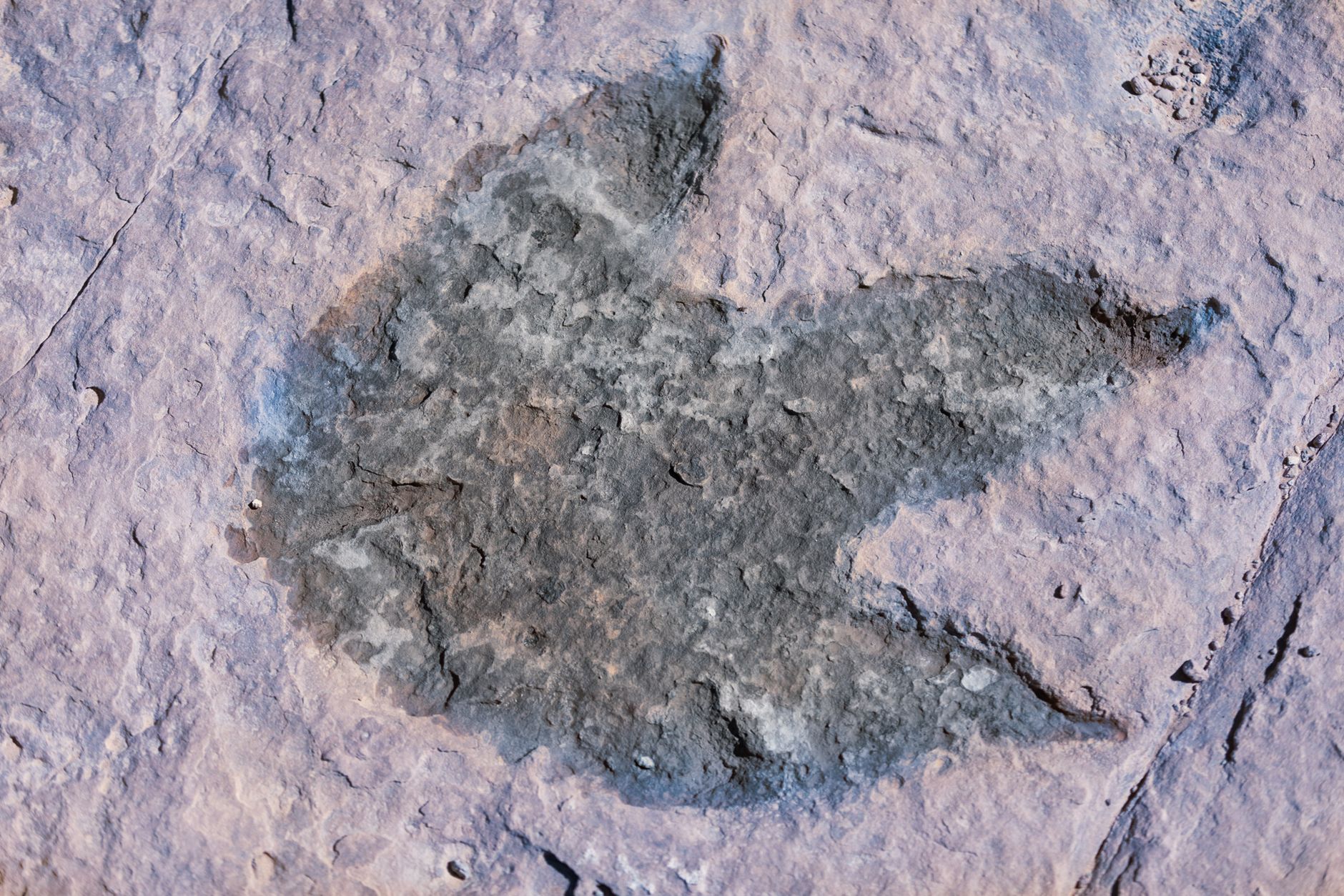
That belief was solidified within 30 minutes of further excavation. The team struck a third print, followed by a fourth, and eventually a fifth print during a return trip to the site this summer. The resulting sequence—consisting of two left and two right footprints—stretches across more than 23 feet of terrain. Each individual print is approximately 3 feet long, a size that led researchers to conclude the animal was an adult.
Why It Matters: Behavior vs. Anatomy
In the field of paleontology, the distinction between skeletal remains and trackways is fundamental. For decades, our understanding of the Tyrannosaurus rex has been built primarily on bones—teeth, skulls, and limb bones that tell us about the animal’s physical structure, diet, and size. However, bones are static; they do not capture the living essence of an animal’s movement.
“Bones tell us an enormous amount about these animals, but footprints capture a moment of behavior,” Lyson explained. “With a trackway, we can actually follow an animal as it moved across the landscape. That is incredibly rare for T. rex.”
By analyzing the stride length—which was approximately 13 feet between steps—and the size of the prints, researchers were able to calculate an estimated walking speed of 3.4 to 4.5 miles per hour. This speed is remarkably similar to the walking pace of modern humans, providing a tangible sense of how this massive predator navigated its environment.
Comparing Fossil Types
| Feature | T. rex Trackway Discovery | Typical T. rex Skeleton |
|---|---|---|
| Primary Data Type | Behavioral (movement/speed) | Anatomical (structure/size) |
| Geologic Context | Hell Creek Formation (ND) | Various (MT, WY, SD, etc.) |
| Key Evidence | 23-foot sequence of prints | Fossilized bones and teeth |
| Scientific Value | Gait and locomotion patterns | Biological and evolutionary history |
The Science of Fossilization in the Hell Creek Formation
To understand how these tracks survived for 66.5 million years, one must look at the unique environmental conditions of the Hell Creek Formation. This geologic layer, which spans parts of Montana, the Dakotas, and Wyoming, was once a swampy, riparian habitat characterized by forested landscapes and river systems.
Researchers believe the preservation of these specific prints was the result of a precise chemical process. The depressions left by the T. rex feet were likely filled with water laden with bacteria. This created a specific chemical environment where dissolved minerals, specifically sandstone and calcium carbonate, accumulated in successive layers. Over millions of years, these minerals hardened, creating a mass that was more durable than the surrounding mud, effectively “locking” the footprints in place.
Digital Reconstruction and Remote Analysis
Because the site is located in the rugged, difficult-to-access Badlands, the team utilized modern technology to ensure the data was preserved even if the physical site succumbed to erosion. They employed high-resolution 3D surface scanning to create detailed digital models of the entire trackway.
This technology allowed for a unique collaborative effort. Peter Falkingham, a paleobiology professor at Liverpool John Moores University in England and the study’s lead author, was able to conduct a thorough analysis of the footprints remotely. Using the 3D data, Falkingham could examine the depth, angle, and shape of the toes without ever having visited the North Dakota site in person.
Stakeholders and the Human Element of Discovery
The discovery highlights the vital role that amateur enthusiasts play in modern science. Kent Hups, the high school teacher who first spotted the print, expressed the profound impact of the find.
“As a teacher, I’m always telling my students that science starts with curiosity, passion and careful observation,” Hups said. “I never imagined that could lead me to a discovery like this. Everybody hopes that they find that thing… But you never think you’re going to find something that is the only one in the world.”
For the Denver Museum of Nature & Science, the discovery represents a significant addition to their research capabilities and a major logistical undertaking. The museum is currently coordinating with the U.S. Forest Service to manage the extraction of the fossils from federal land.
What It Means for You
While a prehistoric footprint may seem distant from daily life, discoveries like the T. rex trackway have broader implications for how we understand the history of life on Earth:
Counterpoints and Open Questions
Despite the excitement, the discovery is not without its challenges and uncertainties.
The Risk of Erosion: The very environment that preserved the tracks—a dynamic, riparian landscape—is also what threatens them. The tracks are highly susceptible to natural erosion, which is why the decision to airlift them was made.
The Rarity Problem: Large theropod footprints are exceptionally rare in the Hell Creek Formation. Some scientists suggest this may be due to the historical floodplain environment, which might not have been as conducive to preserving large tracks as other geologic formations. This leaves an open question: Was the T. rex less common in these specific swampy areas, or are we simply missing the majority of the evidence due to poor preservation conditions?
Unconfirmed Biological Details: While the size and shape of the toes strongly suggest an adult T. rex, researchers are still working to confirm if these tracks might belong to a different, closely related large theropod. Furthermore, while Tyler Lyson expressed hope that the tracks might contain preserved skin impressions, this remains unconfirmed and would require extremely delicate cleaning processes.
What Happens Next
The immediate future of the T. rex trackway involves a high-stakes logistical operation. In October 2026, specialized crews are scheduled to return to the site. The plan involves wrapping three of the most significant footprints in plaster and burlap to create protective casts. Once encased, these heavy blocks will be placed into a helicopter net and airlifted out of the rugged North Dakota Badlands.
Once the fossils arrive at the Denver Museum of Nature & Science, the long-term scientific work will begin. Researchers will focus on:
Frequently Asked Questions
How old are the T. rex footprints?
The footprints were made approximately 66 to 68 million years ago, during the late Cretaceous period. They were formed in the sediment of what is now the Hell Creek Formation.
How fast was the T. rex walking?
Based on the stride length of about 13 feet and the size of the three-foot-long prints, researchers estimate the dinosaur was walking at a speed of approximately 3.4 to 4.5 miles per hour.
Why is this trackway different from finding a T. rex bone?
Finding a bone tells us about the animal’s anatomy—how big it was and what it looked like. Finding a trackway tells us about its behavior—how it moved, how fast it walked, and how it interacted with the ground and environment.
Where exactly were the tracks found?
The tracks were discovered near Marmarth, North Dakota, in a region known as the Hell Creek Formation. The land is managed by the U.S. Forest Service.
Closing
The discovery of the T. rex trackway marks a milestone in North American paleontology. By moving beyond the study of static bones and into the realm of prehistoric movement, scientists are closer than ever to understanding the living, breathing reality of the Cretaceous period’s most iconic predator.
References
Featured image: Andrey Atuchin — via Smithsonian Magazine


One thought on “T. rex Trackway Found in North Dakota: Why It Matters”