
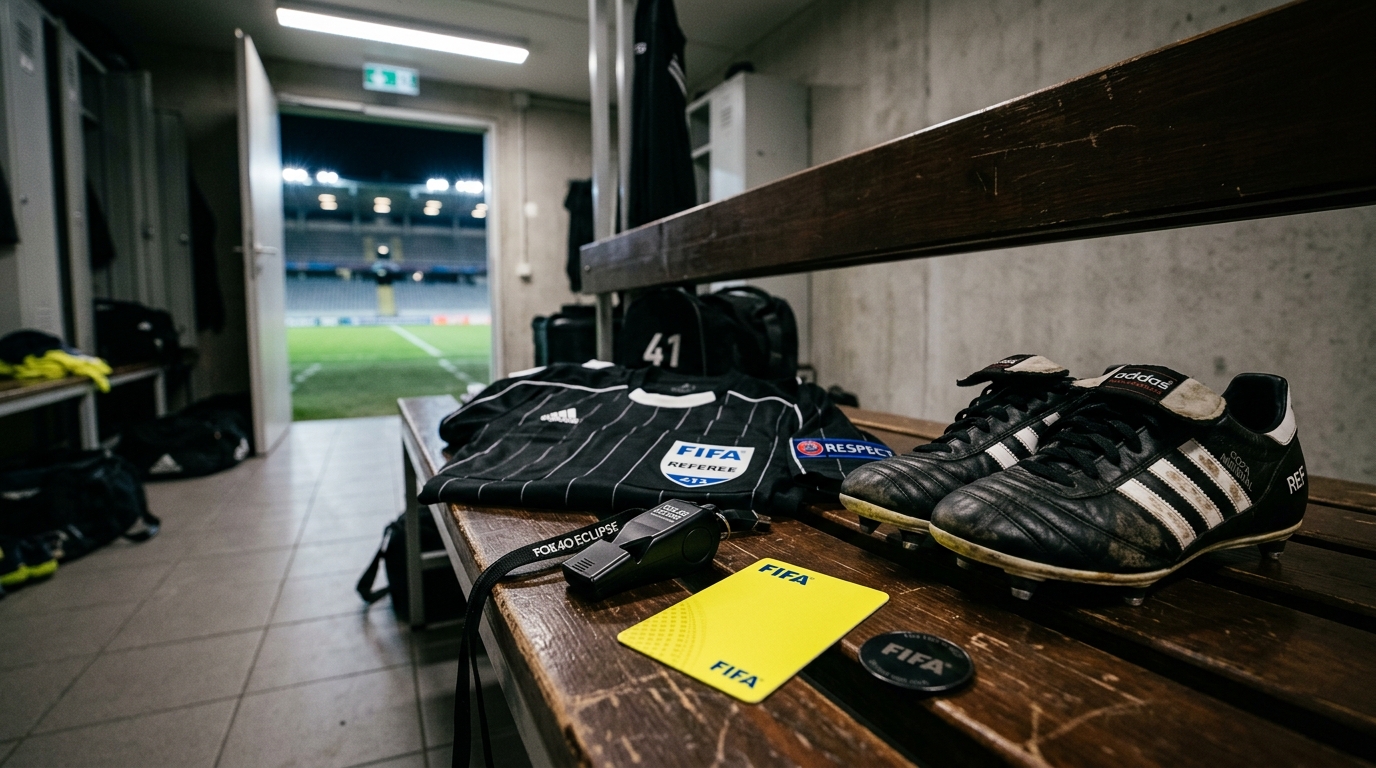
English VAR Analysis: Navigating the officiating Crisis in 2026
English VAR analysis has become the most contentious aspect of modern football, transforming the beautiful game into a landscape of protracted delays and heated debate. As someone who has spent two decades following European leagues, I have seen the sport evolve from the visceral, high-speed passion of the early 2000s to a clinical, often frustrating experience defined by freeze-frames and digital lines. The system, once promised as a savior of integrity, now feels like a barrier between the supporter and the pitch. We are currently facing a critical juncture where the Premier League and IFAB must decide whether to continue this high-tech experiment or fundamentally re-engineer the protocol to prioritize the flow of play over absolute, sterile perfection.
Quick Summary
English VAR implementation is under intense scrutiny due to inconsistent application of rules in high-stakes matches.
The fundamental issue centers on the subjective interpretation of the “clear and obvious” threshold by officials.
Proposed reforms include real-time audio transparency and the integration of semi-automated offside technology (SAOT).
Financial consequences for clubs are immense, leading teams to treat officiating trends as critical data points for tactical planning.
The best path forward likely involves a minimalist approach, limiting intervention to objective binary calls rather than subjective opinions.
Can We Fix the System? A Direct Answer
If you are searching for a direct answer regarding the future of officiating: yes, the system can be salvaged, but only by removing the human element from subjective calls. The most effective step the league can take is a full-scale move to semi-automated offside technology (SAOT). By removing the human error of drawing lines on a screen, we eliminate the primary source of frustration. Furthermore, referees need to adopt a “minimalist interference” philosophy. If a check takes longer than 60 seconds, the original decision on the field should stand. This approach would restore the speed of the game while still preventing catastrophic, undisputed howlers that damage the league’s reputation.
The Anatomy of the Officiating Crisis
When I sit down to conduct a proper English VAR analysis, I often find that the frustration stems from a fundamental disconnect between the rulebook and the reality of live football. We are watching a game played at supersonic speeds being judged by officials looking at granular, frame-by-frame replays that ignore the kinetic energy and context of a tackle or a challenge. The “clear and obvious” mantra has lost its meaning. In practice, it has become a mechanism for the booth to re-referee the entire game, often leading to decisions that technically follow the letter of the law but violate the spirit of the sport.
One evening last season, I was watching a match from the stands, and the crowd spent six minutes in complete silence while officials checked a potential handball. The energy in the stadium completely evaporated. When the goal was finally chalked off for a touch so faint it required five different camera angles to spot, the feeling wasn’t one of justice—it was one of annoyance. This is the core problem: the technology is being used to find reasons to punish rather than reasons to uphold the flow of play. We have reached a point where the officiating has become the headline, which is a failing grade for any support system in sports.
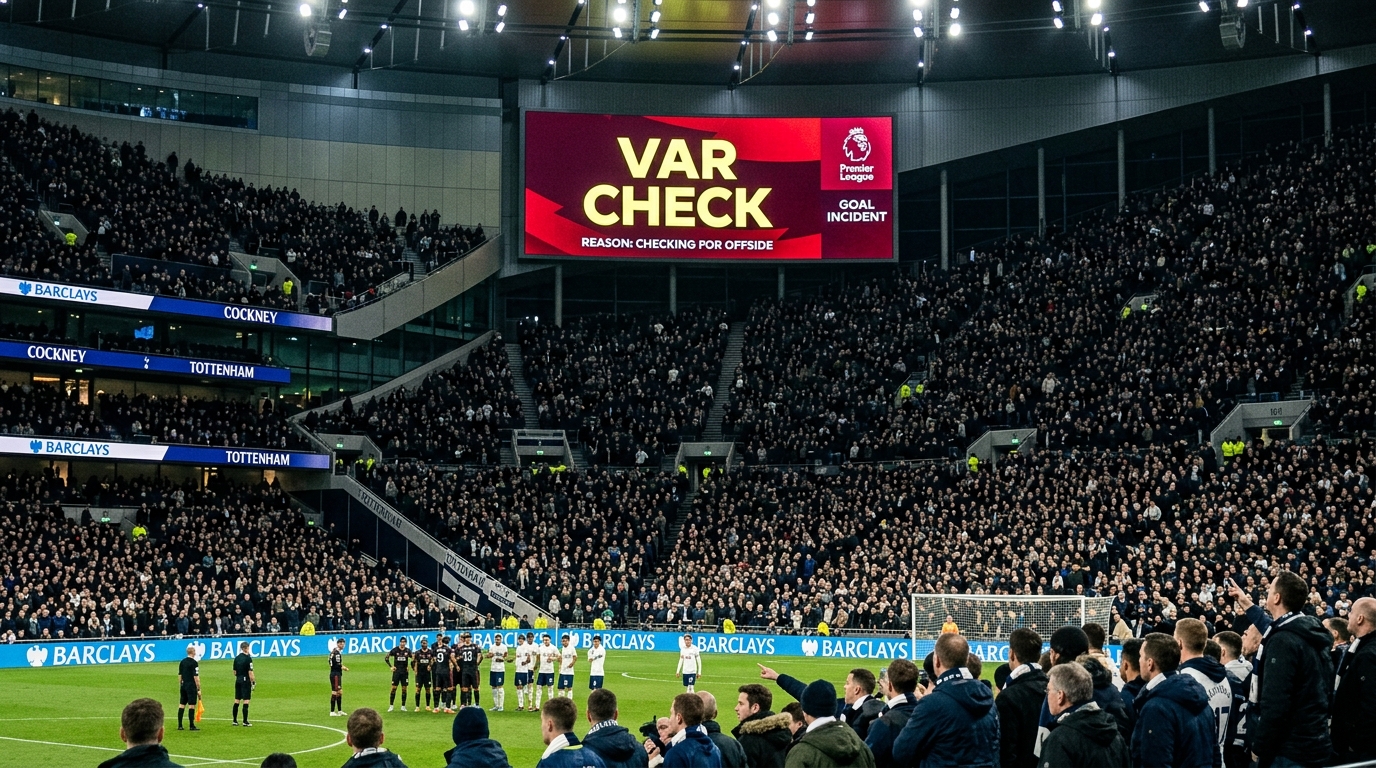
Deep-Dive: Why Consistency Eludes the Premier League
The most frequent complaint I hear from fellow fans is about the lack of consistency. Why is a shirt pull in the penalty area a penalty in one stadium, but considered a ‘physical challenge’ in another? In my observation, the issue lies in the training curriculum of the refereeing pool. There is no unified interpretation of how much contact is allowed before an action becomes a foul. Until the officiating body establishes a clear, objective rubric that is consistently applied across every refereeing team, we will continue to see these discrepancies.
Furthermore, the broadcast cameras themselves are a limitation. We have high-definition feeds that capture every blade of grass, but we are still limited by frame rates that don’t always align with the exact moment of ball contact. This is where I find the “binary vs. subjective” argument so compelling. In tennis, the Hawkeye system is binary. In cricket, the ball is either hitting the stumps or it isn’t. Football, however, is a game of contact and context. Trying to apply binary technology to a subjective game creates friction. Until we accept that not everything in football can be measured with a tape measure, we will continue to struggle with these errors.
The Financial and Competitive Stakes
It is easy to dismiss this as just ‘sports talk,’ but the financial stakes are staggering. A single point in the Premier League table can mean the difference between European qualification and mid-table anonymity. When you calculate the broadcast revenue, commercial partnerships, and prize money associated with a Champions League spot, we are talking about figures reaching upwards of £50 million. If a series of officiating errors costs a club that position, the impact on their transfer budget and long-term sustainability is massive.
Because of this, I have noticed that top-tier clubs are now hiring their own analytical departments to track refereeing patterns. They aren’t just scouting players; they are scouting the men in the middle. If a referee is known for being lenient on aggressive pressing, a team might adjust their defensive line. This is a sad, cynical, but necessary evolution. When the game becomes a defensive struggle against human error, we have lost a portion of the spontaneity that makes football special.
Who Should Monitor English VAR Analysis (And Who Should Not)
If you find yourself constantly debating the nuances of IFAB hand-ball regulations, this level of analysis is for you. It is ideal for the analytical fan who treats football as a series of data-driven events. It is for those who enjoy the complexity of rules and want to understand why a specific call was made, even if they disagree with the outcome. Understanding the protocol makes the game less of a mystery and more of a contest of rule application.
However, you might want to skip the deep-dive if you value the raw, emotional experience of match day above all else. If dissecting the ‘why’ of a decision ruins the flow and joy of your weekend, walk away. There is a real downside to this level of scrutiny: it turns the fan into a cynic. Once you see the strings behind the curtain, it is hard to enjoy the magic of the show again. I personally struggle with this; I often find myself analyzing a tackle before I have even reacted to the beauty of the play itself.
Common Mistakes to Avoid
Blaming Malice for Errors: A common mistake I see on social media is the attribution of errors to corruption or bias. In my experience, most mistakes are the result of cognitive overload and systemic pressure, not malice. Referees are human beings under the most intense scrutiny imaginable. Assuming a conspiracy usually blinds you to the actual problem, which is usually a failure in the communication process between the VAR booth and the on-pitch referee.
- Confusing Technical Correctness with Fairness: You must check the current IFAB rulebook before you scream at the television. Many decisions that fans despise are actually technically correct under current, overly convoluted rules. For example, the criteria for ‘unnatural arm position’ are extremely specific. Before arguing a point, look up the actual wording. You will often find that the referee followed the rule perfectly, even if the rule itself produces an outcome that defies common sense.
Frequently Asked Questions
Why does the Premier League seem to have more VAR issues than other leagues?
The perception of increased errors is largely due to the sheer intensity of the global spotlight. Every single incident in the Premier League is dissected by millions of viewers and hundreds of camera angles. This high-definition scrutiny simply doesn’t exist in the same way for lower-profile leagues. While the system certainly has flaws, the ‘crisis’ is amplified by the fact that the English game is the most analyzed sporting event on the planet. The high volume of eyeballs creates a constant cycle of criticism that feeds on itself.
Is semi-automated offside technology the silver bullet we need?
It is the closest thing to a solution we have. SAOT removes the human element of drawing lines and guessing the point of impact. It creates a definitive, binary result that is communicated in seconds. By moving to this system, we can eliminate the longest, most painful delays in the game. It won’t solve the issue of subjective fouls, but offside decisions are the most frequent source of controversy, and automating them would instantly improve the flow of the match for everyone involved.
Should we scrap the system and go back to human-only officiating?
Returning to the pre-VAR era is a romantic notion, but it is practically impossible. The commercial and financial stakes are too high to ignore the availability of video evidence. Instead of scrapping it, we should pivot toward a ‘minimalist’ model. Instruct officials to only intervene in instances where a mistake is truly egregious and undeniable. If the booth can’t reach a consensus within 60 seconds, the original on-pitch call stands. This would return authority to the referee and speed up the game significantly.
Conclusion: Finding the Balance
My journey through English VAR analysis has led me to one inescapable conclusion: we have reached the limit of what technology can provide in a game that relies so heavily on subjective interpretation. The current state of affairs is one of over-correction, where the desire for perfection has ironically created a more confusing and fragmented experience. The path forward is not to remove the system, but to simplify it. We need to embrace the reality that officiating will never be 100% accurate, and that is okay.
I recommend that fans shift their focus back to the athleticism and tactical genius on display. While the officiating will always be a point of friction, the quality of the football itself has never been higher. Support the push for transparency, advocate for faster, automated decisions, but don’t let the technology overshadow the joy of the game. The goal is to see the referee influence the match as little as possible, allowing the players to determine the outcome on the pitch. That remains the ultimate goal for anyone who loves the sport.

One thought on “English VAR Analysis: Crisis, Reforms, and Future Logic”