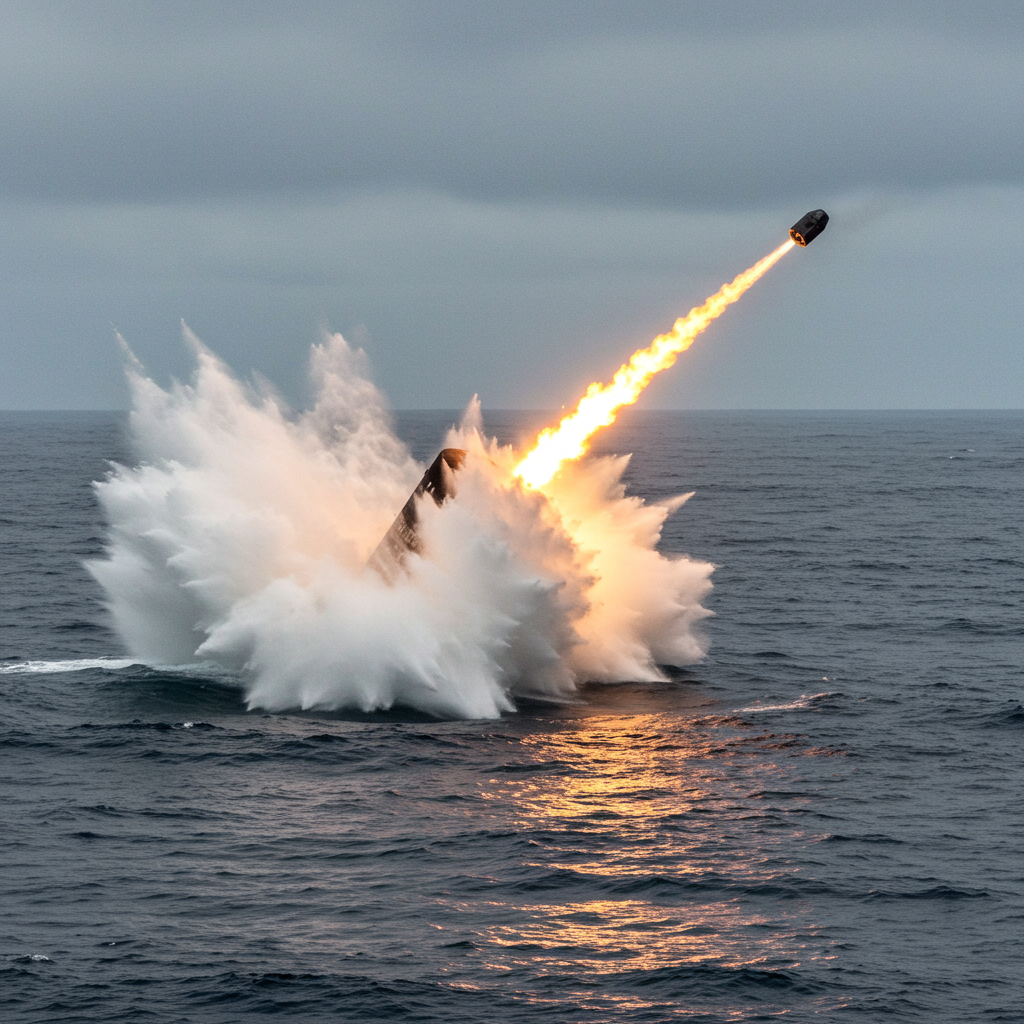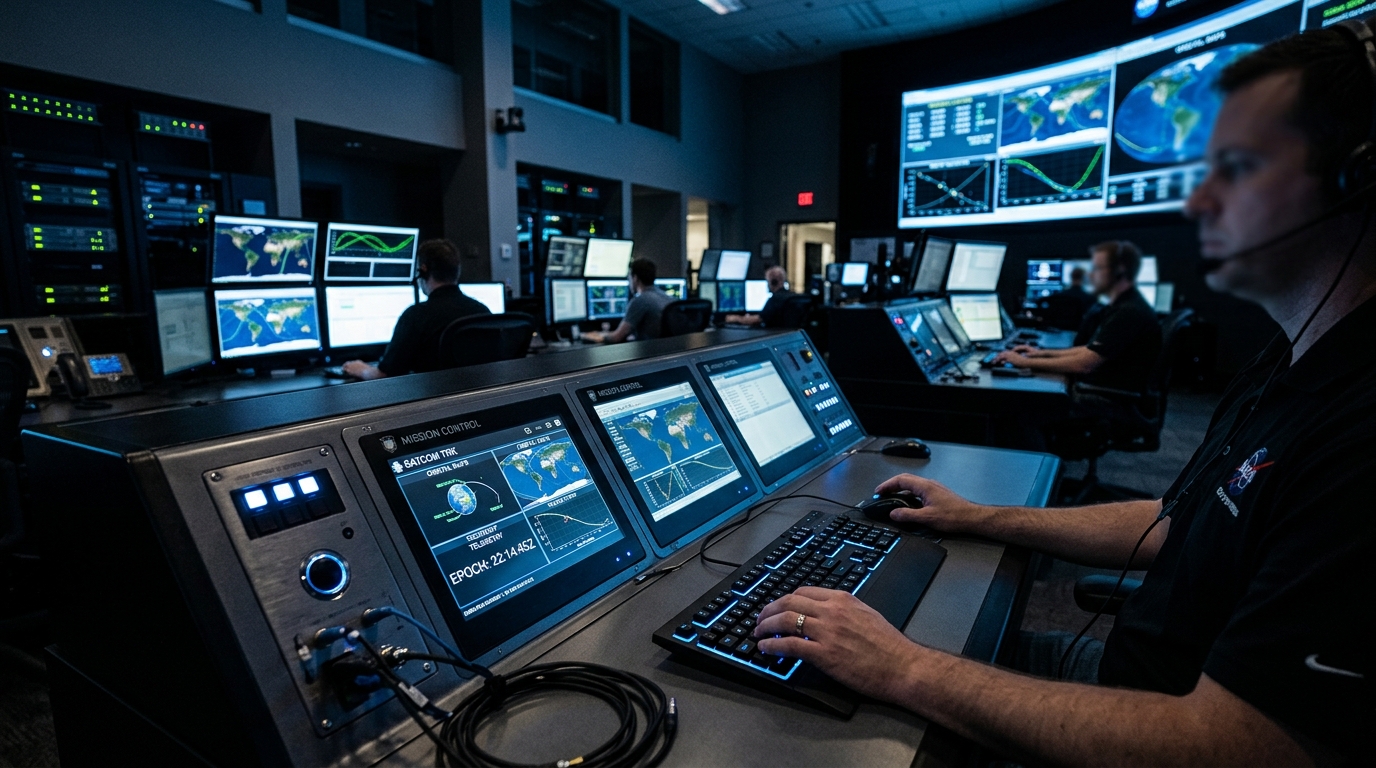
The confirmation that the United States has officially deployed space weapons into Earth’s orbit represents the most significant shift in military doctrine since the dawn of the nuclear age. For decades, the space domain was treated as a protected sanctuary, largely governed by the optimistic parameters of the 1967 Outer Space Treaty. However, as of September 2026, the era of silent deterrence has ended, replaced by an overt, public acknowledgment that the high ground is now a contested battlefield. When Air Force Secretary Troy Meink confirmed the presence of ‘on-orbit space control weapons,’ he did more than just update a policy; he signaled that the infrastructure powering our financial markets, GPS, and precision navigation is now under direct, active protection—and threat.
Quick Summary
The U.S. government has officially admitted to deploying ‘space control’ weapons in orbit to protect the Joint Force.
these capabilities utilize both kinetic (physical) and non-kinetic (electronic/jamming) methods to neutralize threats.
The strategy serves as a direct response to aggressive anti-satellite (ASAT) development by Russia and China.
While these weapons are presented as defensive, their presence risks accelerating an orbital arms race and increasing space debris.
The shift marks a move toward a ‘warfighting domain’ model, prioritizing autonomous systems over traditional legacy satellite networks.
The Strategic Pivot: What This Means for You
If you are wondering what this means for your daily life, the answer is grounded in infrastructure. Most people don’t realize that nearly every aspect of modern existence—from the timing signals in your bank’s servers to the routing of global shipping logistics—relies on a fragile, invisible lattice of satellites. By confirming the deployment of deployed space weapons, the Pentagon is essentially telling us that the ‘peaceful’ status quo of the last 60 years is no longer sufficient to guarantee that these systems will remain functional during a conflict. If you are an investor, a policy analyst, or involved in the aerospace sector, you need to understand that the threshold for what constitutes an ‘act of war’ in orbit has fundamentally changed.
Understanding Space-Control Capabilities
When military leaders talk about ‘space control,’ they are using a specific, clinical term that describes the ability to ensure our own forces can use space while simultaneously denying that ability to an adversary. In my career analyzing defense trends, I have found that the public often conflates these technologies with Hollywood-style ‘laser guns’ or destructive missiles. In reality, the toolkit is far more nuanced, relying on a tiered approach to engagement.
Non-kinetic weapons represent the ‘scalpels’ of this new domain. These include sophisticated electronic jammers that can mask a satellite’s signal, laser dazzlers that blind optical sensors, and cyber-warfare tools capable of hijacking or disabling a command-and-control link. I have seen the development of these systems accelerate because they allow for ‘reversible’ effects. If a nation can disrupt an enemy’s satellite network for 24 hours without creating a single piece of junk, they have effectively won the engagement without triggering the catastrophic diplomatic and physical consequences of a kinetic strike.
Kinetic weapons are the ‘sledgehammers.’ These are physical impactors or projectiles designed to destroy a target satellite upon contact. The problem here is the physics of low-Earth orbit (LEO). In my assessment, the use of kinetic weapons is a reckless gamble. A collision at 17,000 miles per hour turns a single satellite into thousands of high-velocity shards of metal. This is the seed of the ‘Kessler Syndrome’—a scenario where a single destruction event creates a chain reaction of collisions, effectively turning a useful orbital shell into a minefield of debris that could last for centuries. This is why, despite the aggressive rhetoric, there is still immense pressure to limit these systems to non-destructive applications.
The Rise of the U.S. Space Force
Since its creation in 2019, the U.S. Space Force has undergone a transformation from a nascent bureaucracy into a fully operational branch of the military. The recent admission of deployed space weapons is the logical conclusion of that maturation process. For years, the Space Force had to justify its existence while its primary assets—the expensive, ‘crown jewel’ satellites—sat like sitting ducks, vulnerable to any adversary with a crude missile or a powerful jammer. The shift to a ‘defensive-offensive’ posture is an acknowledgment that passive protection is dead.
We are now moving toward a future defined by autonomous, rapid-response systems. Secretary Meink’s forecast that the Air Force will look ‘radically different’ by 2032 is not just a marketing slogan. I anticipate a pivot toward smaller, cheaper, and more replaceable satellite constellations. If an adversary destroys one, it barely matters because you have hundreds more in the sky. This ‘swarm’ strategy is much harder to counter than the massive, multi-billion-dollar ‘exquisite’ satellites we spent decades building. However, this transition creates a new vulnerability: the reliance on algorithmic autonomy. When the speed of an engagement occurs in microseconds, humans are effectively removed from the loop. If a drone misinterprets a sensor glitch as an attack, the potential for an accidental, rapid escalation is unprecedented.
Why the ‘Sanctuary’ Era is Over
Historically, the 1967 Outer Space Treaty served as a comforting fiction. It banned nuclear weapons and weapons of mass destruction (WMDs) in orbit, and for years, we pretended that meant all weapons were banned. The reality is that the treaty is a relic of the Cold War. It never prohibited conventional weapons, electronic warfare systems, or kinetic interceptors. The U.S. acknowledgment of deployed space weapons simply forces the world to confront the reality that the ‘high ground’ has always been a strategic prize.
I recall watching the early debates about militarization, and the sentiment was always that space was ‘different.’ The truth, however, is that space is just another geography. It has the same strategic gravity as the high seas or the air lanes. When a domain becomes vital to economic and military survival, it will eventually be weaponized. We are not watching the ‘start’ of an arms race; we are watching the public acknowledgment that the race has been running for a long time, and we are now moving into the final, most dangerous sprint.
Who Should Monitor Space Warfare (And Who Should Not)
Understanding the nature of space warfare is a critical requirement for several distinct groups, but it isn’t for everyone. Knowing how the chess board is set up can change your entire outlook on global markets.
This is ideal for:
Security and Defense Analysts: If your job involves predicting geopolitical stability, you need to understand the ‘deterrence calculus’ of orbital assets.
Aerospace Stakeholders: Anyone working with satellite data, launch services, or telecommunications needs to prepare for a reality where insurance premiums for space assets will likely skyrocket.
Policy Makers: If you are involved in local or international policy, understanding the risk of debris and escalation is essential for crafting sustainable, long-term frameworks.
You might want to skip this if:
You are looking for technical schematics: If you are looking for a DIY guide or specific details on how a jammer works, you will be disappointed. These programs are protected by some of the most restrictive security clearances in the world.
You want a ‘good vs. bad’ narrative: This is a complex, high-stakes game of shadows. If you want a story where one side is solely to blame, this topic will only frustrate you. Both major powers are actively pursuing these capabilities, and the ‘victim’ status is largely a matter of perspective.
Cost and Value Considerations
When we look at the financial side of these projects, the numbers are astronomical—literally. A single next-generation missile-warning satellite can cost upwards of $4 billion. When you realize that such an asset can be rendered useless by a relatively cheap electronic jammer, the ‘defensive value proposition’ of the current space-control strategy becomes clear. If spending $100 million on an on-orbit sensor or jamming array protects a $4 billion satellite, the Department of Defense views that as an exceptional return on investment.
However, the cost of the ‘orbital debris incident’ I mentioned earlier is the missing variable in this budget equation. The global economy relies on precision timing signals that keep everything from stock exchanges to power grids in sync. If a major orbital plane were rendered unusable, the damage would not be measured in billions; it would be measured in the trillions, affecting the global supply chain, telecommunications, and maritime navigation. The ‘cost’ of these weapons isn’t just in the budget line item—it is in the catastrophic risk they introduce to the global commons.
Common Mistakes to Avoid
There are two critical mistakes that most people make when discussing this topic. If you can avoid these, you will be miles ahead of most commentators.
Mistake 1: Conflating Electronic Warfare with Kinetic Destruction.
People often treat all ‘space weapons’ as the same, assuming that if a country has ‘space weapons,’ they are planning to blow up satellites. This is fundamentally wrong. Electronic jamming or ‘dazzling’ is a scalpel; it is meant to temporarily disable an adversary during a specific window. Kinetic weapons are the equivalent of dropping a nuke on a city block—they cause permanent, unpredictable, and potentially global damage. Understanding this distinction is the only way to analyze whether a nation is acting to ‘degrade’ an enemy or ‘trigger’ a permanent conflict.
Mistake 2: Ignoring the Diplomatic ‘Spin.’
Do not assume that the U.S. acknowledgment is just a boring administrative update. It is a calculated diplomatic move. By going public, the U.S. is signaling strength and deterrence. However, it also gives Russia and China a perfect excuse to claim the moral high ground, arguing that the U.S. is the primary driver of ‘militarization.’ Failing to see that this announcement is part of a larger global PR battle will cause you to miss the real geopolitical impact.
Frequently Asked Questions
1. Does the 1967 Outer Space Treaty effectively ban these weapons?
No. A common misconception is that the treaty bans all weapons. In reality, it only prohibits weapons of mass destruction (nuclear, biological, or chemical weapons) from being placed in orbit. Conventional, kinetic, and non-kinetic weapons remain in a legal gray area that most nations are currently exploiting to their strategic advantage.
2. Is this immediate escalation to space war?
It is unlikely that this announcement leads to a ‘Star Wars’ style conflict tomorrow. Instead, we are entering a period of ‘persistent engagement.’ Think of it like a submarine patrolling deep water. We know they are there, they know we are there, and both sides are constantly looking for weaknesses. It is a high-stakes, long-term standoff designed to make the other side think twice before attacking.
3. How do these weapons impact the commercial satellite industry?
Commercial entities are in a very tough spot. As the number of commercial internet satellites grows, the orbital environment becomes more crowded. During a conflict, those private assets could be caught in the crossfire—literally. Private companies will likely face increased costs for satellite shielding, maneuverability fuel, and, eventually, much higher insurance premiums as the risks of ‘collateral damage’ increase.
4. What exactly does the Space Force mean by ‘space control’?
Space control is a military doctrine aimed at ensuring U.S. access to space while simultaneously preventing an adversary from using space to harm us. It is the military version of the ‘high ground.’ It encompasses everything from keeping our own satellites safe to actively disrupting an enemy’s ability to communicate with their forces on the ground.
Conclusion
The era of space as a ‘sacred’ or ‘neutral’ zone is firmly in the past. The official confirmation of deployed space weapons is the signal that we have entered a new, more dangerous phase of global security. We are no longer watching from the sidelines as space becomes a theater of war; we are witnessing the formalization of that war as a daily reality. For the average person, the world looks the same as it did yesterday. But for those in the halls of power and the boardrooms of global industry, the map has changed. Moving forward, the focus must shift to building international norms that prevent an accidental collision from spiraling into a permanent orbital disaster. We must push for transparency and rules of behavior in the ‘final frontier’ before we accidentally break it for everyone forever.