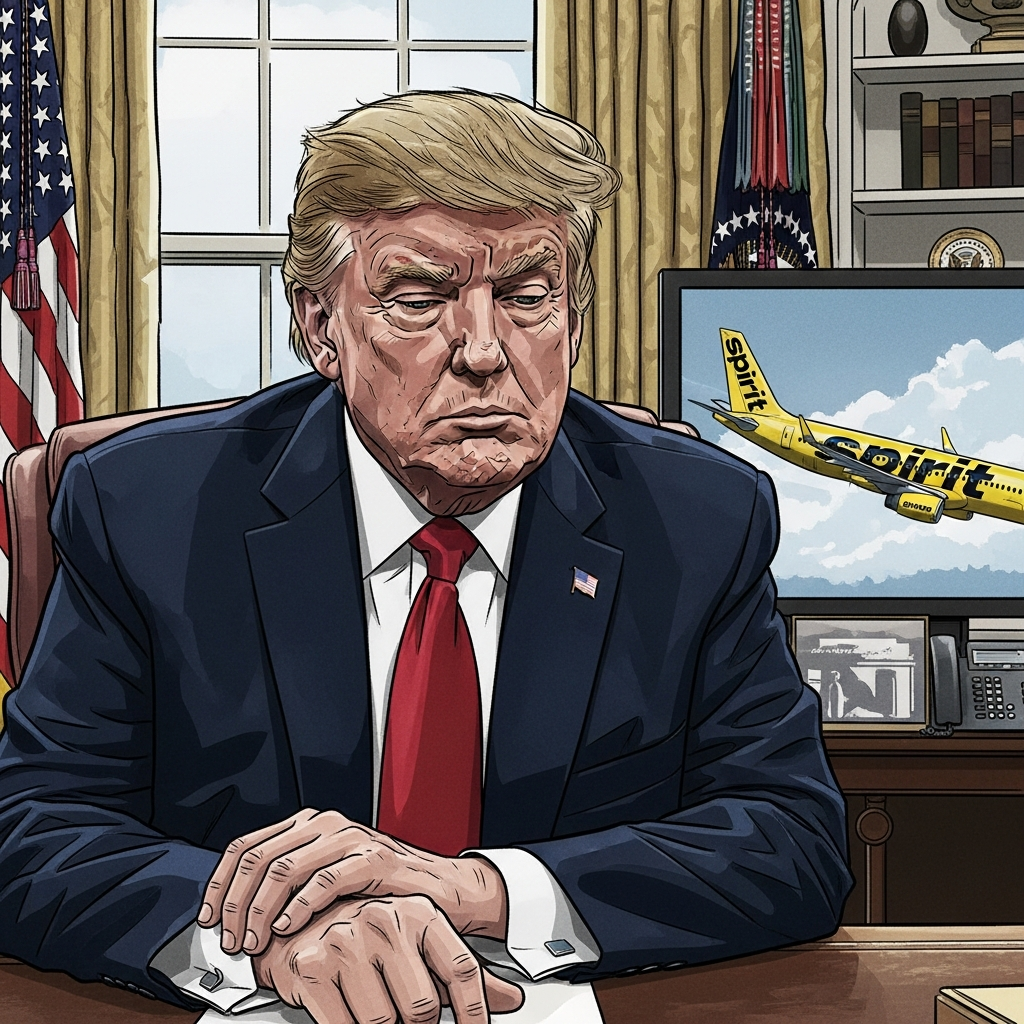
The Trump administration is reportedly exploring an extraordinary federal intervention to rescue Spirit Airlines from imminent collapse. Amidst mounting financial pressure and an ongoing war in Iran driving up jet fuel costs, officials are considering deploying the powerful Defense Production Act (DPA). This potential move aims to prevent the liquidation of Spirit, save thousands of jobs, and ensure the continued operation of a key airline. The discussions highlight a critical moment for the U.S. airline industry and the administration’s willingness to use emergency powers in times of crisis.
Spirit Airlines Faces Critical Financial Headwinds
Spirit Airlines has navigated an incredibly turbulent period, declaring bankruptcy twice within the last two years. This severe financial distress follows the Department of Justice’s decision to block its proposed merger with JetBlue during the Biden administration. That ruling left Spirit vulnerable and struggling independently. Compounding these challenges, the ongoing conflict with Iran has significantly pushed up jet fuel prices, squeezing airline margins across the board.
Creditors recently voiced serious doubts about Spirit’s long-term viability. The immediate crisis escalated when Spirit missed a crucial interest payment. This oversight put the airline into a potential default on its debtor-in-possession agreement with creditors. Sources indicate Spirit’s attorney has warned that the company could cease operations within days. Although Spirit holds approximately $250 million in cash, these funds are largely inaccessible due to existing creditor liens, leaving the airline’s operational liquidity critically low.
The Defense Production Act: An Emergency Lifeline for Spirit?
The Defense Production Act (DPA) is a potent emergency power. Historically, it has been used to compel private companies to prioritize government contracts or increase production of critical goods. For instance, it might accelerate manufacturing during a national emergency. Crucially, the DPA also grants authority for the government to provide loans to private firms for purposes deemed vital to national defense. This specific provision could serve as a vital lifeline for Spirit Airlines.
U.S. officials familiar with the discussions confirm President Trump’s openness to some form of federal action. He has publicly stated his intent to “do it to save the jobs” associated with Spirit. The Office of Management and Budget has meticulously outlined what a federal bailout could entail. This comprehensive plan involves potential participation from both the Commerce Department and the Pentagon, underscoring the perceived strategic importance of the airline’s survival.
Detailing the Proposed Federal Bailout Plan
Under the currently discussed proposal, the federal government would extend a substantial $500 million loan to Spirit Airlines. This loan would be offered at a reasonable interest rate. Critically, it would position the U.S. government as the top debtor in Spirit’s bankruptcy hierarchy. The loan would be robustly protected, secured by Spirit’s assets which are projected to exceed the government’s investment costs.
In a unique arrangement, taxpayers would receive a warrant. This warrant grants the right to own a significant 90% stake in Spirit Airlines once it successfully emerges from bankruptcy. Furthermore, the Pentagon is slated to leverage Spirit’s excess capacity. This could involve using the airline’s planes for transporting troops, military cargo, or other essential missions. After this period of federal intervention and stabilization, the airline would likely be prepared for sale to another carrier, ensuring its long-term future under private ownership. This strategic maneuver would, however, require approval from Spirit’s existing creditors.
Internal Divisions and Broader Strategic Context
The potential DPA intervention has ignited a debate within the Trump administration itself. Commerce Secretary Howard Lutnick and the White House are strong advocates for the plan. They argue that preventing an American company from failing during a period of international conflict, particularly with rising fuel prices due to the Iran war, is paramount. Saving Spirit’s approximately 7,500 direct jobs is a key driver behind their stance.
Conversely, Transportation Secretary Sean Duffy has expressed reservations. He argues that such a move could create political problems and merely prolong an inevitable financial failure for the airline. Despite these differing viewpoints, a general consensus among Trump officials appears to favor avoiding the collapse of an American company during wartime. This sentiment aligns with President Trump’s previous remarks on Spirit’s “good aircraft” and “good assets.”
This consideration of the DPA for Spirit isn’t an isolated incident. The Trump administration is simultaneously exploring other emergency powers to stabilize critical sectors amid the Iran conflict. For example, the White House has been considering a temporary suspension of the Jones Act. This key maritime law mandates that vessels transporting goods between U.S. ports must be U.S.-built, owned, and crewed. Waiving it temporarily could allow foreign-flagged ships to transport oil, potentially easing soaring oil and gasoline prices fueled by the conflict and threats to the Strait of Hormuz. These parallel discussions underscore a broader strategy to deploy federal tools to mitigate the economic fallout of the geopolitical landscape.
Spirit’s Valuable Assets and Future Prospects
Despite its current financial woes, Spirit Airlines possesses valuable assets that make it an attractive candidate for federal intervention and a future sale. As of late 2025, Spirit owned 48 planes and leased an additional 83. Beyond the physical aircraft, the airline holds highly prized “slots” at major airports, particularly at Newark Airport, a crucial hub for United Airlines. These slots represent scheduled times for take-offs and landings and are incredibly valuable in congested airspace.
Earlier in April, Spirit and United Airlines executives approached White House officials with a liquidation plan. This plan notably included selling Spirit’s Newark Airport slots. However, Trump officials reportedly rejected this idea. The federal government owns these slots, and the administration’s strategy is to preserve them. Keeping these valuable assets intact would significantly enhance Spirit’s attractiveness to a future owner, facilitating a more stable acquisition post-bailout. President Trump himself has noted the value of these “very good slots.”
White House spokesman Kush Desai confirmed the administration’s active interest in helping Spirit Airlines remain operational for its passengers and employees. However, he cautioned against premature conclusions, stating, “Any reporting, however, about the mechanism or structure of any deal… unless officially unveiled by the Administration, should be regarded as speculation.” This underscores the ongoing, dynamic nature of the high-stakes negotiations.
Frequently Asked Questions
What is the Defense Production Act and how could it save Spirit Airlines?
The Defense Production Act (DPA) is a U.S. emergency power allowing the government to compel private companies for national defense or critical needs. In Spirit Airlines’ case, the DPA’s provision for providing loans to private firms for national defense purposes could be activated. This would enable the government to extend a $500 million loan, becoming a top creditor and potentially preventing the airline’s liquidation. This intervention aims to stabilize Spirit and secure its assets and jobs, particularly during economic pressures from the Iran war.
Why is the Trump administration considering such an unusual intervention for Spirit Airlines?
The Trump administration is exploring DPA use for Spirit Airlines primarily to save approximately 7,500 jobs and prevent a major American company from failing during the ongoing Iran war. Rising jet fuel costs, exacerbated by the conflict, have pushed Spirit into financial distress. The administration views the airline’s assets, including airport slots, as strategically valuable. This unusual intervention reflects a broader strategy of using emergency powers, as seen in parallel discussions about suspending the Jones Act, to stabilize critical sectors and the economy amidst geopolitical tensions.
What are the potential financial implications for taxpayers if the government bails out Spirit Airlines?
If the government bails out Spirit Airlines, taxpayers would initially be exposed to a $500 million loan. However, the plan is structured to protect this investment. The loan would be secured by Spirit’s assets, which are expected to exceed the government’s costs. Furthermore, taxpayers would receive a warrant, granting them the right to own 90% of Spirit Airlines once it emerges from bankruptcy. This arrangement aims to provide a significant return on investment and mitigate taxpayer risk, with the eventual goal of selling the stabilized airline to another carrier.
The situation surrounding Spirit Airlines remains fluid, with high-level discussions ongoing. The ultimate decision on whether to deploy the Defense Production Act could set a significant precedent for government intervention in financially distressed companies deemed vital to national interest or economic stability. The administration’s careful balancing act between immediate economic rescue, long-term industry stability, and the responsible use of taxpayer funds continues.