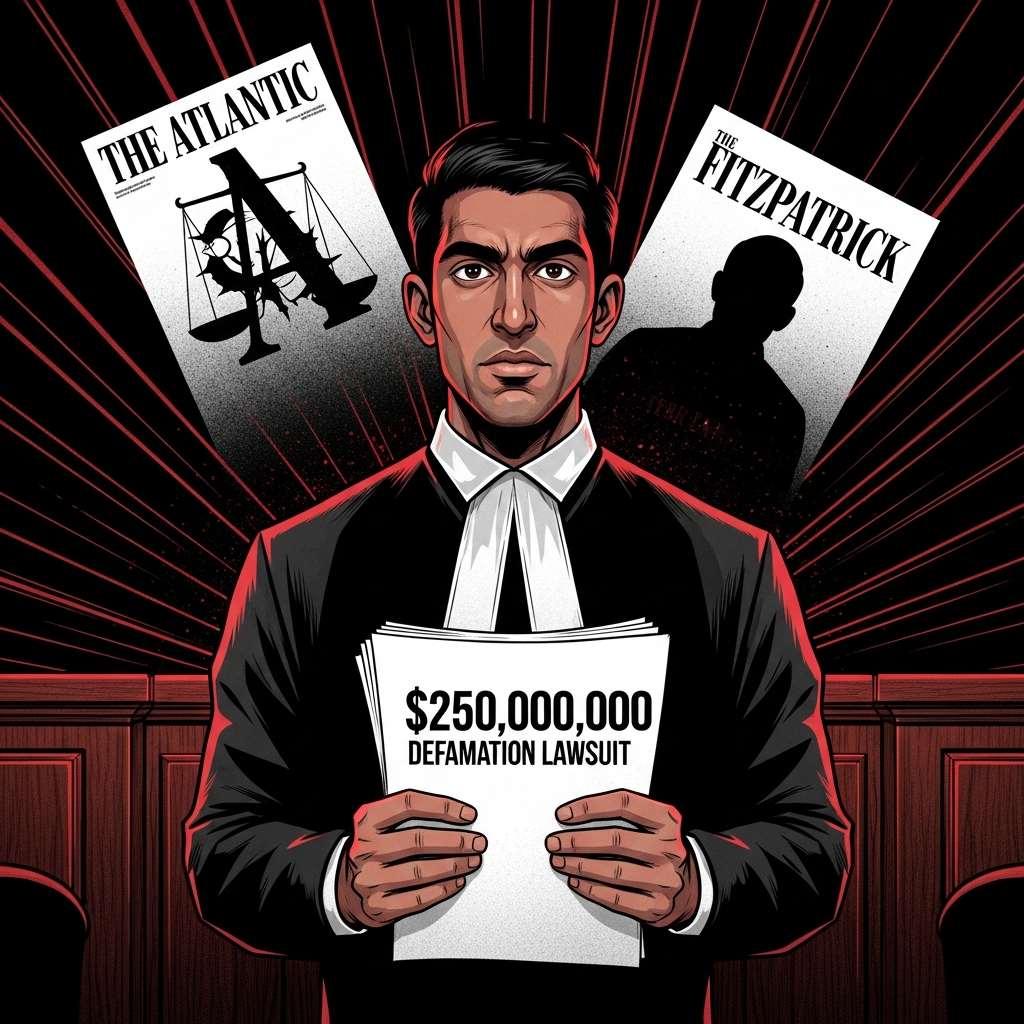
Former FBI Director Kash Patel has ignited a high-stakes legal battle, filing a massive $250 million defamation lawsuit against The Atlantic magazine and staff writer Sarah Fitzpatrick. The suit alleges that a recently published article maliciously targeted Patel, falsely accusing him of excessive drinking and erratic behavior. This legal action unfolds amid an already tense political climate, raising critical questions about media accountability, journalistic ethics, and the challenging standards for proving defamation against public figures.
Patel’s lawsuit frames The Atlantic‘s article as a “sweeping, malicious, and defamatory hit piece” explicitly designed to destroy his reputation and force him from office. He vehemently denies the allegations, asserting that the publication acted with “actual malice” by knowingly disseminating false information, even after receiving explicit warnings that its central claims were “categorically false” hours before publication.
The Core Allegations: What The Atlantic Reported
The Atlantic article, which reportedly cited over two dozen anonymous sources, painted a concerning portrait of Patel’s conduct. It alleged that he had alarmed colleagues across the Trump administration and within the FBI with episodes of heavy drinking and unexplained absences. The report specifically detailed incidents at private clubs in Washington, D.C., and Las Vegas, going as far as to suggest Patel was, at times, “unreachable” due to these issues.
More critically, the article implied these behaviors violated FBI conduct standards. Such alleged actions, The Atlantic suggested, could leave the nation’s top law enforcement official vulnerable to coercion or exploitation. The piece also referenced widely shared social media footage of Patel “chugging beer” with members of the U.S. Olympic men’s hockey team, portraying it as further evidence of his alleged conduct. Concerns were reportedly so high that senior administration officials were discussing Patel’s potential replacement. Journalist Sarah Fitzpatrick publicly defended her reporting, stating she stands by “every word” and has “excellent attorneys.”
Kash Patel’s Forceful Rebuttal and Legal Strategy
Kash Patel has not minced words in his response. He dismissed The Atlantic‘s report as “fake news” and “hit piece lies.” He took to social media, declaring that being targeted by the “fake news mafia” was merely confirmation he was “doing exactly what I should be doing.” Patel vowed that “no amount of BS you write will ever deter this FBI from making America safe again and taking down the criminals you love.” He further stated on Fox News, “If the fake news mafia isn’t hitting you personally with baseless information, then you’re not doing your job.”
The lawsuit itself dedicates substantial space to defending Patel’s professional integrity. It highlights his “historic law enforcement results” during his 15-month tenure as FBI Director, presenting these achievements as direct evidence of his competency and dedication, thereby directly challenging the narrative of job performance issues put forth by The Atlantic. Patel’s complaint specifically targets over a dozen sentences from the article as defamatory, including claims that he is “known to drink to the point of obvious intoxication” and that meetings are frequently rescheduled due to “alcohol-fueled nights.”
A central tenet of Patel’s defamation lawsuit is the accusation of “actual malice.” His legal team argues that The Atlantic proceeded with publication despite abundant publicly available information contradicting the allegations. Furthermore, the lawsuit contends that the publication harbored a “pre-existing animus” against Patel, suggesting a motive beyond objective journalism. Patel’s lawyers also accuse The Atlantic of failing to provide him sufficient time to respond to the allegations or adequately consider his “detailed, specific and substantive” refutations. He publicly affirmed his intent to fight, telling Fox News, “We are not going to take this lying down… You want to attack my character? Come at me. Bring it on. I’ll see you in court.”
The High Bar for “Actual Malice” in Public Figure Defamation
Proving “actual malice” is a notoriously difficult standard, particularly when the plaintiff is a public figure like FBI Director Kash Patel. Established by the Supreme Court in New York Times Co. v. Sullivan, this standard requires a plaintiff to demonstrate that the defendant published the defamatory statement “with knowledge that it was false or with reckless disregard of whether it was false or not.” This legal bar is incredibly high, intentionally protecting robust and critical journalism, even if it is unflattering or erroneous.
Courts have consistently upheld this stringent standard, especially in defamation lawsuits involving political figures. The Trump administration, for instance, has a documented losing track record when it comes to legal entanglements with the media, underscoring the formidable challenge Patel faces. His lawsuit aims for a significant sum, seeking not only $250 million in compensatory, special, and punitive damages but also the “disgorgement of all income Defendants have earned by virtue of their lies.”
Beyond Defamation: Kash Patel’s 2020 Election Claims
Adding another layer of complexity to the unfolding drama, Kash Patel simultaneously made significant claims regarding alleged evidence of widespread rigging in the 2020 presidential election. During an interview on Fox News, he asserted that he possessed “all the information we need” to support former President Donald Trump’s allegations that the election was stolen. Patel stated that the FBI was collaborating with prosecutors at the Department of Justice (DOJ) under Acting Attorney General Todd Blanche, promising that arrests were “coming soon.”
Fox News anchor Maria Bartiromo challenged Patel on these claims, noting the consistent lack of verifiable evidence presented to the public despite persistent discussions about election integrity from Trump and his allies. Patel responded by reiterating that the information exists and backs Trump’s claims. However, he cited an “ongoing prosecution and investigation” as the reason he could not disclose details, stating he could not “get ahead of the DOJ and the President.”
This context is crucial: multiple states, including Arizona, Georgia, Pennsylvania, Wisconsin, and Michigan, launched official probes, partisan audits, or legislative investigations into the 2020 results. None of these states were subsequently sued by the DOJ or the federal government over their findings. Despite this, former President Trump, now in his second term, continues to advocate for election integrity and pushes for the passage of the ‘SAVE America Act.’ Patel’s decision to publicly link his legal battle with these broader, unproven claims of election fraud adds a distinct political dimension to the defamation suit.
Official Responses and Broader Implications
In the immediate aftermath of The Atlantic‘s report and Patel’s lawsuit, official reactions have been swift. White House Press Secretary Karoline Leavitt publicly defended Patel, emphasizing his continued role as a “critical player in the administration’s law and order team.” This statement underscores the White House’s support for Patel amidst the controversy.
Conversely, The Atlantic has remained steadfast in its position. The magazine issued a clear statement: “We stand by our reporting on Kash Patel, and we will vigorously defend The Atlantic and our journalists against this meritless lawsuit.” This resolute stance signals a protracted legal battle, with significant implications for both parties. The case will undoubtedly attract considerable scrutiny from media organizations, legal experts, and the public, potentially reshaping discussions around journalistic practices, anonymous sources, and the protection afforded to public figures under defamation law. Patel’s lawsuit also highlights the challenges faced by journalists when relying on anonymous sources, especially in high-profile political reporting, and the necessity for robust verification processes.
Frequently Asked Questions
What is the core of Kash Patel’s $250 million defamation lawsuit against The Atlantic?
Kash Patel, former FBI Director, has sued The Atlantic and journalist Sarah Fitzpatrick for $250 million, alleging defamation. The lawsuit stems from an article that claimed Patel engaged in excessive drinking and erratic behavior, which he vehemently denies. Patel asserts the article was a “hit piece” published with “actual malice,” arguing The Atlantic knew the allegations were false and disregarded warnings prior to publication. He is seeking substantial damages for harm to his reputation and career.
What is the “actual malice” standard, and why is it crucial in this lawsuit?
“Actual malice” is a legal standard that public figures, like Kash Patel, must prove in defamation cases. It requires demonstrating that the defendant (in this case, The Atlantic) published the false information either knowing it was false or with reckless disregard for its truthfulness. This standard, established by New York Times Co. v. Sullivan, sets a very high bar for plaintiffs, protecting freedom of the press and ensuring critical reporting on public officials, even if it proves to be erroneous.
How do Kash Patel’s 2020 election claims relate to his lawsuit against The Atlantic?
Kash Patel made public claims of possessing evidence of 2020 election rigging and imminent arrests by the DOJ around the same time he filed the defamation lawsuit. While legally separate, he publicly linked the two, suggesting that the “fake news mafia” was targeting him with baseless information because he was “doing his job” related to these election investigations. This connection adds a significant political dimension to the defamation case, tying it into broader narratives about media credibility and election integrity.
This high-profile legal battle is poised to be a landmark case, further challenging the delicate balance between a free press and the reputation rights of public figures. As the proceedings unfold, the definitions of journalistic responsibility and legal accountability will be tested under intense public scrutiny.