Groundbreaking fossil discoveries in Southwest China are completely reshaping our understanding of life’s earliest chapters. Scientists previously thought complex animal life diversified dramatically during the “Cambrian explosion.” However, recent finds indicate a much earlier, more gradual emergence. These extraordinary fossils push back the timeline for sophisticated animal evolution by millions of years. This incredible discovery fills a critical gap in the fossil record. It offers a unique window into the genesis of modern animal forms, including the distant ancestors of humans.
A Breakthrough Discovery in Ancient Yunnan
The remarkable fossil trove comes from China’s Yunnan province. Specifically, it was unearthed at the Jiangchuan Biota. Researchers from Oxford University and Yunnan University collaborated on this significant project. Their dedicated fieldwork led to the uncovering of over 700 ancient specimens. These fossils date back between 554 and 539 million years ago. This places them firmly in the late Ediacaran period. This period immediately precedes the famous Cambrian period.
The discovery site is near a UN Chengjiang world natural heritage site. It offers an unparalleled “snapshot” of evolutionary forces. Initially, the team, led by Dr. Gaorong Li of Yunnan University, sought only algal fossils. Their persistence, however, revealed sites where animal fossils were exceptionally preserved. This find is arguably “some of the most significant early animal fossils” discovered in decades, according to Frankie Dunn, a co-author and paleontologist from Oxford University.
Rewriting the Dawn of Complex Animal Life
For generations, scientists believed the Cambrian explosion was a sudden event. Around 540 million years ago, simple ocean creatures supposedly diversified rapidly. They evolved into complex animals with diverse features. This included shells, cartilage, and distinct mouths and anuses. The new Jiangchuan fossils fundamentally challenge this narrative. They suggest the “explosion” may have been a “slow burn” instead. Many complex life forms previously linked to the Cambrian actually thrived much earlier. They existed millions of years prior, during the Ediacaran period.
This groundbreaking research indicates that complex animal life had already established clear foundations. Transitional forms were present by the end of the Ediacaran period. The findings “close a major gap in the earliest phases of animal diversification.” They demonstrate the presence of intricate animals earlier than previously assumed. This discovery provides the first tangible glimpse into a crucial biological transition. It shows the shift from simple, two-dimensional organisms to complex, three-dimensional animals. These new creatures moved through water and actively fed. Such traits were once thought to have emerged at least four million years later.
Unveiling Ancient Organisms with Modern Traits
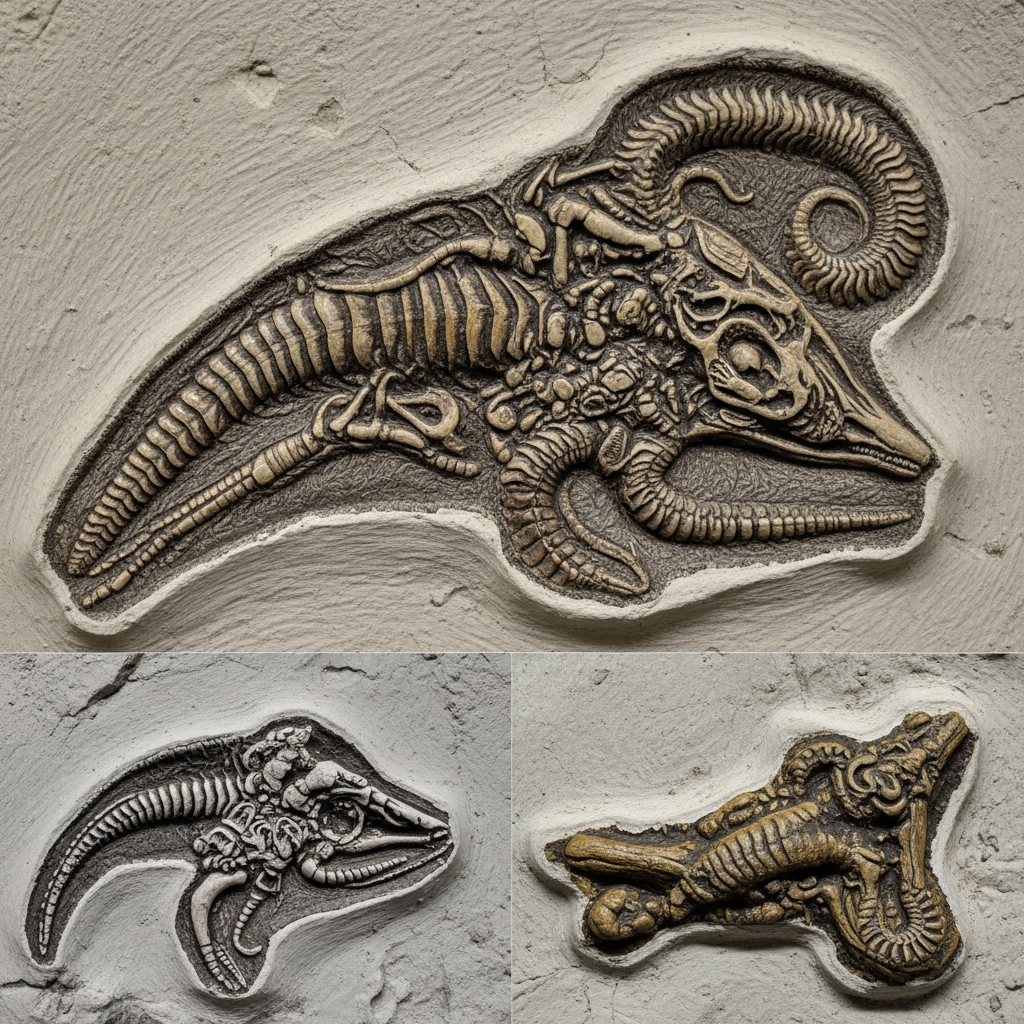
The diverse collection of Ediacaran fossils includes many “alien-looking” specimens. There are wormlike creatures tethered to the seafloor. Some are “sausage-shaped” animals. Others are fingerlike organisms with tentacles. The most frequently found animal was an unnamed worm-like creature. It was roughly the size of a human index finger. It rooted itself to the seafloor using a disk. The presence of over 100 examples suggests it densely populated the ancient ocean floor.
A crucial characteristic of these newfound complex animals is their bilateral symmetry. Their bodies are largely identical on the left and right sides. They feature a distinct head and anus. This body plan is a critical evolutionary adaptation. It facilitates movement and supports sophisticated nervous systems. Such bilaterians would eventually dominate the animal kingdom. Prior to this, scientists thought bilaterians primarily arose and diversified during the Cambrian period. The Jiangchuan fossils show otherwise.
Evidence of Early Deuterostomes and Other Lineages
Among the most significant discoveries are the oldest known relatives of deuterostomes. This major animal group includes vertebrates like fish and humans. This suggests a deeper evolutionary root for human ancestry than previously known. Ancestors of modern starfish and acorn worms were also found. These belong to a group called Ambulacraria. These early Ambulacrarians displayed a simple, specialized body plan. They featured a U-shaped body, a stalk for attachment, and tentacles for filter feeding. This indicates early adaptations for survival. The presence of ambulacrarians strongly implies that chordates, animals with a backbone, must have existed during this same ancient era.
Other unique fossils include cambroernids, a group with coiled bodies and filamentous tentacles. These were previously unknown before the Cambrian. Organisms resembling Margaretia, a Cambrian creature described as a tube with holes, were also identified. Rare fossils potentially representing early comb jellies were found. Some specimens reveal unusual combinations of body features. Tentacles, stalks, and eversible feeding structures were observed. These “strange designs” suggest early life experimented with a wide array of body forms. Many of these evolutionary experiments later disappeared. However, others led to modern lineages.
Resolving the “Rocks Versus Clocks” Evolutionary Puzzle
The Jiangchuan Biota discovery helps resolve a long-standing debate in paleontology. This debate is known as the “rocks versus clocks” conundrum. Genetic analyses, the “clocks,” had long suggested earlier animal evolution. They implied that the earliest common ancestors of complex animals existed during the Ediacaran period. However, the fossil record, the “rocks,” lacked direct evidence. There was no physical proof to support this genetic hypothesis.
Now, this new fossil site brings the “rocks and the clocks” into closer agreement. It provides tangible, physical evidence for early complex animal life during the Ediacaran. As Frankie Dunn states, it is “the first window” into how the modern animal-dominated biosphere formed. Emily Mitchell, a paleontologist at Cambridge not involved in the research, affirmed the study’s significance. She noted that a transitional stage between Ediacaran and Cambrian fauna was logically expected. Until now, specific fossil evidence was missing. The Jiangchuan Biota provides that crucial missing link.
Unraveling the Secrets of Fossil Preservation
The exceptional preservation of the Jiangchuan fossils is key to their significance. Most Ediacaran fossils are simple impressions left in rock. In contrast, these specimens are preserved as thin carbon films. This unique preservation method is rare for rocks of this age. It allowed scientists to discern intricate details. These include feeding organs, guts, and structures related to movement. Such clarity offers unparalleled insights into the biology of these ancient animals.
Professor Ross Anderson noted that the apparent absence of these complex animal groups from other Ediacaran sites might be misleading. It could be due to differences in preservation rather than their true biological absence. The carbonaceous compressions at Jiangchuan offer a level of detail comparable to the famous Burgess Shale site in Canada. This allows researchers to see characteristics that define modern animals. These include a mouth, a gut, and a proboscis or pharynx.
What’s Next? Understanding the “How” and “Why” of Life’s Explosion
With the “when” of complex life’s emergence becoming clearer, researchers now focus on deeper questions. They aim to understand not just when this “life explosion” happened, but how and why. Frankie Dunn is interested in disentangling feedbacks between Earth and life. She also explores interactions between different life forms. This research seeks to determine if the Ediacaran seafloor environment inevitably led to something akin to the Cambrian explosion.
University of California at Berkeley paleontologist Charles Marshall suggests several factors. He believes the “sudden” nature of the Cambrian explosion was likely due to sufficiently high oxygen levels on Earth. The presence of an already rich developmental genetic system also played a role. These early animals, with behaviors like eating each other and churning sediment, profoundly impacted the planet. Their emergence “changed the planet forever,” according to Duncan Murdock of Oxford’s museum. They laid the foundations for the diverse world we inhabit today. This discovery ignites new inquiries into the fundamental processes that led to complex life on Earth.
Frequently Asked Questions
What is the significance of the Jiangchuan Biota discovery?
The Jiangchuan Biota is a fossil site in Southwest China that contains over 700 exceptionally preserved specimens. These fossils, dating to the late Ediacaran period (554-539 million years ago), reveal that complex animal life, including ancestors of humans and starfish, emerged millions of years earlier than previously thought. This discovery fundamentally challenges the traditional view of the Cambrian explosion as a sudden event, suggesting a more gradual evolution of complex life and bridging a critical gap in the fossil record.
How do these new fossils change our understanding of the Cambrian Explosion?
The new fossils from the Jiangchuan Biota suggest the Cambrian explosion was not as sudden or “explosive” as once believed. Instead, many complex animal forms, like those with bilateral symmetry and advanced feeding systems, were already present in the late Ediacaran period. This implies that the diversification of animal body plans was a more drawn-out process, a “slow burn” rather than an abrupt burst, extending the timeline for complex animal evolution significantly into the Ediacaran.
What types of complex animals were found, and what do they tell us about human ancestry?
The Jiangchuan Biota yielded a diverse array of complex animals. Key finds include some of the oldest known relatives of deuterostomes, a major animal group that encompasses vertebrates like humans and fish. Early ancestors of starfish and acorn worms (Ambulacraria) were also discovered. These fossils show creatures with bilateral symmetry, distinct heads and anuses, and evidence of three-dimensional movement and active feeding. The presence of these early deuterostomes provides crucial fossil evidence supporting genetic studies that indicated a much deeper evolutionary root for human ancestry, linking us to life forms from over half a billion years ago.
Conclusion: A New Chapter in Evolutionary History
The discovery of the Jiangchuan Biota represents a monumental shift in our understanding of early complex animal life evolution. It definitively places sophisticated organisms, including direct ancestors of modern animals, millions of years before the once-accepted timeline. By reconciling genetic “clocks” with fossil “rocks,” this find provides a vital transitional snapshot between Earth’s earliest, simplest life forms and the diverse ecosystems we know today. This remarkable site in China’s Yunnan province not only enriches the fossil record but also opens new avenues for research into the intricate processes that sculpted the very foundations of life on our planet.