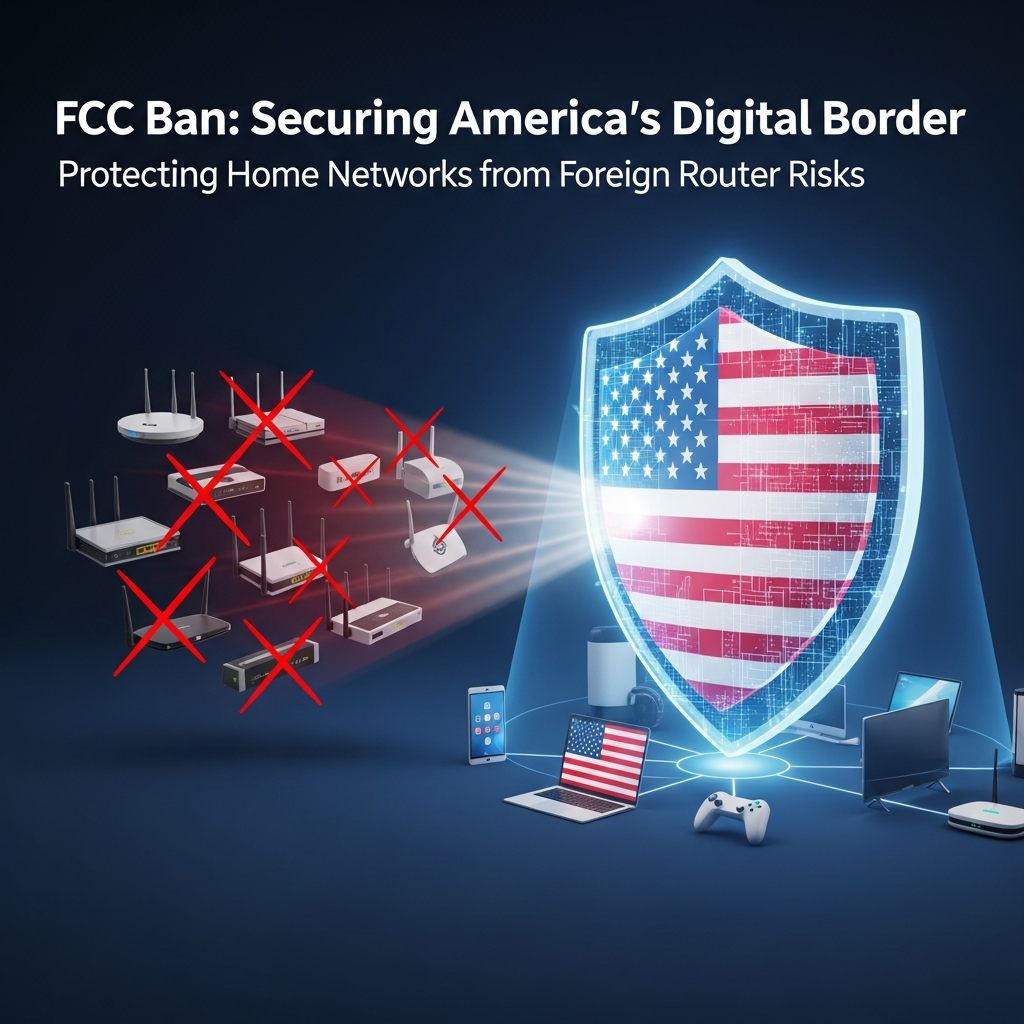
The United States has enacted a groundbreaking ban on new foreign-made consumer internet routers, marking a pivotal moment for national security and home network integrity. This sweeping regulatory change, spearheaded by the Federal Communications Commission (FCC), aims to fortify American digital infrastructure against escalating cyber threats. For millions of households and small businesses, understanding this shift is crucial for future internet security.
The Sweeping US Router Ban: What You Need to Know
In a significant update to its “Covered List” of equipment deemed insecure, the Federal Communications Commission announced a ban on all new consumer-grade internet routers manufactured outside the United States. This decision, mirroring a similar ban on foreign-made drones late last year, places an unprecedented emphasis on domestic production for critical networking hardware.
The ban specifically targets “new device models.” This means any router not already authorized by the FCC prior to the directive will no longer be approved for import, marketing, or sale in the US. Crucially, if you already own a foreign-made router, you are not required to replace it, and its continued use is permitted. However, the future market for new consumer routers will look very different.
The FCC defines a router as “foreign-made” if “any major stage of the process through which the device is made, including manufacturing, assembly, design and development,” occurs outside the US. This broad definition ensures that merely designing a product in the US but building it abroad will still trigger the ban.
Why the Urgent Action? National Security & Cyber Threats
The FCC’s stringent action stems from mounting concerns over the past year regarding national security. According to an Executive Branch determination, foreign-produced routers “pose an unacceptable risk to the national security of the United States and to the safety and security of U.S. persons.”
“Malicious actors have exploited security gaps in foreign-made routers to attack American households, disrupt networks, enable espionage, and facilitate intellectual property theft,” the FCC stated. These vulnerabilities in small and home office routers have reportedly been leveraged in direct attacks against American civilians in their homes.
Specifically, the FCC cited intelligence linking malicious access to routers with three significant cyberattacks — referred to as Volt, Flax, and Salt Typhoon. These attacks, reportedly targeting critical US infrastructure (including communications, energy, transportation, and water) between 2024 and 2025, were attributed by US government investigations to actors operating within, or on behalf of, the Chinese government.
Beyond direct attacks, the ban addresses a major supply chain vulnerability that could disrupt the US economy, critical infrastructure, and national defense. FCC Chair Brendan Carr emphasized the necessity of adding foreign-produced routers to the Covered List to protect national security. This move also aligns with previous legislative efforts, such as the 2021 Secure Equipment Act, which prohibited the FCC from licensing electronics from companies deemed national security threats, notably Chinese firms like Huawei and ZTE.
Navigating the New Landscape: Impact on Consumers and Businesses
For consumers, the primary takeaway is that your current foreign-made router remains operational. The ban’s impact will be felt when you need to purchase a new device. Future choices will be limited to routers that have either been manufactured domestically or have received a “conditional approval” from the FCC.
The process for obtaining this conditional approval is rigorous. Foreign manufacturing companies seeking to continue importing new products must:
Disclose their foreign investors or influence: This includes details about the firm’s management structure and ownership.
Provide a detailed account of their supply chain: Ensuring transparency regarding component sourcing and assembly.
- Present a clear plan to relocate the manufacturing of their routers to the United States: This is arguably the most challenging requirement, as it demands a fundamental shift in global production strategies.
- www.bbc.com
- www.cnet.com
- www.theverge.com
- www.shacknews.com
- gizmodo.com
While the Department of Defense (DoD) or Department of Homeland Security (DHS) can grant exemptions, neither agency has yet specified any such exceptions. This underscores the comprehensive nature of the new regulation, signaling a clear push for domestic manufacturing.
Key Players Affected: From Giants to Niche Brands
The ban will profoundly impact the global electronics manufacturing landscape. The vast majority of internet routers are currently assembled or manufactured outside the US, primarily in Taiwan, China, Vietnam, and Thailand. This means the ruling affects not just foreign companies, but also major US brands that rely on overseas production.
Prominent router brands like TP-Link, Asus, Netgear, Google, Cisco, Amazon, D-Link, Eero, and Razer are all expected to be significantly affected. For instance, Netgear, a US company, manufactures nearly all of its products abroad. Its stock saw a temporary rise after the announcement, with a spokesperson commending the Administration and FCC for “action toward a safer digital future.”
TP-Link, a China-founded company that has been a bestseller on Amazon, has been under intense scrutiny for over a year due to its perceived ties to China. The company has actively sought to distance itself, establishing a global headquarters in California and attempting to rebrand, noting that virtually all routers are made outside the US, including those by US-based companies.
A notable exception to this trend of foreign manufacturing is the newer Starlink WiFi router, part of Elon Musk’s SpaceX, which the company states is manufactured in Texas. This highlights the growing potential for domestic production to meet the new regulatory demands.
Beyond Manufacturing Location: A Deeper Look at Router Security
While the ban focuses on the country of origin for manufacturing, an important nuance exists regarding router security. As some experts point out, the location of manufacturing isn’t always the sole determinant of vulnerability.
For example, in the aforementioned Volt Typhoon hack, state-sponsored Chinese hackers targeted Cisco and Netgear routers. In these specific instances, the vulnerability stemmed not from foreign manufacturing, but because the US companies had ceased providing security updates for the particular router models, which had been discontinued.
This insight suggests that robust software support, consistent security updates, and a comprehensive product lifecycle management strategy are equally, if not more, critical for maintaining router security. Consumers should understand that “Made in USA” doesn’t automatically guarantee impenetrable security without ongoing software vigilance. The ban, however, aims to mitigate risks associated with potential hardware-level backdoors or state-sponsored influence within the supply chain.
The Road Ahead: Onshoring Challenges and Market Shifts
The new FCC directive presents formidable challenges for router manufacturers. Rapidly relocating manufacturing operations to the United States will require substantial investment, restructuring of supply chains, and potentially higher production costs. This could lead to increased prices for consumers and a temporary reduction in product availability as companies adapt.
However, the policy also aims to foster a more resilient and secure domestic tech manufacturing base. The long-term vision is a router supply chain that is less susceptible to foreign influence and more directly accountable to US regulatory oversight. The market will likely see an acceleration of efforts to either onshore production or seek conditional approvals by demonstrating clear plans to do so. The full economic and market impacts will unfold in the coming months and years as companies strategize their response to this landmark shift.
Frequently Asked Questions
Why has the FCC banned foreign-made internet routers?
The FCC banned new foreign-made consumer internet routers primarily due to national security concerns. US government agencies determined that these devices pose “unacceptable risks” related to cybersecurity attacks, espionage, intellectual property theft, and the disruption of critical American infrastructure. Specific cyberattacks, including Volt, Flax, and Salt Typhoon (2024-2025), were attributed to foreign actors exploiting vulnerabilities in these routers, prompting the urgent regulatory action to secure the US digital supply chain.
Do I need to replace my existing foreign-made router due to this ban?
No, you do not need to replace your existing foreign-made router. The FCC ban applies only to “new device models” that have not received prior FCC authorization. Any foreign-made router you currently own and use is still permitted. The ban primarily impacts future purchases, as new routers sold in the US will now need to be manufactured domestically or obtain specific conditional approval, including a plan to move production to the US.
Which router brands are most affected by the new US manufacturing requirements?
The ban significantly impacts nearly all major consumer router brands, including US companies that manufacture their products overseas. Brands like TP-Link, Netgear, Asus, Google, Amazon, Cisco, and D-Link, which largely produce devices in countries like Taiwan, China, or Vietnam, will be heavily affected. These companies will either need to relocate manufacturing to the US or secure conditional approval by presenting a clear plan to do so. An exception is the newer Starlink WiFi router, which is manufactured in Texas.
Conclusion: A New Era for Internet Security
The US ban on new foreign-made consumer internet routers represents a decisive move towards bolstering national security in the digital age. By targeting the very hardware that forms the backbone of our connected lives, the FCC aims to mitigate severe cybersecurity risks and reduce reliance on vulnerable foreign supply chains. While this shift will undoubtedly bring challenges for manufacturers and potentially alter the consumer market, it underscores a critical re-evaluation of how we secure our most fundamental digital connections. For consumers, staying informed about future product options and prioritizing router security—including regular software updates—will be more important than ever.