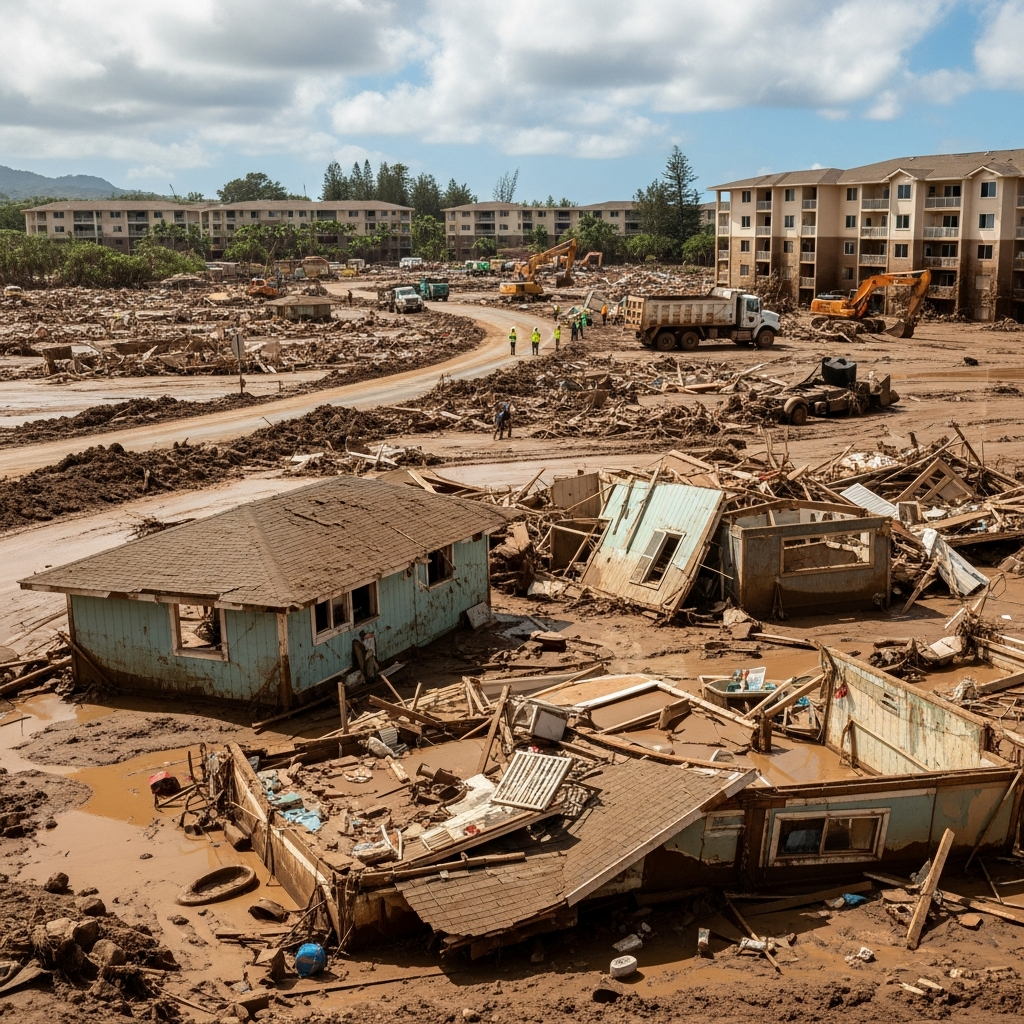
Hawaii is grappling with its most severe flooding in two decades, a catastrophic event that has turned lush landscapes into mud-laden ruins and left a trail of emotional and financial devastation. Triggered by a rare succession of powerful “Kona Low” storms in March 2026, the deluge has inflicted over a billion dollars in preliminary damage, fundamentally reshaping communities across O’ahu and Maui. As residents begin the arduous journey of recovery, the profound impact on lives and infrastructure underscores the islands’ vulnerability and the urgent need for long-term resilience strategies.
Hawaii’s Unprecedented Flood Crisis: A Billion-Dollar Impact
The beautiful Hawaiian Islands faced an unprecedented natural disaster in March 2026. A pair of intense winter storms unleashed historic rainfall, leading to widespread flooding. The preliminary damage estimates from this catastrophic event are staggering, projected to exceed $1 billion. This includes extensive harm to homes, businesses, critical infrastructure, and the environment.
For many, the cost is far more personal than financial. Melanie Lee, an O’ahu resident, tragically recounted losing “everything” from her home of nearly 20 years. Sentimental items, family photographs, and irreplaceable memories were all swept away by the relentless floodwaters. Her heartfelt question, “now where we go from here?”, echoes the profound uncertainty felt by countless families. Even Honolulu-born actor Jason Momoa and his family were forced to evacuate their North Shore home due to power outages and rising waters, highlighting the indiscriminate nature of the disaster. Carol Philips, Vice President of the North Shore Chamber of Commerce, grimly noted that some houses, like one inhabited by eight people, were simply “gone.”
The “Kona Low” Deluge: Unpacking the Storm
The relentless flooding was a direct consequence of two consecutive “Kona Low” storm systems. These are Hawaii’s unique winter cyclones, typically bringing heavy rains to the leeward, usually drier, sides of the islands. While Hawaii experiences one or two such storms annually, it is exceptionally rare for two to strike within the same month, let alone within a week. The first system, active from March 10-16, saturated the ground with over four feet of localized rainfall. The second, intensifying around March 21, brought torrential downpours at rates of two to four inches per hour, exacerbating an already critical situation.
This dual onslaught far surpassed the severity of the 2004 Manoa Flood, previously considered one of Hawaii’s worst. That event, which brought 8.71 inches of rain in six hours, caused an estimated $85 million in damage. The sheer scale and projected costs of the March 2026 Kona Lows mark them as a truly catastrophic benchmark for the state. Experts are increasingly linking the observed increase in the intensity and frequency of heavy rainfall in Hawaii directly to human-caused global warming. This connection highlights a critical long-term concern for the islands’ future and points to the broader implications of climate change on vulnerable regions.
Widespread Destruction Across O’ahu and Maui
The sheer force of the floodwaters devastated communities across both O’ahu and Maui. The impact was widespread, affecting everything from residential areas to vital public services. Emergency responders were stretched thin, conducting over 200 rescues from the rapidly rising waters. Sadly, some individuals required hospital treatment for hypothermia, a stark reminder of the immediate dangers posed by the severe conditions.
O’ahu’s Ordeal
On O’ahu, the North Shore bore the brunt of the devastation. Communities like Waialua, Haleʻiwa, and Mokuleia experienced unprecedented damage. Satellite imagery vividly depicted flooded farms, fields, and buildings, with muddy storm debris flowing into the ocean. Homes were not only inundated with mud but in some cases were lifted off foundations, swept onto beaches, or even split in half. Roads became impassable rivers, and in Makaha Valley, one road section collapsed entirely, sending vehicles over the edge. More than 2,000 people were left without power over the weekend, with Hawaiian Electric working tirelessly to restore services. Evacuation orders were issued for thousands north of Honolulu, underscoring the immediate threat to life and property. The National Guard was deployed to northern O’ahu, wading through waist-deep water to assist stranded motorists and mudbound homeowners.
Maui’s Ongoing Battle
The island of Maui, still reeling from the devastating wildfires two years prior that killed 102 people, faced a fresh wave of sorrow. The recent flooding added immense emotional and financial burden to an already struggling population. The storms blasted down riverbeds, destroyed crucial bridges and roads, and swallowed vehicles whole. A hospital in Kula was also impacted, adding to the state’s healthcare challenges. U.S. Rep. Jill Tokuda, representing parts of O’ahu, articulated the overwhelming feelings within these communities, where some residents had only recently moved into new homes after the fires, only to face another major disaster.
The Critical Threat to Wahiawa Dam
A particularly alarming aspect of the crisis was the “imminent risk of failure” of the 120-year-old Wahiawa dam in Central O’ahu. Classified as being in “poor condition” with a “high hazard potential,” the potential breach of this dam posed an existential threat to thousands. Emergency evacuation orders, stating “LEAVE NOW,” were issued for an estimated 4,000 to 5,500 residents living downstream in Haleʻiwa and Waialua. Officials warned that the sole remaining access road out of Waialua was also at high risk of failure if heavy rains continued. Fortunately, as water levels receded, the immediate danger to the dam subsided, though it remains under close monitoring. This incident highlighted critical infrastructure vulnerabilities across the islands.
Recovery, Resilience, and Federal Support
As the worst of the storms passed, attention quickly shifted to the monumental task of recovery. Residents and volunteers immediately mobilized, organizing clean-up parties and rescue efforts, even for pets. The spirit of aloha, community, and mutual support was evident amidst the debris and despair. Governor Josh Green confirmed that his chief of staff had secured assurances of federal support from the White House, a vital lifeline for the state’s rebuilding efforts.
Public safety measures remain ongoing. A boil water notice was issued for North Shore areas from Mokuleia to Turtle Bay, and residents were urged to report any damages to city authorities. While no fatalities were reported, the long-term economic and emotional costs are immense. The challenge now is not just to rebuild structures but to support the emotional well-being of communities that have endured successive tragedies.
Climate Change’s Shadow: A Looming Concern
The recent “Kona Low” events serve as a stark reminder of Hawaii’s increasing vulnerability to extreme weather. Scientific insights indicate a direct link between the rising intensity and frequency of heavy rainfall in Hawaii and human-caused global warming. This connection implies that such severe weather events may become more common, placing greater pressure on the islands’ infrastructure and emergency response systems.
This pattern underscores the critical need for Hawaii to enhance its climate resilience strategies. Investments in robust infrastructure, early warning systems, and community-based preparedness are paramount. The devastating floods of 2026, coming so soon after the Maui wildfires, highlight a challenging new reality. Future planning must account for these intensified climate threats to protect both the natural beauty and the vibrant communities of the islands.
Frequently Asked Questions
What caused the severe Hawaii flooding in March 2026?
The catastrophic Hawaii flooding in March 2026 was primarily caused by two consecutive “Kona Low” storm systems. These are unique winter cyclones that bring intense, moisture-laden winds to the islands. It’s rare for Hawaii to experience two such powerful storms within such a short timeframe, especially after an earlier storm had already saturated the ground. The combined effect of these systems delivered up to four feet of rain in some areas, leading to widespread flash flooding and unprecedented devastation. Experts also suggest a link between the increased intensity of these rainfall events and human-caused global warming.
Which areas of Hawaii were most impacted by the recent floods, and what is the status of recovery efforts?
The islands of O’ahu and Maui bore the brunt of the severe flooding. On O’ahu, the North Shore communities of Waialua, Haleʻiwa, and Mokuleia experienced extensive damage, including homes being swept away and critical roads collapsing. Maui, already recovering from devastating wildfires two years prior, saw riverbeds blasted, bridges and roads destroyed, and a hospital in Kula impacted. As of late March 2026, the immediate danger from the storms passed, and initial recovery efforts are underway with community clean-ups and federal support assurances. However, the long-term rebuilding process is expected to be extensive and challenging.
How does this flooding impact future preparedness for similar climate-related disasters in Hawaii?
This unprecedented flooding event significantly impacts Hawaii’s future disaster preparedness. It highlights the islands’ increasing vulnerability to extreme weather, especially given the scientific link between intensified rainfall and climate change. The incident, particularly the threat to the Wahiawa dam and the strain on existing infrastructure, underscores the urgent need for enhanced climate resilience strategies. This includes strengthening infrastructure, improving early warning systems, and fostering community-based preparedness programs. The event serves as a critical lesson for adapting to a future with more frequent and intense climate-related challenges.
Facing the Future: Hawaii’s Path to Rebuilding
The March 2026 floods represent a profound moment for Hawaii, testing the resilience of its people and infrastructure. While the immediate crisis has subsided, the journey to full recovery will be long and complex, demanding sustained effort, resources, and emotional support. This disaster, coupled with recent wildfires, serves as a poignant reminder of the escalating impacts of climate change on vulnerable regions. As the islands embark on the path to rebuilding, the spirit of aloha and community solidarity will be crucial, inspiring hope and demonstrating the enduring strength of Hawaii in the face of adversity. The lessons learned from this unprecedented event will undoubtedly shape the future of disaster preparedness and climate adaptation for the entire state.