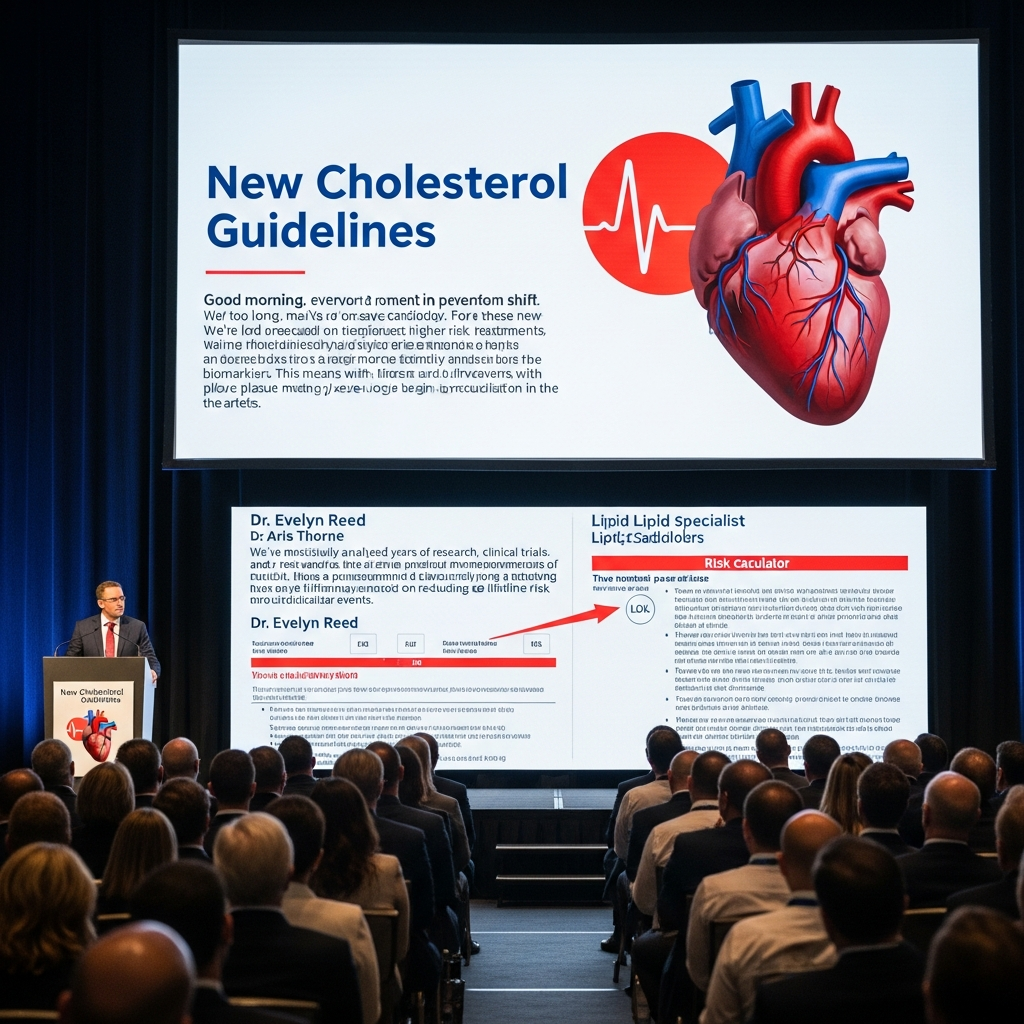
Heart disease remains the leading cause of death globally, silently impacting millions. For too long, cholesterol management has focused on intervention after risk factors escalate. However, a groundbreaking shift is underway. Major health organizations like the American Heart Association (AHA) and American College of Cardiology (ACC) have released updated cholesterol guidelines, emphasizing a more aggressive, personalized, and proactive approach to heart health. These new recommendations prioritize earlier intervention, sophisticated risk assessment tools, and comprehensive strategies to protect your heart throughout your lifetime.
This pivotal update, published in leading medical journals like Circulation and the Journal of the American College of Cardiology (JACC), aims to redefine how doctors and patients manage dyslipidemia – an imbalance of blood fats like cholesterol and triglycerides. With an estimated 4.4 million deaths annually linked to high cholesterol, and one in four U.S. adults grappling with elevated “bad” cholesterol (LDL-C), these guidelines couldn’t be more critical. The message is clear: prevention starts now, not later.
Understanding Dyslipidemia: More Than Just “High Cholesterol”
Dyslipidemia is a broad term encompassing any abnormality in the lipids or fats circulating in your blood. While high cholesterol, specifically elevated low-density lipoprotein cholesterol (LDL-C), is the most common form, dyslipidemia also includes low levels of “good” cholesterol (HDL-C) and high triglycerides.
Dr. Rodrigo Mendirichaga Magana, an interventional cardiologist, explains that these imbalances cause plaque to gradually build up in artery walls. Over time, this plaque narrows arteries and can rupture, leading to a heart attack or stroke. The insidious nature of dyslipidemia is that it’s often “silent,” presenting no symptoms until a serious event occurs. This makes early detection and management profoundly important for long-term health. Beyond heart attacks and strokes, dyslipidemia increases the risk for high blood pressure, peripheral artery disease, atherosclerosis, coronary artery disease, type 2 diabetes, pancreatitis, and chronic kidney disease.
The Pillars of Prevention: Lifestyle First
A cornerstone of the updated guidelines is the profound emphasis on earlier intervention through healthy lifestyle choices. Experts like Dr. Heather Johnson, director of preventive cardiology, stress that the most powerful tools for protecting your heart are readily available to everyone, no prescription needed.
The guidelines highlight five essential pillars for high cholesterol prevention:
Heart-Healthy Diet: Prioritize whole foods like fruits, vegetables, whole grains, and lean proteins, while minimizing ultra-processed options, saturated fats, and completely eliminating trans fats. Incorporating soluble fiber (oatmeal, beans, apples) and even whey protein can positively impact cholesterol levels.
Regular Physical Activity: Aim for at least 150 minutes of moderate exercise per week. Consistent activity helps raise “good” HDL cholesterol and improves overall cardiovascular health.
Avoiding Tobacco: All forms of tobacco use significantly harm your heart and blood vessels. Complete abstinence is crucial.
Quality Sleep: Treat sleep as a health priority. Adequate and consistent sleep plays a vital role in metabolic and cardiovascular health.
- Maintaining a Healthy Weight: Achieving and maintaining a healthy weight reduces strain on your heart and improves lipid profiles.
- www.medicalnewstoday.com
- www.aol.com
- www.aol.com
- www.foodbible.com
- www.aol.com
Dr. Johnson emphasizes that “small, consistent habits matter.” The goal is lifespan-based prevention, making sustainable changes rather than short-term fixes, to shape heart risk over decades, not just weeks.
Empowering Risk Assessment: The PREVENT Calculator
One of the most significant advancements in the new guidelines is the recommendation for the Predicting Risk of Cardiovascular Disease EVENTs (PREVENT) calculator. This contemporary tool offers a more individualized and precise estimate of a person’s risk for heart attack and stroke.
The PREVENT calculator provides both 10-year and 30-year risk estimates, making it applicable for individuals as young as 30. Dr. Johnson explains that this tool transforms the conversation from a simple “What is your cholesterol number?” to “What is your overall risk, and should we act earlier to lower it?” By factoring in elements like body mass index, cholesterol levels, blood pressure, age, and tobacco use, PREVENT helps clinicians and patients determine when lifestyle changes are sufficient and when medication should be considered sooner. This earlier, more comprehensive assessment is crucial, as heart disease is now clearly viewed as a “lifelong disease,” according to Dr. Christopher Kramer of UVA Health.
Uncovering Hidden Dangers: Advanced Cholesterol Testing
Beyond standard lipid panels, the updated guidelines advocate for the appropriate use of three additional tests to enhance cardiovascular risk assessment, especially when more intense LDL-C lowering strategies might be needed. These tests offer deeper insights into your personal risk profile:
Coronary Artery Calcium (CAC) Scan
As explained by Dr. Nathaniel Lebowitz, a cardiologist at Hackensack University Medical Center, a CAC scan is a quick, non-contrast CT scan that directly looks for existing plaque buildup in your heart’s arteries. This scan tells doctors if damage is already present, providing a tangible measure of atherosclerosis development. The guidelines suggest screening for calcium buildup for men aged 40+ and women 45+ with borderline or intermediate 10-year risk.
Lipoprotein(a) [Lp(a)]
Dr. Estelle Jean, a cardiologist with MedStar Health, highlights Lipoprotein(a) (Lp(a)) as a crucial, often overlooked, genetic risk factor. This is a one-time blood test that checks for an inherited, “sticky” type of cholesterol that typically doesn’t improve with lifestyle changes. Lp(a) levels remain stable throughout life, so a single measurement is usually sufficient. Affecting an estimated 64 million Americans, high Lp(a) levels reveal “hidden risk” for atherosclerotic cardiovascular disease, even in young, seemingly healthy individuals with otherwise normal cholesterol. International guidelines are increasingly recommending this test for all adults at least once in their lifetime, as it significantly aids in personalizing prevention strategies.
Apolipoprotein B (ApoB)
Apolipoprotein B (ApoB) is another valuable blood test that counts all the “bad,” artery-clogging particles in your blood. This offers a more accurate measure of risk than a standard LDL number alone, especially for individuals with high triglycerides, type 2 diabetes, or cardiovascular-kidney-metabolic syndrome. Dr. Kevin Shah, a cardiologist at MemorialCare Heart & Vascular Institute, notes that these additional tools provide vital insights beyond routine panels, allowing doctors to counsel patients more effectively about their long-term risk.
Targeting Triglycerides and Early Life Interventions
The updated guidelines also bring renewed focus to specific conditions and demographics:
Hypertriglyceridemia Management
High triglycerides, a type of fat in the blood often linked to simple carbohydrates, are now recognized as a significant risk-enhancing factor for heart disease. Dr. Yu-Ming Ni, a cardiologist and lipidologist, states that elevated triglycerides may warrant a more aggressive treatment plan. Critically, very high triglycerides (above 500 mg/dL) can indicate a genetic condition or acquired disorder that impairs triglyceride processing, leading to an elevated risk of pancreatitis – a dangerous, life-threatening illness. In such cases, triglyceride lowering is prioritized. The guidelines acknowledge new classes of treatments, such as olezarsen and plozasiran, which can significantly reduce triglycerides for these patients.
Acknowledging Early-Life Cholesterol Risk
Perhaps one of the most proactive recommendations is the acknowledgment that high cholesterol can begin early in life, profoundly impacting future heart disease risk. The guidelines now recommend universal cholesterol screening for all children aged 9 to 11 years old. Dr. Kaavya Paruchuri, director of the Lipid Apheresis Unit at Mass General Health, explains that this reflects growing evidence that atherosclerosis begins in childhood. Early screening helps identify conditions like familial hypercholesterolemia or lifestyle-related lipid abnormalities before symptoms develop. This upstream prevention strategy allows for timely lifestyle changes and, when necessary, medication, substantially reducing lifetime cardiovascular risk decades before clinical disease appears.
New LDL Targets and Earlier Medication
The new guidelines also set more aggressive and precise targets for LDL cholesterol levels, and expand recommendations for statin therapy. For most individuals without significant risk factors, the aim is now below 100 mg/dL. For those at “higher risk,” the goal drops to below 70 mg/dL. Importantly, for patients already diagnosed with heart disease, the recommended target is even lower, below 55 mg/dL, based on research showing fewer adverse events at these levels.
For the first time since 2018, these guidelines explicitly advise statin therapy for adults as young as 30 who meet specific criteria. This includes individuals with an LDL cholesterol level of 160 mg/dL or higher, a strong family history of premature heart disease, or a high 30-year risk of developing cardiovascular disease. Dr. Steven Nissen of the Cleveland Clinic notes that previous guidelines were often too conservative, and these new recommendations encourage considering LDL-lowering treatment for patients with even borderline or intermediate 10-year risks if their lifetime risk is high. This proactive approach aims to limit long-term exposure to high LDL cholesterol, a powerful predictor of heart-related events.
Ultimately, these updated cholesterol guidelines represent a comprehensive “one-stop shop” for managing blood lipids, ushering in an era of more precise, individualized, and equitable prevention. While the fundamental risk factors remain (cholesterol, blood pressure, diabetes, smoking, obesity), the new framework empowers both patients and clinicians to act earlier and more effectively, maximizing the potential to prevent heart disease and stroke, which the AHA estimates are 80% preventable through lifestyle changes.
Frequently Asked Questions
What are the core changes introduced in the new cholesterol management guidelines?
The updated guidelines, released by the AHA and ACC, emphasize earlier, more aggressive, and personalized cholesterol management, shifting focus from treatment to lifelong prevention. Key changes include universal cholesterol screening for children aged 9-11, earlier intervention through lifestyle changes for adults, the use of a new PREVENT calculator for individualized 10-year and 30-year risk assessment, and recommendations for additional diagnostic tests like CAC scans, Lp(a), and ApoB to uncover “hidden risk.” They also introduce more stringent LDL cholesterol targets and advise statin therapy for certain individuals as young as 30.
What specific new tests might my doctor recommend to assess my cardiovascular risk?
Beyond standard cholesterol panels, your doctor might recommend three advanced tests based on the new guidelines. A Coronary Artery Calcium (CAC) scan can detect existing plaque in your heart’s arteries. A Lipoprotein(a) (Lp(a)) blood test is a one-time genetic screen for a “sticky” cholesterol type that doesn’t respond to lifestyle changes and reveals hidden risk. Finally, an Apolipoprotein B (ApoB) blood test measures all artery-clogging particles, providing a more accurate risk assessment than LDL alone, especially for those with high triglycerides or diabetes. These tests offer deeper insights to tailor your prevention plan.
When should I start discussing cholesterol management with my doctor, especially if I feel healthy?
The new cholesterol guidelines emphasize early and lifelong prevention. You should discuss cholesterol management with your doctor much sooner than previously advised, even if you feel healthy. Universal screening is now recommended for children aged 9-11. For adults, the guidelines suggest that individuals as young as 30, especially those with an LDL-C level of 160 mg/dL or higher, a strong family history of early heart disease, or risk factors identified by the new PREVENT calculator (which provides 10-year and 30-year risk estimates for individuals aged 30-79), should proactively engage in discussions about lifestyle interventions and potential medication options like statins. Don’t wait for symptoms; prevention is key.
These new cholesterol guidelines mark a transformative moment in cardiovascular health. By understanding these updates and actively engaging with your healthcare provider, you can take control of your heart health much earlier and more effectively. Remember, knowledge is power, and proactive steps today can safeguard your future. Discuss your personal risk factors, the PREVENT calculator, and advanced testing options with your doctor to create a tailored prevention plan. Your heart will thank you.