Humanity stands on the brink of a historic return to deep space. NASA’s groundbreaking Artemis II mission is poised to launch, sending astronauts on an unparalleled journey around the Moon for the first time in over 50 years. This monumental endeavor, utilizing the mighty Space Launch System (SLS) rocket and Orion capsule, represents a crucial step in our quest to establish a sustained lunar presence and eventually reach Mars. Get ready to witness a new era of exploration as preparations intensify at the Kennedy Space Center in Florida.
The Journey Begins: Rollout to Launch Pad 39B
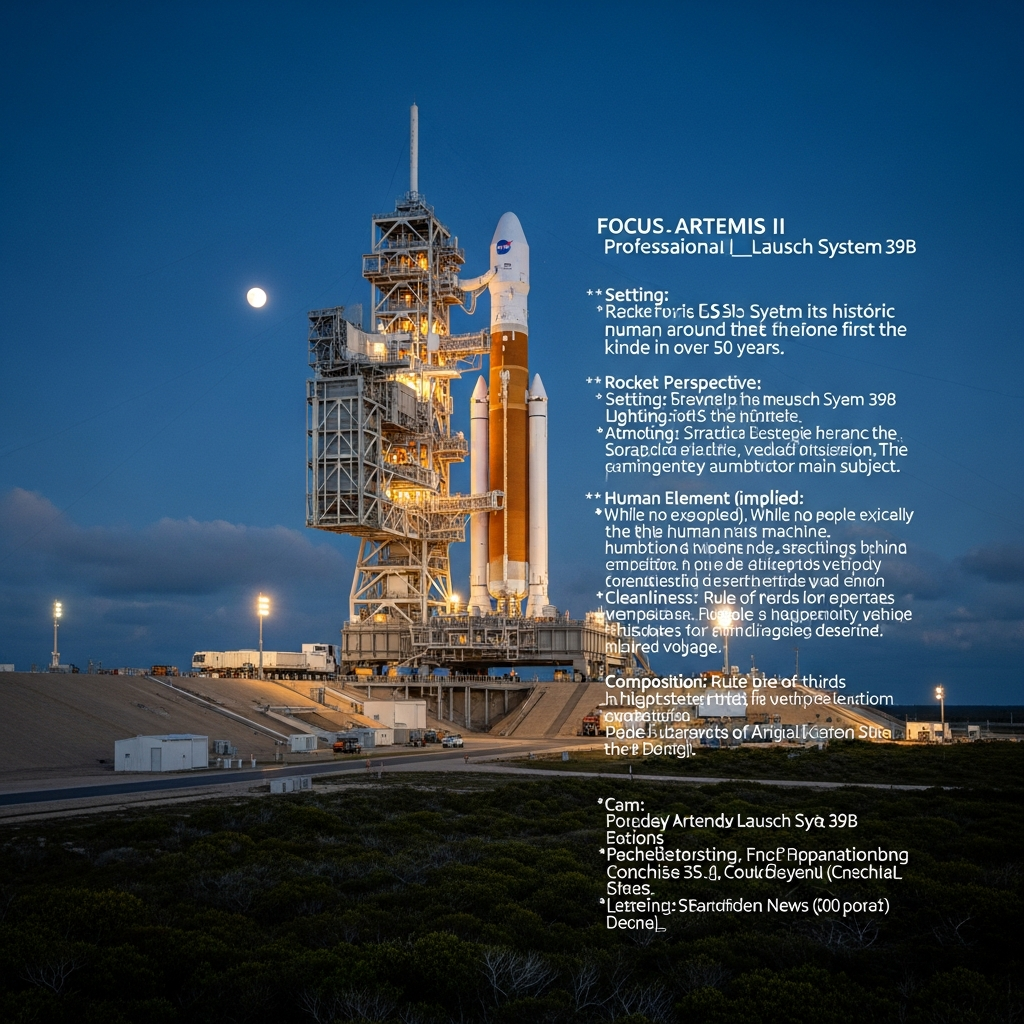
The visual spectacle of the Artemis II launch preparations recently captivated the world. On Saturday, January 17, 2026, at 6:42 p.m. EST, NASA achieved a major milestone. The towering SLS rocket, integrated with the Orion spacecraft, completed its meticulous nearly 12-hour trek to Launch Complex 39B. This intricate 4-mile journey from the Vehicle Assembly Building (VAB) was undertaken by NASA’s crawler-transporter 2.
This colossal vehicle, a veteran from the Apollo and Space Shuttle eras, moved at a deliberate pace of just 0.82 to 1 mph. Thousands of space center workers, their families, and NASA Administrator Jared Isaacman witnessed the awe-inspiring event. Crew commander Reid Wiseman articulated the feeling of the moment, stating, “What a great day to be here.” The immense rocket and capsule, weighing 11 million pounds, signified a tangible step towards a new chapter in human spaceflight. A brief pause outside the VAB’s high-bay doors allowed teams to reposition the crew access arm. This arm provides astronauts and the closeout crew direct access to the Orion spacecraft on launch day, underscoring the crewed nature of this pioneering mission.
Artemis II Mission Overview: A Historic Lunar Fly-Around
The Artemis II mission is not just another space launch; it’s a testament to human ingenuity and a bridge to our future among the stars. This flight will mark the first time humans travel beyond Earth orbit to the Moon in over five decades.
Target Launch Date and Backup Windows
NASA teams are currently targeting Wednesday, April 1, 2026, for the Artemis II launch from Kennedy Space Center. This date became firm as of Tuesday, March 17, following extensive work to resolve prior issues with the Space Launch System rocket. While April 1st is the primary goal, NASA’s timeline includes several backup launch opportunities. Should weather or other unforeseen factors cause a delay, alternative dates between April 3-6 remain possibilities. The focus is squarely on ensuring every system is flawless before launch.
Meet the Trailblazing Crew
Four courageous astronauts will embark on this historic voyage aboard the Orion capsule. The crew for the Artemis II mission includes NASA astronauts Reid Wiseman (Commander), Victor Glover (Pilot), and Christina Koch (Mission Specialist). Joining them is Canadian Space Agency (CSA) astronaut Jeremy Hansen, a former fighter pilot, making his first rocket ride into space. These trailblazers represent an international partnership in humanity’s return to the Moon, building on the legacy of previous lunar explorers. The surviving Apollo-era moonwalkers are “so fired up that we are headed back to the moon,” according to Wiseman, eager to see humans discovering the unknown far from Earth.
The Powerful Space Launch System (SLS) and Orion
The Artemis II mission hinges on the immense power of NASA’s Space Launch System (SLS) rocket. Standing at a towering 322 feet (98 meters), the SLS will propel the Orion capsule towards the Moon. Built by Lockheed Martin, the Orion spacecraft is designed for deep-space travel. On this 10-day trip, the crew will not make a lunar landing. Instead, they will circle the Moon, with the Orion capsule traveling approximately 4,700 miles beyond the far side. This trajectory will take its passengers farther into space than any humans have previously ventured. The primary objective is to rigorously test critical systems and hardware in a crewed environment, preparing for future expeditions to the lunar surface.
Crucial Preparations: Wet Dress Rehearsal and Final Checks
Before a definitive launch date can be set, meticulous final preparations are underway. Engineers and technicians at Kennedy Space Center are concentrating on readying the Artemis II rocket for its essential wet dress rehearsal. This comprehensive test is currently targeted for no later than February 2, 2026.
The wet dress rehearsal is a vital step designed to thoroughly evaluate fueling operations and countdown procedures. During this rigorous test, the team will load the rocket with cryogenic, or super-cold, propellants. They will then run through the entire launch countdown sequence, mimicking launch day operations. Finally, they will practice the safe draining of these propellants from the rocket. These procedures are deemed indispensable for ensuring the vehicle is fully ready for its first crewed mission. NASA Administrator Isaacman emphasized that an actual launch date would not be communicated until this crucial demonstration is completed. The space agency has also indicated that additional wet dress rehearsals might be necessary, and the SLS and Orion could even be rolled back to the Vehicle Assembly Building for further work if required. This thoroughness highlights NASA’s unwavering commitment to safety and mission success.
The Grand Vision: NASA’s Artemis Program Roadmap
The Artemis II mission is not an isolated event; it’s a critical component of NASA’s ambitious, long-term Artemis program. This program represents a sustained effort to enable human exploration of the Moon and, ultimately, Mars.
From Artemis I to a Permanent Lunar Base
The journey began with Artemis I, which successfully launched on November 16, 2022, from Kennedy Space Center. That uncrewed test flight sent the Orion capsule on an orbit around the Moon, serving as the inaugural test of the vehicle and overall system. Although Artemis I experienced some issues, including heat shield damage, extensive analyses and tests stemming from these findings have contributed to the thorough preparations for Artemis II. “This one feels a lot different, putting crew on the rocket and taking the crew around the moon,” noted NASA’s John Honeycutt, emphasizing the human element.
Looking beyond Artemis II, NASA recently updated its timeline for subsequent missions. A new mission, now designated Artemis III, is planned for 2027. This mission will involve astronauts aboard the Orion capsule meeting and docking in Earth orbit with at least one of the commercial lunar landers being developed by private companies. Following this, the first human Moon landing under the program, Artemis IV, has been rescheduled for 2028. After Artemis IV, NASA plans for Moon landings to occur approximately once a year. The long-term strategic goal is to establish a permanent human lunar base, which will serve as a crucial staging point for future crewed missions to Mars.
Commercial Partnerships Powering Deep Space
The future of space exploration is increasingly collaborative, with commercial partners playing a pivotal role. The Artemis program leverages the innovation of private companies like Elon Musk’s SpaceX and Jeff Bezos’ Blue Origin. These companies are developing the advanced lunar landers vital for the Artemis III mission and beyond. The integration of commercial capabilities, such as those demonstrated by SpaceX’s “Version 3” Starship, which recently completed static fire tests of its powerful Raptor engines, is accelerating the timeline for deep space exploration. These partnerships highlight a dynamic shift in how humanity is reaching for the stars, combining governmental expertise with private-sector agility to achieve unprecedented feats.
Frequently Asked Questions
What is the primary goal of the Artemis II mission?
The primary goal of the Artemis II mission is to conduct the first crewed flight test of the Space Launch System (SLS) rocket and Orion spacecraft. This 10-day mission will send four astronauts on a journey around the Moon, venturing farther into space than any humans have been before (approximately 4,700 miles beyond the lunar far side). It aims to rigorously test the Orion’s life support systems, spacecraft capabilities, and crew procedures in a deep-space environment, all in preparation for future lunar surface landings.
Where will the Artemis II rocket launch from, and how can I track its progress?
The Artemis II rocket will launch from Launch Complex 39B at NASA’s Kennedy Space Center in Florida. This iconic launch site has been central to American spaceflight history. While specific tracking methods will become available closer to the Artemis II launch date, NASA typically provides live streams of launch events on its official website (nasa.gov) and through its social media channels. News outlets covering space exploration will also offer extensive updates and tracking information.
How does Artemis II pave the way for future human missions to the Moon and Mars?
Artemis II is a foundational step in NASA’s long-term Artemis program. By validating the SLS rocket and Orion spacecraft with a crew, it proves the essential hardware and systems needed for human deep-space travel are ready. This mission directly enables subsequent steps, including the planned Artemis III (docking with commercial lunar landers in Earth orbit in 2027) and Artemis IV (the first human lunar landing in 2028). Ultimately, the experience and infrastructure gained from these lunar missions, including establishing a permanent lunar base, are crucial for developing the capabilities required to send humans to Mars.
A New Era of Exploration Awaits
The impending Artemis II launch from Kennedy Space Center in Florida is more than just a date on a calendar; it’s a testament to humanity’s enduring spirit of exploration. With the powerful Space Launch System rocket and the advanced Orion capsule, a new generation of astronauts will embark on a journey that rekindles our connection to the Moon and charts a course for Mars. The meticulous preparations, the cutting-edge technology, and the dedicated teams all converge on one shared vision: to push the boundaries of what is possible. Get ready to witness history in the making as we step into an exhilarating new chapter of deep space exploration.