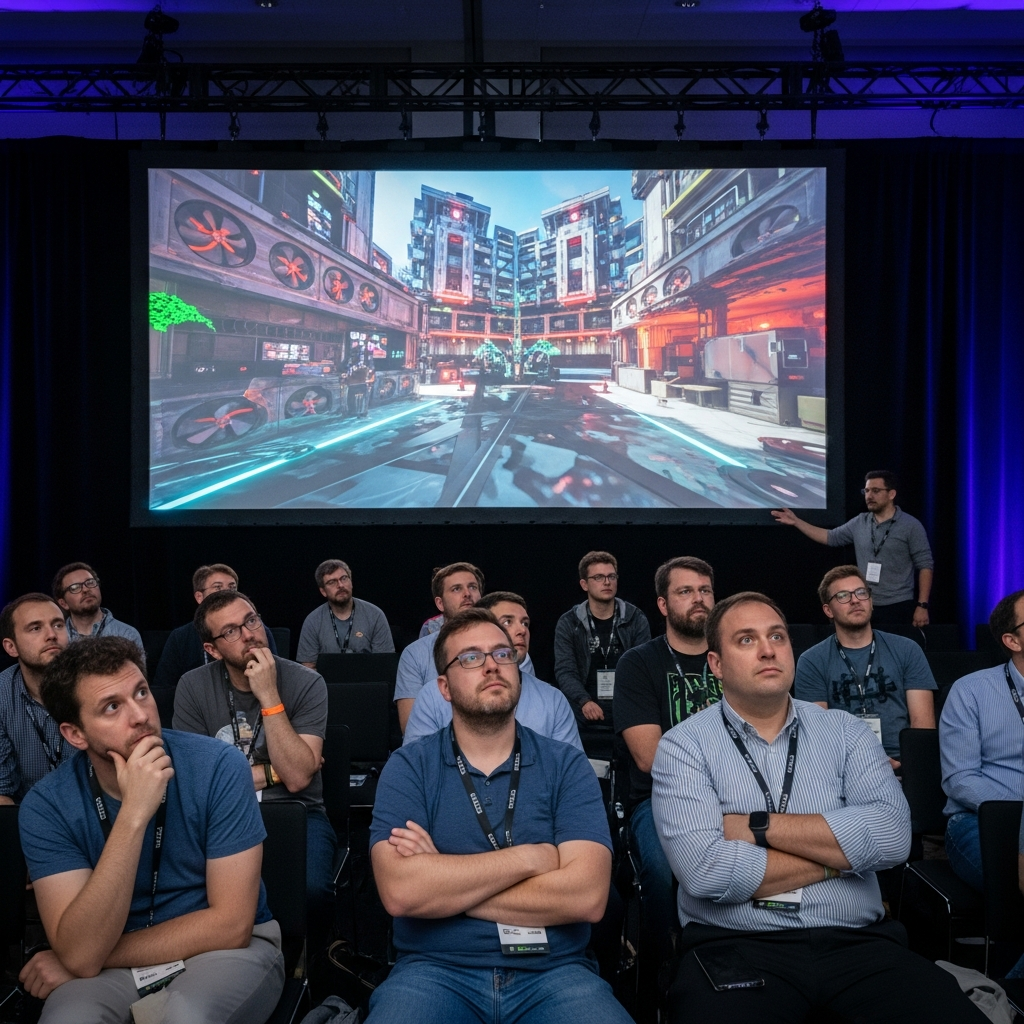
NVIDIA has unveiled DLSS 5, heralding it as a transformative leap in computer graphics that promises to bridge the gap between rendered virtual worlds and photorealistic reality. This AI-powered rendering technology, revealed at the GTC 2026 developer conference in San Jose, California, aims to revolutionize how games look and feel by infusing pixels with unprecedented visual fidelity. However, early previews have ignited a passionate debate within the gaming community, with some praising its potential while others voice strong concerns about a perceived loss of artistic intent.
The Next Era of Gaming Graphics with NVIDIA DLSS 5
At its core, NVIDIA DLSS 5 introduces a groundbreaking real-time neural rendering model. Unlike previous iterations of Deep Learning Super Sampling (DLSS), which primarily focused on boosting performance through intelligent upscaling and frame generation, DLSS 5 shifts its emphasis to dramatically enhancing visual realism. This ambitious new approach aims to deliver cinematic-quality graphics in real-time, a feat previously thought impossible outside of high-budget Hollywood visual effects.
Jensen Huang, NVIDIA’s visionary founder and CEO, famously described DLSS 5 as “the GPT moment for graphics.” He highlighted its ability to merge traditional, handcrafted rendering techniques with advanced generative AI. This blend is designed to offer a dramatic leap in visual realism while crucially preserving the creative control game artists demand. Expected to launch in Fall 2026, DLSS 5 is positioned as NVIDIA’s most significant graphical innovation since real-time ray tracing debuted in 2018.
NVIDIA’s Legacy of Innovation: From Shaders to Neural Rendering
NVIDIA boasts a rich history of pushing the boundaries of computer graphics. From the programmable shaders introduced with GeForce 3 in 2001 to the parallel computing power of CUDA with GeForce 8800 GTX in 2006, the company has consistently delivered architectural breakthroughs. The launch of real-time ray tracing with the GeForce RTX 2080 Ti in 2018 marked another pivotal moment, setting new standards for lighting and reflections. Looking ahead, path tracing and neural shaders are anticipated with the GeForce RTX 5090 in 2025.
Over 25 years, NVIDIA has achieved a staggering 375,000x increase in compute power. Yet, the rendering demands for a seamless 16-millisecond game frame are still a fraction of what’s available for a Hollywood VFX frame, which can take hours to complete. This disparity means brute-force rendering alone cannot achieve photorealism in real-time gaming. This challenge fueled the original DLSS, first released in 2018, as an AI-driven solution to boost performance. Its success led to widespread adoption across over 750 games, making it an industry benchmark. DLSS 4.5, introduced earlier in 2026, already uses AI to generate an impressive 23 out of every 24 pixels on screen. Now, with DLSS 5, the focus expands beyond performance to fundamentally transform visual quality itself.
How NVIDIA DLSS 5 Achieves Photorealistic Visuals
DLSS 5 operates by taking a game’s color and motion vectors for each frame as input. An advanced AI model then processes this information to infuse the scene with highly photoreal lighting and materials. Crucially, these enhancements are anchored to the source 3D content and remain consistent across frames, ensuring temporal stability crucial for interactive gameplay. The technology runs in real-time, even at demanding 4K resolutions, promising smooth and interactive experiences.
The underlying AI model is meticulously trained to understand complex scene semantics. This includes discerning intricate details like characters, the texture of hair and fabric, the translucence of skin, and various environmental lighting conditions such as front-lit, back-lit, or overcast scenes – all by analyzing a single frame. This deep comprehension allows DLSS 5 to generate visually precise images that accurately handle challenging elements. Think about the subtle subsurface scattering on skin, the delicate sheen of fabric, or how light interacts realistically with individual strands of hair. Despite these sophisticated enhancements, the system is designed to preserve the original scene’s structure and the developer’s artistic intent. Furthermore, NVIDIA provides game developers with detailed controls for intensity, color grading, and masking, allowing artists to fine-tune how and where these visual enhancements are applied to maintain a game’s unique aesthetic. Integration is streamlined through the existing NVIDIA Streamline framework.
Industry Backing and Upcoming Game Integrations
The announcement of DLSS 5 has garnered significant support from leading publishers and game developers worldwide. Major industry players such as Bethesda, CAPCOM, Hotta Studio, NetEase, NCSOFT, S-GAME, Tencent, Ubisoft, and Warner Bros. Games are all onboard to integrate the new technology.
Executives have voiced strong enthusiasm for DLSS 5’s potential. Todd Howard, Studio Head at Bethesda Game Studios, highlighted how the technology will allow artistic style and detail to shine without being constrained by traditional real-time rendering limits. He confirmed DLSS 5’s planned integration into Starfield and future Bethesda titles. Jun Takeuchi, Executive Producer at CAPCOM, emphasized how DLSS 5 will help create more cinematic, compelling, and deeply believable experiences, enhancing immersion in titles like Resident Evil™ Requiem. Charlie Guillemot, co-CEO of Vantage Studios, noted its impact on building the kind of immersive worlds they’ve always envisioned for games like Assassin’s Creed Shadows.
A wide array of anticipated and existing titles are slated to receive DLSS 5 support, including:
AION 2
Assassin’s Creed Shadows
Black State
CINDER CITY
Delta Force
Hogwarts Legacy
Justice
NARAKA: BLADEPOINT
NTE: Neverness to Everness
Phantom Blade Zero
Resident Evil™ Requiem
Sea of Remnants
Starfield
The Elder Scrolls IV: Oblivion Remastered
Where Winds Meet
“Breakthrough” or “AI Slop”? Initial Gamer Reactions to DLSS 5
Despite NVIDIA’s bold claims and widespread developer support, the initial unveiling of DLSS 5 has been met with a mixed, and at times highly critical, reception from the gaming community. While previous DLSS versions were generally praised for their performance benefits – enabling smoother gameplay, boosting frame rates, and reducing VRAM usage even on mid-range GPUs – DLSS 5’s new direction towards “photorealistic graphics” has sparked significant backlash.
Gamers watching early footage have expressed disappointment, with many labeling the output as “AI slop” or “AI filter.” The primary concern centers on a perceived degradation of visual fidelity, particularly in character rendering, where the AI-generated images reportedly diverge significantly from the original artistic intentions of game studios. A notable example cited was the character Kratos from God of War, where DLSS 5 purportedly rendered him as a “Chris Hemsworth-style warrior,” effectively sanitizing his rugged aesthetic.
The community’s sentiment suggests that many high-end PC users, who invest heavily in powerful GPUs, do not desire an “AI Slop filter” applied to their meticulously crafted gaming experiences. This critical feedback highlights a fundamental tension: while AI offers incredible potential for visual enhancement, there’s a strong desire to maintain artistic integrity and player control over the final visual output. NVIDIA plans to release DLSS 5 as a free update for all RTX GPU users later this fall, irrespective of these initial adverse reactions.
Beyond Gaming: NVIDIA’s Broader AI Vision at GTC 2026
The DLSS 5 announcement was part of a broader suite of AI innovations unveiled by NVIDIA at its GTC 2026 conference. This showcased the company’s pervasive strategy to integrate advanced AI across various sectors. Beyond gaming graphics, NVIDIA also revealed plans for its next-generation AI computing system, Vera Rubin, slated for a later 2026 launch. This massive system, composed of approximately 1.3 million components, is projected to deliver an astounding 10 times the performance per watt compared to its predecessor, the Grace Blackwell system. Such advancements are crucial for powering the most demanding AI applications, from scientific research to enterprise solutions.
Furthermore, NVIDIA introduced NemoClaw, a new software stack designed to facilitate the development and deployment of AI agents on the OpenClaw platform. These announcements underscore NVIDIA’s commitment not only to enhancing visual experiences in games but also to providing comprehensive hardware and software tools essential for the future of AI research and application development across numerous industries.
The Future of Gaming Visuals with DLSS 5
NVIDIA DLSS 5 stands at a crossroads, representing both a monumental step forward in real-time graphics technology and a point of contention among its most dedicated users. Its ability to create dynamic, photorealistic lighting and materials through advanced neural rendering could unlock unparalleled immersion in future titles. Yet, the early criticisms regarding artistic integrity and the “AI slop” perception cannot be ignored.
As DLSS 5 rolls out this Fall, the true test will be its implementation in actual games and how developers leverage its powerful capabilities while respecting original artistic visions. The technology certainly pushes the boundaries of what’s possible in gaming visuals, making the journey from rendered pixels to virtual reality more seamless than ever. The dialogue surrounding its impact on game aesthetics will undoubtedly continue to evolve.
Frequently Asked Questions
What is the primary difference between DLSS 5 and previous NVIDIA DLSS versions?
NVIDIA DLSS 5 represents a significant shift in focus compared to its predecessors. While earlier DLSS versions (1-4.5) primarily aimed to boost game performance through intelligent resolution upscaling and frame generation, DLSS 5’s main objective is to dramatically enhance visual fidelity. It achieves this using a new real-time neural rendering model, which infuses pixels with photorealistic lighting and materials, creating cinematic-quality graphics in real-time. This moves beyond simply improving frame rates to fundamentally transforming how realistic games look.
Which major game titles and studios are confirmed to support NVIDIA DLSS 5?
Several prominent game developers and publishers have announced support for NVIDIA DLSS 5. Confirmed studios include Bethesda, CAPCOM, Hotta Studio, NetEase, NCSOFT, S-GAME, Tencent, Ubisoft, and Warner Bros. Games. A wide range of titles are expected to integrate DLSS 5 upon its release this Fall, including highly anticipated games like Starfield, Resident Evil™ Requiem, Assassin’s Creed Shadows, Hogwarts Legacy, Phantom Blade Zero, and The Elder Scrolls IV: Oblivion Remastered*.
Should gamers be concerned about the “AI slop” criticisms surrounding NVIDIA DLSS 5?
The “AI slop” criticism surrounding NVIDIA DLSS 5 stems from initial previews where some gamers felt the AI-generated visuals, particularly character models, deviated from the original artistic intent of the game. While DLSS 5 aims for photorealism, some viewers perceived a “sanitized” or artificial look that didn’t align with established aesthetics, such as a rugged character appearing overly groomed. It’s important to remember these are early reactions. As the technology evolves and developers gain more experience with its controls, the final results in released games may vary. Gamers should wait for widespread implementation and reviews to form their own informed opinions.