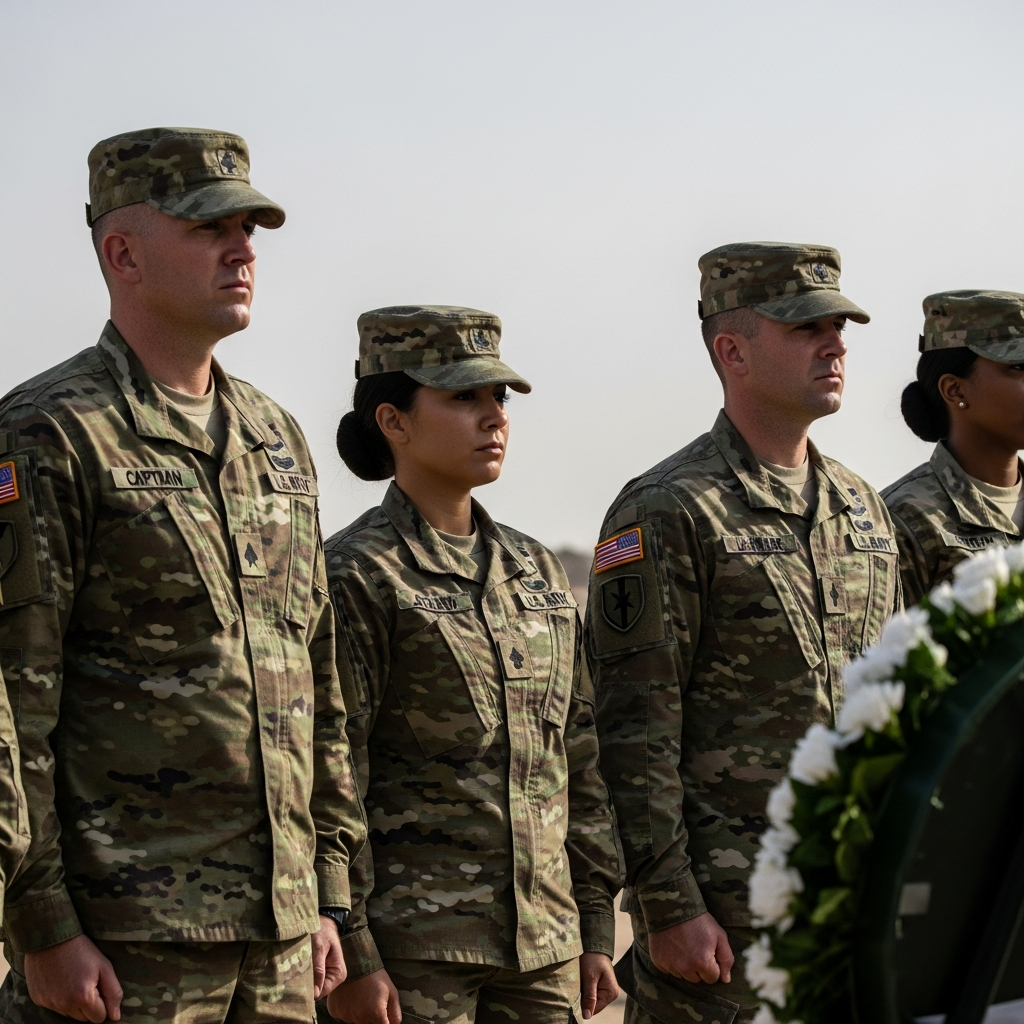
The nation mourns the profound loss of four courageous U.S. Army Reserve Soldiers who made the ultimate sacrifice while serving in support of Operation Epic Fury. On March 1, 2026, Captain Cody A. Khork, Sergeant 1st Class Noah L. Tietjens, Sergeant 1st Class Nicole M. Amor, and Sergeant Declan J. Coady tragically perished in Port Shuaiba, Kuwait, following a devastating unmanned aircraft system (UAS) attack. Their selfless dedication and commitment to duty represent the highest ideals of military service, leaving an indelible mark on their families, communities, and the nation they swore to protect.
This solemn announcement, conveyed by the Department of Defense, underscores the persistent dangers faced by service members deployed around the globe. The incident, which is currently under thorough investigation, highlights the evolving nature of modern warfare and the bravery of those who stand ready to confront its challenges. Our thoughts remain with the loved ones of these fallen heroes, and the broader military community, as they navigate this incredibly difficult time.
Honoring Lives of Courage and Sacrifice
The four brave Army Reserve Soldiers who tragically lost their lives were assigned to the 103rd Sustainment Command, based in Des Moines, Iowa. Each brought unique skills, unwavering dedication, and a profound sense of purpose to their service. Their stories are a testament to the diverse backgrounds and shared commitment that define the U.S. Army Reserve.
Captain Cody A. Khork, 35, hailed from Winter Haven, Florida. His leadership and experience were invaluable to his unit and missions abroad.
Sergeant 1st Class Noah L. Tietjens, 42, from Bellevue, Nebraska, was a seasoned non-commissioned officer whose dedication inspired those around him.
Sergeant 1st Class Nicole M. Amor, 39, of White Bear Lake, Minnesota, served with distinction, embodying resilience and strength.
Sergeant Declan J. Coady, 20, from West Des Moines, Iowa, represented the next generation of military service, demonstrating immense promise and courage at a young age.
These individuals were more than just soldiers; they were sons, daughters, siblings, and friends whose absence will be deeply felt. Their sacrifice in the line of duty reminds us of the profound human cost of safeguarding freedom and stability worldwide. The communities they called home now join together to remember their contributions and support their grieving families.
The Vital Role of the 103rd Sustainment Command
The 103rd Sustainment Command (Expeditionary) plays a critical, yet often unsung, role in military operations. Units like the 103rd are the logistical backbone of the U.S. Army, responsible for ensuring that troops on the front lines have everything they need to operate effectively – from food, water, and fuel to equipment, medical supplies, and transportation. Without the diligent efforts of sustainment commands, complex operations like Operation Epic Fury would simply not be possible.
Their work in Port Shuaiba, Kuwait, a key logistical hub in the region, is vital for maintaining readiness and support across a vast operational area. Soldiers in these units face inherent risks, even when not directly engaged in combat, as they operate in challenging environments susceptible to various threats. The attack on March 1, 2026, tragically highlights the dangers faced by all service members supporting deployed forces, irrespective of their specific role.
Understanding the Threat: Unmanned Aircraft System Attacks
The tragic incident involving an unmanned aircraft system attack underscores a growing and complex challenge in contemporary warfare. UAS, often referred to as drones, offer adversaries a relatively low-cost, asymmetrical capability to conduct surveillance, reconnaissance, and strike operations. These systems can be difficult to detect and intercept, posing a significant threat to military installations, personnel, and infrastructure.
The proliferation of advanced drone technology has forced military forces worldwide to adapt their defensive strategies and invest heavily in counter-UAS capabilities. This ongoing arms race between offensive drone development and defensive countermeasures is a defining feature of modern conflict. Such attacks emphasize the dynamic and unpredictable nature of the operational environment our soldiers navigate daily, even in areas historically considered secure. The Department of Defense continuously works to enhance force protection measures and develop innovative solutions to mitigate these evolving threats.
The Investigation: Seeking Answers and Accountability
Following such a grave incident, a comprehensive and meticulous investigation is immediately launched. This process is critical for several reasons: to determine the exact sequence of events, identify the perpetrators, understand any potential vulnerabilities, and prevent future occurrences. Military investigations involve forensic analysis, intelligence gathering, and witness interviews, often spanning multiple agencies and international partners.
The commitment to a thorough investigation ensures accountability and provides clarity to the families of the fallen. It also informs strategic adjustments and tactical improvements, enhancing the safety and effectiveness of U.S. forces globally. The findings, once concluded, will contribute to a deeper understanding of the threats posed by UAS and guide future force protection protocols for troops deployed in similar regions.
Supporting Our Military Families in Times of Loss
When a service member dies in the line of duty, the military and government agencies provide extensive support to their surviving family members. This support begins with the dignified notification process, carried out by uniformed service members, and continues through long-term benefits and resources. Organizations like the Tragedy Assistance Program for Survivors (TAPS) offer compassionate care, peer support, and comfort to those grieving.
Families receive assistance with funeral arrangements, financial counseling, healthcare benefits, and educational opportunities. The unwavering support from the military community, veterans’ organizations, and the wider public plays a crucial role in helping these families rebuild their lives and honor their loved one’s legacy. This collective commitment ensures that the sacrifice of these fallen Army Reserve Soldiers is never forgotten and that their families receive the care and respect they deserve.
Frequently Asked Questions
What specific incident led to the deaths of the four Army Reserve Soldiers in Kuwait?
On March 1, 2026, four U.S. Army Reserve Soldiers, Captain Cody A. Khork, Sergeant 1st Class Noah L. Tietjens, Sergeant 1st Class Nicole M. Amor, and Sergeant Declan J. Coady, died in Port Shuaiba, Kuwait. Their deaths were a direct result of an unmanned aircraft system (UAS) attack while they were supporting Operation Epic Fury. The incident is currently under investigation by military authorities to determine the full circumstances.
How can the public or media honor the memory of Captain Khork, Sergeant First Class Tietjens, Sergeant First Class Amor, and Sergeant Coady?
To honor the memory of these fallen heroes, the public can support military family organizations like TAPS (Tragedy Assistance Program for Survivors) or local veterans’ charities. Media members seeking official statements or further information regarding Captain Cody A. Khork, Sergeant 1st Class Noah L. Tietjens, Sergeant 1st Class Nicole M. Amor, and Sergeant Declan J. Coady may contact the U.S. Army Reserve Command Public Affairs Office, located at Fort Bragg, N.C., at usarmy.usarc.usarc-hq.mbx.press-desk@army.mil.
What is the role of the U.S. Army Reserve’s 103rd Sustainment Command in operations like Epic Fury?
The 103rd Sustainment Command (Expeditionary) is a critical logistical unit within the U.S. Army Reserve. Its primary role in operations such as Epic Fury is to provide essential support services, including transportation, supply management, maintenance, and medical logistics, to deployed forces. This ensures that combat and support units have the resources necessary to sustain their operations effectively and efficiently, even in complex and remote operational environments like Port Shuaiba, Kuwait.
A Legacy of Service Remembered
The tragic passing of Captain Cody A. Khork, Sergeant 1st Class Noah L. Tietjens, Sergeant 1st Class Nicole M. Amor, and Sergeant Declan J. Coady is a somber reminder of the sacrifices made daily by members of our armed forces. These Army Reserve Soldiers deployed with courage, serving with distinction in a vital mission under Operation Epic Fury. Their dedication to country, professionalism, and unwavering spirit will forever be etched in the hearts of those they served alongside and the nation they defended. As the investigation into this Kuwait attack continues, we stand united in grief and gratitude, honoring their memory and recommitting ourselves to supporting their families and all who serve.