Pakistan’s southwestern Balochistan province has recently faced a brutal surge in violence, as security forces launched extensive counter-operations following a series of coordinated gun and bomb attacks. These devastating assaults, claimed by a banned separatist group, tragically resulted in the deaths of nearly 50 individuals, including numerous civilians and security personnel. In a swift and decisive response, Pakistani authorities reported eliminating at least 145 fighters, marking one of the deadliest periods in the region’s long-standing insurgency. This critical update details the audacious attacks, the subsequent security crackdown, and the escalating geopolitical tensions that underscore the fragile peace in Balochistan.
Unpacking the Coordinated Attacks in Balochistan
The latest wave of violence unfolded with alarming speed. Early on a Saturday morning, coordinated gun and bomb attacks rocked multiple districts across Balochistan. These districts included key strategic locations such as Quetta, Gwadar, Mastung, and Noshki. The assaults were meticulously planned and executed, targeting various security installations and public spaces.
The banned Balochistan Liberation Army (BLA) quickly claimed responsibility, dubbing their offensive “Operation Herof” (meaning ‘black storm’). This operation reportedly involved “fidayeen attacks,” a term often used for suicide assaults. According to the BLA, the initial phase spanned 14 locations, later expanding to a “coordinated” offensive across 48 cities and areas. This audacious campaign saw armed militants, some disguised as civilians, infiltrate hospitals, schools, banks, and markets. They opened fire indiscriminately, causing widespread panic and chaos.
Civilian Lives Lost Amidst the Violence
The human cost of these attacks was immediate and severe. Reports confirmed that 31 civilians were tragically killed, a stark reminder of the indiscriminate nature of the violence. Among the fatalities were five women, highlighting the vulnerability of the general population caught in the crossfire. Additionally, 17 security personnel lost their lives while bravely responding to the threats. This brought the total non-militant death toll to nearly 50.
Eyewitness accounts painted a grim picture of the attacks’ impact. Outside a damaged shop, private security guard Jamil Ahmed Mashwani recounted being struck by assailants shortly after midday. Al Jazeera’s Kamal Hyder, reporting from Quetta, described the BLA’s operation as “audacious.” He noted that attackers managed to penetrate the heart of the provincial capital. They also blocked major highways, severely disrupting daily life and exacerbating fears among residents.
Pakistan’s Decisive Counter-Operation and Casualties
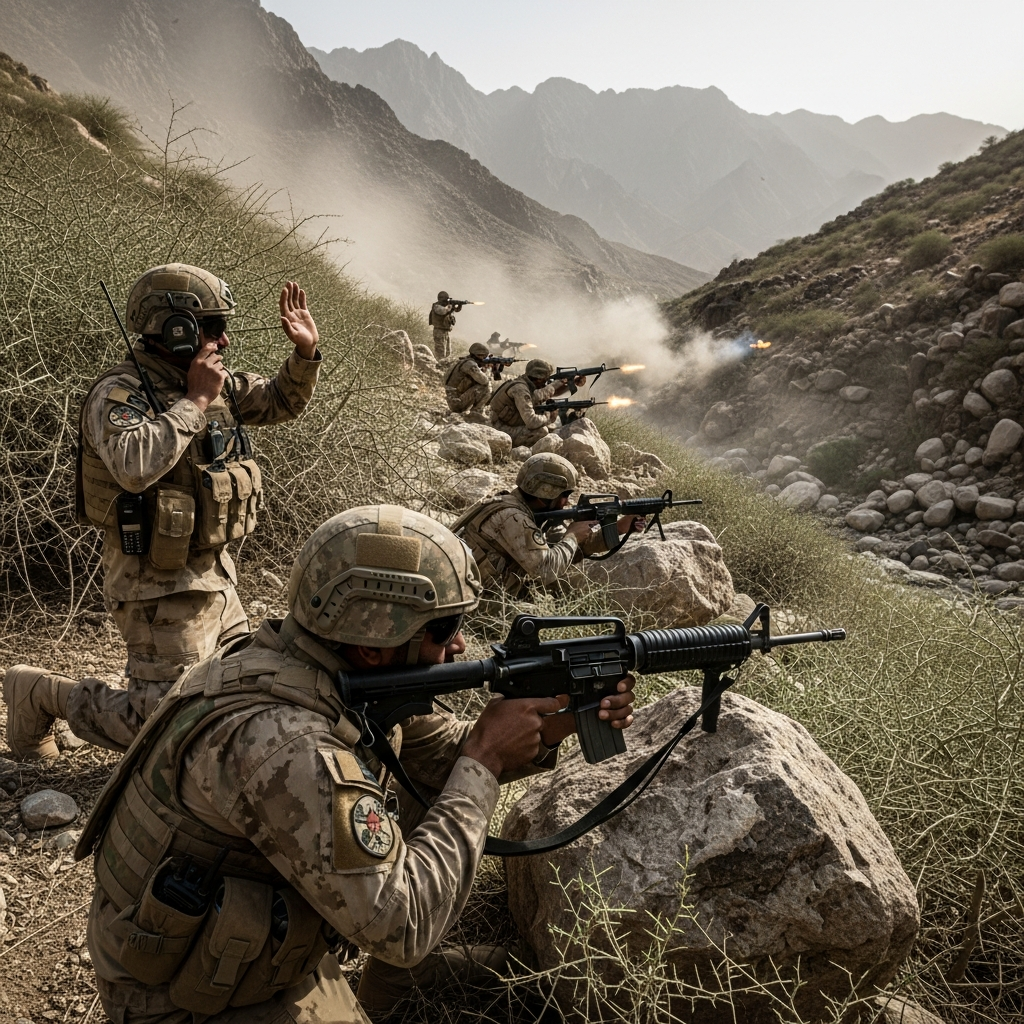
In the immediate aftermath of the attacks, Pakistani security forces launched a massive manhunt and counter-operation. Provincial Chief Minister Sarfraz Bugti confirmed that troops and police officers responded swiftly. Their actions led to the elimination of 145 members of what the government terms “Fitna al-Hindustan,” a phrase often used for the BLA. Bugti emphasized that this represented the highest number of fighters killed in decades, underscoring the intensity of the security response.
Pakistan’s military provided a breakdown of the casualties. They reported killing 92 fighters on Saturday, the day of the main attacks, and an additional 41 on Friday. This indicated that pre-emptive operations were already underway based on intelligence reports. Bugti stated that the bodies of the 145 killed individuals were in government custody, with some identified as Afghan nationals. He further claimed these “Indian-backed terrorists” had intended to take hostages but failed to reach the city center.
Discrepancies in Claims and Ground Realities
The conflict narrative saw significant discrepancies between BLA claims and official Pakistani reports. The BLA asserted that their rebels killed over 200 Pakistani military personnel and captured central military headquarters in various cities. They also claimed to have taken 14 personnel hostage and destroyed over 30 government properties, including banks and prisons. The BLA confirmed only seven of their fighters were killed, four of whom were female “Fidayeens” from their elite Majeed Brigade.
Conversely, Pakistani authorities presented a different picture. While acknowledging the severity of the attacks, they highlighted the high number of militants neutralized. Independent news agencies like AP reported a total of 33 people killed in the offensive raid, comprising 18 civilians and 15 security personnel. These conflicting figures underscore the challenge of verifying information in active conflict zones.
Escalating Tensions and Geopolitical Accusations
The Balochistan attacks quickly escalated into a complex geopolitical issue. Chief Minister Sarfraz Bugti accused Afghanistan of backing the assailants, claiming that senior BLA leaders were operating from Afghan territory. He also pointed fingers at India, alleging their support for the separatist group.
Both New Delhi and Kabul vehemently denied these accusations. India’s Ministry of External Affairs spokesperson, Randhir Jaiswal, categorically rejected the “baseless allegations.” Jaiswal suggested that Islamabad was attempting to deflect attention from its own internal problems. He advised Pakistan to focus instead on addressing the “longstanding demands of its people in the region.”
Imposed Security Measures and Broader Context
In response to the heightened security threat in Balochistan, authorities imposed extensive, months-long restrictions. These measures included bans on public gatherings, demonstrations, and limits on traffic movement. A notable new regulation prohibited the use of face coverings that concealed individuals’ identities in public spaces, aiming to enhance identification and security.
Balochistan, Pakistan’s largest and poorest province, has been plagued by decades of violence. Ethnic Baloch separatist groups like the BLA seek greater autonomy and a larger share of the region’s vast natural resources. The BLA regularly targets Pakistani security forces. Worryingly, they have also attacked civilians, including Chinese nationals working on various development projects under the China-Pakistan Economic Corridor (CPEC) initiatives. The U.S. has designated the BLA as a foreign terrorist organization. The United States condemned the recent violence, with its charge d’affaires Natalie Baker calling them acts of terrorist violence and expressing Washington’s solidarity with Pakistan. This highlights the international community’s concern over the escalating Balochistan conflict. Pakistan also faces periodic attacks elsewhere, including from factions linked to the Tehrik-e-Taliban Pakistan (TTP).
The increasing involvement of female fighters, as highlighted by Defence Minister Khawaja Asif, signals an alarming evolution in the militant tactics. He also noted a disturbing shift towards increasingly targeting civilians, laborers, and low-income communities. The aftermath in Quetta, with burnt-out vehicles, bullet-riddled doors, and streets sealed off, serves as a stark visual reminder of the ongoing struggle for stability in Balochistan.
Frequently Asked Questions
What exactly happened during the recent Balochistan attacks claimed by the BLA?
A series of coordinated gun and bomb attacks, dubbed “Operation Herof,” occurred across Balochistan, Pakistan, primarily on a Saturday. The Balochistan Liberation Army (BLA) claimed responsibility. Militants targeted security installations and public spaces in districts like Quetta, Gwadar, Mastung, and Noshki, leading to nearly 50 non-militant deaths, including 31 civilians and 17 security personnel. Pakistani forces responded with extensive counter-operations, reportedly killing 145 fighters.
Which specific regions and targets were affected by the Balochistan Liberation Army’s “Operation Herof”?
The BLA’s “Operation Herof” targeted multiple regions, including the provincial capital Quetta, along with Gwadar, Mastung, and Noshki districts. Militants struck at security installations like the Frontier Corps headquarters, attempted suicide bombings, and briefly blocked urban roads. They also infiltrated civilian areas such as hospitals, schools, banks, and markets, demonstrating an intent to disrupt daily life and maximize impact across a broad geographical area.
What are the wider geopolitical implications and accusations surrounding the Balochistan conflict?
The recent Balochistan attacks have intensified geopolitical tensions. Pakistan accused Afghanistan of harboring BLA leaders and India of backing the separatist group. Both Afghanistan and India vehemently denied these claims, with India suggesting Pakistan was deflecting from its internal problems. The United States, which designates the BLA as a foreign terrorist organization, condemned the attacks. This underscores the international concern and the complex regional dynamics influencing the long-running insurgency in Pakistan’s resource-rich province.
Conclusion
The recent deadly attacks in Balochistan, followed by the significant counter-operations by Pakistani forces, underscore the enduring and escalating challenges within the region. With 145 fighters reportedly neutralized, and nearly 50 lives tragically lost, the human cost of the Balochistan conflict remains devastating. The bold actions by the BLA, including the involvement of female fighters and the targeting of civilians, signal a troubling evolution in the tactics of separatist groups. As accusations fly between neighboring countries and security restrictions tighten, the path to lasting peace in Balochistan remains fraught with complexity. The international community watches closely, hoping for stability in this strategically vital but conflict-ridden province.