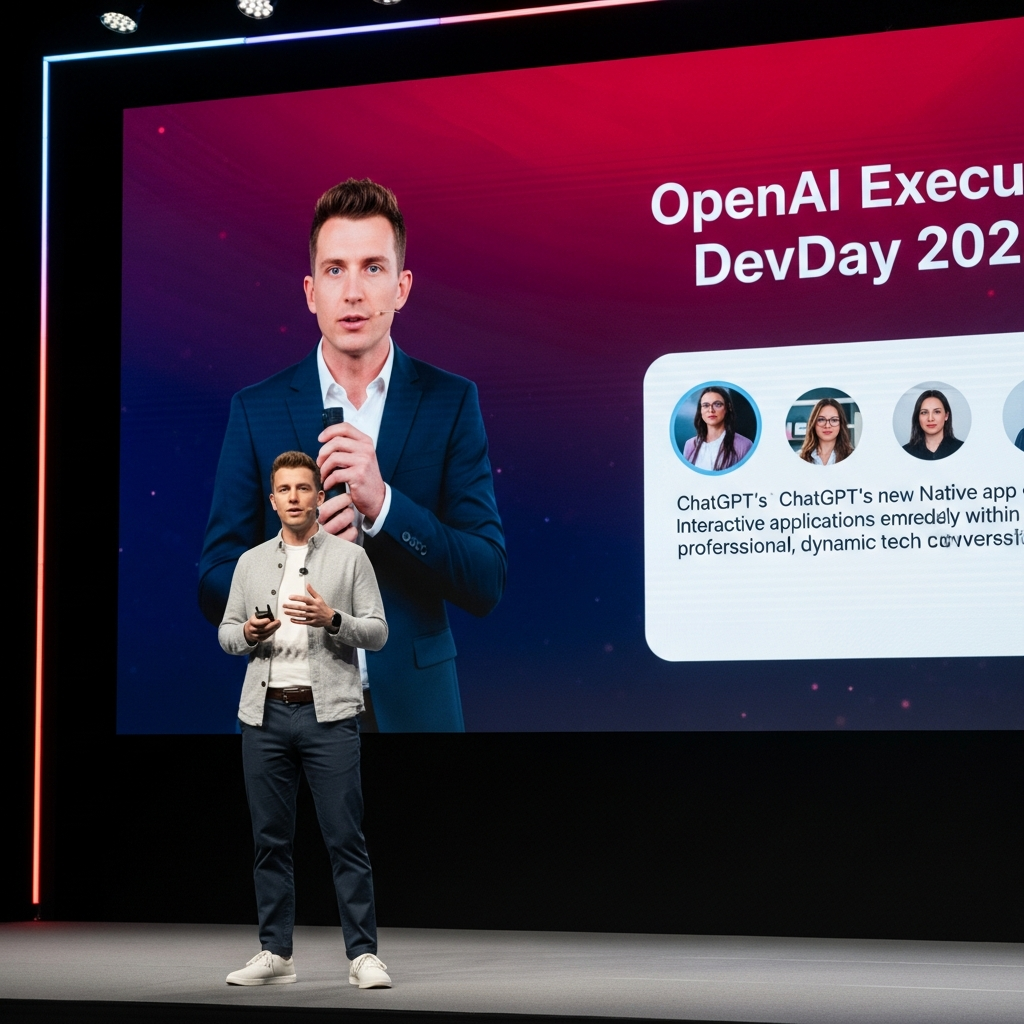
ChatGPT is transforming into a dynamic platform, moving far beyond a simple chatbot. OpenAI has officially launched a new native app ecosystem, allowing developers to embed fully interactive applications directly within ChatGPT conversations. This groundbreaking development, unveiled at DevDay 2025 on October 6, 2025, marks a pivotal moment for AI, promising unparalleled versatility for users and expansive opportunities for developers. Prepare to interact with your favorite services and accomplish complex tasks without ever leaving the chat interface.
ChatGPT’s App Ecosystem: A New Era for AI Interaction
This isn’t just an update; it’s a paradigm shift. OpenAI’s strategic move establishes a comprehensive app directory, accessible directly through ChatGPT’s tools menu on web, iOS, and Android platforms. This initiative builds upon earlier partner integrations, but now allows for deeper, more interactive experiences. Users can browse, discover, and install applications that seamlessly extend ChatGPT’s capabilities, transitioning from idea generation to direct action within a single conversational flow. Imagine converting an outline into a presentation or ordering groceries, all through a natural language conversation.
The previously termed “connector” apps, like Google Drive, are now simply integrated “apps,” signaling a unified approach. These new integrations are designed as “chat-native experiences,” providing both context and the ability to perform real-world actions. This means less tab-switching and a more fluid digital experience.
Seamless Integration: How Apps Transform Your Chat Experience
The core appeal of ChatGPT’s new app platform lies in its ability to centralize digital tasks. No longer do users need to juggle multiple applications or browser tabs to accomplish goals. With the new app directory, functionality is brought directly to the conversation. Users can invoke third-party tools instantly using an “@ mention” within a chat, streamlining everything from planning to purchasing.
Apps are intuitively organized into categories like Feature, Lifestyle, and Productivity, making discovery straightforward. To use an app, a simple click and authorization connect it to ChatGPT, enabling direct interaction through conversational prompts. For instance, with a connected Dropbox app, users can ask ChatGPT to “gather insights, prepare briefs, and summarize reports or internal documents” from their files. This fundamental shift means that services appear contextually, precisely when they are most relevant to the user’s ongoing conversation.
Key Integrations: Powering Productivity and Lifestyle
OpenAI has rolled out a strong lineup of initial integrations, demonstrating the breadth of possibilities within the new platform. These apps are designed to make ChatGPT an indispensable tool for daily life and work:
Adobe Photoshop: Refine image generation prompts or work within Photoshop tools without leaving the chat.
Apple Music & Spotify: Create playlists, find music, and manage libraries by simply chatting with ChatGPT.
Booking.com & Tripadvisor: Search for accommodations, compare options, and book reservations for travel, all through conversation.
Canva & Figma: Generate design concepts or turn sketches into workable diagrams directly within the chat interface.
Coursera: Access personalized learning experiences and find educational content on demand.
DoorDash & Instacart: Transform recipe ideas or meal plans into actionable shopping carts, schedule deliveries, and even suggest substitutions.
Target: Receive product recommendations, add items to a cart, and facilitate checkout for both planned purchases and impulse buys.
Zillow: Simplify apartment searches, narrow criteria, surface listings, and schedule tours with conversational commands.
These integrations highlight ChatGPT’s potential to become a central hub for a vast array of services, offering significant convenience and efficiency for users.
Empowering Developers: The OpenAI Apps SDK & Submission Process
Beyond user benefits, OpenAI is actively cultivating a thriving ecosystem for developers. The company is now accepting app submissions for review and publication within ChatGPT, adhering to specific app submission guidelines. The Apps SDK (Software Developer Kit), initially introduced in beta, provides a robust toolkit for creating new experiences tailored for ChatGPT users.
Developers are equipped with a range of resources to facilitate their building process, including:
Best Practices Guides: Essential advice for crafting effective chat-native applications.
Open-Source Example Applications: Practical templates to kickstart development.
Open-Sourced UI Library: Tools designed for building intuitive, chat-native interfaces.
Step-by-Step Quickstart Guide: A clear path from concept to implementation.
Once an app is ready, developers submit it through the OpenAI Developer Platform, where they can track its approval status. OpenAI anticipates a gradual rollout of approved apps over the coming year, progressively expanding the utility and depth of the chat window. The underlying technology, the Model Context Protocol (MCP), enables developers to connect their data sources and render fully interactive user interfaces, even supporting multimedia like videos, directly within ChatGPT responses.
The Vision: ChatGPT as Your Conversational Operating System
Sam Altman, OpenAI’s CEO, envisions these apps as “interactive, adaptive, and personalized” experiences that users can converse with. This move is a significant step towards positioning ChatGPT as the default interface for countless common web actions, blurring the lines between a chatbot and a full-fledged operating system. The aspiration is for apps within ChatGPT to become a “natural extension of the conversation,” helping users transition effortlessly from ideas to actions.
Industry analysts suggest this strategy could fundamentally alter how users discover applications. Instead of relying on traditional app stores or social media, conversation becomes the central hub, with services contextually appearing when relevant. This approach significantly reduces user friction, potentially enhancing app conversion and retention rates. Essentially, if ChatGPT can intelligently suggest the right app at the opportune moment, it evolves from a mere chatbot into a powerful “operating system for living your life,” or even a “mini internet” within itself.
Monetization and Privacy: Critical Considerations
As the platform matures, monetization for developers is a key area OpenAI is actively exploring. While currently developers can monetize by linking users out from the ChatGPT app to their native app or website, OpenAI has explicitly stated future plans for internal monetization options. This includes potential integration with the recently introduced Instant Checkout feature in ChatGPT, opening up new revenue streams and potentially disrupting traditional e-commerce pathways.
Privacy remains a paramount concern. OpenAI mandates that companies provide “clear” privacy policies for their submitted applications and collect only the minimum data necessary. Users retain control over permissions, allowing them to review what information is shared before data transmission. Transparency in data handling is critical for building consumer trust, especially as transactional use cases become more prevalent within the chat interface. The exact extent of conversation data accessible to third-party developers (whether it’s the entire history, recent messages, or just the specific prompt invoking the app) is a crucial ongoing discussion point for ensuring user confidence.
Frequently Asked Questions
What is ChatGPT’s new native app platform, and how does it differ from previous integrations?
ChatGPT’s new native app platform allows third-party applications to be deeply embedded and interactive directly within chat conversations, rather than simply acting as external connectors. Launched at DevDay 2025, this system enables users to perform complex actions like ordering groceries or booking travel entirely within ChatGPT, using natural language. It differs from earlier integrations by offering fully interactive UIs and direct task execution, aiming to make ChatGPT a central hub for digital actions.
How can developers get started building apps for the ChatGPT platform?
Developers interested in building apps for ChatGPT can leverage the Apps SDK, currently in beta. OpenAI provides comprehensive resources, including best practices, open-source example applications, an open-sourced UI library for chat-native interfaces, and a step-by-step quickstart guide. Submissions are processed through the OpenAI Developer Platform, where status can be tracked, and accepted apps will gradually roll out to users.
What are the privacy considerations for users interacting with third-party apps in ChatGPT?
Privacy is a key focus for OpenAI. Developers are required to provide clear privacy policies for their apps and collect only the minimum data necessary for functionality. Users have control over permissions, meaning they can review and authorize what information from their conversations is shared with third-party applications. OpenAI aims for transparency to build trust, ensuring users are aware of how their data is used when performing transactional tasks within the chat environment.
The Future is Conversational: ChatGPT’s Bold New Chapter
OpenAI’s launch of a native app platform within ChatGPT represents a monumental leap forward for artificial intelligence. By seamlessly integrating a multitude of services and empowering developers, ChatGPT is evolving beyond a powerful language model into a comprehensive digital assistant that blurs the lines between a chatbot and an operating system. This transformative development promises an enhanced, more productive, and deeply personalized user experience, ushering in an era where complex tasks are accomplished through intuitive conversation. The future of digital interaction is conversational, and ChatGPT is poised to lead the way.