The world of sports crossovers rarely sees a legend like Michael Jordan step into a courtroom, especially not for a NASCAR trial. Yet, in a surprising turn of events that captured national headlines, the basketball icon did just that. Jordan provided character testimony in a high-profile 2015 domestic violence hearing involving NASCAR star Kurt Busch. This unexpected appearance not only added a layer of celebrity intrigue to the legal proceedings but also sparked discussions about the intersection of sports, celebrity, and personal conduct. Delving into the details reveals a compelling story beyond the initial headlines, highlighting the stakes involved and the lasting impact on all parties.
The Unforeseen Courtroom Drama: Why Michael Jordan Testified
Michael Jordan’s involvement in the legal battle between Kurt Busch and his former girlfriend, Patricia Driscoll, was largely unforeseen. The trial centered on Driscoll’s allegations that Busch had physically assaulted her in his motorhome at Dover International Speedway in September 2014. These accusations led to a civil protective order hearing in Kent County Family Court in Dover, Delaware. The case garnered significant media attention, not just for the serious nature of the allegations but for the potential career implications for a prominent NASCAR driver. Busch, a former NASCAR Cup Series champion, faced immense pressure, including a temporary suspension from the sport.
Jordan’s decision to testify stemmed from his long-standing friendship with Kurt Busch. Their connection wasn’t merely casual; Jordan had developed a relationship with Busch through mutual acquaintances and shared interests, particularly in motorsports. This deep-rooted personal bond ultimately prompted Jordan to lend his considerable public weight as a character witness. His appearance aimed to shed light on Busch’s character from a personal perspective, offering insights that legal proceedings often rely on to humanize a defendant. Jordan’s presence underscored the gravity of the situation and the lengths to which Busch’s allies were willing to go to support him.
Michael Jordan’s Character Witness Account
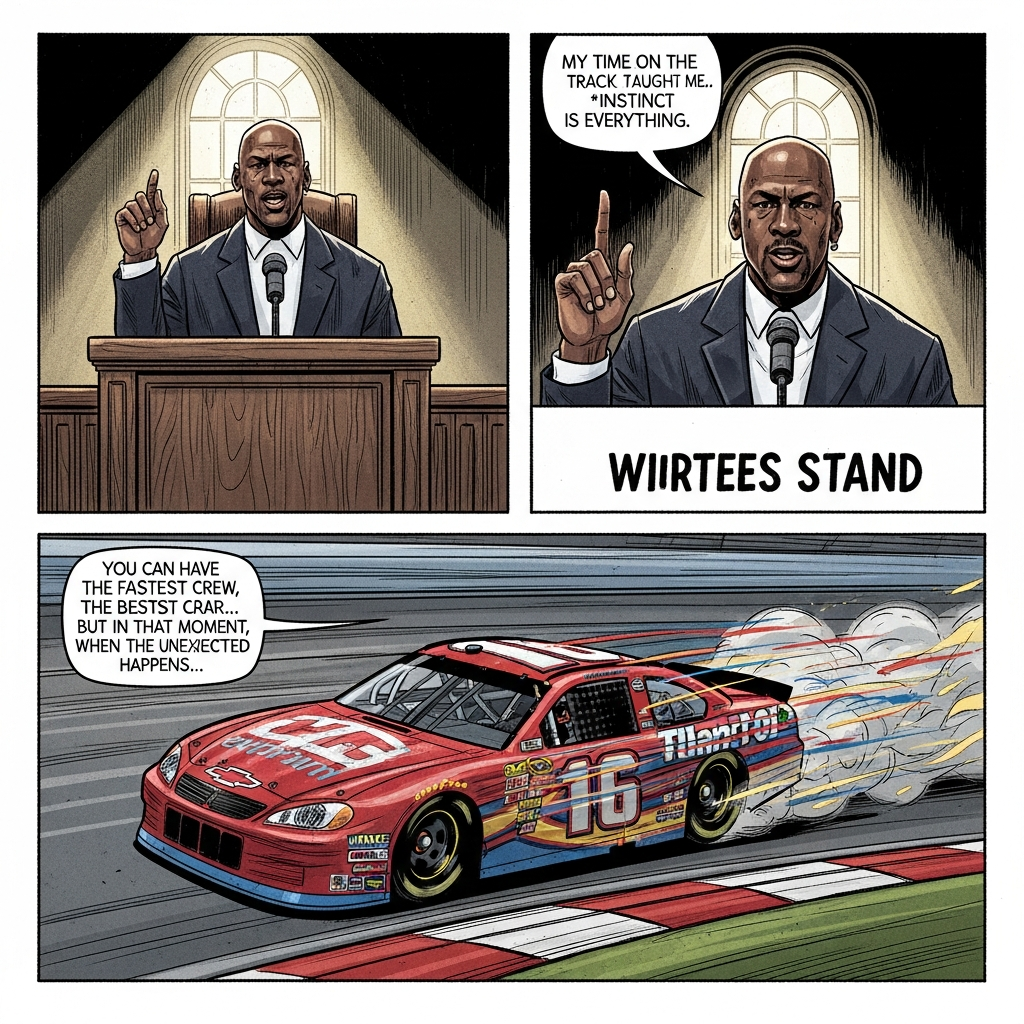
During his testimony on February 10, 2015, Michael Jordan appeared via video deposition. He spoke candidly about his relationship with Kurt Busch, describing him as a close friend. Jordan emphasized that he had never witnessed Busch display any anger or violence towards women. “He’s a great friend,” Jordan stated, further elaborating that Busch was a person he could rely on. Jordan’s account painted a picture of a loyal and even-tempered individual, directly contrasting the allegations presented by Driscoll’s legal team. He specifically mentioned seeing Busch around women, including his own wife, and noted a consistent pattern of respectful behavior.
Jordan’s testimony was strategically important for Busch’s defense. In a domestic violence case, character witnesses can influence how a judge perceives the defendant’s overall disposition and credibility. By having a figure as universally respected as Michael Jordan speak to Busch’s character, the defense aimed to cast doubt on the narrative of an abusive individual. Jordan’s words carried weight, not only because of his celebrity but also due to his reputation for integrity and directness. His participation aimed to offer a significant counter-narrative to the damaging claims made by Patricia Driscoll.
The Trial’s Aftermath and Busch’s Career Implications
The Delaware court ultimately sided with Patricia Driscoll, granting a permanent protective order against Kurt Busch in late February 2015. Commissioner David Jones concluded that it was more likely than not that Busch had committed an act of domestic violence. This ruling had immediate and severe consequences for Busch’s racing career. NASCAR suspended him indefinitely just days before the start of the 2015 racing season, including the iconic Daytona 500. This decision sent shockwaves through the motorsports community, emphasizing NASCAR’s commitment to addressing serious allegations against its athletes.
Despite the protective order, the criminal investigation in Delaware did not result in charges against Busch. The prosecutor’s office cited insufficient evidence to pursue a criminal conviction. Following NASCAR’s own behavioral assessments and conditions, Busch was reinstated to competition in March 2015. He returned to racing and continued a successful career, even winning the Daytona 500 in 2017. This entire episode highlighted the complex nature of legal proceedings in sports, where civil rulings, criminal investigations, and league sanctions often operate independently, each carrying significant weight and varying outcomes.
Beyond the Courtroom: Jordan’s Enduring Connection to NASCAR
Michael Jordan’s appearance in the Kurt Busch trial, while impactful, was just one chapter in his broader involvement with NASCAR. Years later, Jordan solidified his commitment to the sport by co-founding 23XI Racing alongside veteran driver Denny Hamlin. Launched in 2020, this team marked a significant entry for Jordan into NASCAR ownership, aiming to bring diversity and a new level of engagement to stock car racing. The team quickly established itself, fielding cars for Bubba Wallace and later Tyler Reddick. This venture showcased Jordan’s long-standing passion for motorsports and his desire to contribute meaningfully to the industry.
Jordan’s testimony in the Busch trial, viewed in retrospect, underscored his loyalty to friends and his willingness to step into uncomfortable public situations for those he believes in. It also provided an early glimpse into the influential role he would continue to play within the NASCAR landscape. His transition from a character witness to a team owner demonstrates a profound dedication to the sport. The trial itself served as a moment where the lines between personal relationships, professional responsibilities, and public scrutiny became incredibly blurred for a global icon.
The Broader Impact on Sports and Celebrity Endorsements
The Michael Jordan-Kurt Busch trial saga also brought into sharp focus the intricate dynamics between athletes, their personal lives, and their public personas. When a celebrity of Jordan’s stature testifies, it inevitably draws immense media attention to the private affairs of others. This level of scrutiny can significantly impact sponsorship deals and endorsements, which are crucial for professional athletes. For Busch, the initial allegations and subsequent suspension had a profound effect on his marketability, regardless of the eventual criminal outcome.
Such high-profile legal battles serve as a stark reminder to sports organizations and athletes alike about the importance of integrity and accountability. Leagues like NASCAR often implement robust conduct policies to protect their brand and uphold public trust. The event also demonstrated how personal connections can intertwine with professional obligations, pushing even the most guarded public figures into the spotlight for reasons unrelated to their primary achievements. Jordan’s testimony became a case study in how far loyalty can extend, even into the often-unforgiving legal arena.
Frequently Asked Questions
What was the purpose of Michael Jordan’s testimony in the NASCAR trial?
Michael Jordan provided character testimony in a 2015 civil protective order hearing involving NASCAR driver Kurt Busch and his former girlfriend, Patricia Driscoll. Jordan testified via video deposition, describing Busch as a “great friend” and stating he had never witnessed Busch exhibit anger or violence towards women. His testimony aimed to present a positive portrayal of Busch’s character, contrasting the domestic violence allegations made against him. Jordan’s involvement was significant due to his celebrity status and long-standing friendship with Busch.
What was the specific legal outcome that followed Michael Jordan’s testimony?
Despite Michael Jordan’s testimony, the Delaware court granted a permanent protective order against Kurt Busch in February 2015. The court concluded that it was more likely than not that Busch had committed an act of domestic violence. This ruling led to NASCAR suspending Busch indefinitely, though he was later reinstated after behavioral assessments. No criminal charges were filed against Busch by the Delaware prosecutor’s office, citing insufficient evidence for a criminal conviction. The outcome highlighted the different standards of proof in civil and criminal cases.
How did Michael Jordan’s involvement influence public perception of Kurt Busch and NASCAR?
Michael Jordan’s unexpected testimony significantly amplified the public and media attention surrounding the Kurt Busch trial. While Jordan’s appearance aimed to support Busch’s character, the ultimate granting of a protective order still cast a shadow over Busch’s public image and career. For NASCAR, the incident underscored the league’s commitment to addressing serious allegations, leading to a temporary suspension that reinforced their stance on athlete conduct. Jordan’s rare public intervention also highlighted the complex intersection of sports, celebrity, and personal legal battles, influencing how the public perceived the integrity of those involved.
Conclusion
Michael Jordan’s testimony in the 2015 Kurt Busch NASCAR trial stands as a unique moment in sports history. It highlighted the complex interplay between personal friendships, legal battles, and public scrutiny, all under the glare of intense media attention. While Jordan’s aim was to support a friend, the trial’s outcome and subsequent events further emphasized the gravity of domestic violence allegations and the far-reaching consequences for professional athletes. Jordan’s presence underscored his loyalty and, perhaps, foreshadowed his deeper future involvement as an owner in NASCAR. This chapter serves as a powerful reminder of how even the most celebrated figures can find themselves navigating the challenging currents where sports, law, and celebrity converge.