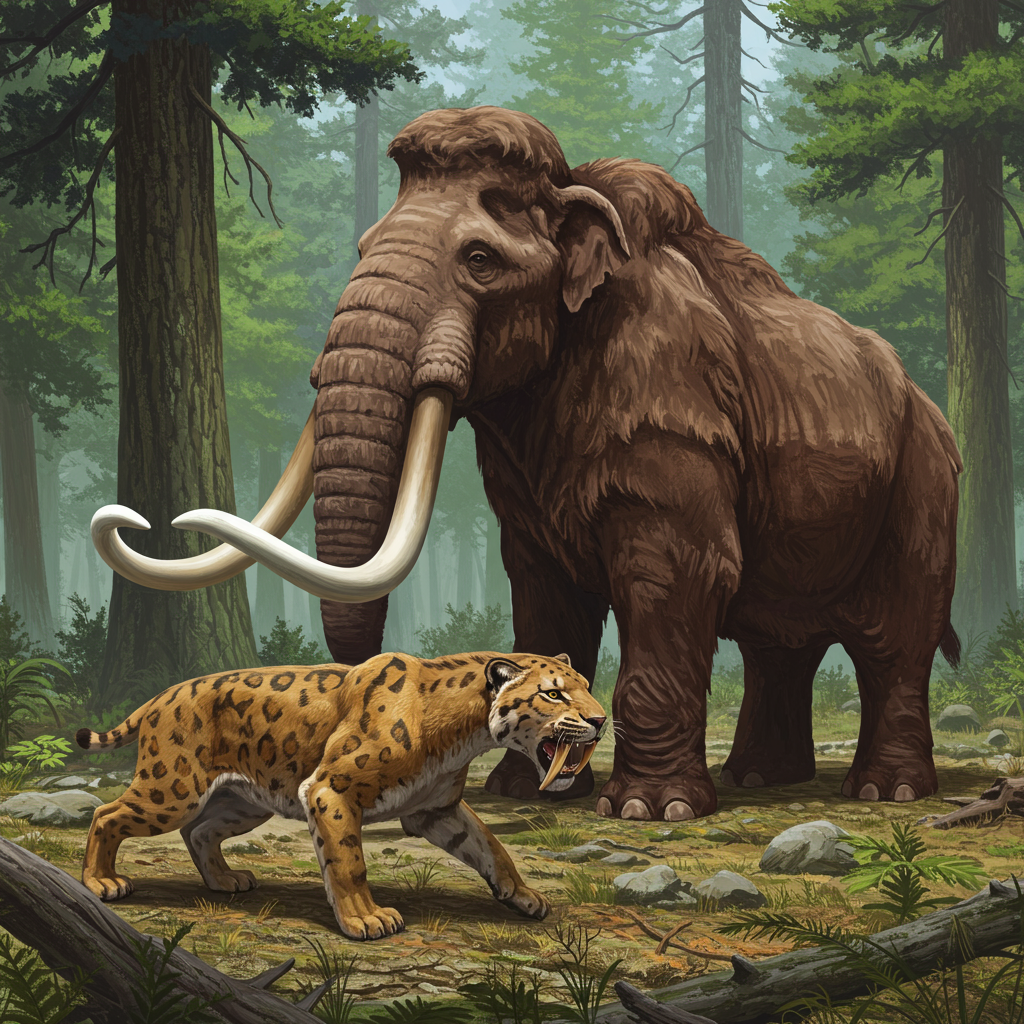
Imagine north America millions of years ago, a land teeming with massive creatures like rhinos, giant camels, and ground sloths. Towering above many, a fearsome predator stalked this ancient landscape: a newly identified species of gigantic saber-toothed cat. Weighing up to 900 pounds, this colossal feline was built to hunt prey as large as bison, fundamentally reshaping our understanding of prehistoric apex predators on the continent.
This remarkable discovery, published in recent research, introduces us to Machairodus lahayishupup. This formidable cat roamed North America between 5 and 9 million years ago, during the Miocene epoch. Its immense size alone sets it apart; estimates suggest it could average around 600 pounds but might scale up to a staggering 900 pounds, making it the largest cat in North America during its time. Its preferred meals? Herbivores weighing 1,000 to 2,000 pounds, with the power to potentially bring down animals up to 6,000 pounds.
Unearthing a Prehistoric Giant
Identifying a new species from the distant past is a meticulous process. Researchers embarked on this project by examining seven fossil specimens previously categorized as Machairodus. These uncategorized bones were compared against known fossil and bone samples from big cats discovered worldwide. What emerged from this detailed analysis was clear evidence of a unique animal unlike any known before.
The path to identification held a surprising twist. Traditionally, paleontologists rely heavily on teeth—particularly the iconic saber-like canines—to distinguish different species of saber-toothed cats. However, in the case of Machairodus lahayishupup, the key anatomical feature was the humerus, the bone in the upper forearm. Specifically, the structure around the elbow region provided the crucial clues.
The Elbow’s Tale: More Than Just Teeth
By comparing the humerus fossils of the mystery specimens to those of modern large cats like lions, pumas, and tigers, as well as other fossil cats, the research team noted distinctive characteristics. This new species possessed forearms built for immense power, suggesting muscularity and strength far exceeding that of many other felines. Detailed measurements and advanced digital models of the fossilized bones confirmed these unique traits, allowing researchers to confidently classify the finds as a previously unidentified species within the Machairodus genus.
The sheer size of the humerus fossils was a significant indicator. The largest analyzed specimen measured over 18 inches in length. To put this into perspective, the average humerus of a modern adult male lion is roughly 13 inches long. This substantial difference in bone size and structure strongly supports the conclusion that Machairodus lahayishupup was a truly gigantic saber-toothed cat, dwarfing even today’s largest felines. This reliance on post-cranial bones (everything other than the skull) highlights the diverse methods paleontology employs to piece together ancient life.
North America’s Reigning Apex Predator
With an estimated weight potentially reaching 900 pounds, Machairodus lahayishupup was unquestionably an apex predator in the North American ecosystems of the Miocene. The strength indicated by its massive forelimbs suggests a hunting strategy focused on overpowering very large prey. These cats likely targeted the abundant megaherbivores of the era.
According to the researchers, the diet of Machairodus lahayishupup would have included formidable animals like rhinoceroses, giant camels, and massive ground sloths. These were animals that weighed well over a thousand pounds, requiring incredible strength and specialized techniques to take down. Study co-author Jonathan Calede described these powerful animals as regularly hunting “bison-sized” creatures. He emphasized the sheer scale, noting that Machairodus lahayishupup was “by far the largest cat alive at that time” anywhere in North America.
Hunting Strategies of Ancient Saber-Tooths
While the specific hunting details for Machairodus lahayishupup are inferred from its anatomy and prey availability, studies on later saber-toothed cats like the famed Smilodon (the saber-tooth tiger) provide valuable context. Research suggests later saber-tooth species used their powerful forelimbs to grapple and pin large prey before delivering a precise killing bite to the neck with their specialized canine teeth. This method minimized the risk of damaging their fragile sabers, which weren’t designed for crunching bone. The robust forelimbs of Machairodus lahayishupup strongly hint at a similar reliance on upper body strength for subduing massive animals. Understanding these ancient hunting adaptations helps us reconstruct the dynamic interactions within prehistoric food webs.
Broader Implications for Saber-Toothed Cat Evolution
The identification of this gigantic Machairodus species in North America adds a crucial piece to the puzzle of saber-toothed cat evolution globally. Large saber-toothed cats have been found in fossil records from Europe, Asia, and Africa, spanning various epochs. The confirmation of a similarly massive species in North America during the Miocene raises fascinating questions about their lineage and distribution.
Did these giant cats evolve independently on different continents, adapting to similar ecological pressures? Or did they share a common, globally dispersed ancestor that then diversified into regionally unique species? Researchers like Jonathan Calede and John Orcutt believe their findings contribute significantly to this ongoing evolutionary debate. The presence of similar large forms across continents points towards either a pattern of convergent evolution—where unrelated species develop similar traits—or a shared ancestry with wide dispersal across land bridges that existed millions of years ago. Further fossil discoveries and comparative studies will be vital in tracing these ancient migratory paths and evolutionary branches.
This discovery not only highlights the incredible diversity of prehistoric life but also underscores the importance of existing museum collections. The specimens that led to identifying Machairodus lahayishupup had been housed in museums for years, awaiting detailed analysis. Their study reminds us that valuable scientific breakthroughs can come from re-examining known collections with new techniques and perspectives, potentially revealing giants hiding in plain sight.
Frequently Asked Questions
How was this giant saber-toothed cat species identified?
Researchers identified Machairodus lahayishupup by comparing seven previously uncategorized fossil specimens, primarily focusing on the humerus (forearm bone), especially the elbow region. Unlike traditional methods relying mainly on teeth, the unique structure and large size of the humerus, compared to other ancient and modern cats, proved crucial in recognizing it as a distinct, previously unknown species.
What did Machairodus lahayishupup eat?
Based on its immense size and powerful build, Machairodus lahayishupup was an apex predator that preyed on large herbivores of the Miocene epoch in North America. Its diet likely included formidable animals such as rhinoceroses, giant camels, and large ground sloths, which were abundant at the time. Researchers state it regularly hunted creatures “bison-sized,” implying prey weighing thousands of pounds.
What does this discovery reveal about saber-toothed cat evolution?
The identification of a giant Machairodus in North America from 5 to 9 million years ago adds evidence to the global distribution of large saber-toothed species during this period. It sparks questions about whether these massive forms evolved independently on different continents (convergent evolution) or if they shared a common, widespread ancestor. This finding contributes to mapping the complex evolutionary history of these extinct felines.
Conclusion
The unveiling of Machairodus lahayishupup provides a thrilling glimpse into the raw power and ecological complexity of North America millions of years ago. This 900-pound giant saber-toothed cat dominated its environment, capable of bringing down prey several times its own size. Its discovery, driven by the meticulous study of fossil bones like the surprisingly informative humerus, not only adds a spectacular new species to the prehistoric roster but also fuels ongoing scientific exploration into the global evolution and dispersal of saber-toothed cats. As researchers continue to analyze fossils and apply new techniques, further secrets of these magnificent ancient predators are sure to be revealed, deepening our appreciation for the incredible biodiversity that once roamed our planet.