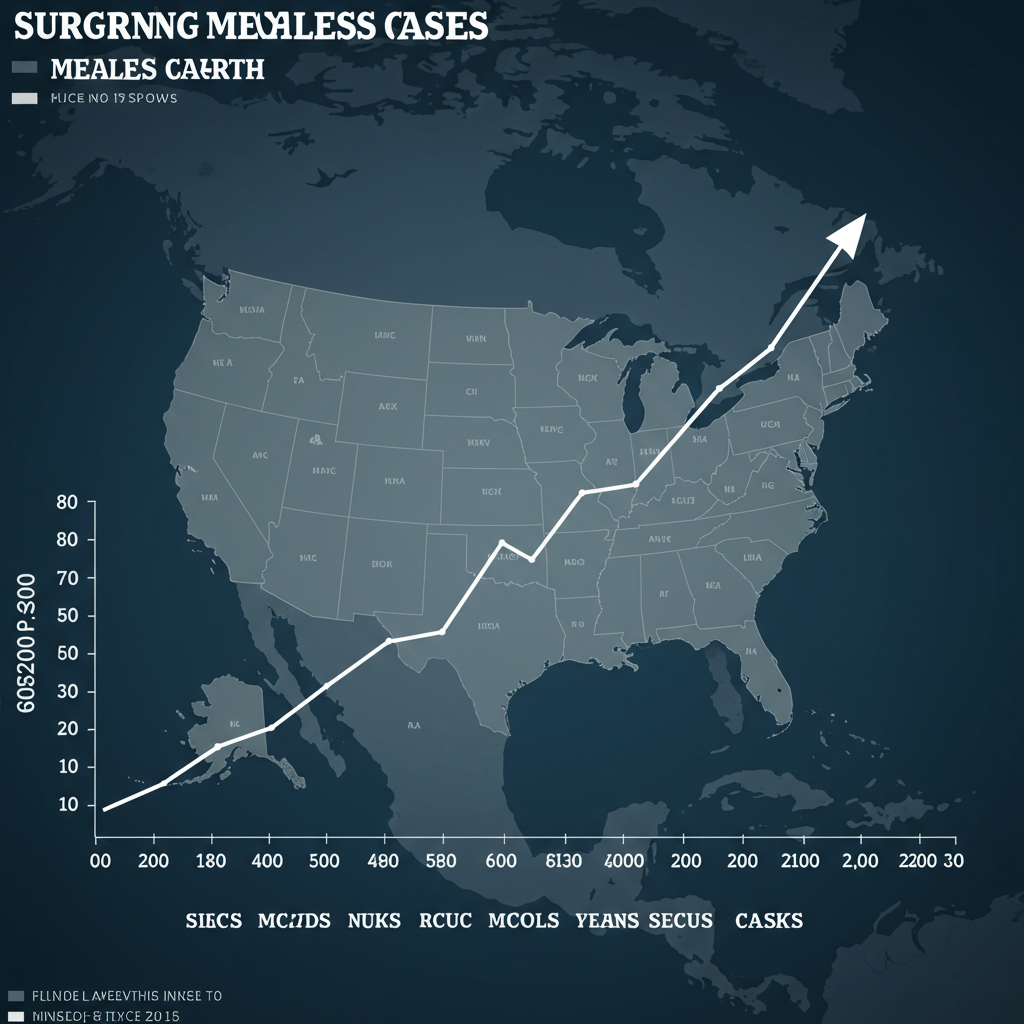
measles, a disease declared eliminated in the United States over two decades ago, is experiencing a worrying resurgence. New data confirms that confirmed measles cases this year have soared past previous records set since the year 2000. This alarming trend poses a significant public health threat, particularly for unvaccinated individuals and vulnerable communities across the nation. The situation underscores the critical importance of maintaining high vaccination rates to protect against this highly contagious and potentially severe illness. This surge highlights how quickly a preventable disease can reappear when community immunity wanes.
According to the latest reports from the Centers for Disease Control and Prevention (CDC), the U.S. has recorded 1,267 confirmed measles cases so far this year. This figure is almost 4.5 times the total number of cases seen throughout all of last year. Critically, this number is just shy of the 1,274 cases recorded in 2019, which represented the highest annual count since measles was declared eliminated in the U.S. in 2000. Experts now anticipate the 2025 total will likely surpass that 2019 peak. Nearly 40 states have reported at least one case, demonstrating the widespread nature of the current challenge.
Why the Rise in Measles Cases Matters
Measles is far more serious than just a simple rash. It is one of the most contagious human diseases known, spreading through the air when an infected person coughs or sneezes. The virus can remain active in an airspace for up to two hours after the infected person leaves. This ease of transmission means the virus can spread rapidly through a community, especially where immunity levels are low. While many people recover, measles can lead to severe, life-threatening complications.
Data from the current measles outbreak shows the real risks. Roughly 12% of confirmed cases this year have required hospitalization, with a majority of these patients being under the age of 19. Tragically, three deaths have been linked to measles in the U.S. this year: two young children in Texas and one adult in New Mexico. All three individuals were unvaccinated. Beyond immediate illness, measles can cause serious long-term problems like pneumonia, brain swelling (which can result in lasting damage like blindness, deafness, or intellectual disabilities), and a dangerous phenomenon known as “immune amnesia,” leaving patients vulnerable to other past illnesses. There is no specific antiviral treatment for measles; only supportive medical care is available, making prevention through immunization paramount.
Understanding the Drivers Behind the Outbreak
The primary factor driving this increase in measles cases is a decline in childhood vaccination rates. The CDC recommends children receive two doses of the MMR vaccine (measles, mumps, and rubella) to be fully protected. The first dose is typically given between 12 and 15 months of age, with the second dose between 4 and 6 years old. For years, the U.S. maintained high vaccination coverage, exceeding the 95% threshold needed for effective community immunity (often called herd immunity). This high coverage is what allowed the disease to be declared eliminated in 2000.
However, vaccination coverage among kindergartners nationally has been falling in recent years. It is now below the critical 95% target needed to prevent sustained outbreaks. This drop creates pockets of vulnerability where the virus can take hold and spread. This year’s surge is heavily linked to outbreaks occurring in these under-vaccinated populations. So far, there have been 27 outbreaks reported in the U.S., accounting for 88% of the total cases. In comparison, 2024 saw 16 outbreaks associated with 69% of cases.
The Southwest Outbreak: An Epicenter
The largest single outbreak since 2000 is centered in the Southwest, spanning parts of West Texas, New Mexico, Oklahoma, and Kansas. This outbreak alone accounts for a substantial majority of cases, with over 700 reported in Texas. It originated in a close-knit community in Gaines County, Texas, which is known to have historically low vaccination rates. In Gaines County’s Loop Independent School District, only 46% of kindergarten students were vaccinated against measles in 2023-24, a significant drop from 82% in 2019 and far below the recommended 95%.
Across the impacted region, the vast majority of cases have occurred among individuals who were unvaccinated or whose vaccination status was unknown. Reports indicate that about 96% of cases this year fall into this category. Only a small percentage of cases (around 1-2%) have occurred in individuals who received one or two doses of the MMR vaccine, highlighting its effectiveness even when not achieving 100% protection. Past large measles outbreaks in the U.S., such as those in an Orthodox Jewish community in New York in 2019 and an Amish community in Ohio in 2014, also occurred in similar close-knit populations with low vaccination rates.
The Role of Travel and Global Context
While measles was eliminated domestically, cases in the U.S. are often triggered by international travel. Unvaccinated individuals traveling abroad can contract the disease and bring it back, potentially seeding outbreaks if they return to communities with low immunization rates. As the CDC notes, “Measles anywhere is a threat everywhere.” Global measles activity has been rising recently after a dip during the COVID-19 pandemic.
This interconnectedness means that maintaining high vaccination rates is crucial not only because of internal vulnerabilities but also because of the constant risk of importation. Areas with high vaccination coverage, like parts of Maryland, demonstrate how imported cases typically do not lead to large outbreaks because the virus cannot spread easily within a highly immune population. Conversely, the current surge shows the consequence when travel-related cases reach communities where vaccine coverage has fallen.
Protecting Against Measles: The MMR Vaccine
The measles, mumps, and rubella (MMR) vaccine remains the most effective tool for preventing measles. It is a safe and highly effective vaccine. One dose provides approximately 93% protection against measles, while two doses offer about 97% protection. Individuals who have received two doses are considered very well-protected against the virus.
For adults unsure of their vaccination status, the CDC advises that receiving an additional dose of the MMR vaccine is safe. Checking with your healthcare provider about your or your family’s vaccination records is the best way to ensure you are protected. While some may seek alternative measures, health experts emphasize that only vaccination provides robust protection against infection. Methods like vitamin A supplementation, while helpful in reducing mortality in severely malnourished populations, do not prevent measles infection and are not a substitute for vaccination in the U.S. Similarly, antibiotics are only used for secondary bacterial infections, not the measles virus itself.
Addressing vaccine hesitancy and misinformation is a critical challenge in controlling outbreaks. Experts stress the importance of accurate information about the safety and effectiveness of the MMR vaccine. They also highlight that measles is a serious disease with devastating consequences, not a minor illness. Trusted messengers, including healthcare providers and community leaders, play a vital role in communicating accurate information and addressing specific concerns within affected populations.
Frequently Asked Questions
What is the current situation with measles cases in the U.S.?
Measles cases in the United States have reached alarmingly high levels in 2025, with 1,267 confirmed cases reported by the CDC so far. This number is close to surpassing the previous post-elimination record set in 2019. Cases have been reported in nearly 40 states. The surge is primarily linked to significant outbreaks, particularly one large outbreak centered in the Southwest (Texas and New Mexico), where low vaccination rates are a key factor.
Why are measles cases rising despite elimination in 2000?
Measles was declared eliminated in the U.S. in 2000 due to high vaccination rates achieving herd immunity. However, national vaccination rates, particularly among kindergartners, have recently fallen below the critical 95% threshold needed to prevent outbreaks. This creates communities vulnerable to the virus, which can be imported by unvaccinated international travelers. When the virus reaches these under-vaccinated pockets, it spreads quickly, leading to the outbreaks currently driving the case surge.
How can I protect myself and my family from the measles outbreak?
The most effective protection against measles is receiving the MMR vaccine. The CDC recommends two doses for children (at 12-15 months and 4-6 years) and advises adults to check their vaccination status and consider an additional dose if unsure. Ensuring everyone in your family is up-to-date on their MMR immunization is crucial. In areas with high transmission, individuals, especially those who are unvaccinated or immunocompromised, may also consider using a well-fitted mask like an N95 in public settings.
Conclusion: A Preventable Crisis
The dramatic rise in U.S. measles cases this year serves as a stark reminder of the importance of vaccination. A disease that was effectively eliminated is making a comeback due to declining immunity in certain communities. The current outbreaks, particularly the large one in the Southwest, demonstrate the real-world consequences of falling below the critical 95% vaccination target. Measles is highly contagious and poses serious risks, including hospitalization and death, especially for unvaccinated individuals. Reversing this trend requires a collective commitment to public health, ensuring high vaccination rates nationwide. Protecting against measles is not just an individual choice; it’s a community responsibility that safeguards the most vulnerable among us.
Word Count Check: 963