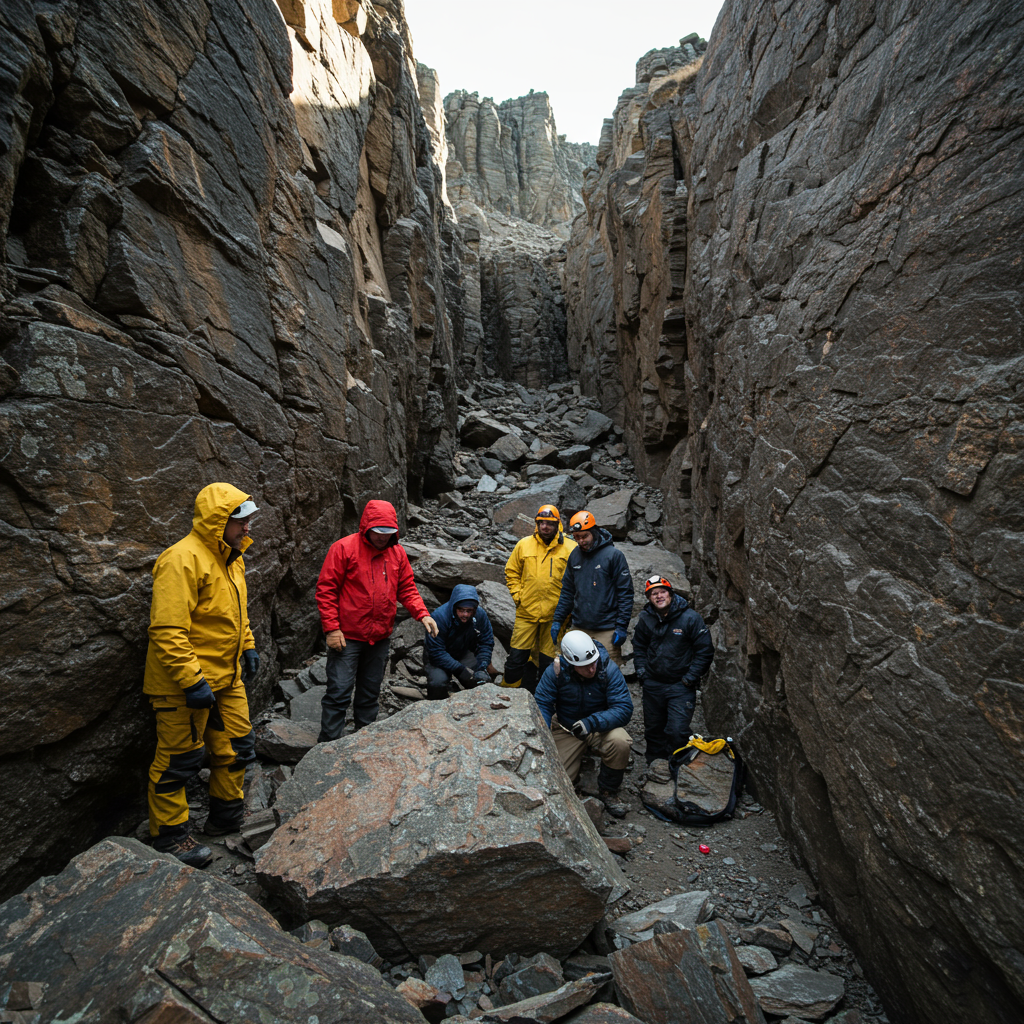
Scientists are on a global quest to find the oldest rocks on Earth. Unlocking the secrets held within these ancient formations offers humanity an unprecedented glimpse into our planet’s violent and mysterious beginnings. The current leading candidate for the title lies hidden in the remote landscapes of northern Quebec, Canada.
Located in the Nunavik region, roughly 40 kilometres south of the Inuit community of Inukjuak, sits the nuvvuagittuq Greenstone Belt (NGB). This vast geological formation contains rocks that researchers propose are the most ancient accessible volcanic rocks on Earth. Their age is estimated at a staggering 4.3 billion years old, placing them firmly within the Hadean eon. This earliest period of Earth’s history began when the planet formed around 4.5 billion years ago and lasted for hundreds of millions of years. Very little geological record survives from this incredibly turbulent era, making formations like Nuvvuagittuq invaluable.
A Window into the Hadean Eon
The Hadean eon is a time scientists know little about. It was marked by extreme conditions, including intense volcanic activity and likely frequent impacts from space. Finding rocks from this period is incredibly rare. These ancient rocks from the Nuvvuagittuq Greenstone Belt act like “books” filled with chemical records. They hold potential clues about the environment on Earth billions of years ago. Studying them could shed light on profound questions. Did oceans exist? When did plate tectonics begin? Are there traces of early life etched into their structure? Geologists like Jonathan O’Neil believe these rocks “open a new window at a time when we have almost no record.” O’Neil, a professor of earth sciences at the University of Ottawa, has been a lead researcher studying the NGB.
While tiny mineral grains called zircons have been found dating back even further (some 4.4 billion years old, found in Australia), an entire rock formation provides far more comprehensive information than isolated crystals. The Nuvvuagittuq belt, if confirmed to be this old, offers a unique, widespread snapshot of Hadean Earth.
The Scientific Debate: Dating Ancient Basalt
Establishing the age of such ancient rocks is a complex process, and the Nuvvuagittuq claim has faced scientific scrutiny. The NGB is largely composed of basalt, a type of volcanic rock. Basalt typically lacks zircons, the minerals commonly used for reliable isotopic dating techniques in very old rocks (like the Acasta Gneiss in Canada’s Northwest Territories, reliably dated at 4.03 billion years and currently considered a “golden spike” marking the end of the Hadean).
O’Neil and his colleagues initially proposed the 4.3 billion-year age in 2008. Their original dating relied on the samarium-neodymium isotopic technique. While suitable for ancient rocks, this method is less common for terrestrial samples. Furthermore, the initial study showed inconsistencies when comparing dates obtained using different isotopic methods. Critics argued these discrepancies suggested the rocks might be a mixture of older and younger materials. This mixing could potentially make interpreting their overall age and the environmental information they contain unreliable. This fueled a significant scientific debate within the geological community.
New Evidence Supports Extreme Age
To address the controversy and strengthen their claim, O’Neil’s team conducted new research published in the journal Science. For this new analysis, they studied a different part of the NGB formation. They focused on a younger rock intrusion – liquid magma that had later solidified within cracks of the original rocks. This intrusion, by definition, must be younger than the surrounding main NGB rocks.
Using isotopic dating techniques on this specific intrusion rock, the researchers found that two different isotopic “clocks” provided consistent ages. Both methods agreed the intrusion was 4.16 billion years old. The scientists argue this provides powerful support for their original assertion. Since this reliably dated 4.16-billion-year-old rock is clearly younger than the rock it cut into, the original NGB formation must be even older than 4.16 billion years. This reinforces the argument that the NGB contains rocks formed during the Hadean eon and represents the oldest preserved rock formation on Earth.
Reactions to the new data are varied. Some experts familiar with dating ancient rocks, like Graham Pearson from the University of Alberta, find the new data convincing. He points to the variety of techniques used and the careful study. However, other scientists, who previously doubted the 2008 results, remain cautious. Martin Bizzarro, a professor at the University of Copenhagen, acknowledges the rare agreement of isotopic clocks in the new study but is not yet definitively convinced. He suggests other complex explanations for the data might be possible given the incredibly dynamic nature of the early Earth.
Despite lingering scientific debate, O’Neil expressed hope the new, more consistent data will increase confidence among researchers. Establishing the Hadean age of the NGB is crucial. It allows scientists to confidently interpret the potential signs of early ocean chemistry, nascent plate tectonics, and even traces of early life that colleagues are actively searching for within these same rocks. Placing these potential discoveries within the Hadean context is vital for understanding Earth’s earliest evolution.
Nuvvuagittuq: Science Meets Inuit Stewardship
The scientific significance of the Nuvvuagittuq Greenstone Belt has attracted global interest. Geologists from around the world have been eager to study the formation, aiming to validate its age and conduct further research. However, this influx of scientific activity has also brought unintended consequences and highlights critical ethical considerations, particularly regarding research on Indigenous lands.
The local Inuit community (Inukjuammiut) initially welcomed researchers. Unfortunately, some research practices led to significant, irreparable damage to the landscape. Researchers, some reportedly using heavy equipment like power tools and generators, extracted large rock samples without the consent or consultation of the Inukjuammiut and the Pituvik Landholding Corp., which represents the community’s land interests. According to Tommy Palliser, president of Pituvik, the extensive drilling and excavation left the environment visibly scarred and altered. Worse, some excavated rocks were reportedly found being sold online for substantial amounts, with no benefit returning to the community. This led the residents to feel exploited and disrespected.
Community Action and Future Plans
In response to the perceived damage and lack of consultation, the Inukjuammiut took decisive action in spring 2024. The Pituvik Landholding Corp. implemented a temporary closure of the area specifically for researchers. This measure pauses research activities to allow the community time to establish proper policies, regulations, and frameworks for future research. The community aims to develop a sustainable approach that respects their land, culture, and ensures any research provides reciprocal benefits.
Pituvik is actively exploring options for long-term protection and regulated access. A key proposal is to designate the Nuvvuagittuq area as a provincial park. This would potentially secure funding, allow for the development of infrastructure to monitor research activities within defined zones, and enable the hiring of staff to manage visitors and scientists alike. The community acknowledges they were initially “caught off guard” by the scale and impact of the research. The temporary closure is planned to last around two years, providing time to develop their proposal and secure funding, with a potential reopening to researchers under new formalized conditions anticipated around 2027.
The situation at Nuvvuagittuq serves as a crucial case study for the ethics of scientific research in Northern and Indigenous territories. Experts emphasize the need for genuine partnerships and trust-building with local communities. All aspects of research must be discussed openly and agreed upon beforehand. Initiatives like the Atanniuvik project, which aims to establish community-based research review committees in Nunavik villages, are seen as positive steps to prevent similar issues in the future and ensure research is conducted collaboratively and respectfully, with clear regulations and community control over activities on their traditional lands.
Frequently Asked Questions
What are the Nuvvuagittuq rocks and why are they potentially Earth’s oldest?
The Nuvvuagittuq Greenstone Belt is a geological formation in northern Quebec, near Inukjuak, Nunavik. It contains ancient volcanic rocks, primarily basalt. Researchers, led by Jonathan O’Neil, propose these rocks are approximately 4.3 billion years old, placing them in the Hadean eon. Their extreme age is significant because very little geological record survives from this early period of Earth’s history, offering scientists a rare chance to study the planet’s conditions just after it formed.
Where are the Nuvvuagittuq Greenstone Belt rocks located and can people visit them?
The Nuvvuagittuq Greenstone Belt is situated in the remote Nunavik region of Quebec, about 40 kilometres south of the community of Inukjuak, on Inuit traditional territory. While the area is of immense scientific interest, public access, particularly for research, is currently restricted. Due to past unregulated research activity causing environmental damage and disrespect towards the local community, the Inukjuammiut, via the Pituvik Landholding Corp., implemented a temporary closure to researchers in spring 2024. They are developing plans for future access under new regulations, possibly as part of a provincial park proposal, with potential reopening anticipated around 2027.
What is the scientific controversy surrounding the age of the Nuvvuagittuq rocks?
The main controversy stems from the difficulty in reliably dating the Nuvvuagittuq rocks. As basalt, they lack zircons, the standard mineral for dating very old rocks. Initial dating methods (like samarium-neodymium) yielded inconsistent results, leading critics to question the claimed 4.3 billion-year age. More recent research dated a younger intrusion rock within the formation to 4.16 billion years, with consistent results across multiple dating methods. Scientists argue this new evidence supports the claim that the surrounding, original Nuvvuagittuq rocks are indeed older than 4.16 billion years and thus Hadean, though some skepticism within the scientific community remains due to the complexity of early Earth processes.
Exploring Our Planet’s Deep Past
The Nuvvuagittuq Greenstone Belt stands as a remarkable geological treasure. It holds the potential to unravel fundamental questions about Earth’s earliest moments, from the formation of oceans to the dawn of plate tectonics and possibly even the first inklings of life. The scientific quest to definitively date these rocks continues, with new evidence strengthening the argument for their extreme age. However, the story of Nuvvuagittuq is also a powerful reminder of the crucial need for ethical research practices. Future study of these ancient formations must be conducted in respectful partnership with the Inukjuammiut community. By ensuring stewardship aligns with scientific discovery, we can gain invaluable knowledge about our planet’s deep past while honouring the land and its traditional guardians.