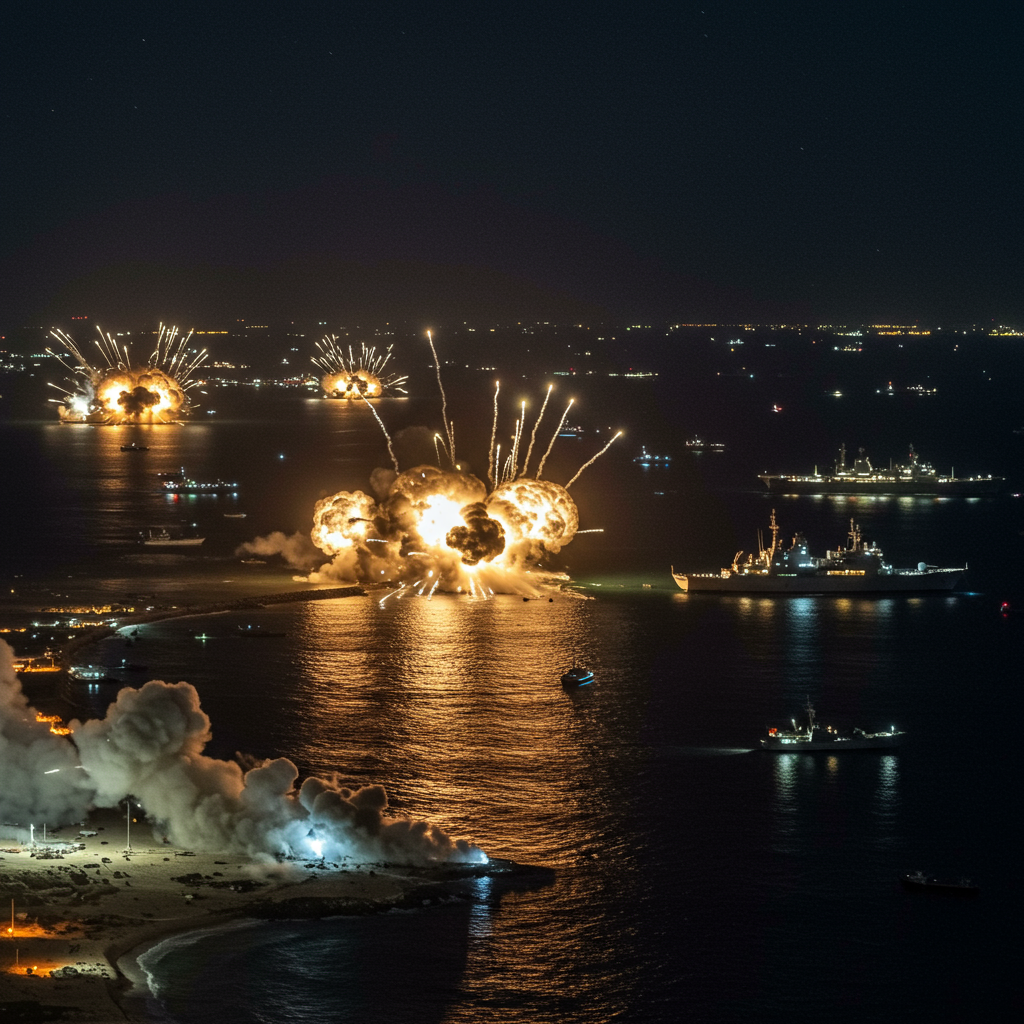
Recent intense actions unfolded in the Red Sea region as Israeli forces reportedly executed strikes against targets in Yemen. The israel Defense Forces (IDF) announced overnight Monday local time that they targeted three key ports. The IDF alleges these maritime facilities are crucial hubs used by Houthi forces to receive and transfer weaponry originating from the Iranian regime.
In a significant development during these strikes, Israeli forces also claim to have hit the Galaxy Leader. This commercial vessel was seized by Houthi forces back in November 2023. That takeover occurred shortly after the current conflict between Israel and Hamas erupted, following the devastating October 7 terrorist attacks on Israel led by Hamas. These attacks tragically resulted in 1,200 Israeli deaths and 250 individuals being taken hostage.
The Seized Vessel: Galaxy Leader’s Role
The Galaxy Leader holds particular notoriety. Following its seizure, the ship’s crew was held hostage from November 2023 until their release in January 2025. This release was reportedly part of a ceasefire arrangement earlier this year between Israel and Hamas. The IDF has provided justification for targeting the vessel, claiming Houthi forces repurposed it. According to the IDF, a radar system was installed on the ship. This system was allegedly used to track other vessels operating in international maritime areas. The IDF asserts this tracking facilitated further “terrorist activities.”
These strikes, referred to in some reports as “Operation Black Flag,” specifically targeted the ports of Hodeidah, As-Salif, and Ras Isa. Israeli military sources described these locations as containing “key terror infrastructure.” In addition to the ports and the Galaxy Leader, the strikes also reportedly hit the Ras Khatib or Ras Qantib power station, which Israel claims supported Houthi military operations.
Justification and Response
The Israeli military stated the action was a direct response to continued missile launches from Yemen aimed at Israel. This ongoing aggression reportedly occurred despite a fragile ceasefire that has been in place with Iran since late June. Defense Minister Israel Katz issued a stern warning following the strikes. He stated that the same fate awaited Yemen as Tehran. He emphasized the IDF had “powerfully struck Houthi terror targets.” Katz reiterated that anyone attempting to harm Israel would be struck and would “pay a heavy price.” Reports indicate the IDF issued an urgent evacuation warning in Arabic for those present at the targeted ports before the strikes commenced.
Following the Israeli attacks, Houthi forces offered a counter-narrative. A Houthi spokesperson posted on X stating their forces had “effectively repelled” the Israeli assaults.
Broader Regional Context and Escalation
These Israeli strikes in Yemen occur amidst a complex regional backdrop. A delicate ceasefire deal is reportedly in place between Iran and Israel following a recent “12-day war” between the two adversaries. Simultaneously, Israel and Hamas are engaged in intense negotiations. These talks aim for a new ceasefire agreement. The proposed deal would involve pausing Israeli military operations in Gaza. It would also secure the release of some of the estimated 20 remaining living hostages held by Hamas in Gaza. Negotiators from both sides reportedly arrived in Doha, Qatar, over the weekend to continue these crucial discussions. Hamas had reportedly responded positively to a recent U.S.-brokered proposal, which was backed by Israel. Adding to the diplomatic flurry, Israeli Prime Minister Benjamin Netanyahu is scheduled to meet with President Donald Trump at the White House.
The strikes also follow reports of a prior alleged Israeli strike last month. That incident reportedly targeted Houthi military chief Mohammed Abdul Karim al-Ghamari. Israeli officials had observed a temporary lull in Houthi activity afterward. They believed this pause was linked to the strike on al-Ghamari. Sources suggested al-Ghamari, described as a key figure in Houthi-Iran coordination and head of the group’s missile program, was seriously wounded or killed. However, Houthi launches toward Israel have reportedly resumed in recent days. The most recent launch prior to these strikes occurred on Saturday night. That missile launch triggered alarms in Israel’s Dead Sea and Judean Desert regions. The IDF confirmed that missile, launched from Yemen, was successfully intercepted. No casualties or damage were reported in Israel from that incident.
Impact on Red Sea Shipping
The Houthis have significantly disrupted global trade since October 2023. Their attacks target Israel and international shipping in the Red Sea. They state these actions are in solidarity with Palestinians in Gaza. Between November 2023 and January 2025, they reportedly targeted over 100 merchant vessels. These attacks used missiles and drones. They resulted in the sinking of two ships and the deaths of four sailors. Most of the dozens of missiles and drones launched towards Israel by the Houthis have either been intercepted or fallen short. This persistent threat to Red Sea security underscores the strategic importance of the ports and maritime assets used by the Houthis. The Israeli targeting of ports and the Galaxy Leader vessel directly addresses infrastructure alleged to support these disruptive activities. The IDF has reiterated its determination to counter threats to Israeli civilians “wherever required,” regardless of the distance. The situation remains highly volatile.
Frequently Asked Questions
Why did Israel target specific ports and the Galaxy Leader ship in Yemen?
Israel’s strikes aimed at dismantling Houthi infrastructure. According to the IDF, the targeted ports (Hodeidah, As-Salif, Ras Isa) are used to transfer weapons from Iran to the Houthis. The Galaxy Leader ship, seized by Houthis in 2023, was allegedly fitted with a radar system. The IDF claims this system tracked international vessels to facilitate further “terrorist activities.” The strikes were framed as a response to continued Houthi missile launches towards Israel.
What was “Operation Black Flag” and which Houthi targets were hit?
“Operation Black Flag” is a term used in some reports to describe the recent Israeli airstrikes in Yemen. During this operation, Israeli forces reportedly struck several key Houthi targets. These included the strategically important Houthi-controlled ports of Hodeidah, As-Salif, and Ras Isa. Additionally, the strikes targeted the Ras Khatib or Ras Qantib power station and the seized commercial vessel, Galaxy Leader.
How do these Israeli strikes connect to the wider conflict in the Red Sea and region?
These strikes are deeply intertwined with the ongoing regional tensions. The Houthis have been attacking Israel and disrupting Red Sea shipping since the start of the Israel-Hamas war. Their actions are declared solidarity with Palestinians. The Israeli strikes target infrastructure allegedly supporting these Houthi activities, including weapons transfers and maritime tracking. The situation is further complicated by fragile ceasefires between Iran and Israel and ongoing Israel-Hamas hostage negotiations.
These events underscore the complex and interconnected nature of the conflicts in the Middle East. Actions in one arena, like Yemeni ports, directly impact security and stability across the region, including vital shipping lanes and diplomatic efforts elsewhere. The situation remains dynamic, with potential for further escalation or shifts based on ongoing negotiations and military actions.