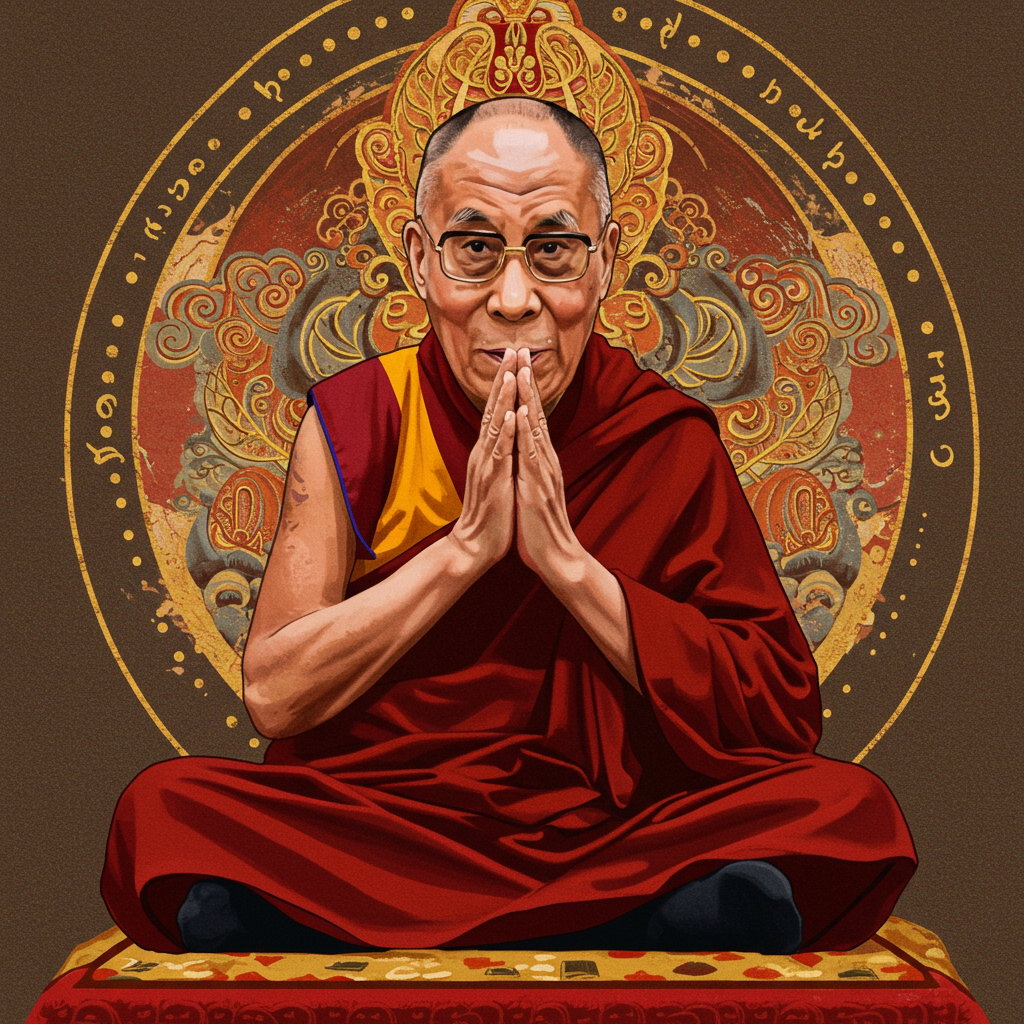
<a href="https://news.quantosei.com/2025/07/06/dalai-lama-a-global-symbol-of-tibetan-culture-and-resistance-turns-90/” title=”Dalai Lama Turns 90: Reincarnation Plans and Tibet's Future”>dharamshala, India – On Sunday, July 6, 2025, the world joined thousands of devotees in the Himalayan town of Dharamshala to celebrate a significant milestone: the 90th birthday of the 14th dalai Lama, Tenzin Gyatso. Widely recognized as a global emblem of Tibetan culture and resistance, his nine decades mark a life profoundly dedicated to service, spiritual leadership, and navigating the complex reality of exile. The celebrations in Dharamshala, his home since fleeing Chinese rule in 1959, blended religious reverence with cultural expression, drawing well-wishers from across the globe.
A Joyous Gathering in Exile
Despite persistent rain, thousands of followers, including hundreds of saffron and red-robed monks and nuns, gathered in Dharamshala for the central ceremony. The atmosphere was one of deep respect and collective anticipation. As the Dalai Lama arrived, assisted by attendant monks, the air filled with the sounds of traditional Tibetan music – drums beating, bagpipes playing, and senior lamas striking cymbals in honor of their spiritual leader.
Escorted to the main temple courtyard, he took his place before the packed audience. The head of the democratically elected Tibetan government-in-exile, Penpa Tsering, performed a symbolic act, raising the Tibetan flag as the national anthem echoed through the gathered crowd. This moment underscored the enduring hope and identity the Dalai Lama represents for Tibetans worldwide, especially those living in the diaspora.
Reflections on a Life Dedicated to Others
Addressing the assembled crowd, the Dalai Lama offered poignant reflections on his journey. “When I look back on my life,” he shared, “I see that I have not wasted it at all.” This simple yet powerful statement encapsulates his decades spent advocating for peace, compassion, and the rights of his people. He further emphasized the core of his life’s work, stating, “I live my life in the service of other sentient beings.”
Known for his infectious laugh and humble demeanor, the 14th Dalai Lama often describes himself merely as a “simple Buddhist monk.” Yet, for millions of Tibetan Buddhists, he is far more. They revere him as a living manifestation of Chenrezig, the Bodhisattva of Compassion, believing he has voluntarily chosen to be reborn to help alleviate suffering in the world. This dual identity – the humble monk and the revered spiritual figure – adds layers to his global significance.
Navigating the Future: Reincarnation and Succession
The 90th birthday capped a week filled with events and culminated in a significant announcement regarding the future leadership of Tibetan Buddhism. Ending years of speculation, the Dalai Lama reiterated his intention to reincarnate after his death, ensuring the continuation of the lineage. Crucially, he stated that the next Dalai Lama must be recognized according to traditional Buddhist methods and, importantly, should be born in the “free world” – specifically meaning outside of China.
On the day before his birthday, he also expressed a personal wish to live until the age of 130, a testament to his vitality and continued commitment to his work. These pronouncements are particularly resonant given the complex political landscape surrounding the succession.
The Contested Path Forward
The issue of identifying the next Dalai Lama is a major point of contention with the government of China. Since its troops entered Tibet in the 1950s and solidified control, Beijing has viewed the Dalai Lama as a separatist seeking to undermine its authority. China has repeatedly asserted that it alone possesses the legal and historical right to approve the reincarnation of high Tibetan lamas, including the Dalai Lama. Beijing insists it will reject any successor chosen without its explicit consent.
This stance creates a potential standoff, as the Dalai Lama’s declaration that his successor should be found according to religious tradition and outside China directly challenges Beijing’s claim. Many exiled Tibetans harbor deep fears that China intends to install its own figurehead as the 15th Dalai Lama to further consolidate control over the region and diminish the influence of the current lineage. The succession question therefore remains a crucial political battleground alongside a spiritual one.
A Global Symbol of Resilience and Hope
The 14th Dalai Lama was enthroned at a remarkably young age in 1937. His life took a dramatic turn in 1959 following a failed uprising against Chinese rule, which forced him and thousands of his followers to undertake a perilous journey over the Himalayas to seek refuge in India. In Dharamshala, he established the Central Tibetan Administration, the democratically elected government-in-exile, which has worked tirelessly to preserve Tibetan culture, language, and identity despite living dispersed across the globe.
Over seven decades in exile, he has not only sustained a community but also emerged as one of the world’s most respected moral authorities and peace advocates. His tireless efforts in promoting non-violence, interfaith harmony, and universal responsibility earned him the Nobel Peace Prize in 1989. He has championed the cause of Tibetan autonomy through peaceful means, becoming the enduring voice for a people yearning for freedom and the preservation of their unique heritage.
Well Wishes from Around the World
The significance of his 90th birthday drew tributes from global leaders and prominent figures. Indian Prime Minister Narendra Modi sent birthday wishes, describing the Dalai Lama as “an enduring symbol of love, compassion, patience and moral discipline.” U.S. Secretary of State Marco Rubio also offered congratulations, stating the spiritual leader “continues to inspire people by embodying a message of unity, peace and compassion.”
The celebration in Dharamshala saw hundreds of international followers in attendance, including Hollywood actor Richard Gere, a long-time supporter of the Tibetan cause. Gere spoke movingly, calling the Dalai Lama “the most extraordinary man to ever walk on this planet,” a sentiment met with rapturous applause from the crowd. In a message posted on his website, the Dalai Lama himself reiterated his dedication, reaffirming he is “just a simple Buddhist monk” committed to “promoting human values religious harmony.”
Beyond Dharamshala, celebrations were also held in places with significant Tibetan populations, such as Kathmandu, Nepal, where refugees, monks, and foreign diplomats marked the day with prayers, chanting, and traditional dances, reflecting the global reach of his influence.
Frequently Asked Questions
What were the key highlights of the Dalai Lama’s 90th birthday celebration?
The main celebration for the Dalai Lama’s 90th birthday took place on July 6, 2025, in Dharamshala, India, his home in exile. Thousands of followers, including monks and nuns, attended the event, which featured traditional Tibetan music, cultural performances, and the raising of the Tibetan flag by the head of the government-in-exile. The Dalai Lama addressed the crowd, reflecting on his life of service and expressing his hope to live longer.
Why is the issue of the Dalai Lama’s succession controversial with China?
The controversy stems from conflicting claims of authority. The Dalai Lama states his successor should be chosen according to traditional Buddhist customs and be born outside of China in the “free world.” China, however, views the Dalai Lama as a separatist and asserts it alone has the right to approve the next spiritual leader, threatening to reject any choice made without its consent. This political standoff is part of China’s effort to maintain control over Tibet.
What is the significance of the Dalai Lama as a global figure at 90?
At 90, the Dalai Lama remains a crucial spiritual leader and a powerful global symbol. He is revered by millions as a manifestation of compassion and has spent over seven decades leading the Tibetan diaspora in exile, preserving their culture and identity. He is a Nobel Peace Prize laureate recognized for his advocacy of non-violence, interfaith dialogue, and universal responsibility, representing the ongoing struggle for Tibetan autonomy and human rights.
Conclusion
The 90th birthday of the Dalai Lama was more than just a personal milestone; it was a global affirmation of his enduring legacy and the resilience of the Tibetan people he represents. Celebrated in his exile home, the event highlighted his profound spiritual impact, his unwavering commitment to service, and the vital role he plays in sustaining Tibetan identity against significant odds. As discussions around his future and the complex issue of succession continue, his life stands as a testament to hope, compassion, and the pursuit of freedom, reminding the world of the ongoing challenges faced by Tibet and the continued importance of his message.