Key takeaways
- The Beaver Moon reaches peak illumination at 9:53 a.m. Eastern Time on Tuesday, November 24, 2026, according to The Weather Company and TechTimes.
- NASA’s Astronomy Picture of the Day counts four consecutive supermoons, while National Geographic and the Farmers’ Almanac count three.
- The four full moons fall on November 24 and December 23 (Eastern time), January 22, 2027 and February 20, 2027.
- Devon Salasin, a National Geographic expert, said the difference between a supermoon and a regular full moon is ‘nearly indistinguishable to the naked eye.’
The Beaver Moon supermoon reaches peak illumination at 9:53 a.m. Eastern Time on Tuesday, November 24, 2026, according to The Weather Company, which calls it the first of four consecutive supermoons. Other outlets count differently. NASA’s Astronomy Picture of the Day and EarthSky count four, while National Geographic and the Farmers’ Almanac count three.
The dispute is not about how far away the moon is. The distances listed by Space.com, the Farmers’ Almanac, Star Walk and EarthSky match. The disagreement is about the cutoff each outlet uses to define a supermoon, and the February Snow Moon falls in that gray zone.
When to see the Beaver Moon supermoon
The Weather Company said the moon appears full in the sky on the morning of November 24, and that there is no visible difference in brightness between peak illumination and the rest of the night. The peak is the exact moment the moon reaches 100 percent illumination in its cycle.
The best time to look is when the moon is low on the horizon, according to The Weather Company. This is because of the ‘moon illusion,’ which makes the moon look larger near the horizon. TechTimes reports that the moon’s angular size stays essentially constant. It is about 1.5 percent farther from Earth at the horizon, and a 2002 review found no consensus on the cause of the illusion.
Moonrise times differ by source. For New York on November 24, Sky at Night gave 3:51 p.m. and Star Walk gave 4:15 p.m., according to TechTimes. TechTimes advises readers to check a local moonrise calculator. Star Walk says the moon looks full for about three nights around each peak.
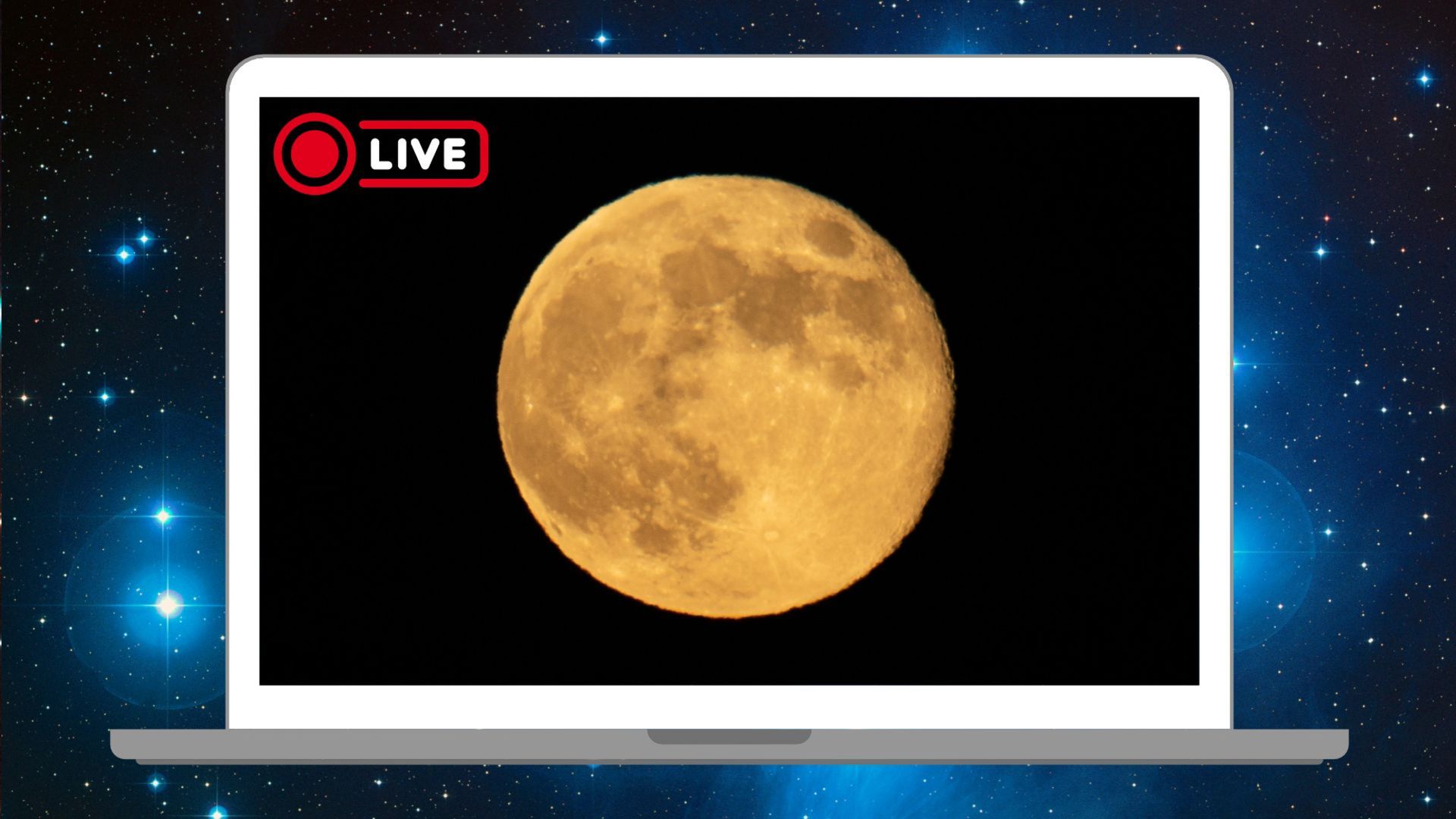
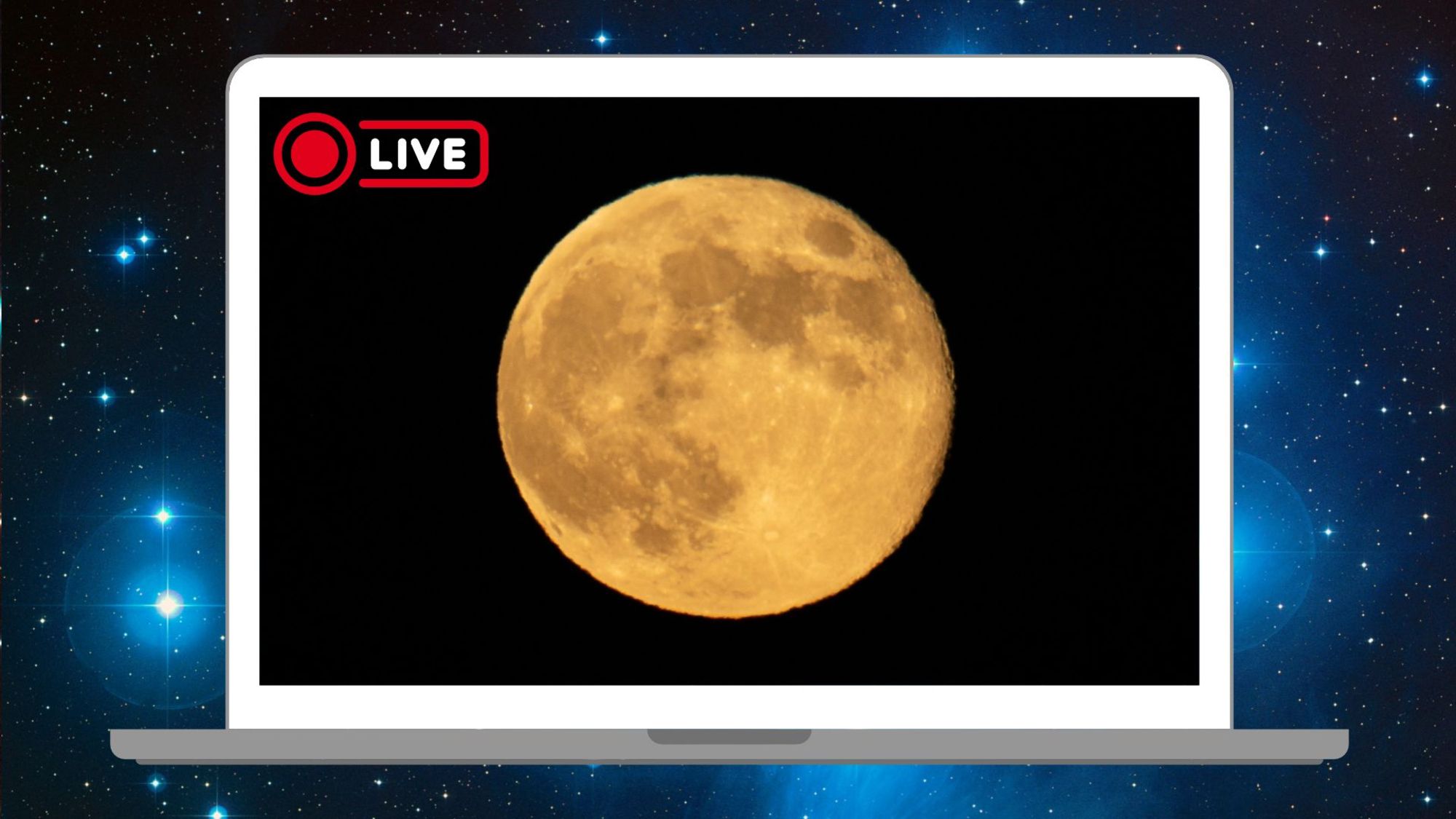
For readers who cannot see the sky, the Virtual Telescope Project plans a free YouTube livestream starting at 10:30 a.m. EST (1530 GMT) on November 24, according to Space.com. The feed uses robotic telescopes in Manciano, Italy, and it is ‘weather permitting.’ Gianluca Masi, the project’s founder, provides commentary. Space.com’s later editor’s note says the supermoon ‘dazzled stargazers with a spectacular show overnight.’
Why some outlets count three supermoons and others count four
Supermoon is not an official term in astronomy. Richard Nolle, an astrologer, coined it in 1979 in Dell Horoscope magazine. He defined it as a new or full moon within 90 percent of its closest approach to Earth. NASA describes the term as unofficial, and says it typically refers to a full moon within at least 90 percent of perigee, the closest point in the moon’s orbit. National Geographic says astronomers call the alignment a ‘perigee-syzygy.’
Because the definition has a percentage but no fixed distance, outlets have chosen different cutoffs. NASA’s Astronomy Picture of the Day, published November 27, calls the Beaver Moon ‘the first of four consecutive full Moons near perigee.’ BBC Sky at Night and EarthSky also count four. National Geographic calls the Beaver Moon the first of three.
The Farmers’ Almanac says there is no formal definition. It uses the closest tenth of the year’s distance range. For 2026, TechTimes calculates that this line sits at about 361,600 km (224,700 miles). The Snow Moon, at 363,306 km, falls about 1,700 km beyond that line. TechTimes presents this comparison as its own calculation, not the Almanac’s. The Old Farmer’s Almanac does include the February moon in its list.
Fred Espenak, a retired NASA astrophysicist at the Goddard Space Flight Center, published tables that many outlets still use. TechTimes reports that he died on June 1, 2025. His table includes the Snow Moon in its supermoon list, even though it is the farthest of the four.
The four full moons, dates and distances
The Beaver Moon is followed by three more full moons. Their dates and times differ slightly by outlet and time zone:
- Beaver Moon, November 24, 2026, 9:53 a.m. ET: 360,768 km (224,170 miles), according to TechTimes.
- Cold Moon, December 23, 2026, 8:28 p.m. ET: 356,740 km (221,667 miles). This is 01:28 UTC on December 24. The Weather Company refers to a ‘big, beautiful display’ on December 24, Christmas Eve. TechTimes says this is the closest full moon of 2026 and the closest since January 2018, a description also used by Live Science.
- Wolf Moon, January 22, 2027, 7:17 a.m. ET: 357,644 km (222,229 miles). The Weather Company and TechTimes both give this date.
- Snow Moon, February 20, 2027, 6:23 p.m. ET: 363,306 km (225,747 miles). TechTimes also reports that a penumbral lunar eclipse reaches its greatest point at 23:12 UTC (6:12 p.m. ET) that night.
The Weather Company says supermoons occur three to four times a year and usually come back to back. NASA gives the same range, according to TechTimes. The timing comes from two cycles that do not match. The full moon returns about every 29.53 days, and perigee about every 27.55 days. Fourteen full-moon cycles and fifteen perigee cycles differ by only about 0.11 day. That gap explains why close full moons arrive in runs. TechTimes calculates that the two cycles realign about every 412 days.
The Weather Company said the Beaver Moon is the first supermoon since January 3. Space.com’s headline also calls it the first of four consecutive supermoons, but its text does not give dates for the other three.

How much larger and brighter a supermoon looks
The size and brightness figures in circulation use different baselines. Star Walk, as reported by TechTimes, says the Beaver Moon is about 6.5 percent larger and 13.5 percent brighter than an average full moon. It gives the Snow Moon as about 6 percent larger and 12 percent brighter, and the Cold Moon as about 8 percent larger and 16 percent brighter.
Space.com gives a different comparison. It says supermoons can be up to 13 percent larger and 30 percent brighter than the smallest full moon of the year. Space.com does not name a source for those figures. It says the smallest full moon of 2026 occurred in May, when the moon was near apogee, its farthest point from Earth.
Espenak said the closest supermoon pulls about 4 percent harder gravitationally than the moon at its average distance, according to TechTimes. TechTimes also reports that less than one percentage point of apparent size separates the disputed Snow Moon from the Beaver Moon, which every outlet counts.
Tides and coastal flooding around the Cold Moon
NOAA defines a perigean spring tide as a new or full moon at closest approach. These occur six to eight times a year. High tides during one can be more than a foot higher than during an apogean spring tide. In Anchorage, Alaska, where the tidal range exceeds 30 feet, the difference can reach 3 feet or more, according to TechTimes.
NOAA says perigean tides alone may cause only minor nuisance flooding in low-lying areas. Major coastal flooding usually requires strong onshore winds and pressure changes from a coastal storm. TechTimes advises readers near the coast to check local tide predictions and storm forecasts for the days around the December 23 Cold Moon. The sources do not describe specific tide heights for that date.
Where the Beaver Moon name comes from
The Old Farmer’s Almanac says the November full moon is often called the Beaver Moon because it rises as beavers are busy building dams and preparing for winter, according to Space.com. The Weather Company says beavers work in late autumn, cutting trees, sometimes in a single night, and stock up on food before the water freezes. They build dams from branches and mud, and their lodges can often be entered only from underwater.
The Weather Company also gives a fur-trade explanation. Beaver pelts are thickest in winter, and trappers were historically paid by the weight of the pelt. November marked the start of the trapping season. Indigenous trappers traded the pelts to colonial traders.
TechTimes reports that attributing full-moon names to Native American traditions is common but contested. It says the Beaver Moon name is supposedly based in an Algonquian language, according to Wikipedia’s summary of scholarship. NASA’s Astronomy Picture of the Day uses the name without explaining its origin.
The November moon has other names. The Weather Company lists Frost Moon, Freezing Moon and Snow Moon, which refer to early autumn frosts and falling temperatures. It also lists the Trading Moon, used by the Cherokee, the Deer Rutting Moon, used by the Dakota and Lakota, and the Whitefish Moon, used by the Algonquin. TechTimes notes that the February 20, 2027 moon is also called the Snow Moon, so the name appears twice in the same series.
Does a halo around the moon predict the weather?
Old weather lore holds that a halo around a November full moon signals snow or rain within a day or two. A bright, sharp-edged moon was said to mean a cold, dry stretch ahead, according to The Weather Company.
Meteorologist Jonathan Erdman told The Weather Company that the lore is a ‘rule of thumb.’ He said it does not always hold, but is often a good first guess. A halo is usually a sign of precipitation to come. The first clouds ahead of a rain or snow system are thin, wispy cirrus clouds. Their ice crystals bend moonlight to form the halo. A clear sky, by contrast, usually means high pressure is in place or moving in, which typically brings dry weather for at least the next day.

What remains unsettled before you plan
Three questions are still open. The first is which count is correct. Because the definition uses a percentage rather than a fixed distance, no outlet’s count can be measured. It is a matter of the cutoff chosen. The second is the date of the second moon. The Weather Company places the event on December 24, while TechTimes gives December 23 at 8:28 p.m. Eastern time, which is December 24 in UTC. The third is the weather. Space.com says cloud cover could prevent both the livestream and naked-eye viewing.
Readers planning a viewing should check local moonrise times, the Virtual Telescope Project’s stream status, and, for the December moon, local tide and storm forecasts.
Frequently asked questions
Is the Beaver Moon officially a supermoon?
No. NASA describes supermoon as an unofficial term in astronomy. It is usually used for a full moon within at least 90 percent of perigee, the closest point in the moon’s orbit. Richard Nolle coined the term in 1979 in Dell Horoscope.
Why do some outlets say the Beaver Moon is the first of three supermoons?
National Geographic calls it the first of three, and the Farmers’ Almanac lists three. The Farmers’ Almanac uses a yearly distance cutoff of about 361,600 km (224,700 miles) for 2026. The February Snow Moon, at 363,306 km, falls beyond that line, according to TechTimes’ own calculation.
When is the best time to see the Beaver Moon?
The Weather Company says the moon looks best when it is low on the horizon because of the moon illusion. Moonrise times differ by source: Sky at Night gave 3:51 p.m. and Star Walk gave 4:15 p.m. for New York on November 24. TechTimes advises checking a local moonrise calculator.
References
- Beaver Moon Opens Supermoon Run: NASA Counts Four Full Moons, Farmers’ Almanac Counts Three — techtimes.com
- Watch November — space.com
- Beaver Moon rises Nov. 24 as first of 4 consecutive supermoons — weather.com
Featured image: (Image credit: Inset: Photo by Lorenzo Di Cola/NurPhoto via Getty Images. Background: NASA, ESA and AURA/Caltech. Create — via Space