Key takeaways
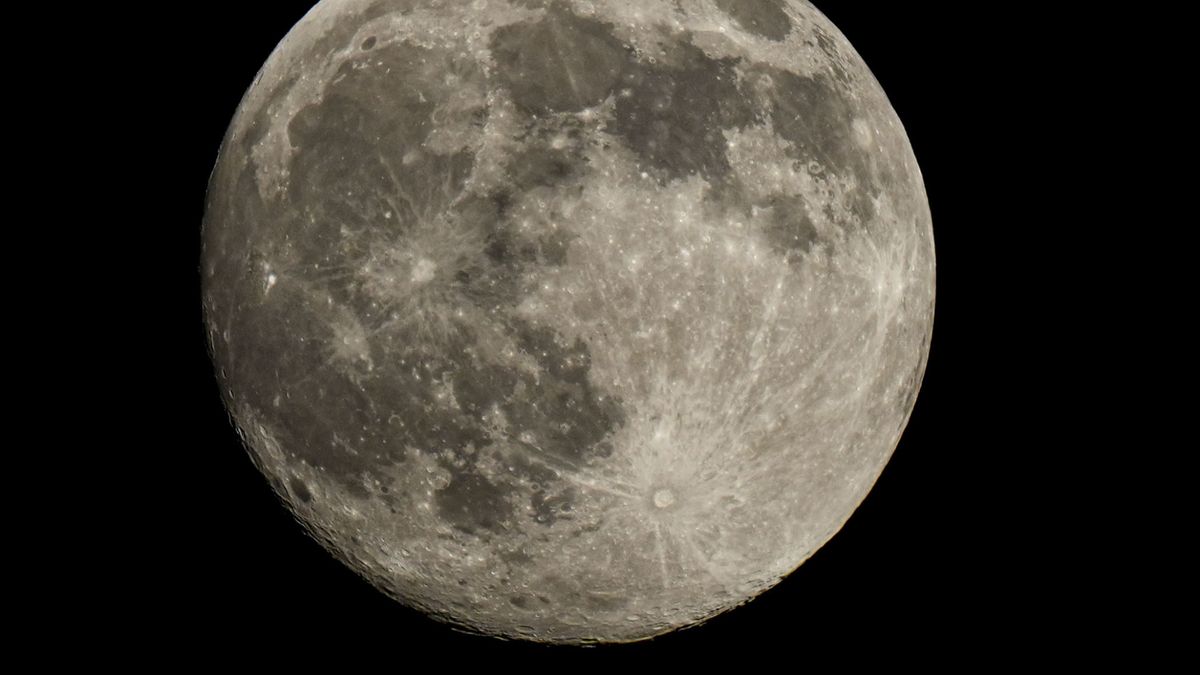
- The Beaver Moon supermoon reached full illumination at 9:53 a.m. EST (1453 GMT) on November 24, 2026, according to Space.com.
- Space.com’s photo report includes images from Thailand, the United States, Canada, Hungary, Iraq, Greece and other locations, plus footage of the moonset taken from the International Space Station.
- Space.com attributes to NASA a figure of up to 14% larger and 30% brighter than the year’s smallest full moon. Another Space.com article gives 13% for the size difference.
- The final supermoon of 2026 is due on December 23, and Space.com calls it the closest full moon of the year.
The Beaver Moon supermoon rose on November 24, 2026, and photographers captured it above landmarks from New York to Athens, according to A photo report published by Space.com. The moon reached full illumination at 9:53 a.m. EST that day, when it sat opposite the sun in Earth’s sky. Viewers in the Americas were below the horizon at that instant, so their best chances came at moonrise or in the predawn hours, according to Space.com’s full moon guide.
Photographers capture the moon above cities and temples
Space.com’s photo report, written by staff writer Anthony Wood, gathered images from Asia, Europe, the Middle East and North America. Pongmanat Tasiri photographed the moon rising above the roof of the Wat Phra That Doi Suthep Buddhist temple in Chiang Mai Province, Thailand. The report describes craters and lunar seas visible across the disk in that frame.
In New York, Gary Hershorn photographed the full moon rising over the Chrysler Building, with the Empire State Building and other skyscrapers in view. Hershorn also captured the moon framed between buildings on 42nd Street shortly before moonset on the morning of November 24, hours before it turned full, the report said.
The report also featured images from several other cities:
- Washington, D.C.: A photo by J. David Ake shows the moon over the Old Post Office Pavilion, with a pink sky and orange autumn leaves in the foreground.
- Los Angeles: Allen Berman shot the moon over downtown from a neighbor’s front lawn in the Baldwin Hills section. “Finding the right spot for tonight’s full moon over downtown Los Angeles was a bit tricky,” Berman told Space.com. “The conditions were perfect with thin clouds over the distant mountains that made for a magical image.”
- Toronto: Mert Alper Dervis photographed the moon over the skyline with a flock of birds in the foreground. The report says atmospheric refraction, the bending of light through air of different densities and temperatures, made the moon’s outline look slightly squashed.
- Istanbul: Salih Zeki Fazlioglu captured the moon lighting a thin layer of clouds above the city, where reflected sunlight competed with city lights.
- Budapest region, Hungary: Robert Nemeti shot the moon rising above the medieval Boldogkő Castle at moonrise on November 24.
- Beijing: Wang Zhao used a telephoto lens to capture a passenger jet crossing the lunar disk, leaving contrails behind it, on the same night.
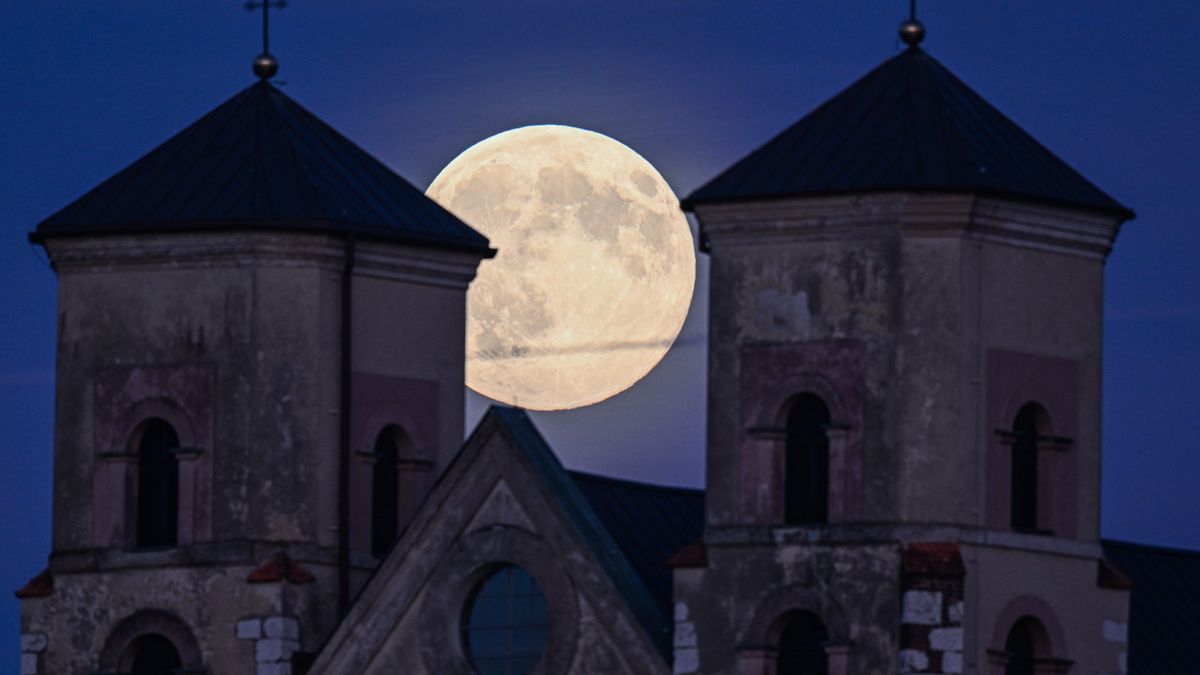
- Najaf, Iraq: Karar Essa photographed the moon between the minarets of the Imam Ali Shrine. The report notes the Tycho crater, about 53 miles (85 kilometers) across, as a bright feature below the lunar equator.
- Athens, Greece: Aris Oikonomou photographed the moon above the Parthenon as night fell over the Acropolis.
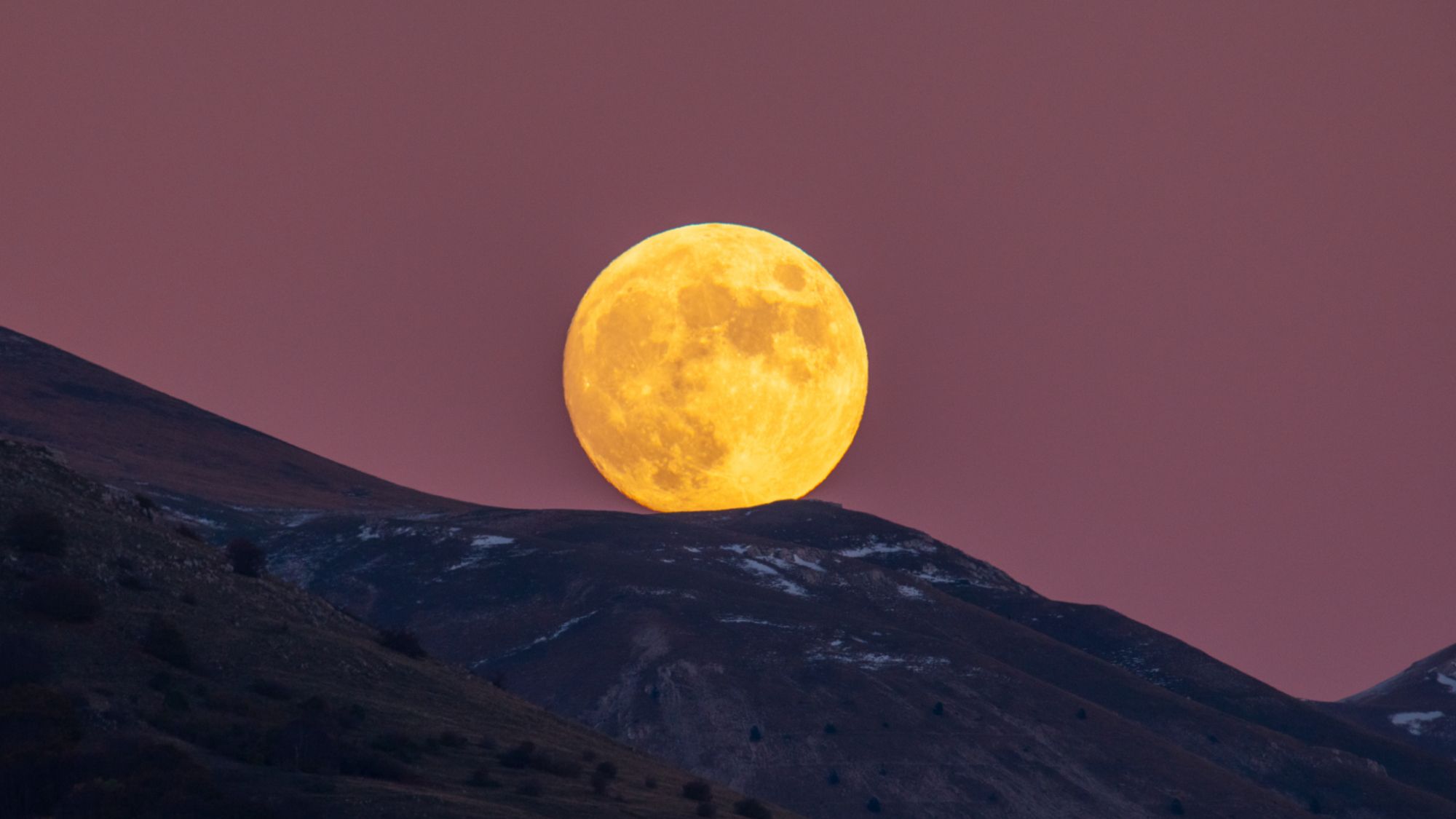
Space.com’s skywatching editor, Daisy Dobrijevic, took a close-up from Nottingham, in the United Kingdom, on November 23, a day before the full moon. She used a Sony A7IV camera with a Tamron 50-400mm lens. “Having seen the rather disappointing weather forecast for the night of the full moon, I decided to head out a day early and capture the almost-full Beaver Moon instead,” Dobrijevic said. The moon was visible only through a gap between two houses, she said.
An astronaut records the moonset from orbit
NASA astronaut Anil Menon photographed the moonset from the International Space Station on November 24. In the series, the moon slipped below Earth’s horizon and appeared distorted by the atmosphere. Menon wrote in a post on X: “Moonset today from space station – no edits to these photos from 400mm lens.” Space.com credits the images to NASA and Menon, and says the composite was assembled by its own staff.
The station’s view is a different kind of record from the ground images. It shows how the atmosphere flattens and bends the moon as it sets, an effect the ground photos also show near the horizon.
Why a supermoon looks larger and brighter
A full moon occurs when the moon sits opposite the sun in Earth’s sky. Its orbit is elliptical, so its distance from Earth changes over roughly 27 days. Space.com’s full moon guide defines a supermoon as a full moon that occurs within 90% of perigee, the point in the orbit closest to Earth. The photo report describes the same timing, saying the moon turns full around the time it passes closest to Earth.
The size and brightness figures differ between Space.com’s articles. The full moon guide says NASA describes a supermoon as appearing up to 14% larger and 30% brighter than the smallest full moon of the year, which the article describes as a “micro-moon.” A separate Space.com livestream article gives 13% for the size difference and attributes the smallest full moon of 2026 to May, when the moon was near apogee, its farthest point from Earth. Neither article measured the brightness or size of the November 24 moon, so these numbers describe typical differences, not observed readings.
Space.com’s livestream article also calls November the “first of four consecutive supermoons.” The full moon guide makes the same claim, but neither article cites a source for the count. Readers should treat it as Space.com’s statement rather than a checked figure.
The moon’s color and size near the horizon also have explanations in Space.com’s guide. The moon can look yellow-orange at low angles because its light passes through more of Earth’s atmosphere. The air scatters shorter, bluer wavelengths, which is the same process that reddens the sky at sunset. This is called Rayleigh scattering. The guide also explains the “moon illusion,” in which the moon looks larger near the horizon, beside buildings or trees, than it does high overhead. The guide describes this as a perception effect rather than a change in the moon’s actual size.
Local times around the world
Because the full moon is a single moment, the local clock time and date differ by place. Space.com’s full moon guide gives these local times for the full moon:
| City | Local time of full moon |
|---|---|
| New York | 9:53 a.m. EST, November 24 |
| London | 2:53 p.m. GMT, November 24 |
| Beijing | 10:53 p.m. CST, November 24 |
| Tokyo | 11:53 p.m. JST, November 24 |
| Sydney | 1:53 a.m. AEDT, November 25 |
The guide notes that moonrise and moonset times vary by location, so the moon’s appearance in the sky depends on where the viewer is as well as the clock.
Where the Beaver Moon name comes from
The name is a traditional folk name, not an official astronomical designation. Space.com’s photo report says the November moon is often called the Beaver Moon because it rose when trappers historically set beaver traps before waterways froze. The full moon guide, citing the Old Farmer’s Almanac, says the name refers to the time when beavers retreat to their dens after storing enough food for winter. The guide repeats that explanation without independent verification.
The guide also lists other traditional names credited to the Old Farmer’s Almanac. The Cree people of Canada and the northwestern United States use “Frost Moon,” and the Tlingit use “Digging Moon,” a reference to animals digging for fallen nuts in hardening autumn soil.
The guide also links the moonrise to religious observances on the same date. According to the Edinburgh Hindu Mandir & Cultural Centre, worshippers light earthen lamps called “diyas” for Dev Diwali, which marks Lord Shiva’s defeat of the demon Tripurasura. According to the BBC, millions also celebrate the birthday of Guru Nanak, the founder of Sikhism, on the same date. The guide does not say whether these observances affected any of the photographs.
The next supermoon and how to photograph it
The final supermoon of 2026 is due on December 23, according to Space.com’s photo report. Its full guide lists the full moon at 8:28 p.m. EST on December 23 (0128 GMT on December 24). The photo report says the moon will pass 221,668 miles (356,740 kilometers) from Earth at maximum illumination, which Space.com describes as the closest full moon of the year.
Space.com’s full moon guide gives these photography tips:
- Use a tripod to keep the camera steady.
- Use a remote shutter or timer to avoid shake.
- Use a stargazing app to find the exact moonrise point on the local horizon.
- Use a lens of about 12 to 50 mm for landscapes that include the moon near the horizon.
- Use a focal length of at least 400 mm for detailed views of the lunar surface.
- For a cleaner, smaller-looking moon, shoot it high in the sky.
The guide also recommends the Celestron Nexstar 4SE telescope, which has a 4-inch aperture, as an easy way to find a steady view of the moon. This is Space.com’s product recommendation, linked to a separate review. It is not an independent test result. Space.com also invites readers to send photos, with their name, location and comments, to spacephotos@space.com.
The free Virtual Telescope Project livestream was scheduled to start at 10:30 a.m. EST on November 24, weather permitting, from robotic telescopes in Manciano, Italy. Space.com’s livestream article did not explain how the morning start related to the moonrise shown in the stream, so readers checking the replay should confirm the timing on the stream page.
Upcoming full moons
Space.com’s full moon guide lists the next full moons in the table below. The guide says these times are for full illumination only, and that local moonrise and moonset can differ by hours. It recommends apps such as Stellarium or SkySafari 7 Pro for local timing.
| Month | Name | Full illumination |
|---|---|---|
| December 2026 | Cold Moon | 8:28 p.m. EST, December 23 (0128 GMT, December 24) |
| January 2027 | Wolf Moon | 7:17 a.m. EST (1217 GMT), January 22, 2027 |
| February 2027 | Snow Moon | 5:09 a.m. EST (1009 GMT), February 20, 2027 |
What the coverage does not show
The Space.com articles are mainly descriptive. They include no official measurements of this moon’s brightness or apparent size, and no statement from NASA about the November 24 event. Quotes come from the photographers, Menon and Dobrijevic, along with the religious and cultural sources cited in the guide.
The reporting also contains a few conflicts that readers should note. The size difference for supermoons is given as 14% in one article and 13% in another. The guide and photo report also treat the count of four supermoons as a fact without a source. Anyone planning to observe the December 23 moon should check the times against an official almanac, such as one from NASA or a national observatory.
References
- November — space.com
- Watch November — space.com
- In pics: November — starlust.org
- November full moon 2026: When, where and how to see the Beaver Moon — space.com
- November’s full moon dazzles skywatchers with a stunning Beaver Moon supermoon (photos) — space.com
Featured image: (Image credit: Photo by Metin Aktas/Anadolu via Getty Images) — via Space