Key takeaways
- New Jersey reported 3,084 new flu cases in the week ending November 14, 2026, more than four times the same week a year earlier, according to state data cited by NJ.com.
- Children aged 5 to 18 were the largest group, with 867 cases in that week.
- A pediatric emergency physician in Morristown said her hospital’s ER saw 400 more children in October 2026 than in October 2025.
- Through November 13, the state had reported 11 flu-related deaths, all among residents 50 or older, and no pediatric deaths.
The New Jersey flu surge is hitting children hard just before the Thanksgiving holiday. The New Jersey Department of Health reported 3,084 new flu cases in the week ending November 14, 2026, more than four times the count for the same week in 2025, according to NJ.com, which cited state data.
Health experts warn that case counts will likely keep climbing as people travel and gather with extended family. The surge is arriving earlier than usual, and the sources show pressure on emergency rooms, schools and hospitals as well as on households.
Children account for the largest share of new cases
Of the 3,084 cases reported for the week ending November 14, 867 involved children aged 5 to 18, and 576 involved children aged 4 and under, NJ.com reported. The article described the 867 cases as the majority. That phrasing does not match the arithmetic: 867 is about 28 percent of 3,084. It is the largest single age group, not a majority of all cases.
Seasonal flu activity has risen since September and is higher than at the same point last year, health experts said. In the last week of October, New Jersey reported 2,508 new flu cases, nearly double the count for the week before, according to a separate NJ.com report. State data from that period also showed increases in COVID-19-associated emergency room and hospital visits. Test positivity also rose for parainfluenza, rhinovirus and enterovirus.
Emergency rooms and schools feel the strain
Dr. Christina Melchionne Miseo, a pediatric emergency medicine physician at Atlantic Health Morristown Medical Center, described the pressure in her department. “We are very busy right now,” she said. “This October, we saw 400 more children in our ER compared to last October, which really represents that surge kind of coming on early and quick and strong.”
State data for the week ending November 14 showed 20 flu-related hospitalizations among children aged 5 to 17 and 21 among children aged 4 and younger. Those figures are small compared with the case counts, but they show that the illness is reaching hospital wards as well as clinics.
Schools are also affected. NJ.com reported that K-12 institutions had 14 flu outbreaks in October 2026. No school outbreaks were reported in October 2025. Flu is driving up absences, the article said.
Dr. Arthur Calise, medical director of Hackensack Meridian Health’s Urgent Care PLUS at MetroPark and West Orange, linked the holiday period to transmission. He said travelers in crowded airports and train stations, and indoor gatherings with extended family, “creates a perfect environment for an already very contagious virus to spread.”

Death counts in the sources do not match
The sources give different flu death counts, and they cannot be reconciled from the material available.
NJ.com’s November 25 report said New Jersey recorded 11 flu-related deaths from October 4 through November 13, 2026, the start of the 2026–2027 season. All of those who died were residents aged 50 or older, and the state had reported no pediatric deaths so far.
A separate NJ.com report, which did not show a publication date in the summary available, cited two flu deaths so far this season. It said both were residents aged 65 or older. The reporting dates for the two counts differ, and neither source explains the gap. Readers should check the New Jersey Department of Health for current figures.
For the 2025–2026 season, NJ.com reported 173 flu deaths in New Jersey, six of them children. The CDC reported 204 pediatric flu deaths nationally that season, according to the same report.
Dr. Miseo said most of the flu deaths she sees involve unvaccinated children. “The deaths that we see from the flu, the majority are unvaccinated and many of them are healthy kids before. That’s just heartbreaking,” she said. This is her clinical impression. The sources do not include a statewide breakdown of vaccination status among people who died.
Why the season arrived early
The CDC says the flu surge is earlier than usual across the United States. Federal data shows that most circulating cases are influenza A(H1N1)pdm09 viruses. This virus type first emerged in the 2009 pandemic.
The CDC also reports more genetic diversity among co-circulating H1N1 viruses than it has seen before. The agency says it is “still too early to determine” whether that diversity will affect vaccine effectiveness this season.
The 2026–2027 flu vaccines were updated to target influenza A(H3N2) subclade K, a strain that spread widely in the 2025–2026 season. The sources do not explain how that update interacts with the H1N1 viruses now dominant.
Nationally, the CDC estimates at least 1,700,000 flu illnesses, 25,000 hospitalizations and 1,400 deaths so far this season, according to the external summary of federal data. That summary did not give a date for the estimate.
The CDC expects hospital admissions and emergency room visits to “ramp up even further” in the week ending November 21, 2026. The reporting available does not include data for that week, so the size of the rise is not yet known.
What the vaccine evidence shows
In a typical flu season, flu vaccines have a 40 to 60 percent efficacy in reducing the incidence of severe illness, according to the CDC. Efficacy changes from season to season, and the sources do not say how this season’s vaccine is performing.
NJ.com also cited a July study published in the journal Pediatrics. The study analyzed vaccine effectiveness over eight flu seasons, from 2016–2017 through 2024–2025. It found that 82 percent of pediatric flu deaths occurred in unvaccinated children. Children who were vaccinated against flu were 80 percent less likely overall to die, the study found.
Public health experts say vaccines may not protect everyone fully, but they are proven to help prevent serious illness and death. Dr. Varun Malik, a family medicine physician at Optum Medical Care in Hoboken, said that people who are vaccinated and still get sick may have a milder illness. Dr. Miseo said some families become discouraged when a vaccinated child catches flu. “It doesn’t mean that it didn’t work,” she said.
New Jersey’s Deputy Commissioner of Public Health Services, Dr. Novneet Sahu, said in a press release that updated vaccines are “designed to protect you from the strains of the virus expected to be circulating in the fall and winter.” Vaccination offers “the best chance to protect yourself from getting seriously ill and missing out on work, school, social events, and holiday gatherings,” he said.
The CDC recommends annual flu vaccination for everyone 6 months and older, a recommendation it has held since 2010. Flu vaccines are offered at doctors’ offices, pharmacies, community health clinics, health departments and other community sites. The external summary says there are three flu vaccine types in the United States: two injectable shots and one nasal spray.
Dr. Malik said that if a family has not had a flu shot, “now is the time for anyone six months and older.” The external summary says vaccination is still recommended late in the season.
COVID-19 guidance differs by level of government. The New Jersey Department of Health recommends COVID-19 vaccination for anyone 6 months and older for the 2026–2027 season. The CDC ended its universal COVID-19 vaccine recommendation in 2025. Flu and COVID-19 vaccines can be given at the same visit, according to the summary.

Warning signs parents are told to watch
Dr. Malik told parents to focus on how a child looks and acts. “For parents, the big focus right now should be how the child is acting and not just the number on the thermometer,” he said. “How the child looks and acts, it tells us a lot more.”
According to Dr. Malik, a child or adult who can drink water, take medication and manage symptoms at home may only need a telehealth visit.
The sources list three situations that call for escalation. A visit in person is advised when illness “isn’t following the usual pattern,” such as a worsening cough, a fever lasting several days or a lingering earache. Emergency care is advised right away for “red flag” symptoms, including difficulty breathing, signs of severe dehydration or neurological problems.
The article notes that most people recover from seasonal flu and COVID-19. Both illnesses can cause serious complications and, in some people, death.
A separate debate over childhood vaccine schedules
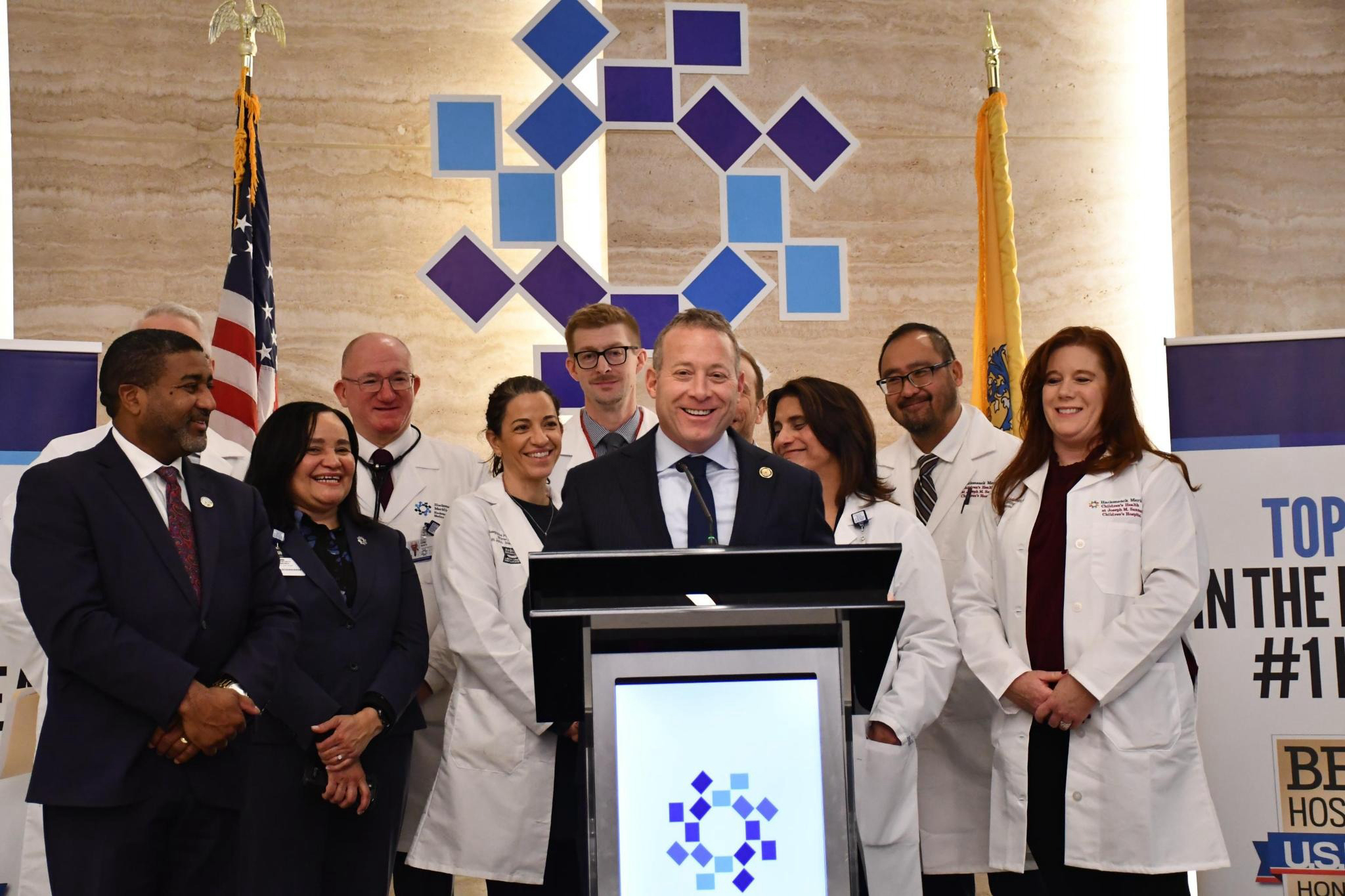
The New Jersey flu debate has also become political. A January 12, 2026 press release from U.S. Representative Josh Gottheimer (D-NJ-5) was issued from Hackensack University Medical Center. The release is a politician’s statement, not independent reporting, and its claims are his own unless attributed to a named agency.
Gottheimer said that HHS Secretary Robert F. Kennedy Jr., through the CDC, had reduced the number of universally recommended childhood vaccines “without substantive input from relevant scientific and medical experts.” He said he and more than 100 members of Congress had asked HHS to restore the previous schedule. The release does not give the date of the change or of the congressional letter. The sources do not include an HHS response.
The release also described the proposed FIGHT FLU Act, which would let states “claw back federal resources” to create or expand mobile flu vaccine clinics. It gave no bill number, cosponsors or committee referral.
The release’s figures describe a different season. It said New Jersey had more than 12,000 flu cases that season, up from about 5,500 a year earlier, and it cited 17 child flu deaths. Those figures conflict with the six children NJ.com reported for the full 2025–2026 season. The release does not name a state data source. Its measles percentage also appears miscalculated: the counts it cites imply an increase of about 652 percent, not the 752 percent it states.
For current numbers, the sources point to the New Jersey Department of Health and the CDC, along with the state’s vaccine clinic locator at NJ.gov/health and federal flu information at CDC flu resources.
References
- Flu surge hits ERs early as N.J. cases nearly double in a week — yahoo.com
- RELEASE: As Flu Cases Surge Across New Jersey, Gottheimer Announces New Action to Protect Kids and Seniors, Boost Vaccine Access — gottheimer.house.gov
- Flu surge hits N.J. kids just before Thanksgiving. Here’s what parents should know. — yahoo.com
Featured image: Image via Josh Gottheimer