Key takeaways
- Michigan withdrew its offer to Texas A&M athletic director Trev Alberts after deposition excerpts from a Nebraska lawsuit were published, according to Sportico.
- Alberts signed a memorandum of understanding on November 17 to succeed Warde Manuel, and about six days later a search-firm representative told him he would not get the job, according to Andscape columnist William C. Rhoden.
- The memorandum reportedly commits Michigan to at least $17.2 million, and Michigan already owes Texas A&M $4 million to cover Alberts’s buyout, Rhoden wrote.
- In a deposition in a Title IX lawsuit against the University of Nebraska, Alberts gave hedged answers when asked whether college coaches should have sex with the athletes they coach.
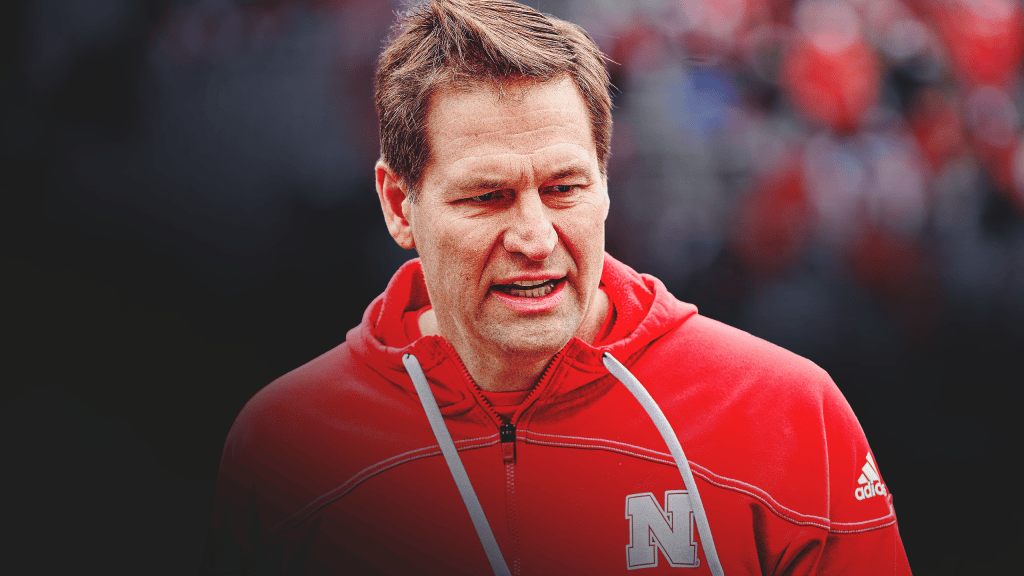
The Trev Alberts deposition is at the center of Michigan’s decision to withdraw its offer to make the Texas A&M athletic director its next leader. According to Sportico, excerpts from Alberts’s testimony in a lawsuit against the University of Nebraska were published by FOIABall’s David Covucci, and Michigan pulled the offer “in light of” that report.
According to Andscape columnist William C. Rhoden, the offer was reversed six days after Alberts signed the memorandum on November 17, 2026. Michigan had reached out to Alberts after the job became vacant, and the reversal left the school with a costly and public problem just as it tried to move past a separate scandal.
The sources do not give the exact date of the reversal or of the excerpts’ publication. Sportico’s text refers only to events “Tuesday” and “last week,” and does not state the publication date of its own article.
Why Michigan needed a new athletic director
Michigan’s athletic department was already in turmoil before the Alberts search began. According to Rhoden, former head football coach Sherrone Moore was involved in a sex scandal that led to his departure. Sportico says Moore’s departure followed a sexual relationship with his administrative assistant.
Warde Manuel, who had led the athletic department, became a casualty of the Moore scandal, according to Rhoden. Rhoden describes Manuel as one of the university’s best athletic directors in terms of on-field success. Alberts was set to replace him.
After the offer was withdrawn, Michigan asked Manuel to stay on and steady the department until it finds a permanent replacement, Rhoden reported.
What Alberts said under oath
The deposition exchanges at the center of the story come from a lawsuit filed in February 2024 by Ashley Scoggin, a former Nebraska women’s basketball player. Alberts was deposed by Maren Lynn Chaloupka, the Nebraska lawyer representing Scoggin, according to Sportico. The first deposition took place on December 4, 2025, with Alberts appearing by Zoom from College Station, Texas. Sportico does not give a date for the second deposition.
The most cited exchange concerns whether coaches should have sexual relationships with athletes. Chaloupka asked: “College coaches should never have sex with the student-athletes that they are coaching. True?” Rhoden quotes Alberts replying: “I don’t know how to answer that. I mean, you know, it just depends.”
Sportico’s transcript excerpt renders the same moment differently. In that version, Alberts first says, “I don’t know the answer to that.” When asked why not, he says, “Well, I mean, you know, it just depends, especially now with eligibility where there’s nuance right.” Both publications agree that Alberts pointed to COVID-19 eligibility rules and to older players being close in age to coaches. The full transcript is not reproduced in either source, so the exact wording cannot be checked against it here.
Chaloupka also asked whether a coach pursuing a sexual relationship with a player could be a “predatory act.” According to Sportico, Alberts said: “I don’t know what that means,” and later: “I don’t feel comfortable answering the question because I don’t know exactly what that means.”
The exchange ended with a comment from the questioner. Chaloupka said she was “crediting you with a high level of understanding” because Alberts was the athletic director of a major program, and added that she was “assuming that the universities that have hired you have done well in not hiring a dummy.” Alberts replied: “Some would argue they didn’t,” Sportico reported.
Sportico also quotes Alberts on reporting duties. He said, “We are trained to report it to the experts. We are not experts in this. I’m not an expert in this area.”
The Nebraska lawsuit and its unproven claims
Scoggin’s suit is a Title IX case. Title IX is the federal law that bars sex discrimination in schools that receive federal funding. According to Sportico, she alleges that associate head coach Chuck Love Jr. groomed her into a sexual relationship and used his authority over her. She also alleges that Love reduced her playing time after she refused certain sexual requests, and that Alberts and head coach Amy Williams failed to protect her from teammates’ alleged berating after the relationship became known. These are allegations, not findings.
The sources disagree on what happened to the players and staff after the relationship came to light. Rhoden says the player was kicked off the team and the coach was fired. Sportico says Scoggin was removed from the squad while Love remained on paid leave. Sportico also says Nebraska’s policy on relationships between staff and students was clear in the text Alberts was shown. Rhoden quotes that policy: “Faculty or staff members are prohibited from engaging in any romantic relationship with an undergraduate student.” Rhoden reports that Alberts agreed the policy applied to coaches and student-athletes.
Alberts and Nebraska deny the allegations in court filings and have sought dismissal, according to Sportico. Alberts argues that, as a designated “responsible employee,” he lacked authority to “institute corrective measures” on the institution’s behalf. Susan Sapp, outside counsel retained by Nebraska, represents Alberts and also represents Williams and Love.
Sportico notes that Alberts was athletic director at the University of Nebraska Omaha from 2009 to 2021. In that role, he said there were “young staff members” roughly the same age as some athletes. He also said: “We don’t get involved, nor do I try to monitor.”
How the reversal unfolded
The sources give a partial timeline. Dates confirmed in the text are marked as such:
- February 2024: Scoggin files the Title IX lawsuit against Nebraska (Sportico).
- December 4, 2025: Alberts gives the first of two depositions by Zoom (Sportico).
- Date not given: Alberts’s second deposition takes place (Sportico).
- November 17, 2026: Alberts signs a memorandum of understanding to succeed Manuel (Rhoden).
- About six days later: A representative of Michigan’s search firm calls Alberts and tells him he will not get the job (Rhoden).
- Days later, a Tuesday: Michigan pulls its offer after Covucci’s excerpts are published (Sportico).
Rhoden argues that the search was flawed. He writes that no one vetted Alberts, including the board, the president or the president’s advisers, and that no one checked his record as athletic director at Nebraska. He says that a review of the lawsuit would have shown the offer was unlikely to hold, given the scandal Michigan was trying to leave behind. These are Rhoden’s assessments. The sources do not include a Michigan statement that confirms or denies a vetting failure.
The money at stake for Michigan
The financial exposure is the most concrete part of the story, but the sources do not agree on the figure. Rhoden says the memorandum Alberts signed could cost Michigan $17.2 million. Sportico says the memorandum “ostensibly committed the school to owing him at least $17.2 million” for accepting the job.
Rhoden also writes that the mistake “will likely cost Michigan more than $20 million,” and says Michigan owes Texas A&M $4 million to cover Alberts’s buyout. Neither source explains how the $4 million relates to the $17.2 million figure, or whether the two amounts add up to the higher estimate.
Sportico does not say whether Michigan will honor the memorandum after rescinding the offer. It states that the text does not explain whether or how the school will meet that commitment. Rhoden’s column, which is an opinion piece, is the only source that gives the higher estimate.
Competing views on the hire
Rhoden frames the episode as a case of adults in the room making poor decisions while athletes carry the risk. He argues that the hiring failure is one example of a wider problem in college sports, in which, he writes, athletes are treated as commodities that fund a “semiprofessional campus entertainment industry.” His column links the Alberts case to the Protect College Sports Act of 2026, a bipartisan Senate bill that aims to regulate name, image and likeness (NIL) earnings, restrict transfers and tighten eligibility controls. Rhoden reports the bill passed the Senate in September and faces an uncertain future in the lame-duck House. He argues that the bill protects institutions more than athletes, a view that is his own.
Rhoden places the bill in a longer history. He cites Ed O’Bannon’s 2009 class action against the NCAA over the use of former players’ NIL, a 2014 judge’s ruling that the ban on paying athletes violated antitrust law, and rule changes in 2021 that allowed paid endorsements and agents. He also cites a 2024 settlement that eased transfer rules for Division I athletes. These are background points from his column.
Sportico takes a narrower view. Its author argues that Alberts’s hedging may have served his narrow legal interest in the Nebraska case but created a broader reputational problem once his answers were public. Sportico describes the “dummy” exchange and Alberts’s reply as the most consequential moment in the deposition. That is the author’s interpretation, not a reported finding.
Sportico also says Alberts is “likely indemnified” by the state of Nebraska against claims in his individual capacity, as a public university employee. The article presents this as an assessment, not a confirmed ruling.
The sources do not include a public statement from Alberts about the reversal. They also do not include a detailed public explanation from Michigan beyond the link to Covucci’s report.
What remains unresolved
Several central questions are not answered by the sources. The date of the second deposition is not given. The date of Michigan’s original hiring announcement is not given. Whether Michigan will pay under the memorandum, and how much, is not settled. The Nebraska case is ongoing, and Alberts and the school have denied Scoggin’s allegations. No court has ruled on them in the sources.
The sources also differ on details of the lawsuit and its aftermath. Rhoden calls the player’s removal and the coach’s firing a settled outcome. Sportico reports that Love was on paid leave and that Scoggin was removed from the squad. A reader should treat the outcome of the staff discipline as unverified until a court or the school confirms it.
Finally, the Alberts story is one case in a larger debate about how colleges hire and supervise athletic leaders. The sources show that the deposition and the hiring reversal are linked in reporting, but they do not show whether the reversal changes how other schools vet candidates.
References
- How Trev Alberts’ Deposition ‘Dummy’ Act Cost Him Michigan Job — sportico.com
- Michigan, Trev Alberts and protecting college sports from the adults in the room — andscape.com
Featured image: Image via Sportico.com