
Key takeaways
- Judges advised prosecutors to drop Case 4000, the gravest of the three cases facing Benjamin Netanyahu, and to revisit Case 2000, during a Wednesday hearing in Jerusalem.
- The court stressed that its recommendations are not binding rulings, and Attorney General Gali Baharav-Miara said she would look them over.
- Netanyahu, Israel’s interim prime minister, wants the trial halted at once and keeps rejecting any wrongdoing.
- Only Israel’s president has the power to grant a pardon. Netanyahu has formally asked for one, and US President Donald Trump has pressed for it.
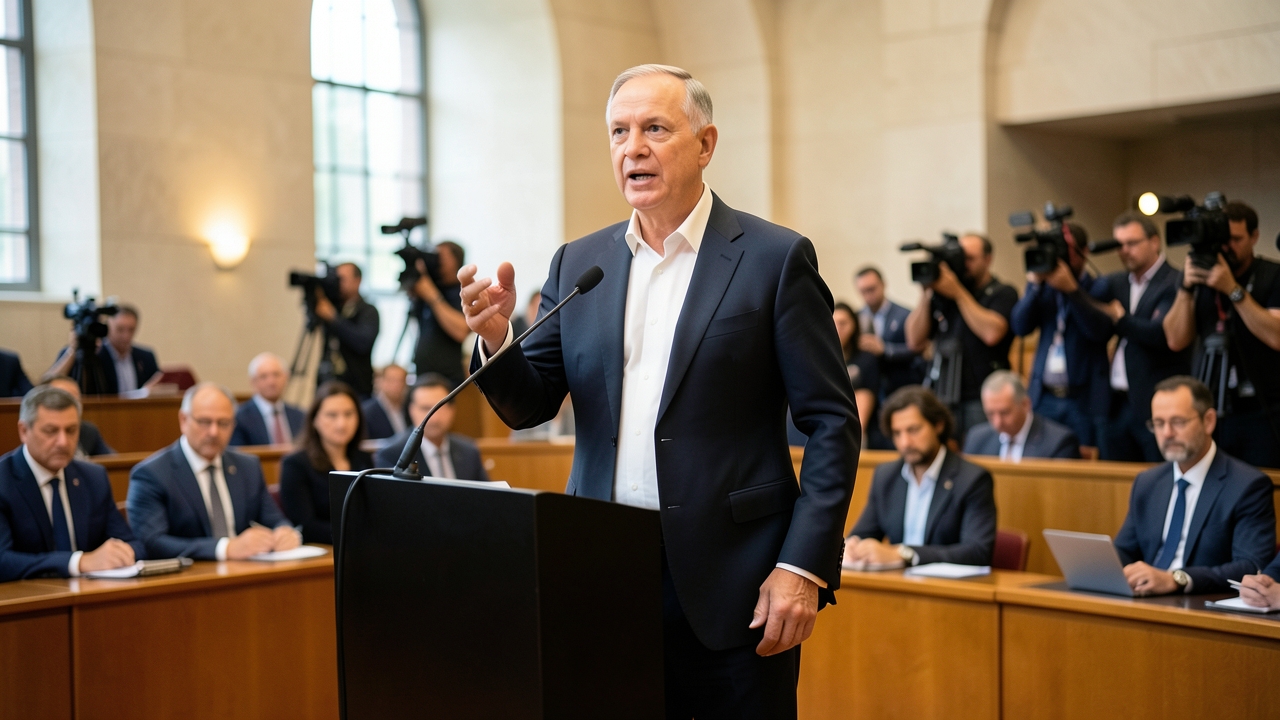
Israeli judges on Wednesday proposed that the most serious charges against Netanyahu be abandoned, a step that could greatly lower the legal danger facing the country’s interim prime minister. The suggestion came at a Jerusalem hearing covering three separate cases. Netanyahu replied in a televised address at parliament, demanding that the trial be brought to an immediate close.
The reports refer only to “Wednesday.” Al-Monitor’s article is dated November 25, 2026, which fell on a Wednesday. The CNN and Insider Paper reports carry no publication date.
Netanyahu, who has held power intermittently for three decades, is struggling to keep his political future intact. Elections that produced no clear result took place on October 27, and his chief competitor, Gadi Eisenkot, has been asked to assemble a government. According to the reports, if Netanyahu stops being prime minister, he would also lose the influence he could use to head off a possible prison term. That connection between the trial and the scramble to form a government is the main reason the recommendations carry weight.
Three cases, three different recommendations
Case 4000: the charge judges doubted most
Netanyahu faces bribery, fraud and breach of trust counts in Case 4000. All three sources call it the gravest case against him. Prosecutors claim he offered regulatory advantages to the telecoms firm Bezeq in return for friendly coverage on the Walla news site. Al-Monitor and the Insider Paper state that he bargained with Shaul Elovitch, Bezeq’s controlling shareholder, over favourable Walla reporting in exchange for policies that would help Bezeq.
CNN values the alleged benefits at over 1 billion shekels. It converts that figure to roughly $300 million and notes the conversion is an estimate.
According to Al-Monitor and the Insider Paper, the judges signalled that a conviction looked unlikely. Israeli outlets reported that Judge Rivka Friedman-Feldman said establishing the bribery charge would involve “considerable difficulties.” CNN credits a court spokesperson with a comparable comment: “It seems to us that the bribery charge presents considerable difficulties. There is serious doubt as to whether the evidentiary foundation supports this allegation.” The reports disagree about who made these remarks, and none offers a complete transcript of the session.
The recommendation is that the case be dropped. Netanyahu rejects the allegations.
Case 2000: whether the conduct is a crime
In Case 2000, Netanyahu stands accused of fraud and breach of trust. Prosecutors say he discussed favourable coverage with the owner of the Yediot Aharonot newspaper. In return, he is alleged to have floated the idea of advancing legislation that would restrict the distribution of Israel Hayom, a free paper and the main competitor of Yediot.
The judges questioned whether these actions added up to a crime. CNN quotes the court: “We have serious doubts as to whether the conduct described in the indictment actually constitutes a criminal offense.” The recommendation is that the arguments in the case be looked at again.
Case 1000: a settlement route
Netanyahu faces fraud and breach of trust charges in Case 1000. Prosecutors claim he accepted expensive presents in return for financial or personal favours. All three sources mention cigars and champagne, while Al-Monitor and the Insider Paper also list jewellery. CNN says the gifts were provided by businessmen from abroad, whereas Al-Monitor describes them as coming from affluent individuals.
The judges proposed a deal that would bring the case to a close. CNN describes this case as considerably less serious than Case 4000. It further reports that if Case 1000 were the only remaining matter, it would be a significant political win for Netanyahu.
Netanyahu: “The trial must end immediately”
In his televised address at parliament, Netanyahu said: “Ten years of terrible suffering for me, my family.” He went on: “Who will give those years back to us?” Al-Monitor quotes him as saying: “The trial must end immediately,” and claims the “fabricated cases” against him were collapsing.
CNN offers a different rendering of the same remarks: “It took 10 years of terrible suffering for me, my wife and my sons for the truth to finally be revealed to everyone.” CNN also reports that Netanyahu called the recommendations a vindication and said he is ready to set up a unity government alongside the parliamentary opposition. Because the wording varies between outlets, this article uses each version only as the relevant source presents it.
Netanyahu’s supporters reacted swiftly. Defence Minister Israel Katz posted on X: “After years of persecution against Prime Minister Benjamin Netanyahu, the time has come to put an end to a trial that was flawed from the outset.” Al-Monitor and the Insider Paper use the phrase “flawed from the outset.” CNN quotes Katz as calling the trial “tainted from the outset,” and saying it “divides Israeli society” and exacts “a heavy price from the country.”
Justice Minister Yariv Levin reposted an older Netanyahu social media message, “There will be nothing because there is nothing,” CNN reports. CNN notes that Netanyahu used that line when the cases first began.
According to Al-Monitor, Netanyahu has consistently denied wrongdoing and portrayed the cases as a politically driven scheme against him. He is the first sitting Israeli prime minister to face trial.
The attorney general and the final decision
Baharav-Miara does not ordinarily attend the trial, yet the court called her to the hearing. Al-Monitor calls that summons unusual. She said she would weigh the judges’ recommendations and was prepared to accept either a verdict or a plea agreement.
CNN reports that she said she would “carefully review” all the recommendations with the prosecution team. She also stated: “There are only two ways to bring the case to a conclusion: a verdict or an appropriate plea agreement that reflects the nature of the acts and offenses.”
The reports do not indicate whether prosecutors will adopt the court’s views. The Insider Paper says the court still has to act on the recommendations, and that the attorney general must choose between a verdict and a plea deal.
Rivals and the coalition fight
Al-Monitor reports that Eisenkot has been asked to form a government. CNN says he is working toward a government that would remove Netanyahu and his far-right partners, who have held power for close to four years. Al-Monitor and the Insider Paper report that Eisenkot’s camp is already seeking to roll back some of Netanyahu-era judicial changes in parliament during coalition negotiations.
Netanyahu’s latest term started in late 2022. During it, he put forward sweeping judicial changes that critics say were meant to weaken the courts, according to Al-Monitor. The reports do not quote any specific critics.
CNN reports that Netanyahu’s rivals had issued no statement following the hearing. The Insider Paper points out that the reports lack responses from Eisenkot, the president’s office or the prosecution team beyond the attorney general’s remarks.
The Insider Paper argues that the trial’s outcome and the coalition talks are now directly connected, since losing the premiership would strip Netanyahu of his leverage over his legal case.
The pardon requests
CNN reports that only Israel’s president can grant a pardon. Isaac Herzog currently holds that post. Netanyahu sent Herzog a one-page letter asking for a pardon. In it, he called the trial “a focal point of fierce controversy” and said he bears “broad public and more responsibility.” CNN reports that he admitted no guilt and made no commitment about his political future.
According to CNN, Trump wrote to Herzog one month before Netanyahu’s request, urging a full pardon. Trump wrote: “While I absolutely respect the independence of the Israeli Justice System, and its requirements, I believe that the ‘case’ against Bibi, who has fought alongside me for a long time, including against the very tough adversary of Israel, Iran, is a political, unjustified prosecution.”
Al-Monitor says Trump pressed Herzog to grant the pardon. The Insider Paper repeats the same claim but offers no date or detail. CNN embeds a video clip of journalist Fareed Zakaria asking Herzog at the World Economic Forum in Davos whether he will pardon Netanyahu. CNN does not report Herzog’s reply, and none of the reports say whether Herzog has acted on either request.
How the case reached this point
The reports list these dates:
- February 2018: Police said there was sufficient evidence to indict Netanyahu, according to CNN.
- January 2020: Netanyahu was indicted in the Jerusalem District Court while visiting Trump in the United States. Hours later, Trump unveiled his “Deal of the Century” plan for the Israeli-Palestinian conflict.
- May 2020: The criminal trial got underway.
- Late 2022: Netanyahu started his most recent term.
- December 2024: Netanyahu began giving testimony in the trials.
- October 27 (year not stated): Inconclusive national elections took place.
- “Last December” (year not stated): Netanyahu formally asked Herzog for a pardon.
- Wednesday (date not stated): Judges issued their recommendations at the Jerusalem hearing.
CNN says the trial has run through several wars, multiple elections and two US presidents.
Where the reports differ and what remains unknown
The reports diverge in several respects:
- Quotes: Netanyahu’s remarks and Katz’s post appear in different wording across the reports.
- Source of the judge’s words: Al-Monitor and the Insider Paper credit the “considerable difficulties” remark to Judge Friedman-Feldman via Israeli media. CNN credits similar words to a court spokesperson.
- Case 1000 gifts: CNN says the gifts came from overseas businessmen. Al-Monitor refers to wealthy individuals, and the Insider Paper adds jewellery.
- Election status: CNN describes an October election as upcoming. Al-Monitor and the Insider Paper describe the October 27 vote as already held and inconclusive.
Several questions are still open. The reports offer no timeline for a court decision. They do not say whether prosecutors will follow the recommendations or whether Herzog has responded to either pardon request. The Insider Paper also notes it has no detail on the Trump pardon claim, and that the reports contain no reply from Eisenkot.
References
- Netanyahu gets major legal boost as court casts doubt on corruption case — cnn.com
- Netanyahu says corruption trial must end after court casts doubt on charges — insiderpaper.com
- Netanyahu says corruption trial must end after court casts doubt on charges — al-monitor.com
Featured image: AI-generated image