
Danish intelligence officials have issued a stark warning that Russian hybrid warfare is escalating, suggesting the risk of a limited military attack against a NATO member could materialize within months. The assessment, released by the Danish defence intelligence service on Thursday, highlights a “low but growing risk” that Moscow may transition from non-kinetic provocations to direct, albeit limited, military incursions or long-range strikes on critical infrastructure.
Key Takeaways
- Imminent Threat: Danish intelligence warns Russia could launch a limited military attack on a NATO member within months.
- Sabotage in Poland: A fire at a Starlink satellite station in the Masovian voivodeship is being investigated as a deliberate act of sabotage.
- Hybrid Escalation: Russia is increasingly using cyber-attacks, disinformation, and physical sabotage to divert European resources from Ukraine.
- Article 5 Vulnerability: Intelligence agencies fear Moscow is testing NATO’s collective defense threshold through deniable, non-insignia operations.
- Kremlin Justification: Sources suggest Moscow views NATO’s technical and intelligence support for Ukraine as an existing hybrid war, justifying its own escalations.
- For European Residents: Expect increased security measures around critical infrastructure, including power plants, telecommunications hubs, and transportation networks. There may also be a rise in localized cyber-disruption or disinformation campaigns aimed at causing social unrest.
- For Investors and Businesses: Geopolitical volatility in Eastern Europe remains a significant risk factor. Companies involved in the defense, cybersecurity, and telecommunications sectors may see increased demand, while those with heavy exposure to European energy or logistics may face heightened operational risks.
- For Policy Makers and Voters: The debate over NATO’s role and the definition of “armed attack” will likely intensify. The ability of the alliance to maintain unity in the face of deniable aggression will be a central theme in upcoming elections and international summits.
- NATO Response Protocols: Watch for updates on how NATO plans to refine its definition of “hybrid attack” and whether new collective defense measures are introduced to protect civilian infrastructure.
- Investigation Results in Poland: The official findings regarding the Starlink station fire in the Masovian voivodeship will be a critical test of whether European authorities can successfully attribute and respond to sabotage.
- Diplomatic Shifts: Monitor the reactions of hesitant member states, such as Slovakia, to see if the perceived threat leads to greater unity or further fragmentation.
- Cybersecurity Posture: An increase in large-scale cyber-attacks against European governmental or utility sectors would signal that the “hybrid war” is moving into a more destructive phase.
- www.theguardian.com
- www.ft.com
What Happened
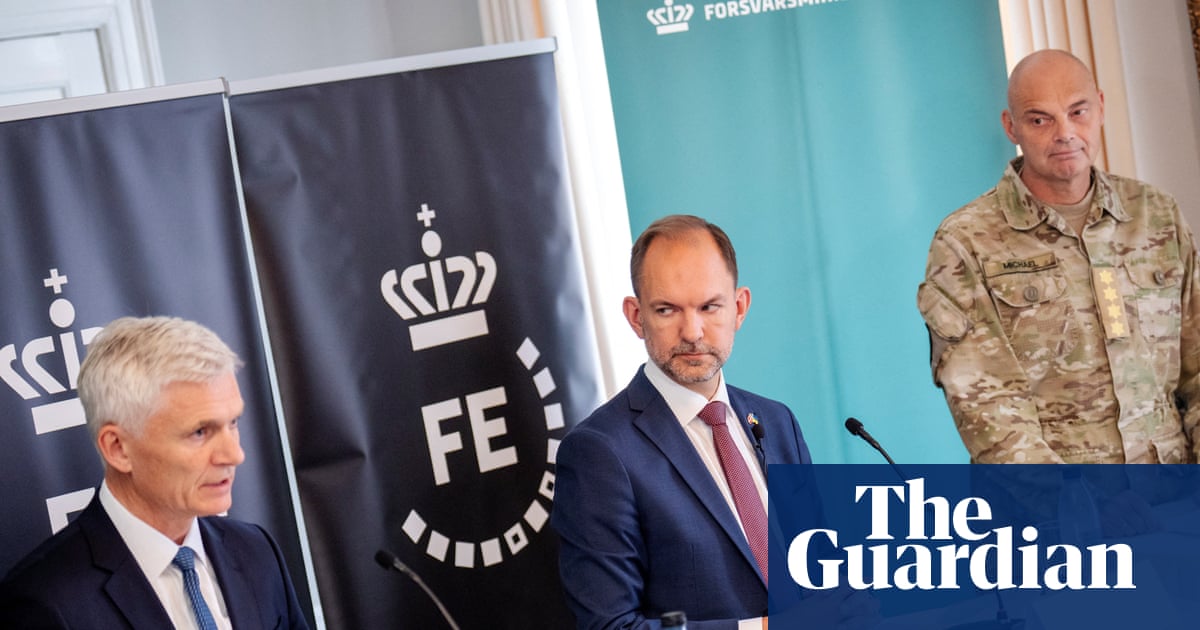
On Thursday, the Danish defence intelligence service published a comprehensive report detailing an intensifying pattern of aggression from the Kremlin. The report serves as a formal warning to European allies that the current landscape of conflict is shifting. According to Thomas Ahrenkiel, head of the Danish defence intelligence service, the threat level is characterized as a “low but growing risk” of direct military action or targeted strikes on NATO infrastructure.
This intelligence update follows a series of high-profile incidents across Europe that suggest a coordinated effort to destabilize the region. Most notably, authorities in Poland reported a fire at a Starlink satellite station in Wola Krobowska, located within the Masovian voivodeship. Krzysztof Gawkowski, the Deputy Prime Minister of Poland, described the incident as an act “deliberately designed to disable the station.” The fire caused significant disruptions to internet access for various institutions, most critically impacting the communication capabilities of the Ukrainian military.
While no perpetrator has been officially named, Gawkowski noted that the circumstances of the fire align with Russia’s evolving “doctrine of attack.” He emphasized that while essential services were restored, the incident must be recognized as a clear element of hybrid warfare, a sentiment echoed by Polish Prime Minister Donald Tusk.

In Germany, the situation has also seen heightened tension. Earlier this month, German authorities publicly attributed an attempted drone attack on the Leipzig/Halle airport to Russian actors, further reinforcing the pattern of targeting critical transportation hubs.
Why It Matters
The shift toward Russian hybrid warfare is significant because it targets the vulnerabilities of modern, interconnected societies without necessarily triggering a full-scale conventional war. By utilizing cyber-attacks, disinformation, and physical sabotage, Moscow aims to achieve strategic objectives while maintaining a degree of plausible deniability.
One primary goal of these actions is the diversion of European resources. If NATO members are forced to redirect military and intelligence assets to protect domestic critical infrastructure—such as power grids, satellite stations, and communication hubs—they have fewer resources available to support Ukraine’s defense.
Furthermore, these tactics are designed to exploit political fractures within the alliance. The intelligence service warns that Russia expects to intensify these efforts in the coming months, potentially moving toward “destructive cyber-attacks that cripple societal functions” and sabotage operations that carry a “high risk of casualties.”
Deep-Dive: The Mechanics of Hybrid Aggression
The Russian Doctrine of Attack
To understand the current threat, one must look at how Moscow perceives its role in the global conflict. According to a source familiar with the Kremlin’s thinking, the Russian military top command is convinced that certain NATO countries are already directly participating in the war against Ukraine. This perception is based on the provision of weapons, intelligence, and technical assistance, such as the guidance of missiles and drones.
Because of this, Moscow views its own hybrid actions not as unprovoked aggression, but as a legitimate response to what it perceives as a pre-existing hybrid war waged by NATO. This logic provides a psychological and strategic framework for the escalation seen in recent weeks.
Recent Incidents and Intelligence Warnings
The following table summarizes recent events that have contributed to the heightened alert status across Europe:
| Date | Incident | Location | Attribution/Status |
|---|---|---|---|
| Earlier this month | Attempted drone attack | Leipzig/Halle airport, Germany | Attributed to Russia by German authorities |
| Recent weeks | Intelligence warnings | Various European capitals | Issued by several European intelligence chiefs |
| Wednesday | UN General Assembly speech | New York, USA | President Zelenskyy warned of global threats |
| “Overnight” (prior to Thursday) | Starlink station fire | Wola Krobowska, Poland | Suspected sabotage by Polish authorities |
| Thursday | Intelligence Report | Denmark | Published by Danish defence intelligence service |
Testing Article 5
A central concern for NATO leadership is whether Russia will attempt to test Article 5, the alliance’s collective defense clause. The Danish intelligence report suggests that Moscow may gamble on the assessment that NATO members will fail to respond collectively.
This risk is compounded by two factors: the potential for “little green men”—troops operating without official insignia—and political hesitation within member states. If an attack is carried out by unidentified actors or through non-kinetic means, the legal and political threshold for an “armed attack” becomes much harder to define.
Political fragmentation is already visible. For example, Slovakian Prime Minister Robert Fico has expressed hesitation regarding his country’s commitment to Article 5, stating that he does not wish Slovakia to be drawn into a military conflict through that mechanism. Such internal divisions provide the exact opening that hybrid warfare is designed to exploit.
What It Means for You
The escalation of Russian hybrid warfare has practical implications for various sectors of society:
Counterpoints and Open Questions
While the intelligence warnings are severe, there are several complexities and counterpoints to consider. First, Russia has officially denied involvement in recent sabotage and drone incidents, characterizing such claims as unfounded.
There is also the challenge of attribution. In the realm of hybrid warfare, proving that a specific cyber-attack or a fire at a remote facility was directed by the Kremlin—rather than a rogue actor or a different state entity—is technically and legally difficult. This difficulty is precisely what Moscow seeks to exploit.
Furthermore, the distinction between a “low risk” and a “growing risk” is subjective. While intelligence agencies are sounding the alarm, some analysts argue that the threshold for a full-scale Russian military incursion remains significantly higher than the threshold for hybrid provocation, suggesting that the threat of a direct attack may be overstated in favor of highlighting the need for increased defense spending.
What Happens Next
As the international community processes the Danish intelligence report, several key developments will serve as indicators of the situation’s direction:

Frequently Asked Questions
What is Russian hybrid warfare?
Russian hybrid warfare refers to a strategy that combines traditional military capabilities with non-military tools such as cyber-attacks, economic pressure, disinformation, and physical sabotage. The goal is to achieve strategic objectives—such as destabilizing an opponent or diverting its attention—while remaining below the threshold of a conventional, declared war.
Has Russia attacked a NATO country yet?
While there have been no confirmed reports of a full-scale Russian military invasion of a NATO member, there have been several suspected hybrid attacks. These include the attempted drone attack at a German airport and the suspected sabotage of a Starlink station in Poland. These incidents are viewed as provocations intended to test NATO’s resolve and infrastructure.
Why is the Starlink station fire in Poland important?
The fire in the Masovian voivodeship is significant because Starlink provides critical communication infrastructure that is vital for modern military operations, particularly for the Ukrainian military. Disruption of this service via sabotage is a direct attempt to degrade the effectiveness of Ukraine’s defense and demonstrates how non-kinetic attacks can have immediate military consequences.
How does Article 5 work?
Article 5 of the NATO treaty is the principle of collective defense. It states that an armed attack against one member is considered an attack against all members. However, the application of Article 5 is complicated by hybrid warfare, where the attacker may use deniable methods (like troops without insignia) or cyber-attacks that do not clearly meet the legal definition of a traditional “armed attack.”
Closing
The warnings from the Danish defence intelligence service underscore a period of profound instability for the European security architecture
References
Featured image: Photo by Lutfi Elyas on Pexels