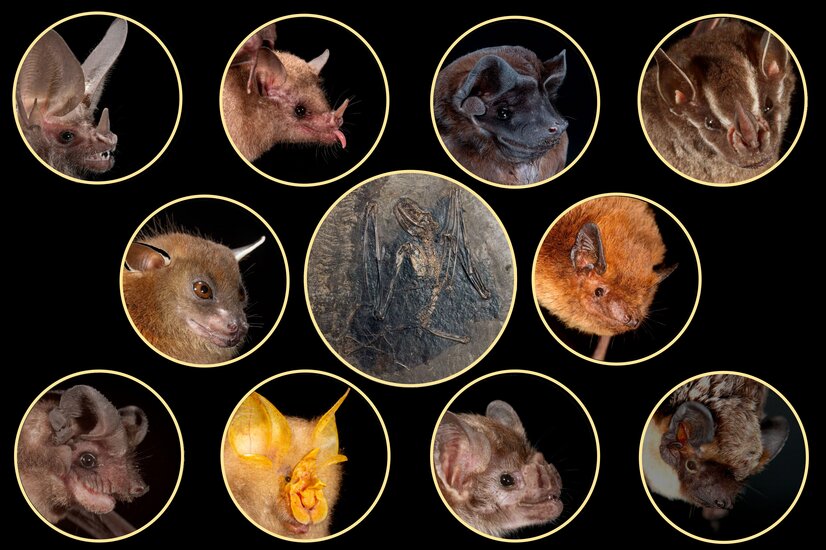
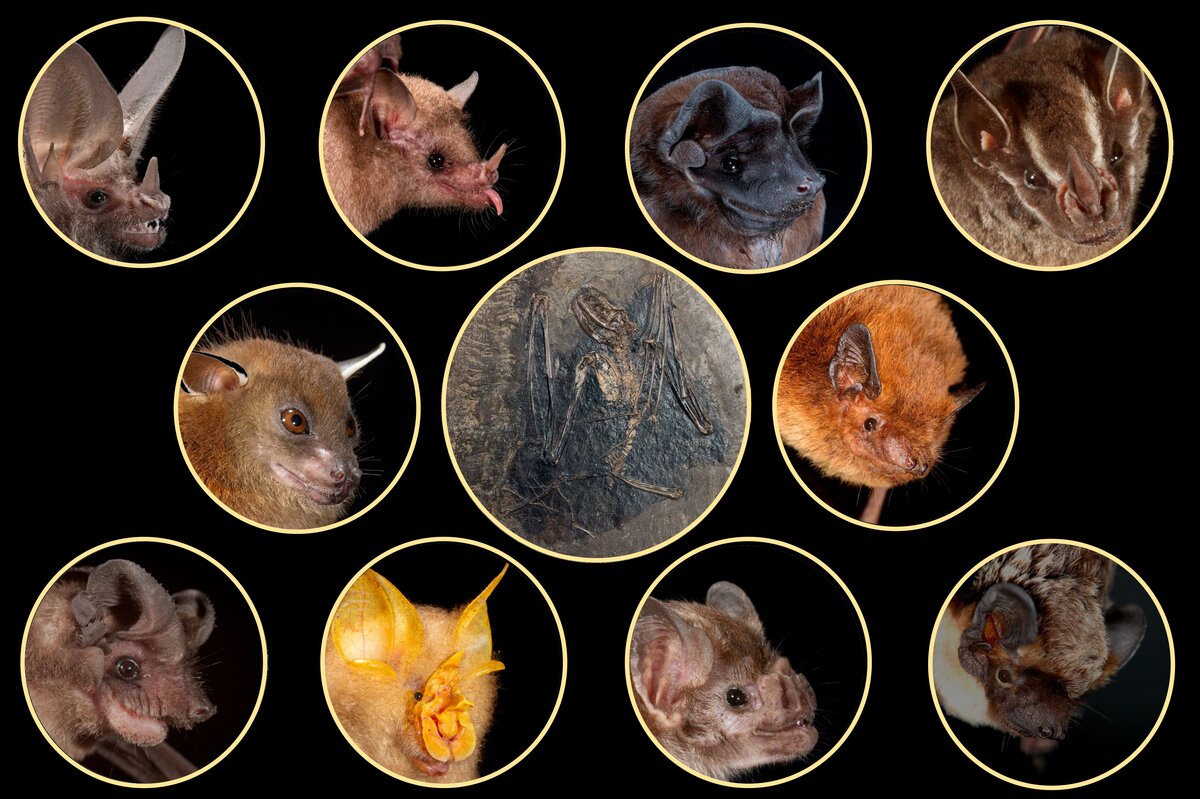
The bat family phylogeny has been fundamentally reshaped by a massive international research initiative that identifies Europe as the likely cradle of bat evolution. By combining high-resolution genomic data with a comprehensive fossil record, an international consortium of scientists has overturned decades of scientific debate regarding where and how the world’s most diverse flying mammals first emerged.
Key Takeaways
- European Origins: The study concludes that bats most likely originated in Europe approximately 65 million years ago, refuting previous theories of African, Asian, or North American origins.
- Global Expansion: From a central “Europe-Africa hub,” bats expanded into the Americas, Asia, and Australia during the early Eocene.
- evolutionary Milestones: Evidence suggests that both powered flight and laryngeal echolocation were established near the very origin of the group.
- Genomic Breakthrough: The Bat1K consortium successfully analyzed 103 chromosome-level genomes, representing all 21 recognized bat families.
- Scientific Impact: This new “genomic map” provides a foundation for studying human health implications, including longevity and disease resistance.
- For Medical Researchers: The discovery of the genomic basis for bat immunity and longevity offers a potential roadmap for addressing human challenges in aging and viral resistance. If the specific genes that allow bats to carry viruses without getting sick can be identified, it could revolutionize vaccine development and immunology.
- For Conservationists: Understanding the historical movement and expansion of bat populations provides essential context for protecting current habitats. Knowing how bats responded to past climate shifts, such as the Paleocene-Eocene thermal maximum, can help predict how modern species might react to current climate change.
- For the Scientific Community: The high-quality genomic datasets and the methodological framework used by the Bat1K consortium are now available as resources, enabling researchers worldwide to benchmark new alignment methods and explore other complex taxonomic groups.
- www.museumfuernaturkunde.berlin
- www.nature.com
What Happened
On September 23, 2026, the scientific journal Nature published the results of a monumental study led by the Bat1K consortium, a massive collaborative effort involving 137 researchers from 64 different countries. The research team, which included prominent scientists such as Prof. Liliana M. Dávalos of Stony Brook University and Prof. Michael Hiller of the Senckenberg Research Institute, successfully redrew the evolutionary tree of all living bats.
For decades, the scientific community has been divided. Previous studies had proposed various points of origin for bats, with some pointing toward North America, others toward Africa, and others toward Asia. The complexity of the bat genome, combined with a fragmented and sparse fossil record, made it nearly impossible to reach a consensus. However, by integrating 103 high-quality, chromosome-level genome assemblies with a morphological dataset of 44 pre-Quaternary fossils, the researchers were able to resolve these long-standing controversies.
Why It Matters
Understanding the bat family phylogeny is not merely an academic exercise in taxonomy; it is a vital component of understanding global biodiversity and human health. Bats account for more than one-fifth of all living mammal species, with over 1,500 species currently known to science. Their unique biological adaptations—including the ability to fly, use echolocation, and resist various viral infections—make them extraordinary subjects for evolutionary biology.
Because many bat species exhibit exceptional longevity and remarkable resistance to disease, the genomic data produced by the Bat1K project provides a roadmap for human medical research. Scientists believe that by uncovering the molecular basis of these traits, they may eventually find insights into human aging, immunity, and viral tolerance. Furthermore, as bats play critical roles in ecosystem services like pollination, seed dispersal, and insect control, a clearer understanding of their evolutionary success helps inform global conservation and ecosystem management strategies.
The Bat1K Consortium: A Genomic Revolution
The scale of this research is unprecedented. The Bat1K consortium was established specifically to generate reference-quality genome assemblies for all living bat species. This phase of the project included 42 new, high-quality assemblies, many of which are haplotype-resolved, providing a level of detail previously unavailable to researchers.
By analyzing these genomes, the team could look beyond simple protein-coding genes. They examined transposable elements, microRNAs, and the “dark genome”—the unannotated, non-coding regions that often drive evolutionary change. This holistic approach allowed them to identify how different lineages accumulated genomic variations that contributed to their diverse foraging niches and physiological capabilities.
Data Overview: The Scale of the Study
| Metric | Value |
|---|---|
| Total Researchers Involved | 137 |
| Countries Represented | 64 |
| High-Quality Genomes Analyzed | 103 |
| Recognized Bat Families Covered | 21 |
| Fossil Specimens Integrated | 44 |
| Estimated Time of Origin | ~65 Million Years Ago |
| Approximate Living Bat Species | 1,500+ |
Redrawing the Family Tree: Resolving the Myzopodidae Mystery
One of the most significant achievements of the study was the resolution of the placement of the Myzopodidae family. These enigmatic, sucker-footed bats are endemic to Madagascar and have long been a source of phylogenetic confusion. Previous studies had placed them within the Noctilionoidea superfamily, but the Bat1K data tells a different story.
According to the research published in Nature, the Myzopodidae actually represent the earliest branch within the panglobal superfamily Vespertilionoidea. This finding was supported by multiple genomic partitions, including neutral intergenic regions and “dark” SNPs (single-nucleotide polymorphisms). The researchers noted that previous models based solely on protein-coding genes may have been misled by selection pressures on functional proteins, whereas the neutral genomic data provided a clearer signal of the true branching patterns.

The European Origin and the Africa-Europe Hub
The most striking revelation of the study concerns the biogeography of bats. Using a dispersal-extinction cladogenesis model that accounts for continental drift and high bat mobility, the researchers determined that the ancestor of all modern bats likely originated in Europe during the late Paleocene.
Following this emergence, the evolutionary trajectory of bats followed a distinct pattern of expansion. The study identifies a “Europe-Africa hub,” where early descendants moved from Europe into Africa. From this central hub, bats underwent multiple, independent range expansions into the Americas, Asia, and Australia during the early Eocene.
This finding refutes previous models that suggested North American or Asian origins. Instead, it suggests that the rapid diversification of bats was closely linked to the environmental changes occurring during the Paleocene-Eocene thermal maximum, approximately 56 million years ago. This period of global warming likely provided the ideal conditions for bats to radiate into their various ecological niches.
Echolocation and Flight: Ancient Adaptations
The study also provides critical timing for two of the most iconic bat traits: powered flight and laryngeal echolocation. By incorporating the fossil taxon †Vielasia into their analysis, the researchers found that echolocation likely predates the diversification of modern “crown” bats.
This suggests that the ability to navigate using sound was already a fundamental part of the ancestral bat toolkit before the major lineages split into the families we recognize today. The placement of †Vielasia within the oldest “Eochiroptera” clade indicates a close evolutionary connection between the development of flight and the development of echolocation. This synergy likely acted as a powerful driver for the immense evolutionary success of the order Chiroptera.
The Ancestral Karyotype: A Genomic Blueprint
Beyond the family tree, the Bat1K consortium has provided a glimpse into the very structure of the ancestral bat genome. By reconstructing the ancestral karyotype, the researchers identified that the original bat ancestor likely possessed 26 chromosomes.
Interestingly, the study found that modern bat genomes have largely evolved through the fusion of these ancestral chromosomes rather than through fissions or translocations. This insight into chromosomal evolution helps explain why bats possess some of the smallest mammalian genomes. Understanding these structural constraints provides a new lens through which to view the evolutionary stability and rapid diversification of the order.
What It Means for You
While this research is primarily conducted in laboratories and museums, its implications extend to several different groups:
Counterpoints and Open Questions
Despite the robustness of the Bat1K study, some scientific questions remain. The researchers acknowledged that the bat fossil record is still inherently sparse and fragmented, which can impact the precision of divergence dating. While the “Total Evidence Dating” (TED) approach significantly reduced the estimated gaps in the fossil record, some uncertainty remains regarding the exact timing of certain lineage splits.
Furthermore, the study highlighted the presence of widespread genomic discordance caused by introgression (the movement of genes between species through hybridization). In some lineages, such as the Yangochiroptera, different parts of the genome appear to support different evolutionary histories. This suggests that the history of bats is not a simple, clean tree, but rather a complex web of genetic exchange that continues to challenge even the most advanced computational models.

What Happens Next
Moving forward, the Bat1K consortium and the broader scientific community will focus on leveraging these new genomic resources. One immediate goal is to conduct more detailed functional studies on the genes identified as being responsible for disease resistance and longevity.
Additionally, researchers will likely apply the integrated genomic-morphological framework used in this study to other highly diverse mammalian orders. As more high-quality, chromosome-level genomes become available, the resolution of the tree of life will continue to improve, potentially uncovering even more surprising stories of how life on Earth has adapted and diversified.
Frequently Asked Questions
Where did bats originally come from?
According to the new research published in Nature, bats most likely originated in Europe during the late Paleocene, approximately 65 million years ago. This discovery overturns previous theories that suggested they originated in Asia, Africa, or North America.
How many bat species are there?
There are currently more than 1,500 known species of bats. They represent more than one-fifth of all living mammal species and are found in nearly every part of the world.
Why is bat research important for human health?
Bats have evolved unique biological traits, such as exceptional longevity and the ability to host various viruses without showing symptoms of disease. By studying the bat family phylogeny and their genomes, scientists hope to find genetic secrets that could help humans manage aging and improve immunity to infectious diseases.
What was the Bat1K consortium?
The Bat1K consortium is a massive international research initiative involving 137 scientists from 64 countries. Their goal is to generate and analyze high-quality, chromosome-level genome assemblies for all living bat species to better understand their evolution.
Closing
The work of the Bat1K consortium marks a turning point in our understanding of one of nature’s most successful evolutionary lineages
References
Featured image: Photo: @ BAT1K — via Museum für Naturkunde