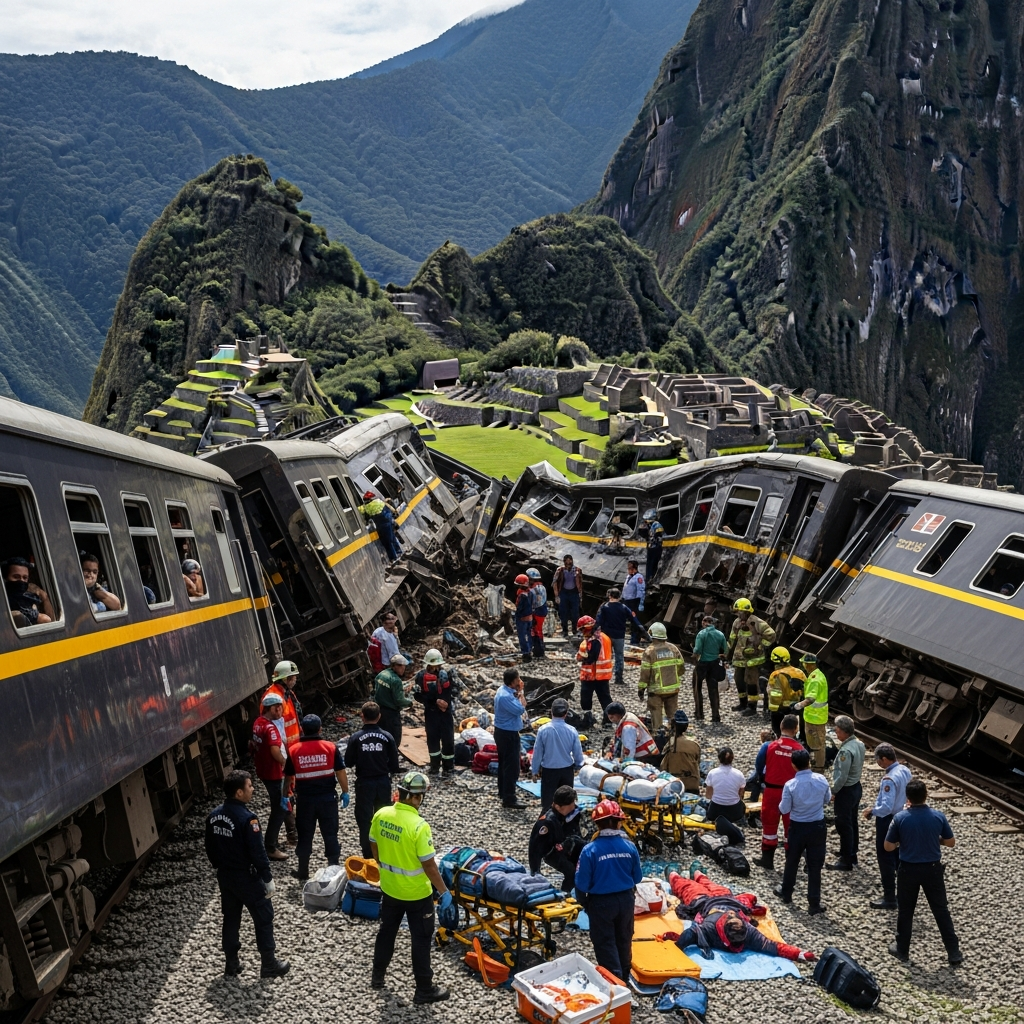
A tragic head-on train collision near Peru’s iconic Machu Picchu on December 30, 2025, has left one railroad worker dead and dozens of others injured, including American citizens. The incident occurred on the critical single-track railway line connecting Ollantaytambo and Aguas Calientes, the gateway to the ancient Inca citadel, causing immediate suspension of all rail services to the world-renowned tourist destination. Emergency teams faced significant challenges accessing the remote Andean crash site, underscoring the complexities of travel in this unique mountainous region.
Fatal Train Collision Rocks Machu Picchu’s Lifeline
The devastating collision took place on Tuesday, December 30, 2025, around lunchtime, involving two passenger trains operating on the heavily used tourist route. Reports confirmed a head-on impact between a PeruRail train and another locomotive belonging to Inca Rail. This vital rail line, nestled in the steep geography of the Peruvian Andes, serves as the primary artery for thousands of tourists and local residents daily, making the incident particularly disruptive.
Authorities in Peru quickly confirmed the fatality of a railroad employee, identified as the conductor of one of the trains. Jhonathan Castillo Gonzalez, a captain with the Cuzco police department, provided initial details. The U.S. Embassy in Peru swiftly reported that American citizens were among the injured, although the precise number and the extent of their injuries were not immediately clear. Initial reports from local health officials indicated at least 40 individuals sustained injuries, with approximately 20 in relatively serious condition, highlighting the severity of the crash.
Emergency Response Under Challenging Conditions
Responding to the remote accident site presented formidable logistical hurdles for emergency services. With no direct road access to the specific area where the collision occurred, first responders and medical personnel had to navigate difficult terrain. A dozen ambulances and medical teams were rapidly dispatched, working tirelessly to provide immediate aid to the injured passengers.
The U.S. Embassy in Peru actively engaged, advising injured citizens and their families to contact iPeru at +51 944-492-314 for assistance. Following initial treatment at the scene, many of the injured were subsequently transferred to medical facilities in the nearby city of Cusco for more comprehensive care. Videos circulating from passengers depicted the immediate aftermath, showing badly damaged locomotives, scattered debris, and victims receiving initial aid by the trackside.
Unpacking the Critical Rail Route to Machu Picchu
The railway line from Ollantaytambo to Aguas Calientes (also known as Machupicchu Pueblo) is far more than just a transport link; it is the sole mechanized access route to one of the world’s most spectacular archaeological treasures. Machu Picchu, a UNESCO World Heritage Site since 1983 and one of the Seven Modern Wonders of the World, draws an average of 4,500 visitors daily. The site, built by the Incas in the 15th century at an altitude of approximately 8,200 feet, relies almost entirely on this rail service for tourist access.
Ollantaytambo, situated about 45 miles northwest of Cusco in Peru’s Sacred Valley, acts as a crucial transportation hub. From there, tourists embark on a picturesque 90-minute train journey to Aguas Calientes, a vibrant gateway town nestled along the Urubamba River. The region’s challenging mountainous landscape means road access is severely limited, making the train an indispensable lifeline for tourism and local commerce alike.
Impact on Travelers and Tourism Sector
Immediately following the collision, all rail traffic between Ollantaytambo and Aguas Calientes was suspended indefinitely. This shutdown caused significant disruption for “hundreds” of tourists awaiting evacuation or planning future trips. Travelers with upcoming rail reservations have been strongly advised to contact their respective rail service providers, such as PeruRail or Inca Rail, directly to inquire about rescheduling options or potential reimbursement.
The incident casts a spotlight on the inherent complexities of tourism in the region. Machu Picchu’s immense popularity has led to concerns about overtourism, and the area has previously experienced disruptions due to political unrest and disputes over the lucrative train and bus service contracts. These existing challenges underscore the fragility of the transport infrastructure crucial for accessing this globally significant cultural landmark.
Investigation and Future Outlook
As of the latest reports, the specific cause of the head-on collision has not yet been determined. Peruvian authorities have launched a full investigation into the incident, aiming to ascertain what led to this tragic accident on such a critical and heavily traveled route. Experts will likely examine factors such as signal systems, operational procedures, and human error.
The suspension of rail services will undoubtedly have a profound impact on the local tourism economy, which heavily relies on the influx of visitors to Machu Picchu. The timeline for service resumption remains unknown, adding uncertainty for both travelers and local businesses dependent on the railway’s operation.
Frequently Asked Questions
What happened in the Machu Picchu train collision?
On December 30, 2025, two passenger trains, one operated by PeruRail and another by Inca Rail, collided head-on on the single railway track between Ollantaytambo and Aguas Calientes, near Machu Picchu. The incident resulted in the death of one railroad employee and injuries to at least 40 people, with about 20 sustaining serious injuries. American citizens were confirmed to be among the injured.
How can travelers affected by the Peru train crash get assistance?
Travelers with upcoming plans to Machu Picchu via the affected rail line should immediately contact their specific train service provider (e.g., PeruRail, Inca Rail) to inquire about rescheduling their trips or reimbursement options. For U.S. citizens needing assistance, the U.S. Embassy in Peru advised contacting iPeru at +51 944-492-314 for support following the incident.
What should tourists know about rail travel safety to Machu Picchu?
While incidents are rare, the recent collision highlights the importance of travel awareness. The route to Machu Picchu relies on a single-track railway through challenging mountainous terrain. Tourists should always follow instructions from train operators and local authorities. In case of disruption, contingency plans are crucial, including checking travel advisories and having contact information for embassies and tour providers readily available.
Conclusion
The recent train collision near Machu Picchu serves as a stark reminder of the complexities inherent in travel to remote, iconic destinations. While investigations continue to uncover the cause of this tragic event, the focus remains on supporting the injured and navigating the immediate impact on travel to one of South America’s most cherished sites. Travelers planning journeys to this historic Inca citadel should stay informed about rail service updates and exercise heightened awareness, ensuring a safer and more prepared experience amidst the region’s unique travel environment.