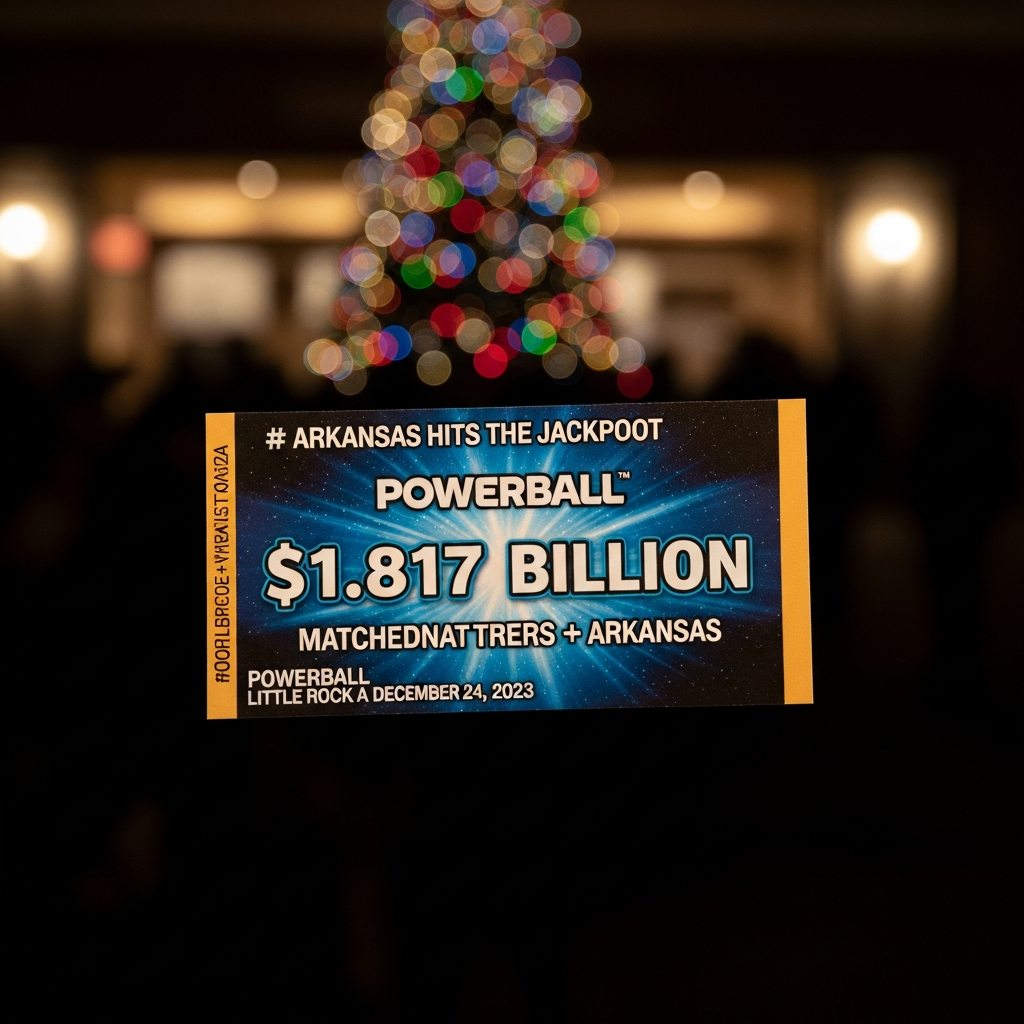
A single Powerball ticket sold in Arkansas has captured a monumental $1.817 billion jackpot, marking it as the second-largest U.S. lottery prize in history. This life-changing win on Christmas Eve, December 24, 2023, ended a record-setting jackpot run and has captivated the nation. The lucky ticket, purchased in Cabot, offers the winner a choice between an immediate cash lump sum of $834.9 million or a long-term annuity, both before the deduction of taxes.
This extraordinary event shines a spotlight on the dreams and immense possibilities lottery games present. The sheer scale of the win, alongside the intricate details of its payout and the broader context of Powerball history, makes this a truly remarkable story. It underscores how widespread ticket sales contribute significantly to public programs and services across the nation, as highlighted by lottery officials.
Arkansas Claims Historic Powerball Victory
The momentous Powerball drawing on Wednesday night, December 24, 2023, delivered a stunning $1.817 billion prize to a single ticket holder in Arkansas. This epic win secured its place as the second-largest lottery prize ever awarded in the United States. The winning ticket was purchased at a Murphy USA gas station located in Cabot, a town northeast of Little Rock.
This marks only the second time a Powerball jackpot has been claimed by a ticket sold within Arkansas, with the first instance occurring way back in 2010. The state now proudly boasts a piece of lottery history, as the identity of the fortunate winner remains undisclosed, adding an air of mystery to this monumental event. The community of Cabot, though perhaps unknowingly, became the epicenter of this national lottery sensation.
The Winning Numbers Unveiled
The numbers that changed someone’s life forever were drawn on that festive Christmas Eve. The winning combination for the $1.817 billion Powerball jackpot was: 4, 25, 31, 52, 59. The all-important red Powerball was 19, and the ticket also featured a Power Play multiplier of 2. These digits collectively cracked one of the most elusive lottery prizes in American history.
Powerball officials confirmed the final jackpot total climbed to $1.817 billion after last-minute ticket sales surged across the country. This remarkable figure had initially been estimated, but widespread public participation pushed it even higher. Matt Strawn, the chair of the Powerball Product Group and CEO of the Iowa Lottery, aptly described the prize as “truly an extraordinary, life-changing” sum, reflecting its unparalleled impact.
Payout Options and Critical Tax Implications
For the fortunate winner of the $1.817 billion Powerball jackpot, two distinct paths exist for claiming their prize. The first is the annuity option, which disperses the full $1.817 billion over 29 years. This includes an immediate initial payment, followed by 29 annual payments that systematically increase by 5 percent each year. This method aims to provide long-term financial stability.
Alternatively, the winner can opt for a one-time lump-sum cash payment. For this particular drawing, that amount stands at a substantial $834.9 million. While many jackpot winners historically choose the immediate cash payout, it’s crucial to remember that both options are subject to significant taxation. Federal taxes typically range between 24% and 37% of the winnings. In most cases, state taxes also apply, further reducing the net amount. Understanding these financial nuances is paramount for any lottery recipient.
Beyond the Grand Prize: Other Significant Wins
While the $1.817 billion jackpot dominated headlines, the December 24 drawing also generated numerous other substantial wins across the nation. Powerball officials encouraged all players to meticulously check their tickets, as many life-enhancing prizes were distributed. Eight tickets sold nationwide successfully matched the first five white numbers, each securing a $1 million prize.
These valuable “Match 5” winning tickets originated from various states, including California, Indiana, Michigan, New York (which impressively had two winners), Ohio, Pennsylvania, and Virginia. It’s noteworthy that in California, these “Match 5” prizes operate under a pari-mutuel system, meaning their value can fluctuate based on overall ticket sales and the number of winners. Beyond these million-dollar prizes, the drawing also produced 114 tickets that won $50,000 and 31 tickets that secured $100,000. Additionally, the associated Double Play drawing saw two tickets, sold in Colorado and South Carolina, match all five numbers to claim $500,000 prizes. Double Play is an optional $1 add-on feature, providing an extra chance to win up to $10 million using the same main Powerball numbers.
Powerball History and Record-Breaking Context
The recent $1.817 billion jackpot did not materialize overnight; it was the culmination of a particularly long and record-setting run. This jackpot cycle extended to 47 consecutive drawings without a winner, marking a new Powerball record for the longest streak in the game’s history. The previous Powerball jackpot had been won on September 6, 2023, when tickets sold in Missouri and Texas split a $1.787 billion prize.
This win on Christmas Eve holds historical significance beyond its sheer size. It represents only the second time a Powerball jackpot has been won on this specific date, with the first occurrence in 2011. Furthermore, this recent prize is only second to the largest single-ticket lottery prize ever recorded: a staggering $2.04 billion jackpot won in 2022 by a player in Altadena, California. The current era has seen an explosion in lottery jackpot sizes, often coinciding with increasingly challenging odds of winning.
Understanding Powerball Odds and Accessibility
Powerball tickets, costing just $2 each, are sold across 45 states, the District of Columbia, Puerto Rico, and the U.S. Virgin Islands. Drawings are held three times a week, providing ample opportunities for hopeful players to try their luck. These drawings take place on Monday, Wednesday, and Saturday evenings, typically at 11 p.m. ET.
While the dream of winning big is compelling, the odds of hitting the jackpot are notably slim, standing at 1 in 292.2 million. However, the odds of winning any prize in Powerball are considerably better, at approximately 1 in 24.9. This distinction is important for players to understand when purchasing tickets. The widespread availability and relatively low cost contribute to Powerball’s immense popularity and its ability to generate such colossal jackpots.
What Happens Next for Powerball?
With the gargantuan $1.817 billion jackpot now claimed, the Powerball game resets its grand prize. The Powerball jackpot for the next Saturday night drawing, following this historic win, will restart at an estimated $20 million. Additionally, the 10X Power Play multiplier feature will become available for players, an option offered when the advertised jackpot is below $150 million. This reset signifies a fresh start for countless hopefuls who dream of becoming Powerball’s next big winner. The consistent cycle of jackpots, large and small, fuels public excitement and supports a wide array of public programs funded by lottery proceeds.
Frequently Asked Questions
What were the winning numbers for the record-setting $1.817 billion Powerball jackpot won in Arkansas?
The winning numbers drawn for the $1.817 billion Powerball jackpot on Christmas Eve, December 24, 2023, were 4, 25, 31, 52, 59, with the red Powerball being 19. The ticket also featured a Power Play multiplier of 2. This monumental win was secured by a single ticket purchased in Cabot, Arkansas, ending a record-breaking 47-drawing jackpot streak.
Where exactly was the Powerball ticket sold that won the $1.817 billion jackpot in Arkansas?
The historic $1.817 billion Powerball winning ticket was sold at a Murphy USA gas station in Cabot, Arkansas. Cabot is a town situated northeast of Little Rock. This marks only the second time a Powerball jackpot has been claimed by a ticket purchased in Arkansas, making the location of this particular sale a significant detail in the game’s history.
What payout options and tax considerations does the $1.817 billion Powerball jackpot winner face?
The winner of the $1.817 billion Powerball jackpot has two primary payout options: a lump-sum cash payment or an annuity. The cash option for this specific drawing is $834.9 million before taxes. Alternatively, the annuity option provides the full $1.817 billion over 29 years, with an initial payment followed by 29 increasing annual installments. Both payment methods are subject to substantial federal taxes (typically 24-37%) and, in most cases, state taxes as well, significantly impacting the net winnings.
A Legacy of Hope and Impact
The Powerball jackpot of $1.817 billion, secured by a lone ticket in Arkansas, stands as a testament to the enduring appeal and life-changing potential of lottery games. This historic win, occurring on a memorable Christmas Eve, not only brings immense fortune to one individual but also provides substantial contributions to state-funded programs through ticket sales. As the Powerball jackpot resets, the dream of winning big continues for millions across the country. It’s a reminder to always check your tickets carefully, as even smaller prizes can make a significant difference.