
Key takeaways
- The FCC authorized SpaceX on Wednesday, November 25, 2026, to deploy up to 1 million orbital compute satellites in a constellation called Starmind.
- The license sets milestones: launches must begin by November 2033, with 10% deployed by November 2035 and 50% by November 2038.
- Scientists, astronomers and rival companies have raised doubts about heat, debris, night-sky brightness and cost, and SpaceX’s own IPO filing says the technology is unproven.
- The FCC deferred a decision on how SpaceX will dispose of satellites above 600 km, saying the company had not given enough information.
The Federal Communications Commission has approved plans for up to 1 million SpaceX data center satellites, giving Elon Musk’s company the first U.S. authorization for a constellation of computing facilities in orbit. The agency announced the decision on Wednesday, November 25, 2026, according to The Associated Press and NPR. It covers a system called Starmind, which SpaceX says would capture solar energy in space to power artificial intelligence (AI) work done for users on Earth.
The approval is a regulatory milestone, not a construction schedule. Nothing in the FCC’s decision shows that 1 million satellites will fly, and several parts of the plan still depend on technology and launch economics that have not been proven. The decision also drew immediate objections from astronomers and skepticism from outside scientists.
What the FCC approved
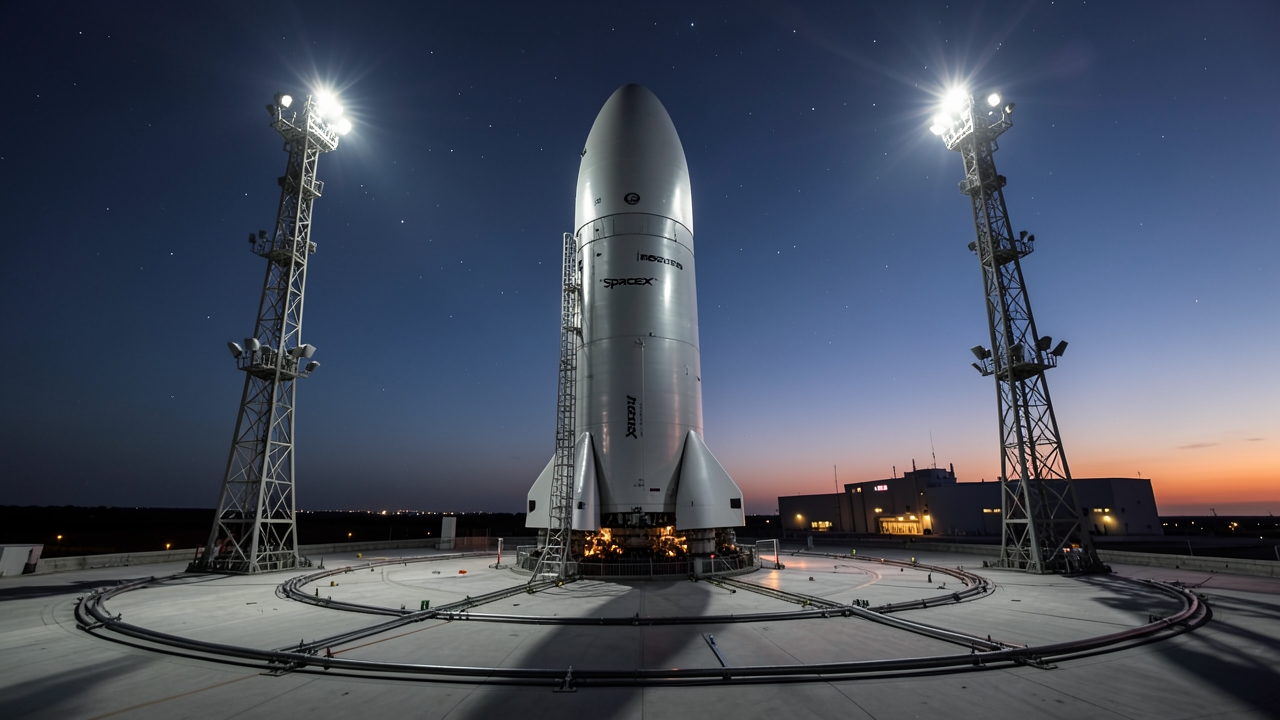
The FCC said it is authorizing SpaceX to deploy 1,000,000 “orbital compute modules” to process large amounts of data that would be used on Earth. The agency described the decision as the first authorization in U.S. history for a constellation of data centers in space, according to Yahoo Finance. The Verge reported that the satellites would carry AI chips.
FCC Chairman Brendan Carr, who was appointed by President Donald Trump, said in a statement: “America is leading the world into the era of super intelligence.” He added that the action “opens a bold new frontier.” In the agency’s release, as quoted by The Independent, the FCC said the approval would allow SpaceX “to pioneer emergent technology that advances American leadership in space and artificial intelligence.”
The FCC also used language that goes well beyond routine licensing. It said the system promises to bring “the human race closer to a Kardashev II civilization—one that can harness the full power of the sun.” The Kardashev scale is a hypothetical ranking of technological advancement, and a Type II civilization would use the entire energy output of its star. SpaceX used similar framing in its January request, Yahoo Finance reported, calling the project a “first step toward becoming a Kardashev II-level civilization.” The phrase is aspirational and is not a technical specification.
The FCC said the Starmind system operates consistently with its orbital debris rules. According to CoinCodex, the permission also covers radio frequencies for backup communications and emergency satellite control. The Independent reported the agency also approved SpaceX’s application to back up its optical, or laser-based, network with extra communications authorization. The FCC said it is still reviewing other proposals for orbital data centers, CoinCodex reported.
The timeline and what SpaceX must do
SpaceX filed its application on January 30, 2026, and the FCC accepted it for filing and opened public comment on February 4, 2026, according to CoinCodex. The approval came about ten months later.
Reports of the license conditions differ slightly in emphasis, but they point the same way:
- 2033: The AP said SpaceX must deploy at least “one authorized space station” by 2033 and then add more through 2040. The Independent reported that launches must begin by November 2033.
- November 2035: The Independent reported that 10% of the total, or 100,000 satellites, must be in orbit.
- November 2038: Half the total, or 500,000 satellites, must be deployed, according to the same report.
- 2040: The Verge reported that SpaceX must reach the 1 million mark by 2040.
The pace implied by those milestones is steep. Going from 100,000 satellites in 2035 to 500,000 in 2038 would mean roughly 400,000 launches’ worth of hardware in three years, which works out to more than 130,000 satellites a year. By comparison, The Independent reported that about 17,000 satellites currently operate in orbit, from all operators combined. That arithmetic is an editorial observation, not a figure from the FCC.
The Independent also noted that operators often request approval for far more satellites than they end up launching, to preserve design flexibility. SpaceX sought clearance for 42,000 Starlink satellites before building that network. Starlink now has just over 11,000 satellites in orbit, according to the same report.
How Starmind is meant to work
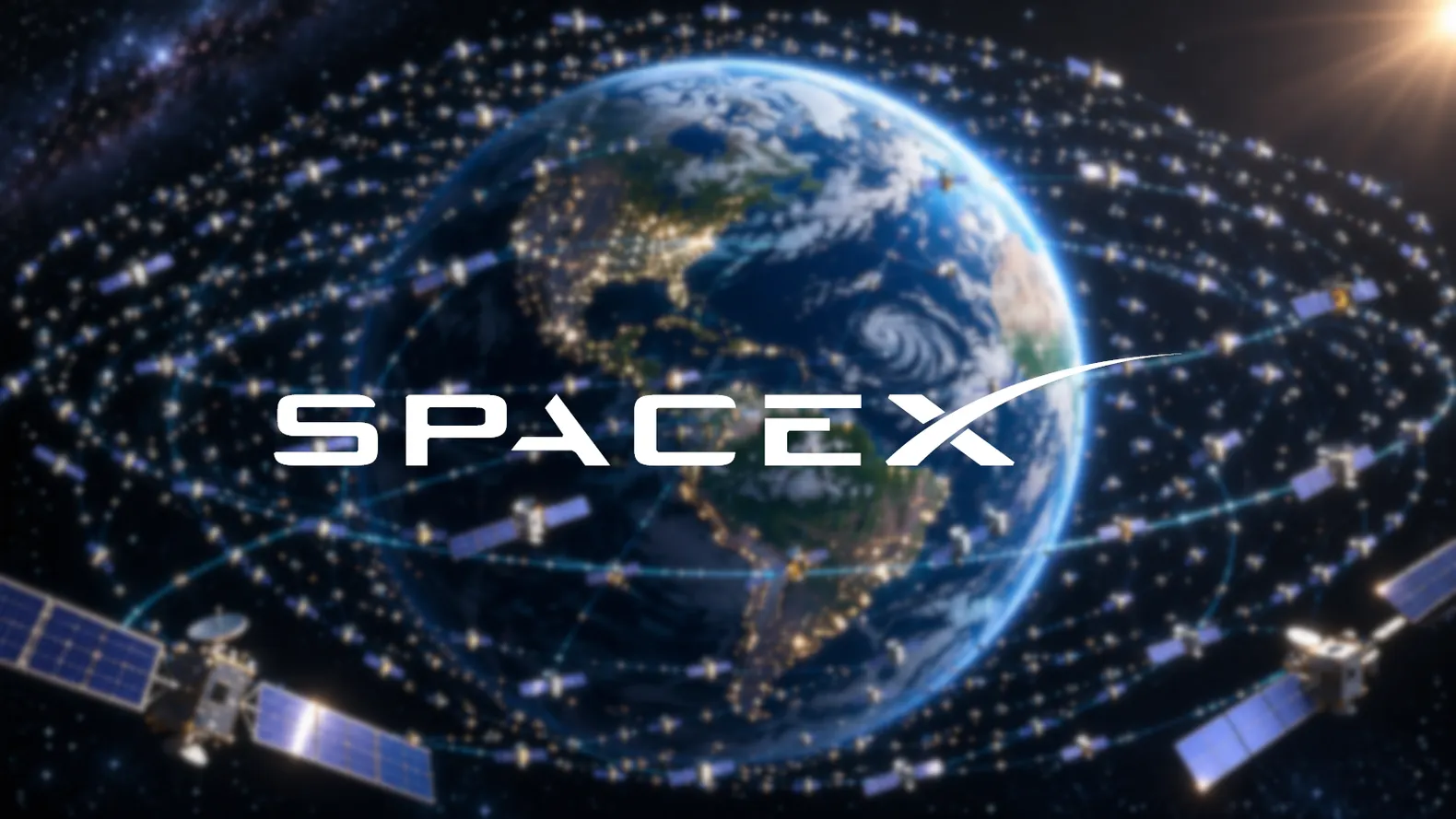
According to the reports, SpaceX’s application describes a constellation operating at altitudes of 500 to 2,000 kilometers (about 310 to 1,240 miles), relying mainly on high-bandwidth laser links. CoinCodex said it could potentially connect to SpaceX’s existing Starlink networks, and The Verge said Starmind would send data to Earth using high-speed lasers that link to Starlink.
The Verge also reported that SpaceX plans to make chips for the satellites at an upcoming facility called “Terafab.” The reports give no specifications for the chips, the power each satellite would draw, or how much computing the full constellation would deliver.
SpaceX told the FCC, as quoted by The Independent: “By directly harnessing near-constant solar power with little operating or maintenance costs, these satellites will achieve transformative cost and energy efficiency while significantly reducing the environmental impact associated with terrestrial data centers.” Data centers, the physical backbone of AI, consume large amounts of electricity and, in many designs, water for cooling. Supporters of the orbital approach argue that solar power in space would ease pressure on power grids and cut demand for sprawling computing warehouses on Earth, the AP reported.
The plan leans heavily on Starship, SpaceX’s reusable next-generation rocket, which is still under development. The Independent said the application depends on sharply lower launch costs from that vehicle, a key dependency that has not yet been proven.
Why scientists are skeptical
Adam Becker, an astrophysicist and author, told the AP that launching a million satellites to create data centers is “a fantasy.” “It’s not going to happen,” he said on Wednesday.
His central technical objection concerns heat. Space is cold, but it is also a vacuum, which traps heat inside objects much like a thermos, the AP reported. Becker said there are “basic physical limits” on how quickly that heat can be radiated away. Computing chips generate large amounts of heat, so a data center in orbit would need a way to shed it. Becker said that spreading the load across many smaller satellites could in principle carry the necessary material, but it would be expensive and difficult.
He and other experts also point to environmental and safety risks. The AP reported concerns about atmospheric pollution from launches and from satellites re-entering the atmosphere, and about collisions in orbit that could harm other essential satellites. “You could end up with a cascading set of space junk collisions,” Becker said, adding that such crashes could create “a cloud of debris” in low Earth orbit, where many weather and telecommunications satellites operate.
The FCC’s approval did not settle one debris-related question. The Verge reported that the agency deferred SpaceX’s request to dispose of satellites located above 600 km in “graveyard” orbits, the alternative being to let them burn up in the atmosphere. The FCC said SpaceX had not provided “sufficient information” about its disposal plans, so that item remains open.
Astronomers and rivals object
The FCC said it received a “substantial number” of public comments before the decision, including petitions to deny SpaceX’s request, the AP reported. Among those urging the agency to refuse were the American Astronomical Society (AAS), satellite communications company Viasat and Amazon’s satellite unit. The AP calls that unit Kuiper Systems, while The Independent refers to it as Amazon Leo.
The AAS said it was “disheartened and dismayed” by the ruling. It argued that placing data centers in low Earth orbit would undermine decades of federal investment in astronomical facilities and “the ability of astronomers and the public to enjoy and study the night sky.” The society said the proposed constellation “involves larger (and therefore brighter) and more numerous objects,” which would be visible as “extremely bright objects for longer periods in the night sky.” Becker echoed the point, calling it “pollution of the night sky to the naked eye.”
The FCC said deploying the satellites “serves the public interest.” It also said it dismissed topics outside its authority, such as environmental concerns, according to the AP.
Amazon’s objections, as described by The Independent, were different in kind. The company argued that SpaceX was unlikely to deploy the full fleet and suggested it could take centuries. Carr rejected that in March, saying: “Amazon should focus on getting Amazon’s house in order with their own launches and their own satellite constellation, rather than worrying about other people that are actually out there launching satellites at the pace and cadence that SpaceX is.” The Independent said the remark suggests the FCC gave weight to SpaceX’s launch record over competitors’ doubts. SpaceX, Viasat, Amazon and the FCC did not immediately respond to AP requests for comment on Wednesday.
The cost question
The approval does not answer whether orbital computing can compete on price. Yahoo Finance cited an estimate from the research firm Wood Mackenzie that a hypothetical 1-gigawatt orbital data center would cost about $170 billion, more than three times the cost of a comparable ground-based facility. Most of the gap comes from launch costs. The firm said launch costs would need to fall by about 70% for orbital data centers to be cost-competitive. This is a third-party estimate and is not confirmed by SpaceX.
SpaceX’s own filings acknowledge the uncertainty. Its IPO filing warns investors that orbital compute relies on technology that has “not yet been proven at commercial scale, or at all,” and says the effort could ultimately be unsuccessful, Yahoo Finance reported. The outlet described the project as “a long way from proven.”
The company’s finances show how much it is already spending on AI. According to Yahoo Finance, third-quarter capital expenditure was $19.6 billion, nearly triple the level a year earlier and more than the company’s $14.6 billion in revenue for the quarter. Most of that went to AI. The company expects capital spending to roughly double to $35 billion to $40 billion in the fourth quarter as it expands AI computing capacity. That spending is mainly on ground-based data centers, which are the source of SpaceX’s AI revenue today. SpaceX has not announced any customers for orbital capacity.
Chief Financial Officer Bret Johnsen said in September that SpaceX is targeting its first orbital compute satellites “next year,” with a much larger push in 2028, according to Yahoo Finance. The FCC license deadline of 2033 for the first authorized deployments is well beyond that target, so the regulator’s timeline is looser than the company’s public ambitions.
Market reaction and the wider race
SpaceX shares, traded under the ticker SPCX, were volatile on the day. Yahoo Finance reported the stock had fallen about 8% earlier in the session, which it attributed to a broader technology sell-off and investor concern over a potential merger with Tesla. After the FCC news, shares pared the loss to about 1%. CoinCodex, which does not name a publication date, described a recovery from a daily low of $114.50 to about $120.70. Yahoo’s page showed the stock up 2.50% at the time it was captured. These price figures come from the individual outlets and have not been independently verified.
Carr posted about the approval on X, which Musk owns. Musk replied: “Much appreciated. This will be a great asset to America and the world.”
SpaceX is not alone in pursuing computing in orbit. The Verge reported that Google and Blue Origin, the rocket company founded by Jeff Bezos, are also working on space-based AI data centers. According to The Verge, Google launched a Project Suncatcher AI server satellite last month, its first step toward putting compute in space, and Blue Origin is scheduled to carry out the first dedicated heavy-lift launch for Suncatcher in 2029. CoinCodex reported that Starcloud has proposed a constellation of about 88,000 satellites and Blue Origin about 51,600. Both are far smaller than SpaceX’s authorization, and the reports do not say whether either has been approved.
What remains unresolved
Several basic details are not public. The FCC and SpaceX have not disclosed a total project cost. CoinCodex noted the announcement did not specify a deployment timeline beyond the license conditions, and The Independent said it is unclear whether SpaceX will launch anything close to 1 million satellites.
The reports also leave open how the thermal, debris and astronomy objections will be handled. The FCC said the system meets its debris rules and set aside environmental objections as outside its authority, while the disposal request for satellites above 600 km awaits more information from SpaceX. The AAS and Becker argue the effects on the night sky and on orbital safety are real regardless of what the license says.
For now, what exists is a license with long-dated milestones, a company that has said it aims to begin deploying much sooner, and a set of technical and financial questions that the approval does not answer.
Frequently asked questions
What exactly did the FCC approve?
The FCC authorized SpaceX to deploy up to 1 million orbital compute modules in a constellation called Starmind. The agency called it the first authorization in U.S. history for a constellation of data centers in space. It does not guarantee that all the satellites will be built or launched.
When does SpaceX have to launch the satellites?
According to The Independent, launches must begin by November 2033. The company must have 10% of the total, or 100,000 satellites, deployed by November 2035 and 50% by November 2038. The Verge reported that the full 1 million is due by 2040.
Why do scientists doubt the plan?
Astrophysicist Adam Becker told the AP that heat is a basic problem, because a vacuum traps heat much like a thermos and limits how it can be radiated away. Experts also cite possible debris collisions, pollution from launches and re-entries, and bright satellites affecting astronomy. Analysts at Wood Mackenzie estimate cost is another hurdle, with launch costs needing to fall about 70% for orbital data centers to compete.
Is the plan likely to be built as approved?
That is uncertain. The Independent reported that operators often seek approval for far more satellites than they launch, and SpaceX has about 11,000 Starlink satellites in orbit after seeking 42,000. SpaceX’s own IPO filing warns that orbital compute has not been proven at commercial scale.
References
- FCC Authorizes SpaceX to Deploy 1 Million Data Center Satellites in Space — coincodex.com
- FCC signs off on SpaceX’s plan to put up to 1 million data center satellites into space — theverge.com
- SpaceX given approval to deploy 1 million satellites for data centers in space — independent.co.uk
- SpaceX stock pares losses following FCC approval for data centers in space — finance.yahoo.com
- FCC says SpaceX can deploy 1 million satellites for data centers in space. Scientists are skeptical — npr.org
Featured image: Image via The Verge