
Key takeaways
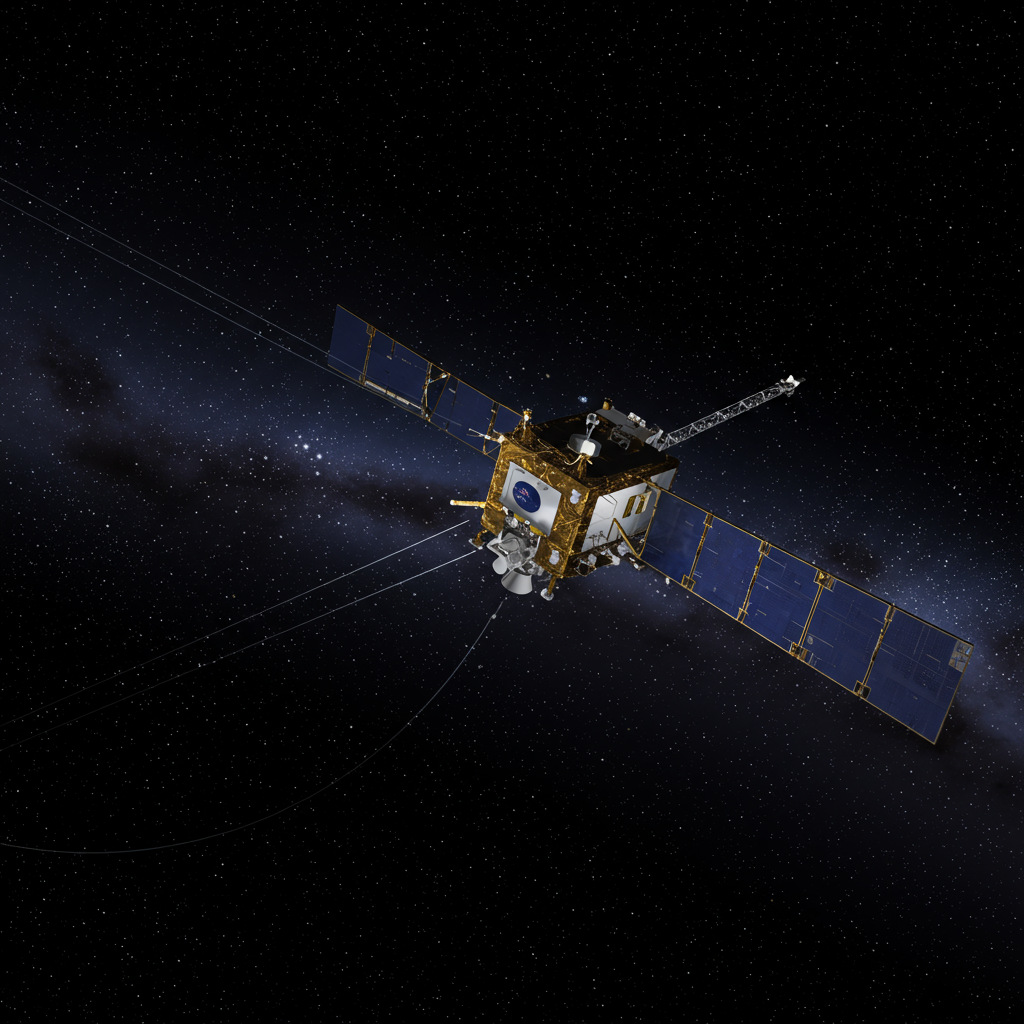
- The European Space Agency’s Euclid telescope first detected the object, a quasar that formed within 630 million years of the Big Bang.
- Webb data indicate the central black hole is about 360 million times the mass of the Sun.
- Lead author Julien Wolf said the new record moves the known frontier back by nearly 40 million years, while the two previous records each moved it back about 15 million years or less.
- The findings were published in the journal Astronomy & Astrophysics.
Astronomers have identified the most distant quasar known to science, a bright galactic core fed by a supermassive black hole that formed within 630 million years of the Big Bang. The findings were reported on Tuesday, November 24, 2026, by a team led by Julien Wolf of The European Southern Observatory in Germany. The object was first spotted in data from The European Space Agency’s Euclid telescope.
The quasar is seen as it appeared about 13.1 billion years ago, when the universe was less than 5% of its present age of 13.8 billion years, according to the reports. Because its light has been travelling for most of the universe’s history, the object offers a rare look at conditions shortly after the first galaxies began to form.
What a quasar is and why it can be seen so far away
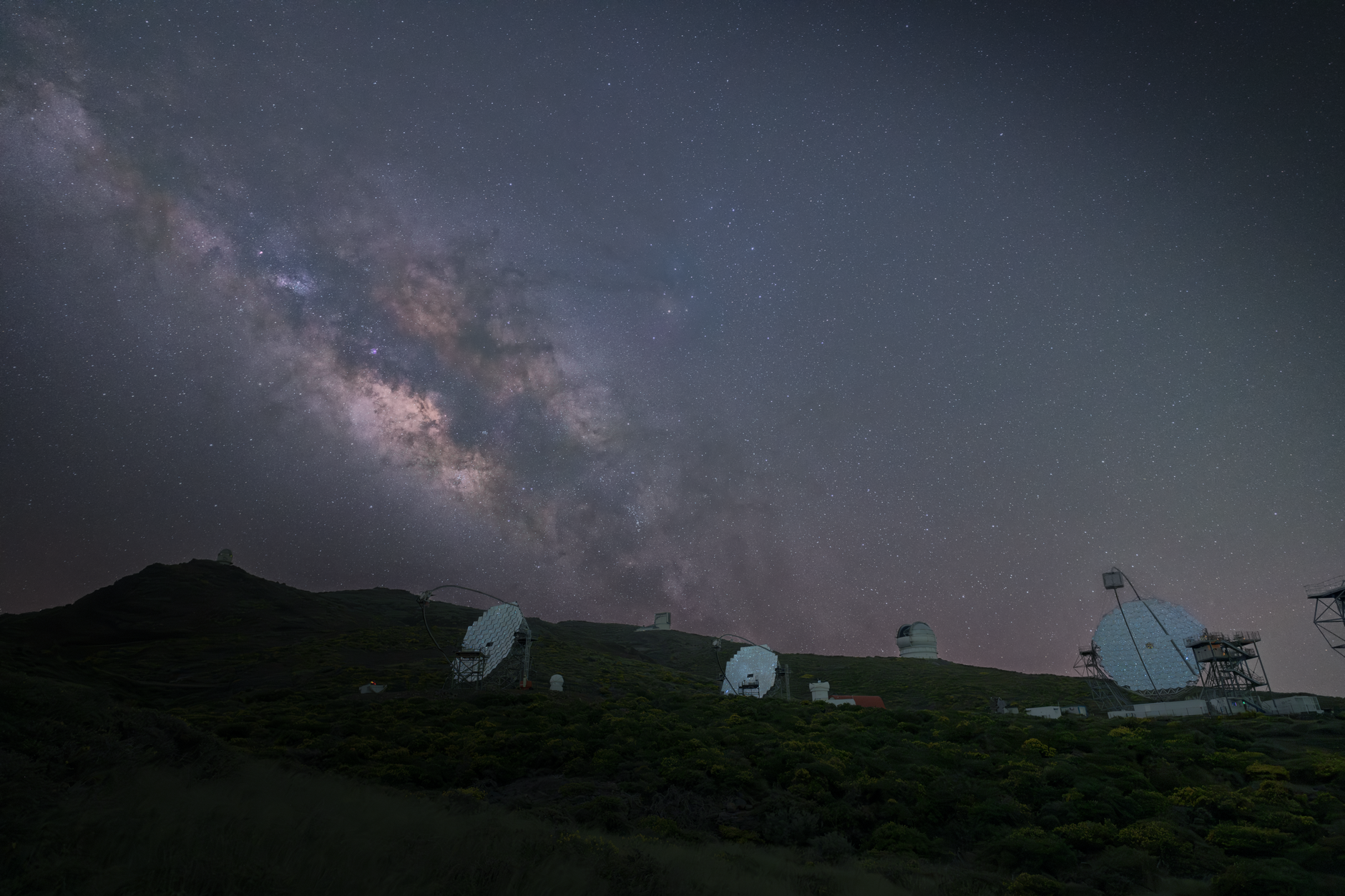
A quasar is the extremely bright core of an active galaxy. Its brightness comes from gas and dust falling into a supermassive black hole at the galaxy’s centre. As this material spirals inward, it forms a hot, swirling structure called an accretion disk.
Silvia Belladitta, an astronomer and co-author of the study at the Max Planck Institute for Astronomy in Germany and the INAF Bologna Observatory in Italy, described the process. She said the disk heats to extreme temperatures and radiates so much energy that it can outshine the rest of its galaxy by factors of hundreds or even thousands. That brightness is what allows astronomers to detect quasars across billions of light-years.
Quasars are also short-lived in a galaxy’s history. According to the reporting, they represent a brief phase during which the nucleus can outshine the rest of the system. Their rarity and brightness make them useful markers for studying the earliest epochs of the universe.
Belladitta said that studying quasars helps astronomers understand how the first galaxies formed and evolved, and how the black holes at their centres grew to such large sizes.
How the quasar was found and confirmed
According to the Associated Press, the discovery did not come from a dedicated, targeted observation. Wolf’s team searched existing data from the Euclid survey, which consists of millions of observations of galaxies. The telescope was launched in 2023 to study dark matter, the invisible material that holds galaxies together, and dark energy, the force that drives them apart.
The quasar’s formal designation is J1504+6252. Its informal nickname is Dun Aonghasa, spelled Dún Aonghas in DW’s report. The name refers to a prehistoric stone fort on Ireland’s Aran Islands. In comments reported by the AP, Wolf said his wife and daughter, who are Irish, visited the fort, and that he was “awestruck” by it. He said the fort represents “the promise of a vast horizon still to explore,” an image he applied to the quasar and the early universe.
Euclid’s images were first used to identify the object. Follow-up observations were then used to check and measure it. The AP reported that data from the Hubble and Webb space telescopes, along with other observatories on and off Earth, corroborated the findings. The reports do not say when those follow-up observations were made, or which instrument produced each measurement.
The result therefore depends on two steps: a wide survey that flags candidates, and more powerful instruments that confirm them. Wolf’s team has described the approach as a way to find rare objects hidden in archival data.
Black hole mass raises the question of how it grew so fast
The most striking figure in the reports concerns the black hole’s size. Wolf said that about 630 million years after the Big Bang, the black hole had already grown to about 360 million times the mass of the Sun. Webb data were used to determine this mass, according to the AP and Naharnet.
In DW’s report, Wolf described the object as adding to evidence that some objects in the early universe developed remarkably quickly. He said the black hole was already shining as a quasar at that early stage.
Wolf also framed the result as a challenge to theory. In the AP’s account, he said the object gives scientists “a new deadline” for the early universe, and then asked: “But how?” The reports do not give an answer. One scenario mentioned by DW is that supermassive black holes form when large gas clouds collapse directly and then gather additional matter over time. The reports present this as a possible route rather than a settled explanation.
The AP notes that the researchers describe the black hole’s mass as astounding for so early in cosmic time. That assessment comes from Wolf and the article’s framing, not from an independent expert. Wolf also called the quasar “even rarer” because its black hole is massive despite being what he called a relatively slow eater. This is his characterisation, and no other source reported in the research evaluates it.
Where the reports differ on timing
The sources agree on the central numbers: formation within 630 million years of the Big Bang, and a look-back time of 13.1 billion years. They differ on some details, and one figure needs a closer look.
First, the reports differ on who made the announcement. DW’s report says researchers at the European Space Agency announced the discovery on Tuesday, and the Euclid image was released by the agency. The AP’s report says the German-led team reported its findings, and that the Euclid image was released on Tuesday. Naharnet’s version says the German-led team reported its findings on a Tuesday without giving a date.
Second, the spelling of the nickname varies. DW uses Dún Aonghas, while the AP uses Dun Aonghasa.
Third, the timing figures do not line up exactly. The AP article points out that a formation time of 630 million years after the Big Bang does not match a look-back time of 13.1 billion years. For a universe 13.8 billion years old, 13.1 billion years ago corresponds to roughly 700 million years after the Big Bang. The AP says the gap may reflect rounding, different definitions of when the quasar “formed,” or the way the look-back time was calculated, but the article does not explain it. Naharnet, by contrast, says the figures are consistent, noting that 630 million years is roughly 4.6% of 13.8 billion years. The reports do not give uncertainty ranges for the mass, the distance or the timing, so readers should treat the exact figures with some caution.
Fourth, the reports describe the quasar’s age in two ways. Some say it formed within 630 million years of the Big Bang, while others say it is seen as it was 13.1 billion years ago. Both describe the same era, but they measure different things: when the quasar came into being, and when its light left it.
How big a jump the new record represents
Wolf’s most direct claim concerns the size of the advance. In an email quoted by the AP, he wrote: “This time the leap in cosmic time is huge! The previous two records each took us back by about 15 million years or less. This one takes us back by nearly 40 million years, the biggest advance in nearly a decade!”
The AP and Naharnet both report this comparison, and both attribute it to Wolf. It is a claim about how far the record for the most distant known quasar has moved, and it has not been independently assessed in the sources reviewed. The record-setting margin is relevant because distant quasars are rare, and each new record pushes the known timeline of black hole growth closer to the Big Bang.
Wolf was also cautious about the record’s future. He said: “Honestly, the record could fall again in a few months or it could stand for years.” The AP describes this as a forecast, not a scheduled event. Naharnet reports that the team’s search of the early universe continues, suggesting more candidates may be examined as new data are analysed.
For survey science, the result is also a demonstration. The discovery shows how large archival datasets can yield significant objects when they are combined with follow-up observations from more powerful telescopes. The AP says the practical lesson is that objects found in survey data can be confirmed later with instruments such as Webb.
Who has responded, and what remains unknown
The reports quote only Wolf, so the reaction described in the research is his own. The AP and Naharnet both say the article does not include outside expert comment, sceptical views, or statements from the European Space Agency, NASA, or the European Southern Observatory as institutions. DW quotes Belladitta and Wolf but does not include independent commentary either.
This matters because several key claims rest on the team’s own assessment. The statement that the black hole’s mass is unusual for such an early time, and that the quasar is especially rare, comes from Wolf. The record advance is also described by Wolf. Independent scientists may review these claims, but no such reviews are reported in the sources.
Several questions remain open. The most prominent is how the black hole reached about 360 million solar masses so early in cosmic history. The reports offer possible routes, such as direct collapse of gas clouds followed by further growth, but they do not resolve the matter. The reports also do not give the uncertainties of the mass, distance or timing measurements, and they do not describe which instrument produced each measurement.
The full scientific detail is in the peer-reviewed paper in Astronomy & Astrophysics. The reports reviewed do not describe its methods in depth, so this article does not add findings beyond those reported.
For now, the discovery adds one data point to a fast-moving field. It shows that a supermassive black hole could reach a very large size within about 630 million years of the Big Bang, according to the team. Whether that finding holds up, and how it fits existing models of early galaxy growth, will depend on further analysis and on the next distant object that either matches or beats the record.
Frequently asked questions
What is a quasar?
A quasar is the extremely bright core of an active galaxy, powered by gas falling into a supermassive black hole. According to the reports, quasars represent a brief phase in a galaxy’s life, during which the nucleus can outshine the rest of the system. Their brightness allows astronomers to see them across billions of light-years.
How far back in time does this discovery reach?
Scientists are seeing the quasar as it was about 13.1 billion years ago, when the universe was less than 5% of its current age. The reports say the object formed within 630 million years of the Big Bang. The AP notes that these two figures do not line up exactly, and it does not explain the gap.
Is this the final record for the most distant quasar?
No. Julien Wolf said the record could fall again in a few months or could stand for years. That statement is a forecast, and the reports do not describe any scheduled search or outcome.
References
- Scientists discover quasar formed within a mere 630 million years of the Big Bang, setting a record — gmg-wdiv-prod.cdn.arcpublishing.com
- m.naharnet.com
- Scientists discover quasar formed 630 million years after the Big Bang — dw.com
Featured image: AI-generated image