Key takeaways
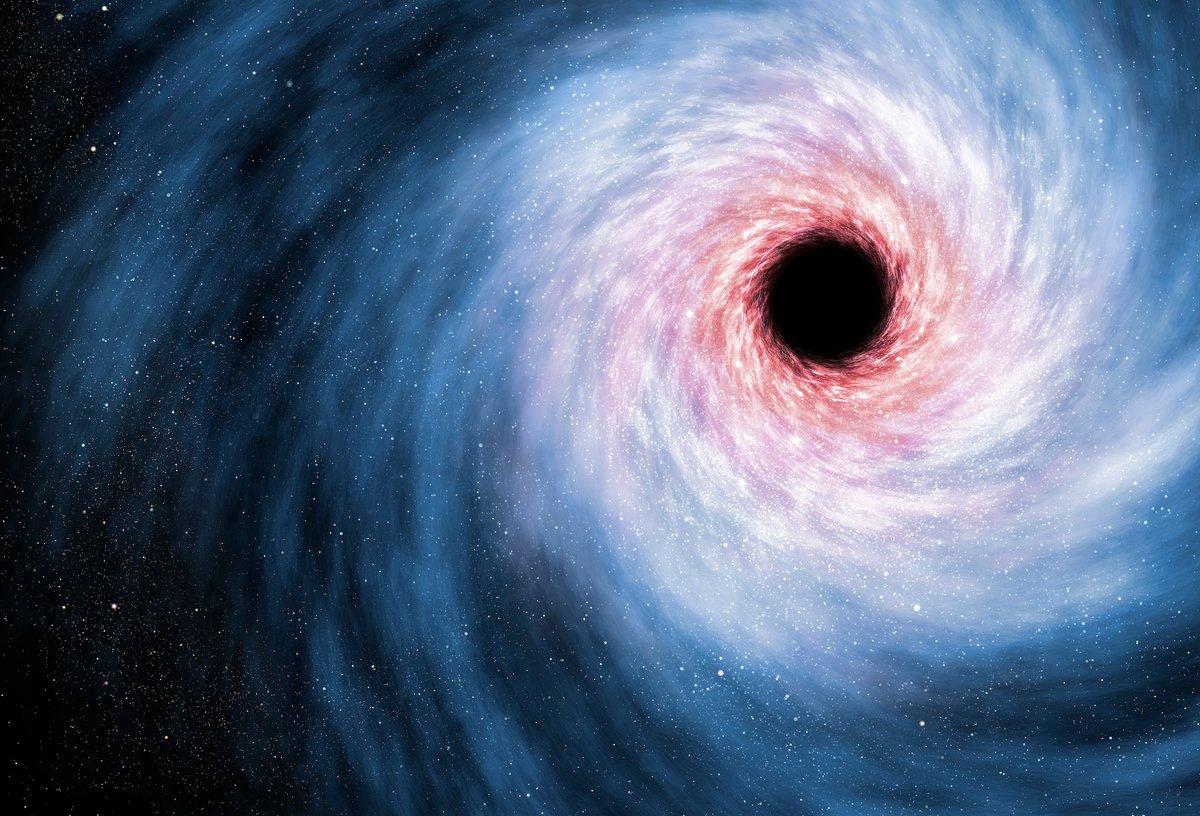
- A significant population of black holes may form through “failed supernovae,” where massive stars implode directly without a visible explosion.
- Analysis of 257 black hole mergers shows a dramatic peak in objects with approximately 10 solar masses.
- A statistical “gap” exists in the 12-to-16 solar-mass range, suggesting a distinct formation mechanism for different mass groups.
- Visual observations of a vanishing star in the Andromeda galaxy provide a potential real-world candidate for this silent collapse.
Failed supernova black holes may represent a massive, silent subpopulation of the universe’s dark objects, according to research published in the journal Physical Review D on November 10, 2026. This study, led by researchers at the California Institute of Technology (Caltech), utilized a decade of gravitational-wave data to suggest that many stars bypass violent explosions entirely, collapsing directly into darkness.
What happened
For decades, the scientific consensus held that the death of a massive star was a loud, bright affair. The Standard model of stellar evolution dictates that when a star exhausts its nuclear fuel, its Core collapses, triggering shockwaves that blast the star’s outer layers into space in a massive supernova explosion. This “bang” leaves behind either a neutron star or a black hole.
However, new findings from the international gravitational-wave detector network—comprising LIGO (Laser Interferometer Gravitational-Wave Observatory), Virgo, and KAGRA—suggest that this model is incomplete. By analyzing a sample of 257 black hole mergers detected over the last 10 years, researchers identified a pattern that points to a different, quieter end for some stars.
According to the study, a vast majority of the merging black holes in the universe are approximately 10 times the mass of our sun. This specific group, which makes up roughly 75% of the analyzed sample, shares similar spin rates, suggesting they originate from a common, unique process. The research team, including Katerina Chatziioannou of Caltech and Isaac Legred of the University of Illinois Urbana-Champaign, argues that these objects are likely the result of “failed supernovae.” In these scenarios, the star undergoes a direct gravitational implosion—a cosmic “whimper” rather than a bang—effectively vanishing from the visible sky.

Why it matters
This discovery is significant because it challenges the fundamental way astrophysicists model the lifecycle of massive stars and the distribution of mass across the cosmos. If a large portion of black holes are born through direct collapse, then the total number of massive stars that undergo traditional supernova explosions may be lower than previously estimated.
Furthermore, the research provides a solution to a long-standing mystery in gravitational-wave astronomy: the “mass gap.” While the data shows a heavy concentration of black holes at the 10-solar-mass mark, there is a surprising and notable scarcity of black holes in the 12-to-16-solar-mass range. This discrepancy suggests that the physics governing the formation of 10-solar-mass black holes is fundamentally different from the processes that create larger black holes.
As Katerina Chatziioannou explained, “Our data are showing that this group of black holes may have a common origin — they may be a distinct subpopulation that failed to go supernova. These results represent a connection between the gravitational-wave data and underlying astrophysics we are trying to extract.”
The physics of failed supernova black holes
To understand the implications of this research, one must look at the two competing pathways for stellar death. The traditional supernova model relies on the outward pressure of shockwaves to expel a star’s outer layers. In contrast, the failed supernova model involves a star so massive or with internal physics so specific that the shockwaves simply “fizzle” out. Instead of exploding, the entire mass of the star is pulled inward by gravity.
| Feature | Standard Supernova Model | Failed Supernova Model |
|---|---|---|
| End-of-life Event | Violent explosion (“Bang”) | Direct implosion (“Whimper”) |
| Mechanism | Core collapse + shockwaves | Direct collapse of massive star |
| Visual Evidence | Bright, expanding outer layers | Star “vanishes” from view |
| Black Hole Mass | Variable (higher mass range) | Likely clustered around 10 solar masses |
Evidence from gravitational waves
The LIGO-Virgo-KAGRA network has detected over 300 black hole collisions since 2015. By studying the “ripples in spacetime” produced by these collisions, scientists can calculate the mass and spin of the objects involved. The researchers found that the 10-solar-mass population exhibited a narrower range of spin rates compared to the overall sample. This uniformity is a key indicator that these black holes are not just random outliers, but a cohesive group born from a specific set of internal physical conditions.
Isaac Legred noted the difficulty of confirming this through traditional telescopes. “We can look up at the sky and try to study historical records of massive stars that failed to explode, but it’s challenging because they just vanish without exploding, leaving a dark patch of sky,” he said. This highlights the critical role of gravitational-wave astronomy, which allows scientists to “see” events that are invisible to optical telescopes.
Visual candidates: The case of M31-2014-DS1
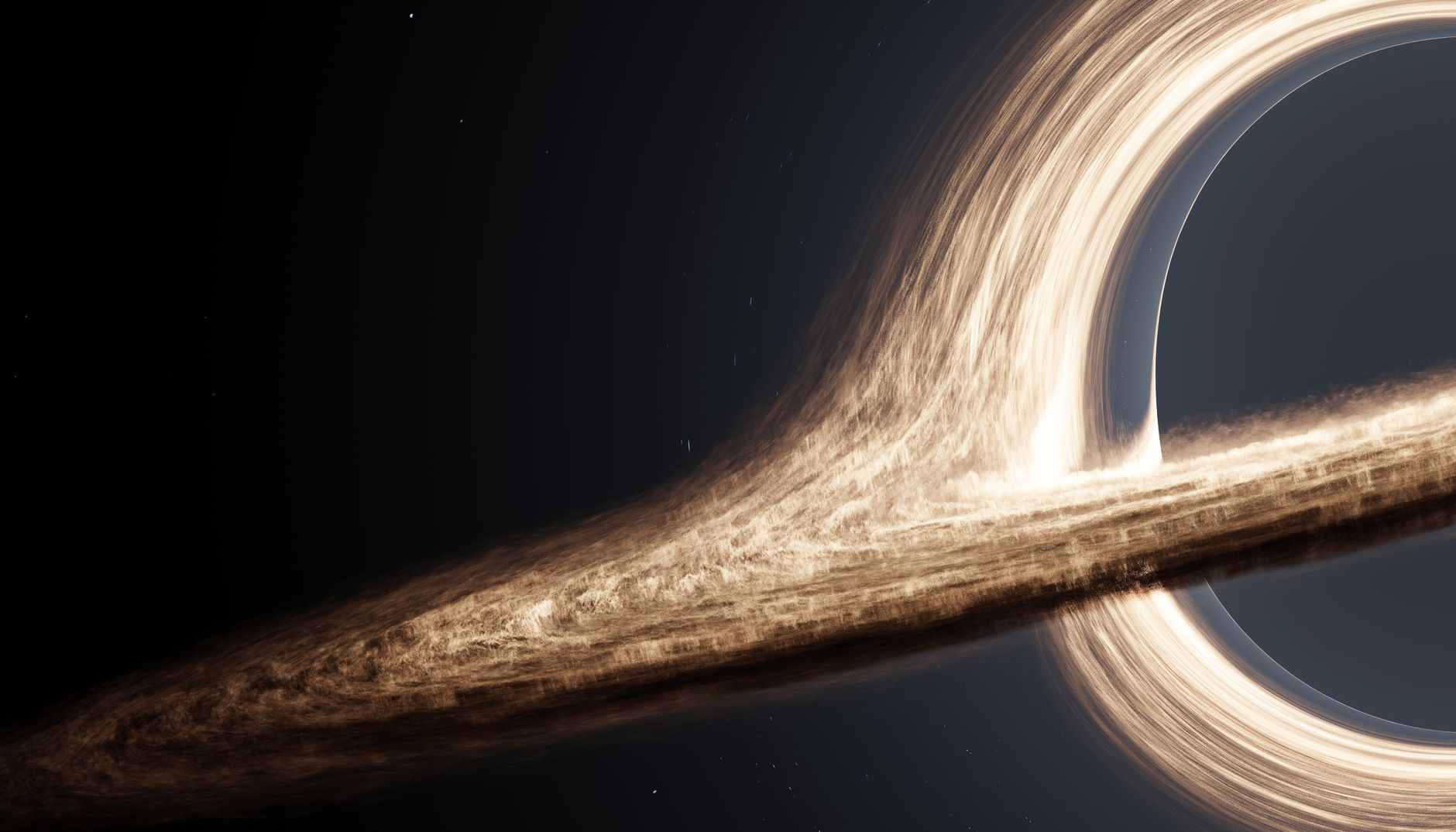
While the gravitational-wave data provides statistical evidence, recent visual observations have provided a potential smoking gun. In a study published in the journal Science on February 12, 2026, astrophysicist Kishalay De of Columbia University presented evidence of a star that may have undergone a failed supernova in the Andromeda galaxy (M31).
Using archival data from NASA’s NEOWISE mission, De’s team identified a yellow supergiant, designated M31-2014-DS1, which was roughly 12 times the mass of our sun. The star was visible in infrared sky mapping between 2009 and 2024, but by 2022, it had completely vanished from view. Follow-up observations from the James Webb Space Telescope (JWST) and the Chandra X-ray Observatory revealed only a dim, reddish blob where the star once resided.
De’s team estimated that the resulting black hole would have a mass of approximately five solar masses, surrounded by an expanding cloud of gas and dust with a mass about one-tenth that of our sun. “I got goosebumps when I saw it disappearing into darkness,” De said, noting that the observations align perfectly with 50-year-old theoretical predictions of direct collapse.
Counterpoints and the stellar merger debate
Despite the excitement, the scientific community remains divided on whether these “vanishing” stars are truly failed supernovae. A competing theory, proposed by astrophysicist Emma Beasor of Liverpool John Moores University, suggests that these events might actually be stellar mergers.
In a stellar merger, two stars collide and join into one, often becoming shrouded in a thick shell of dust that makes them appear to disappear from traditional view. Beasor argues that current models are not yet precise enough to make definitive predictions about what a failed supernova should look like. “Before we confirm one, what I want to do is rule out every other possible scenario that could cause a star to ‘disappear,’” she stated.
Adding another layer of skepticism, Christopher Kochanek of Ohio State University raised concerns about the reliance on dust as an explanation. In both the merger and the failed supernova models, dust is used to explain why light is not being seen. Kochanek warned that dust is a “notorious refuge of scoundrels in astronomy” because its ability to obscure light is so versatile it can be used to explain away almost any anomalous observation.
What it means for you
If you are a student of science, a space enthusiast, or an investor in aerospace technology, these findings signal a shift in how we explore the “dark” side of the universe. The ability to detect and categorize black holes through gravitational waves rather than light means that our understanding of the universe is no longer limited by what we can see with our eyes or traditional telescopes.
As technology advances, the focus of space exploration will increasingly move toward multi-messenger astronomy—the simultaneous use of light, gravitational waves, and other signals to piece together cosmic events. This research underscores the growing importance of funding for large-scale detector networks and next-generation space observatories.
What happens next
The debate between the failed supernova and stellar merger theories will likely be settled by long-term observation. Because the dust shells surrounding these potential merger sites are expanding, the “veil” will eventually thin. If the object remains dark as the dust clears, it supports the black hole formation theory; if it begins to shine brightly, it supports the merger theory.
Astronomers are looking toward several upcoming facilities to resolve these questions:
- The Vera C. Rubin Observatory (Chile): This ground-based facility will provide increased event detection capabilities to find more candidates.
- The Nancy Grace Roman Space Telescope (NASA): This upcoming mission will expand the search for these phenomena across larger swaths of the sky.
This research into failed supernova black holes marks a pivotal moment in our quest to understand the most extreme environments in the universe. By moving beyond the light of traditional telescopes, humanity is beginning to map the silent, dark processes that shape the cosmos.
Frequently asked questions
What is a failed supernova?
A failed supernova occurs when a massive star undergoes a direct gravitational collapse into a black hole or neutron star without the characteristic, violent explosion of a traditional supernova. Instead of blasting its outer layers into space, the star essentially implodes, vanishing from view.
How do scientists know about black holes if they are dark?
While black holes do not emit light, they can be detected through their gravitational influence on other objects. Scientists use gravitational-wave detectors like LIGO to sense the “ripples in spacetime” caused by black holes colliding and merging, which allows them to calculate the mass and spin of the objects involved.
Why is there a mass gap in black hole observations?
Researchers have noticed a statistical scarcity of black holes in the 12-to-16 solar mass range. This “gap” suggests that the physical processes used to form 10-solar-mass black holes, such as failed supernovae, are distinct from the processes that create larger black holes, creating a jump in the distribution of masses.
Can we see a star turn into a black hole?
In most cases, no, because the process of a failed supernova is “quiet” and lacks a bright explosion. However, astronomers can identify candidates by watching for stars that suddenly vanish from infrared or optical surveys, leaving behind only a dim, reddish glow of dust.
References
- Astronomers discover rare black holes that formed when stars failed to go supernova — space.com
- Astronomers Find Hints of Star Population That Failed to Explode — caltech.edu
- Not all black holes are born in supernova explosions. Some stars simply implode — theprint.in
- How did an entire star vanish in the galaxy next door? A black hole may be to blame — scientificamerican.com
- Black Holes May Be Born From Failed Star Explosions — newser.com
Featured image: Image via Scientific American