The arrest of a U.S. service member in connection with the okinawa US Marine murder and robbery of a local woman has triggered a high-level diplomatic crisis between Tokyo and Washington. On Sunday, October 4, 2026, the Japanese government formally summoned the United States Ambassador to address the arrest of Lance-Corporal Devin Jacob Ballard, a 20-year-old Marine accused of killing Anna Yagi, a 39-year-old Japanese woman, in a hotel in Naha.
Key Takeaways
- The Incident: Devin Jacob Ballard is suspected of robbing and killing Anna Yagi in a Naha hotel; the victim reportedly died of strangulation.
- Diplomatic Escalation: Japanese Prime Minister Sanae Takaichi and Foreign Minister Toshimitsu Motegi have lodged strong protests, demanding maximum cooperation from the U.S.
- U.S. Response: Ambassador George Glass has pledged “full cooperation” with the investigation, though the suspect has denied all charges.
- Deepening Tensions: The crime reignites long-standing local anger in Okinawa regarding the heavy presence of the approximately 54,000 U.S. military personnel stationed in Japan.
- Systemic Concerns: Okinawan Governor Genta Koja has criticized U.S. military discipline and troop education as being fundamentally ineffective.
- The Suspect’s Defense: Devin Jacob Ballard has denied the charges. The outcome of the investigation will depend heavily on the forensic evidence and whether the CCTV footage can be definitively linked to his actions.
- The Cause of Death: While initial reports suggest strangulation or suffocation, official medical confirmation is still pending. The exact nature of the violence will be crucial for the legal proceedings.
- Systemic vs. Individual Failure: Is this an isolated incident of individual criminal behavior, or does it reflect a broader failure in U.S. military discipline as Governor Koja claims? The U.S. military will likely argue it is the former, while local leaders will insist on the latter.
- The Scope of Cooperation: How much access will the U.S. military grant Japanese investigators to their personnel and internal records? The level of transparency will determine whether this remains a criminal matter or evolves into a major diplomatic crisis.
- Formal Charges: The progression from arrest to formal indictment by the Okinawa prefectural prosecutor’s office.
- Forensic Results: The release of the official autopsy report regarding Anna Yagi‘s cause of death.
- Diplomatic Meetings: Follow-up discussions between Ambassador Glass and Japanese officials like Minister Motegi regarding the implementation of “strengthened discipline.”
- Political Protests: The scale and frequency of local Okinawan demonstrations in response to the crime and the government’s handling of it.
- www.aljazeera.com
- www.aa.com.tr
- www.aljazeera.com
What Happened in Naha
The investigation into the death of Anna Yagi began following the discovery of her body in a hotel room in the city of Naha, Okinawa. According to reports from the Kyodo News agency, the 39-year-old woman appeared to have been strangled. The suspect, 20-year-old Devin Jacob Ballard, was arrested by Okinawa prefectural police on suspicion of robbery and murder.

Evidence from local CCTV footage has provided a grim timeline of the events. The AFP news agency reported that footage captured a non-Japanese man entering a hotel room accompanied by the Japanese woman. At a later time, the same footage showed the man leaving the room alone, carrying what appeared to be the victim’s personal belongings, including her wallet and backpack.
While the specific timing of the crime remains under investigation, the arrest of Ballard on Sunday has forced an immediate confrontation between the two allied nations. Despite the gravity of the allegations, Ballard has officially denied the charges brought against him by Japanese authorities.
Why the Incident Matters
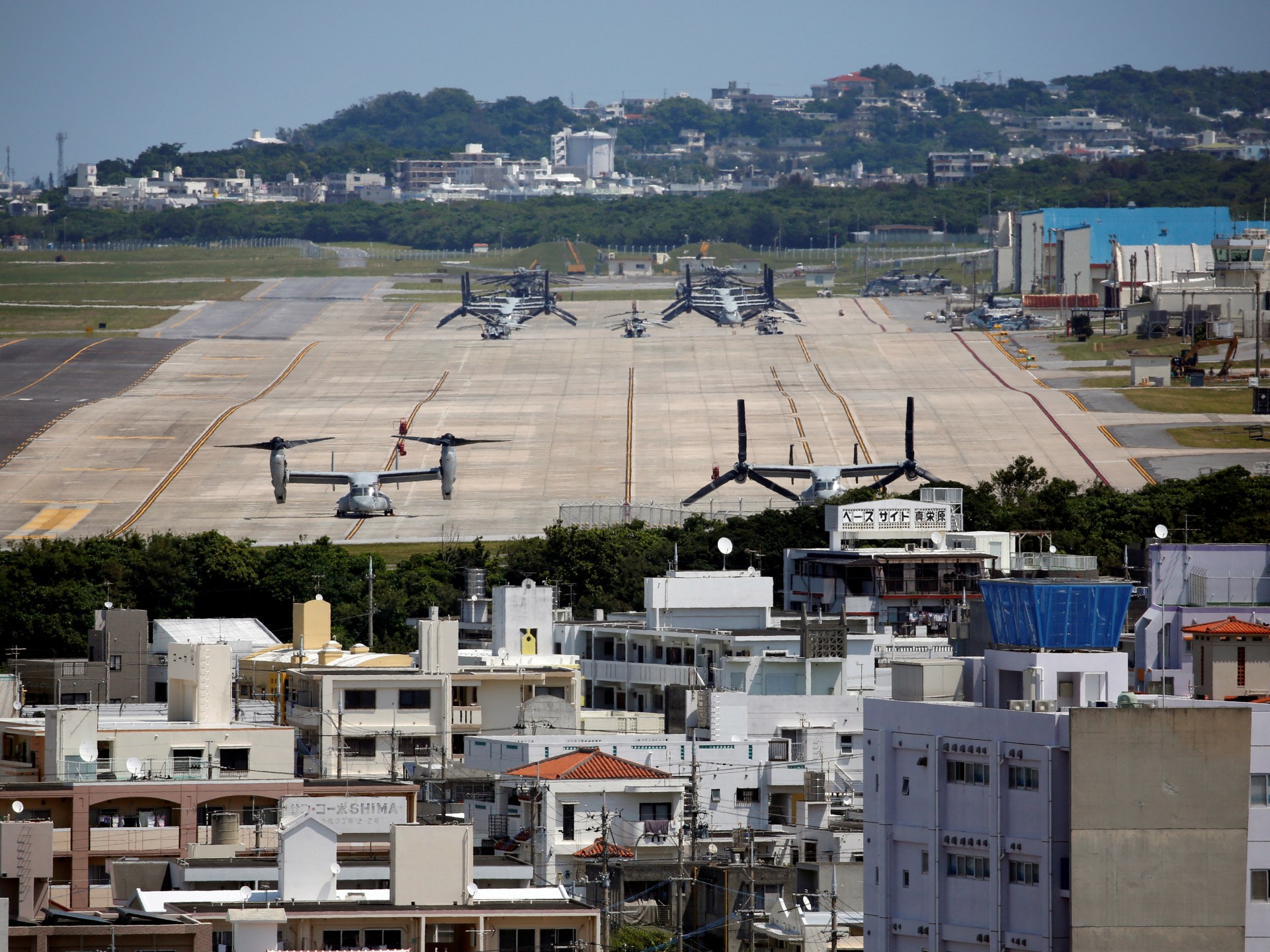
This is not merely a localized criminal case; it is a significant geopolitical event that threatens to destabilize the delicate social and political balance in Okinawa. The island serves as the primary hub for U.S. military operations in the region, hosting the majority of the roughly 54,000 U.S. troops stationed in Japan, including 18,000 Marines.
The incident carries weight because it taps into a decades-old reservoir of resentment among Okinawans. For many residents, the presence of large-scale military installations is viewed as a constant source of anxiety and a threat to public safety. The death of a local citizen at the hands of a foreign service member serves as a catalyst for existing political movements demanding a reduction in the U.S. military footprint.
Historical Context and Criminal Patterns
To understand the current outrage, one must look at the history of U.S. administrative control and the subsequent return of Okinawa to Japanese sovereignty in 1972. Since that handover, the relationship has been punctuated by frequent friction. According to the Yomiuri Shimbun newspaper, approximately 6,000 U.S. military personnel have been arrested in Japan since 1972.
Beyond simple crime statistics, the nature of past incidents has often been particularly sensitive. The article notes that repeated occurrences of sexual crimes and, crucially, the delayed disclosure of such crimes, have deeply angered the Okinawan population. This specific incident, involving a brutal killing and robbery, follows a pattern that local leaders argue the U.S. military has failed to address through its existing discipline and education protocols.
| Key Statistics and Data Points | |
|---|---|
| Total U.S. Personnel in Japan | Approximately 54,000 |
| Total U.S. Marines in Japan | Approximately 18,000 |
| U.S. Military Arrests in Japan (since 1972) | Approximately 6,000 |
| Suspect Age (Devin Jacob Ballard) | 20 |
| Victim Age (Anna Yagi) | 39 |
Stakeholders and Official Reactions
The response to the Okinawa US Marine murder has been swift and divided along diplomatic and regional lines.
The Japanese Central Government
In Tokyo, the reaction has been one of formal, high-level indignation. Prime Minister Sanae Takaichi expressed “profound regret” over what she described as an “extremely brutal and heinous incident.” She emphasized that the government has lodged a strong protest with the United States and is demanding maximum investigative cooperation.
Foreign Minister Toshimitsu Motegi also took a firm stance, summoning U.S. Ambassador George Glass to demand not only cooperation with the current investigation but also a commitment to strengthening discipline among U.S. personnel to prevent future recurrences. Defense Minister Shinjiro Koizumi echoed these sentiments, conveying Japan’s “extremely serious concern” to U.S. military leadership, specifically summoning Lt. Gen. Stephen F. Jost, the Commander of U.S. Forces Japan.
The United States Government
The U.S. diplomatic and military response has focused on damage control and maintaining the alliance through a commitment to the rule of law. Ambassador George Glass expressed his condolences to the victim’s family and confirmed that the U.S. policy is to provide “full cooperation” with the Japanese investigation.

The U.S. Embassy in Japan, via social media, reiterated that they are working with local authorities to “determine the facts of the case.” However, the primary challenge for the U.S. will be demonstrating that this cooperation is substantive, particularly as local Okinawan leaders question the efficacy of U.S. military internal oversight.
The Okinawan Local Government
Perhaps the most vocal criticism has come from the local level. Newly elected Okinawa Governor Genta Koja expressed outrage, stating that the case deals a “major shock” and adds fear to a community that has long been forced to live alongside massive military bases.
Governor Koja did not mince words regarding the U.S. military’s internal management, stating, “I must say, discipline and troop education are not working at all.” This critique highlights a growing sentiment that the U.S. military’s self-regulation is insufficient to protect Japanese citizens.
Analysis: The Futenma and Henoko Complication
The murder occurs at a time when the relocation of the Futenma base is a central, unresolved political issue. Located in a densely populated area of central Okinawa, Futenma has been a “sore spot” for decades. The central Japanese government has approved a plan to relocate the base to Henoko, on Okinawa’s eastern coast, but the project has faced persistent delays and local opposition.
Violent incidents involving U.S. personnel often serve to stall these relocation projects by increasing local resistance to any continued or expanded military presence. If the investigation into Ballard reveals systemic failures in how the U.S. military monitors its personnel, it could provide significant political ammunition to those seeking to move U.S. forces out of Okinawa entirely. The incident places the central government in a difficult position: they must maintain the security alliance with the U.S. while addressing the legitimate safety concerns of Okinawan voters.
What It Means for You
For Residents of Okinawa
If you live in Okinawa, expect an increased presence of law enforcement and potentially heightened security measures around military installations in the coming weeks. The psychological impact of this event may also lead to increased community organizing and protests regarding base relocation and the Status of Forces Agreement (SOFA).
For U.S. Military Personnel
Service members stationed in Japan should expect a significant tightening of discipline, training, and oversight. The U.S. military command is under intense pressure from both the Japanese central government and local leaders to prove that its personnel are adhering to the highest standards of conduct. Expect more frequent briefings on local laws and increased scrutiny of off-base activities.
For Diplomatic and Policy Observers
Watch for any shifts in how the Status of Forces Agreement (SOFA) is managed. This incident may trigger renewed debates in Tokyo about the level of autonomy U.S. forces should have while operating on Japanese soil, particularly regarding how investigations are handled and how suspects are transferred.
Counterpoints and Open Questions
While the evidence presented by local media and police is compelling, several questions remain unanswered:
What Happens Next
Several key developments will serve as indicators of how this crisis evolves:
Frequently Asked Questions
Who is the suspect in the Okinawa murder?
The suspect is Lance-Corporal Devin Jacob Ballard, a 20-year-old member of the U.S. Marine Corps. He was arrested by Okinawa prefectural police on suspicion of robbery and the murder of Anna Yagi.
Why is this incident causing a diplomatic crisis?
The incident is significant because it involves a U.S. service member committing a violent crime against a Japanese citizen on Okinawa, an island with a long history of tension regarding the U.S. military presence. It has prompted formal protests from Japan’s Prime Minister and Defense Minister, demanding better discipline and cooperation.
What is the current status of the investigation?
The investigation is ongoing. While Ballard has been arrested and CCTV footage has been cited by media outlets, the suspect has denied all charges. Japanese authorities are working to confirm the cause of death and the full details of the robbery.
How many U.S. troops are in Okinawa?
While exact numbers for the island specifically fluctuate, there are approximately 54,000 U.S. military personnel stationed in Japan, with the majority of these forces based in Okinawa. This includes about 18,000 Marines.
As the investigation continues, the focus will remain on the intersection of criminal justice and international diplomacy. The resolution of the case against Ballard will likely have lasting implications for the U.S.-Japan security alliance and the future of the military presence in Okinawa.
References
Featured image: Photo by RDNE Stock project on Pexels