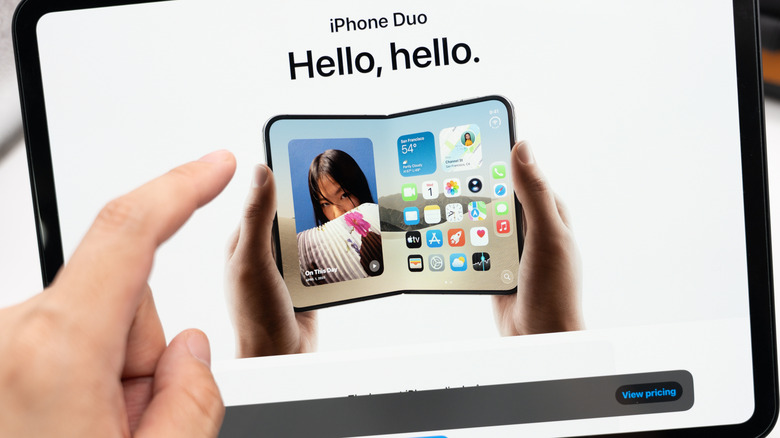
The iphone Duo foldable market is poised for a massive transformation following Apple’s recent unveiling of its first foldable smartphone, a move that has sent ripples through the entire mobile industry. Announced during the company’s “Surprise and Shine” keynote in early September 2026, the iPhone Duo represents Apple’s official entry into a category long dominated by Android manufacturers, most notably Samsung. While Apple is a late entrant to the folding form factor, the sheer scale of its ecosystem and the anticipated consumer interest suggest that its arrival will do more than just add a new competitor; it may fundamentally reshape how the industry approaches foldable hardware and software.
Key Takeaways
- Market Entry: Apple officially announced the iPhone Duo in early September 2026, with pre-orders expected to begin on October 16 and a full release on October 23, 2026.
- Pricing Tiers: The iPhone Duo enters the market at a premium price point, starting at $1,999 for the 256GB model and reaching $3,199 for a 2TB version.
- Competitive Landscape: Samsung currently leads the segment with the Galaxy Z Fold 8 and Z Fold 8 Ultra, offering more mature software and a lower entry price of $1,899.
- The “Halo Effect”: Google leadership anticipates that Apple’s involvement will validate the foldable category and drive increased developer interest in app optimization.
- Technical Innovations: Apple is utilizing a matte nano-texture display to minimize the visible screen crease, a major pain point for existing foldable users.
- Market Impact: Analysts from Counterpoint estimate Apple could capture as much as 25% of the foldable market within a single year of launch.
- Developer Response: Keep an eye on whether major app developers (like Netflix or Slack, which have already shown optimization for the Duo) release new, foldable-specific updates for iOS.
- Samsung’s Reaction: Monitor whether Samsung responds to Apple’s entry with aggressive pricing or new hardware iterations to maintain its multitasking lead.
- Market Share Shifts: Industry analysts will be closely watching the first quarter of 2027 to see if Counterpoint’s prediction of a 25% market share capture for Apple holds true.
- www.aol.com
- www.androidcentral.com
- www.bgr.com
- mashable.com
- www.cnet.com
- www.engadget.com
What Happened: The Arrival of the iPhone Duo
In early September 2026, Apple disrupted the smartphone landscape by announcing the iPhone Duo, its first device featuring a folding display. The announcement, which took place during a surprise keynote, has immediately sparked intense debate regarding both the device’s design and its branding. While the technology itself is not considered a radical departure from existing foldables, the entry of the world’s most influential smartphone manufacturer is viewed as a watershed moment for the segment.
One of the immediate points of contention following the announcement has been the device’s name. According to reports from AOL and Engadget, a significant number of internet users have accused Apple of “copycat naming,” suggesting the “Duo” moniker is a derivative of Microsoft’s Surface Duo line. However, defenders of the Apple brand point to the company’s long history with the name. Apple previously released the PowerBook Duo, a compact laptop-style computer, between 1992 and 1997, and more recently introduced the MagSafe Duo Charger in 2020.
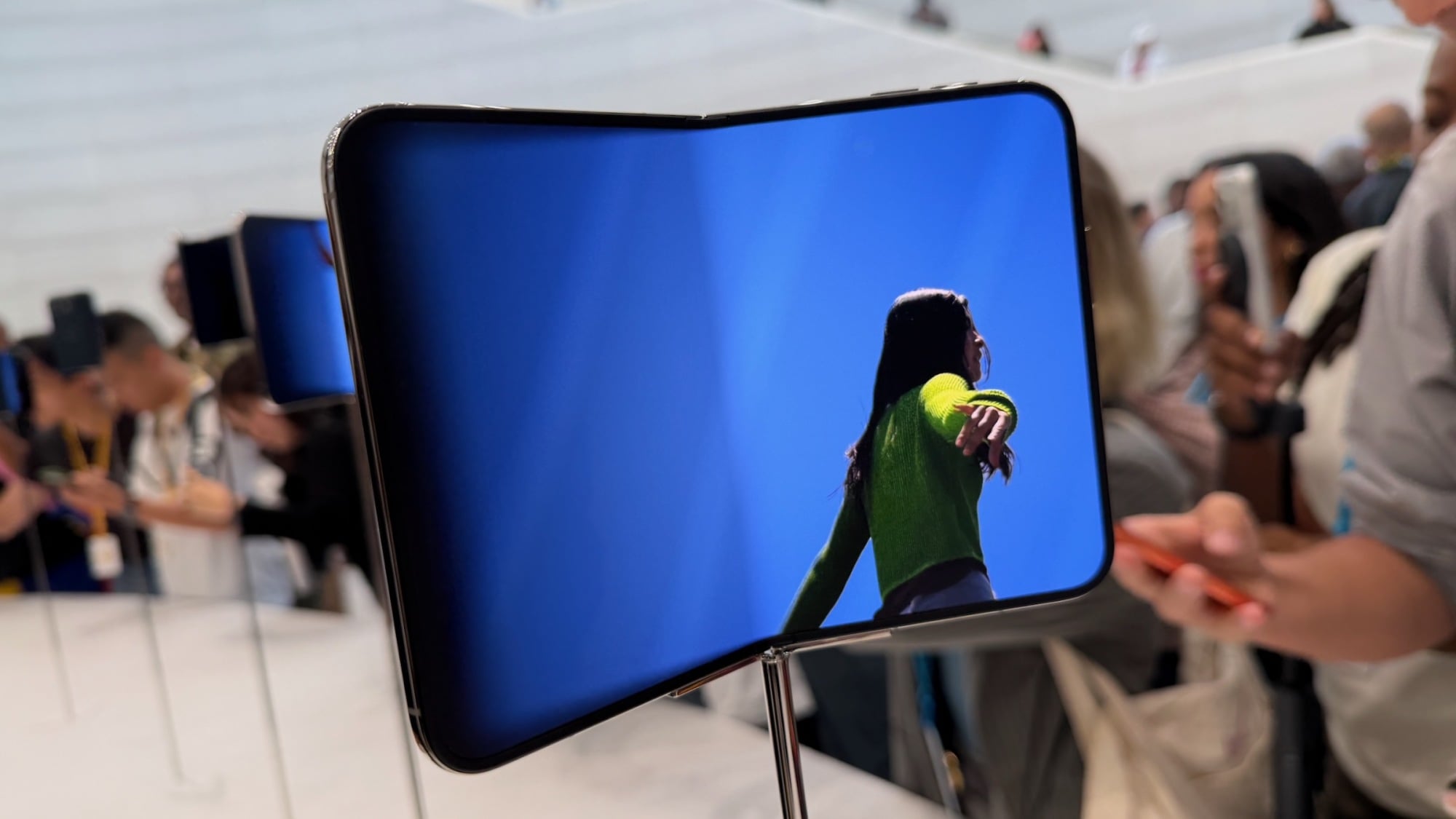
As the industry prepares for the official release on October 23, 2026, the focus has shifted from the naming controversy to the intense technical competition between Apple and established leaders like Samsung.
Why It Matters: Validating a Niche Category
For years, foldable phones have occupied a relatively small slice of the global smartphone market. According to data from IDC, approximately 20.6 million foldable phones were shipped last year. While significant, this figure is a mere fraction of the 1.25 billion total global smartphone shipments recorded in the same period. This disparity highlights the niche status of the foldable format, which has struggled to move from an enthusiast curiosity to a mainstream staple.
Apple’s entry is expected to provide what Android President Sameer Samat describes as a “long-awaited validation” of the foldable form factor. Speaking via Tom’s Guide, Samat suggested that Apple’s presence will create a “halo effect.” The theory suggests that as Apple brings mainstream attention and massive consumer interest to foldables, the total pool of interested buyers will expand, ultimately benefiting Android manufacturers who have spent years pioneering the technology.
Furthermore, the entry of a major player like Apple provides a critical economic incentive for software developers. Currently, a significant criticism of Android foldables is that many apps appear as merely “stretched-out” versions of standard smartphone interfaces. Google has noted that it is actively working with developers to improve this, but the influx of Apple users is expected to provide the necessary scale and financial motivation for developers to build truly optimized, foldable-first applications.
Deep-Dive: Hardware and Software Comparison
To understand the scale of the competition, it is necessary to look at the technical specifications and design philosophies of the primary players in the 2026 market. The iPhone Duo and the Samsung Galaxy Z Fold 8 represent two very different approaches to the premium foldable experience.
Design and Ergonomics
According to early hands-on demonstrations reported by Mashable, the iPhone Duo and the Galaxy Z Fold 8 series cater to different ergonomic preferences. The iPhone Duo is described as having a “sleek, futuristic look” with a “sculptural shape,” featuring rounded corners and a unique D-shaped outer display. It is positioned as a compact, versatile, and highly durable device, holding an IP68 rating for dust and water resistance.
In contrast, the Samsung Galaxy Z Fold 8 is characterized as “boxy and utilitarian.” Samsung has prioritized portability and thinness; the Z Fold 8 is significantly lighter at 201 grams compared to the iPhone Duo’s 254 grams, and it is thinner when unfolded (4.5mm versus the Duo’s 5.2mm). While the Samsung device is highly capable, its IP48 rating offers less protection against dust and sand compared to Apple’s IP68 standard.
Display Technology and the Crease Problem
One of the most significant technical battles is occurring on the screen. While both devices feature 7.6-inch inner displays and approximately 5.5-inch outer displays with 120Hz refresh rates, the implementation differs. Apple has integrated “nano-texture” technology into its Super Retina XDR display. This matte layer is designed to minimize reflections and make the screen crease nearly invisible.
While Samsung utilizes high-quality AMOLED displays with an anti-reflective coating that makes the crease “nearly invisible,” early assessments from Mashable suggest that Apple’s combination of Liquid Glass and nano-texture may be difficult for competitors to match in terms of visual seamlessness.
Technical Specifications at a Glance
| Feature | Apple iPhone Duo | Samsung Galaxy Z Fold 8 | Samsung Galaxy Z Fold 8 Ultra | Motorola Razr Fold | Google Pixel 11 Pro Fold |
|---|---|---|---|---|---|
| Starting Price | $1,999 | $1,899 | $2,100 | $1,899 | $1,899 |
| Inner Display | 7.6″ Super Retina XDR | 7.6″ AMOLED | 8.0″ AMOLED | 8.1″ Inner | 8.0″ Inner |
| Outer Display | 5.4″/5.5″ Super Retina | 5.5″ AMOLED | 6.5″ AMOLED | 6.6″ Outer | 6.5″ Outer |
| Processor | Apple A20 Pro | Snapdragon 8 Elite Gen 5 | Snapdragon 8 Elite Gen 5 | Snapdragon 8 Elite | Tensor G6 |
| RAM | 12GB – 24GB | 12GB | 12GB – 16GB | 16GB | 16GB |
| Main Camera | 48MP Main / 48MP UW | 50MP W / 50MP UW | 200MP W / 50MP UW / 10MP T | Triple 50MP | AI-Optimized |
| Battery | Not stated | 4,800 mAh | 5,000 mAh | 6,000 mAh | Not stated |
| Durability | IP68 | IP48 | IP48 | Not stated | Not stated |
Software: Ecosystems and Multitasking
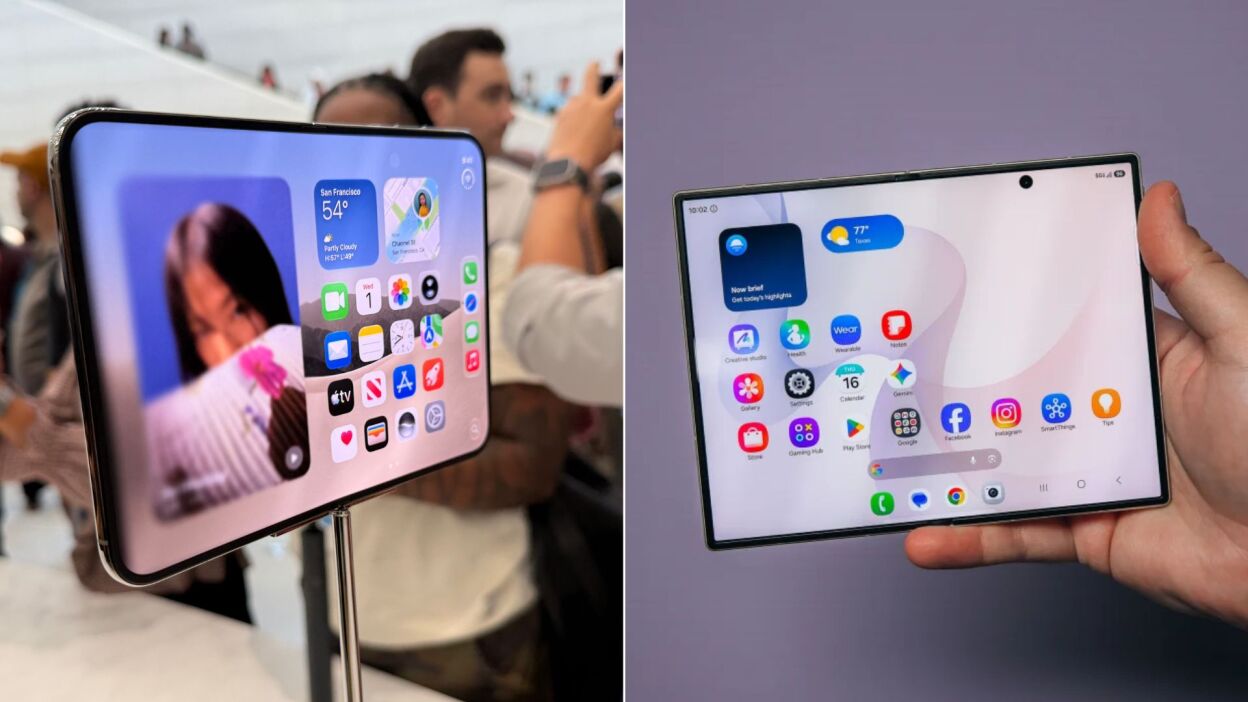
The battle for dominance will also be fought in the software layer. Apple is launching the iPhone Duo with iOS 27, introducing a new “StandBy mode” specifically designed for the foldable format. According to official Apple descriptions, this mode allows the device to function as a smart utility when not in active use, acting as a clock, photo frame, or a display for weather, calendars, and widgets.
Samsung, on the other hand, continues to lean into its established multitasking ecosystem. Running Android 17 with One UI 9, the Galaxy Z Fold 8 is optimized for side-by-side app usage and can handle up to three apps simultaneously. While Apple’s multitasking is currently reported to be limited to a maximum of two apps, the integration of “Apple Intelligence” and Siri AI is expected to provide a highly fluid user experience within the iOS ecosystem.
What It Means for You
The best choice in the 2026 foldable market depends entirely on your specific usage patterns and priorities.
If you are a Power User or Media Consumer:
You may find the Samsung Galaxy Z Fold 8 Ultra to be the superior option. Its massive 8-inch internal display, superior triple-lens camera system (including a 200MP wide-angle lens), and ability to run up to three apps at once make it a true mobile workstation. It is also better suited for high-resolution video capture, supporting up to 8K at 30 fps.
If you are a Commuter or Durability-Focused User:
The Apple iPhone Duo is likely your best bet. Its more compact, “palm-sized” design makes it significantly easier for one-handed use during transit. Furthermore, its IP68 rating provides much higher peace of mind if you frequently find yourself in dusty or wet environments.
If you are a Budget-Conscious User:
You should look toward the Motorola Razr Ultra (2026). Starting at $1,499, it is approximately $500 cheaper than the iPhone Duo while still offering a premium experience with a 4-inch outer display and a highly portable “flip” form factor.
Counterpoints and Open Questions
Despite the excitement, Apple’s entry is not without its critics. One of the most significant drawbacks of the iPhone Duo is its lack of a telephoto lens, a feature that competitors like Samsung and Google include to provide better optical zoom capabilities. For users who prioritize photography, this could be a dealbreaker.
Additionally, the pricing strategy remains a point of contention. At a $1,999 starting price, the iPhone Duo is the most expensive premium foldable on the market, even outpricing the Samsung Galaxy Z Fold 8 Ultra. Consumers will have to decide if the benefits of the iOS ecosystem and the nano-texture display are worth the premium.
There are also lingering questions regarding the long-term durability of Apple’s new hinge mechanism. While the device carries an IP68 rating, the industry has seen various manufacturers struggle with hinge longevity over several years of use. Whether Apple’s hardware can withstand the rigors of daily folding remains to be seen in long-term independent testing.
What Happens Next
The immediate timeline for consumers is clear: pre-orders for the iPhone Duo are scheduled to begin on October 16, 2026, followed by the official retail launch on October 23, 2026.
In the broader industry, watch for the following signals:
Frequently Asked Questions
How much does the iPhone Duo cost?
The iPhone Duo starts at $1,999 for the 256GB base model. Apple also offers higher storage tiers, including a 512GB model for $2,199, a 1TB model for $2,599, and a premium 2TB version for $3,199.
Is the iPhone Duo better than the Samsung Galaxy Z Fold 8?
It depends on your needs. The iPhone Duo is more compact, has a superior IP68 dust and water resistance rating, and features a matte nano-texture display to hide the screen crease. However, the Samsung Galaxy Z Fold 8 is lighter, thinner, and offers a more mature multitasking experience with more app support.
When can I buy the iPhone Duo?
Pre-orders for the iPhone Duo are scheduled to begin on October 16, 2026. The device will be officially available in stores on October 23, 2026.
Does the iPhone Duo have a telephoto camera?
No. Unlike the Samsung Galaxy Z Fold 8 Ultra, which features a triple-lens system including a telephoto lens, the iPhone Duo is equipped with a dual rear-camera system consisting of a 48MP main camera and a 48MP ultra-wide camera.
As the foldable market transitions from a niche experiment to a mainstream battleground, the iPhone Duo stands as a pivotal device
References
Featured image: Image via BGR