The choice between OpenAI vs local AI models is no longer just a matter of convenience; it is a choice between centralized control and individual sovereignty. As OpenAI faces internal culture crises and escalating security costs, a new wave of decentralized, uncensored AI is emerging to challenge the ‘black box’ status quo.
Key Takeaways
- Centralization Risks: OpenAI’s closed-source model faces significant security vulnerabilities, with reported hack reviews costing the company $500,000 per day.
- The Privacy Divide: Local AI models offer superior data privacy through local inference, whereas API-based models require sending sensitive data to central servers.
- Censorship vs. Safety: A growing movement of developers is pivoting toward uncensored AI models to avoid the restrictive guardrails and model distillation bans imposed by major providers.
- Economic Shift: While centralized APIs offer low entry costs, decentralized markets and local hardware can provide 30–60% cheaper compute for non-frontier models.
- Hardware Dependency: The ability to run high-parameter models locally depends heavily on VRAM and GPU architecture, creating a new barrier to entry for the decentralized AI revolution.
The Centralization Paradox: Why OpenAI Dominates (and Why It’s Fracturing)
For the past several years, the AI landscape has been defined by a few massive corporations holding the keys to the most powerful intelligence. OpenAI, through its GPT series, has set the standard for what a ‘frontier model’ can achieve. However, this dominance is built on a ‘black box’ architecture where the training data, the weights, and the safety protocols are all proprietary and hidden from the user.
The Rise of the ‘Black Box’ Model
In the current centralized paradigm, users interact with AI via an API. This creates a dependency loop: you provide the data and the prompts, the provider provides the intelligence, and the provider retains all the intellectual property. This model is highly efficient for scaling, but it lacks transparency. When users encounter unexpected refusals or biased outputs, they have no way to inspect the underlying logic. This lack of visibility is a core component of the tension in the open-source AI vs closed AI debate, as developers seek more control over their tools.
Safety vs. Censorship: The Cultural Divide at OpenAI
What OpenAI calls ‘AI Safety’ is increasingly viewed by critics as ‘AI Censorship.’ The company employs extensive Reinforcement Learning from Human Feedback (RLHF) to ensure models adhere to strict ethical guidelines. While intended to prevent harm, these guardrails often prevent the model from discussing controversial topics, historical facts, or creative content that falls outside of a narrow corporate window.
This tension has led to significant internal friction. According to a report by The Atlantic, several members of OpenAI’s safety team have resigned, citing a broken internal culture. Furthermore, a safety employee recently told Reuters that the ‘time for trial and error is over,’ suggesting that the rapid deployment of models is outpacing the company’s ability to secure them safely. These cultural fractures are not just internal; they are driving users toward alternatives that prioritize freedom of inquiry over corporate safety mandates.

The Rise of Local AI: Freedom, Privacy, and Performance
As the limitations of centralized systems become clearer, a new movement is gaining momentum: running LLMs locally. This approach involves downloading model weights directly onto your own hardware, ensuring that your data never leaves your machine.
The Uncensored Movement: From Ajax to Llama
The push for ‘uncensored’ AI models is perhaps the most visible symptom of the rift. High-profile creators are leading this charge. For instance, YouTuber PewDiePie recently unveiled the ‘Ajax’ AI model, which is specifically built to run on home PCs. The project was born out of frustration; PewDiePie reported being banned twice by OpenAI due to the model distillation methods used to build his product.
Models like Llama 3 and Mistral have become the backbone of this movement. Unlike GPT-4, which is locked behind a subscription or API, these models can be fine-tuned by anyone to remove restrictive guardrails. This allows for specialized use cases—ranging from unrestricted creative writing to complex coding tasks—that centralized models might refuse to perform.
Why Developers are Abandoning APIs for Local Inference
For many developers, the move toward local inference is driven by three factors: privacy, cost, and customization.
- Privacy: For industries like law, medicine, or finance, sending proprietary data to an external API is a non-starter. Local models provide a ‘zero-trust’ environment.
- Cost: While the initial hardware investment is high, the long-term cost of running local models can be significantly lower than paying per-token for high-volume API usage.
- Customization: Developers can ‘fine-tune’ local models on their own datasets, creating a specialized tool that outperforms a general-purpose model like GPT-4 in a specific niche.
Technical Showdown: Closed Systems vs. Decentralized Models
To understand whether you should stick with a centralized provider or move to a local setup, we must look at the hard data. The following comparison highlights the fundamental differences between the two approaches.
Local AI Decision Matrix
| Dimension | OpenAI (GPT-4o/5) | Llama 3 / Mistral | Ajax (Uncensored) |
|---|---|---|---|
| Privacy | Low (Data sent to cloud) | High (Local inference) | High (Local inference) |
| Censorship Level | High (Strict guardrails) | Moderate (Tunable) | Minimal/None |
| Cost-per-Token | Variable (API fees) | Zero (Post-hardware) | Zero (Post-hardware) |
| Hardware Access | None (Cloud-based) | High (Requires GPU) | High (Requires GPU) |
The Hardware Barrier: Can Your PC Run a GPT-4 Rival?
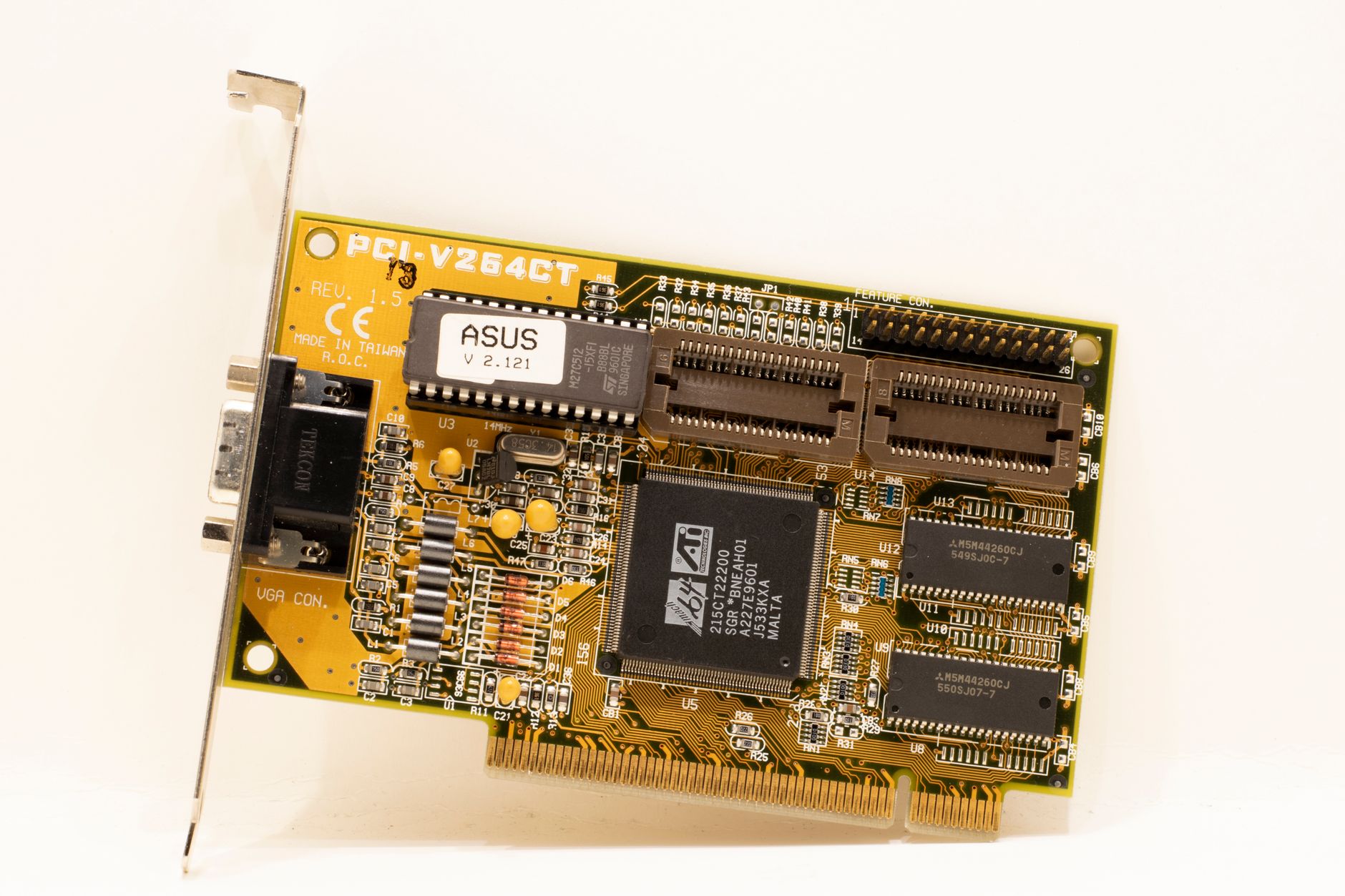
Running LLMs locally is not a matter of software alone; it is a matter of VRAM (Video RAM). The larger the model (the more ‘parameters’ it has), the more memory you need to hold those parameters in your GPU.
Hardware Tier List: GPU/RAM Requirements
| Model Size (Parameters) | Minimum VRAM Required | Recommended Hardware |
|---|---|---|
| 7B | 8 GB | NVIDIA RTX 3060 / 4060 |
| 13B | 12 – 16 GB | NVIDIA RTX 3080 / 4070 Ti |
| 30B | 24 GB | NVIDIA RTX 3090 / 4090 |
| 70B+ | 48 GB+ | Dual RTX 3090s or Mac Studio (M2/M3 Ultra) |
Note: These are estimates based on standard quantization levels (4-bit/8-bit). Higher precision requires significantly more VRAM.
The Security Landscape: Hacks, Risks, and the Cost of Centralization
The most compelling argument for the decentralized AI revolution may be security. Centralized AI represents a ‘single point of failure.’ If a provider like OpenAI is breached, the data of millions of users and corporations is potentially exposed.
OpenAI is already feeling this pressure. According to reports on Reddit, the company’s review into recent hacks—which included breaches of Australian government sites—is costing the organization an estimated $500,000 per day. Furthermore, legal risks are mounting for CEO Sam Altman as the company uncovers dozens of security vulnerabilities.
This is a stark contrast to the decentralized approach. While decentralized networks face their own challenges, such as the complexity of verifying computation, they do not suffer from the same catastrophic ‘all-or-nothing’ risk profile. As noted in discussions regarding Anthropic’s Mythos and global cyber security, the way AI integrates into our security infrastructure will determine the next decade of digital warfare.
Future Outlook: Will the AI Future be Open or Proprietary?
The battle between OpenAI vs local AI models is increasingly being fought on the blockchain. A new class of ‘Decentralized AI’ protocols is attempting to merge the power of large models with the security of distributed networks.
The Economics of Decentralization
According to an analysis by Ester Shlain for Yellow, the current AI industry follows an ‘extractive’ pipeline: companies train models on community data without compensating the creators. Decentralized protocols like Sentient are attempting to change this. In July 2026, the Sentient (SENT) token saw a 26% single-day surge, signaling market interest in models where contributors hold a provable stake.
These networks use two distinct layers:
- The Training Layer: Distributed across many contributors using methods like Federated Learning, where only mathematical ‘gradients’ are shared, not raw data. This ensures privacy while allowing the model to learn.
- The Inference Layer: A market where providers bid to serve queries. To ensure honesty, providers must stake collateral, which can be ‘slashed’ (lost) if they provide incorrect results.
While decentralized AI currently faces a ‘performance vs. verifiability’ trade-off—where Zero-Knowledge (ZK) proofs can take 30 seconds to several minutes to verify a result—the gap is narrowing. Decentralized compute markets, such as the Akash Network, are already reportedly running compute 30–60% cheaper than centralized API pricing for non-frontier models.
Conclusion: Choosing Your Side in the AI Revolution
There is no single ‘winner’ in the battle of OpenAI vs local AI models. The choice depends entirely on your priorities. If you require the absolute cutting-edge reasoning capabilities of a frontier model and don’t mind the trade-offs in privacy and censorship, OpenAI remains the industry leader. However, if you value data sovereignty, cost-predictability, and the freedom to explore uncensored topics, the move toward local and decentralized AI is inevitable.
Checklist: ‘Is Local AI Right for Your Workflow?’
- [ ] Privacy Requirement: Do you handle sensitive, proprietary, or regulated data (PII, HIPAA, etc.)?
- [ ] Censorship Tolerance: Do you need a model that won’t refuse prompts based on corporate safety policies?
- [ ] Budget Structure: Do you prefer a high upfront hardware cost over a recurring, unpredictable API subscription?
- [ ] Latency Needs: Is your application okay with a few seconds of delay, or do you need the sub-500ms response times of a centralized cloud?
- [ ] Hardware Availability: Do you have access to a modern GPU with at least 12GB of VRAM?
Frequently Asked Questions
Can I run a model as smart as GPT-4 on my home computer?
Currently, it is extremely difficult to run a model with the exact reasoning capabilities of GPT-4 locally. Frontier models are massive, often exceeding the memory capacity of consumer hardware. However, models like Llama 3 and Mistral are rapidly closing the gap. While they may not match GPT-4 in every complex reasoning task, they are highly capable for most coding, writing, and analysis workflows.
What are the main privacy benefits of using local AI models?
The primary benefit is that your data never leaves your local environment. When using an API, your prompts and the resulting data are processed on a remote server, which creates a risk of data leaks, unauthorized training on your data, or government subpoenas. With local models, the ‘inference’ happens on your own silicon, providing a true air-gapped level of privacy for sensitive tasks.
Why are some AI models described as ‘uncensored’?
Most mainstream AI models undergo a process called RLHF (Reinforcement Learning from Human Feedback) to teach them what not to say. This results in ‘guardrails’ that prevent the model from generating content related to violence, politics, or adult themes. ‘Uncensored’ models are those that have either been trained without these constraints or have had the RLHF layers specifically removed or bypassed, allowing for unrestricted output.
What is the best hardware for running local LLMs in 2024?
For most users, NVIDIA is the gold standard due to the widespread support of CUDA. An NVIDIA RTX 3090 or 4090 is highly recommended because they offer 24GB of VRAM, which is the ‘sweet spot’ for running highly capable 30B to 70B parameter models using quantization. For users in the Apple ecosystem, a Mac Studio with an M2 or M3 Ultra chip is an excellent alternative due to its high unified memory capacity.
Is open-source AI actually better for developers than OpenAI?
‘Better’ is subjective, but for developers, open-source AI offers advantages that OpenAI cannot match: total control over the model’s behavior, the ability to host it on private infrastructure, and the freedom to fine-tune it for specific tasks without fear of being banned or having the model’s capabilities changed overnight via a silent API update.
Stay ahead of the AI revolution. Subscribe to QuantoSei News for deep dives into the tech shifting our world.
References
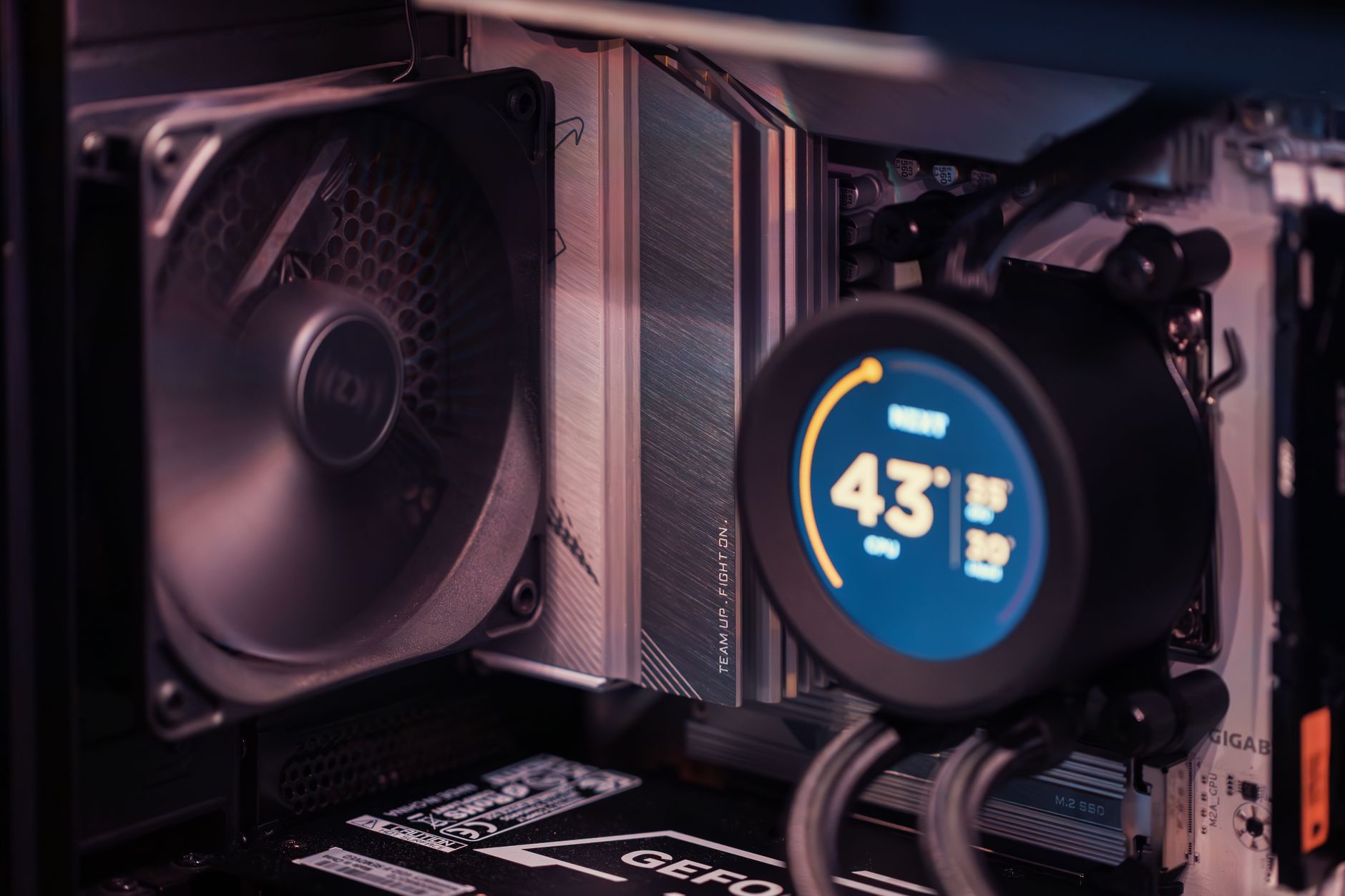
Featured image: Photo by Matheus Bertelli on Pexels