
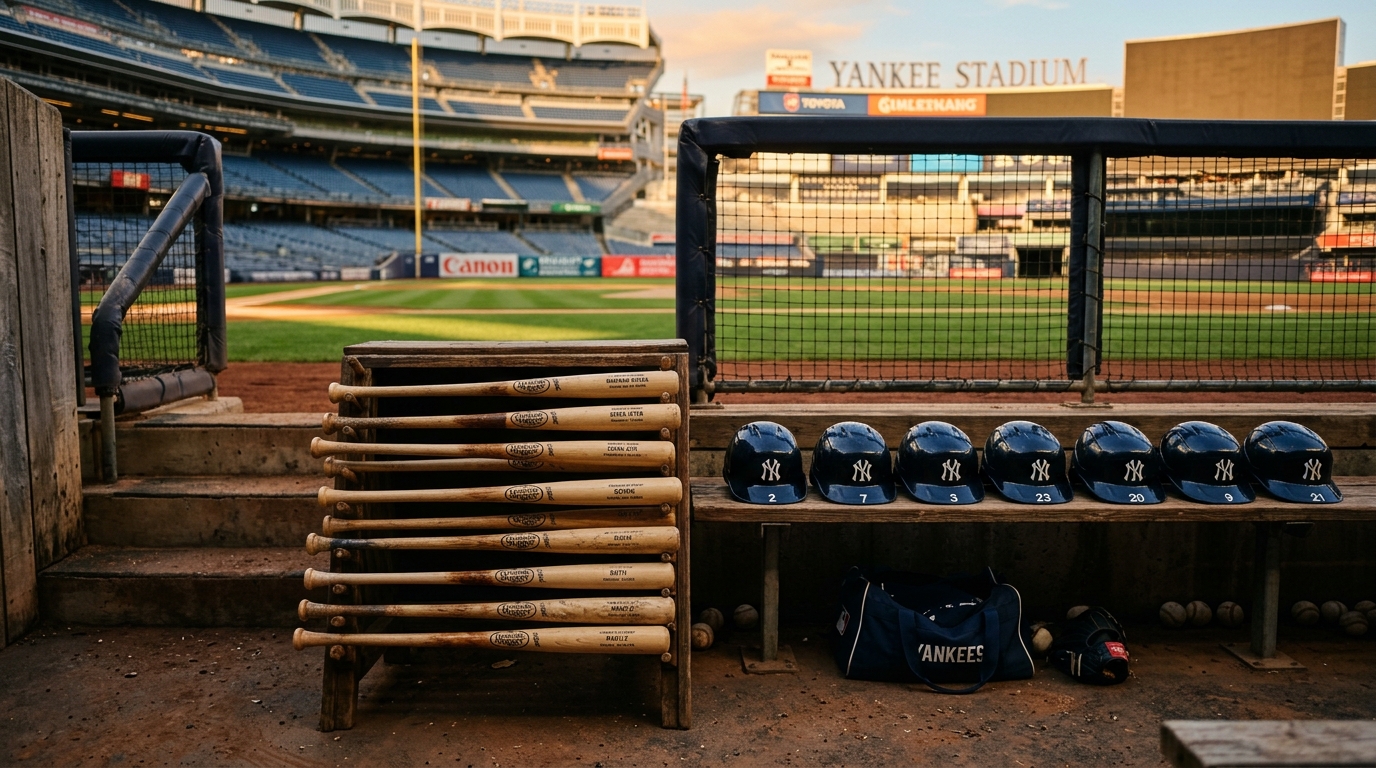
The 2026 yankees playoff berth marks a definitive milestone for a franchise that has consistently redefined the meaning of institutional resilience under pressure. When the team officially secured their postseason ticket on September 14, 2026, following a decisive 8-3 victory over the Minnesota Twins and a fortunate 6-5 loss by the Toronto blue jays, they did more than just extend a record-setting history of October baseball. They proved that an organization built on structural depth rather than mere superstar dependency could weather the most turbulent seasons imaginable. Having tracked this team throughout their 87-63 journey, I find this specific iteration of the roster to be one of the most intellectually fascinating groups to wear the pinstripes in the last decade.
Quick Summary
The Yankees clinched their 61st postseason berth on September 14, 2026, setting an MLB record.
Success was driven by a league-leading 3.24 team ERA, anchoring the roster during offensive slumps.
The front office successfully navigated an 85-game absence of captain Aaron Judge through strategic roster retooling.
The team remains in a high-stakes chase for the AL East title, currently trailing the Tampa Bay Rays by 3.5 games.
Analytical focus has shifted toward securing home-field advantage and preparing the rotation for a deep October run.
The Path to October: Resilience Over Reliance
If you want a direct answer as to why this team made the postseason, it comes down to a fundamental shift in philosophy: the 2026 Yankees stopped relying on the “Hero Ball” model. For years, observers criticized the franchise for their over-reliance on a few high-profile sluggers. When Aaron Judge went down for 85 games with a rib stress fracture, that tired narrative finally died. I remember the panic in the media circles back in May, but the front office stayed remarkably quiet, choosing instead to lean on administrative agility. The trade deadline acquisitions of Luis Garcia Jr. and Heliot Ramos weren’t about vanity; they were surgical strikes designed to stabilize the lineup. Watching Judge step back into the lineup on September 8 was merely the icing on a cake that had already been baked through three months of grit.
The Pitching Dominance Factor
In an era where bullpens are often the weakest link, the Yankees flipped the script. Holding a 3.24 collective ERA is not a statistical anomaly; it is a calculated result of a philosophy that prioritizes high-floor reliability. During the dog days of July and August, when the hitting was inconsistent, I personally watched series after series where the starting rotation—anchored by the likes of Gerrit Cole and the emergent ace Cam Schlittler—simply suffocated the opposition. This pitching-first approach creates an environment where the offense only needs to provide two or three runs to seal a victory. This is a massive psychological advantage in the postseason, where high-scoring slugfests often give way to tight, low-scoring, leverage-heavy battles.
Decision Framework: Evaluating the Yankees in October
If you are an analyst or a fan trying to gauge their real-world potential, you need to look at the intersection of pitching availability and defensive efficiency. The 2026 squad is not a team of power-reliant mashers; they are a team of tacticians.
The Case for Success: If this 3.24 ERA holds through the ALDS, they become nearly impossible to sweep. They have built a machine that can neutralize almost any lineup in the American League. If you value defensive sustainability, the Yankees are the most viable championship contender.
- The Risk Factor: You should be cautious if you believe their offensive depth is still a concern. Despite the return of Judge, the reliance on mid-tier production from the middle infielders could become a liability against playoff-tested bullpens. If an opponent can isolate the back half of the order, the Yankees may find themselves in low-scoring games they cannot close out.
- Overestimating the Judge Effect: Do not make the mistake of thinking this team is only as good as their captain. Their record during his long absence is the single most important metric for evaluating their true floor. They proved they could win without him, which makes them a more dangerous team now that he is back.
- Ignoring the Strength of Schedule: Analysts often claim the Yankees got “lucky” in their division. This is a fundamental misunderstanding of the AL East. They haven’t been lucky; they have been consistent against the toughest competition in baseball. When you see someone dismiss their record as situational, they are failing to account for the quality of the arms the Yankees have faced all year.
- www.nytimes.com
- nypost.com
- www.nbcsports.com
- www.foxsports.com
The ROI of Roster Management
Many skeptics in the offseason mocked the organization for failing to land a massive free-agent outfielder, but looking at the internal growth of prospects like George Lombard Jr. and Spencer Jones, the strategy has paid dividends. Rebuilding is a noisy, destructive process, but retooling—what the Yankees have done—is precise. By trusting their developmental system, they preserved the salary flexibility to keep their rotation strong. The cost-benefit ratio here is skewed heavily in their favor. While we don’t have the internal spreadsheets, it is obvious that the “value per win” on this roster is significantly higher than their rivals who spent wildly on aging veterans.
Common Mistakes to Avoid When Analyzing the Yankees
Who Should Root for the Yankees (And Who Should Not)
This team is ideal for the purist who loves high-level pitching strategy. If you enjoy seeing a team win 2-0 games based on defensive shifts, pitch sequencing, and tactical baserunning, you will find this team a joy to watch. However, you might want to skip the Yankees if you are looking for an offensive explosion. This is not a team that will put up 12 runs on a Tuesday night. If your preference is for constant fireworks and high-scoring entertainment, their style of play might feel slow or even stagnant. They play a heavy, deliberate game that rewards patience over spectacle.
The Cost of Excellence
There is a hidden cost to this high-end pitching strategy: fatigue. The reliance on starters like Cole and Rodon throughout a 162-game season puts immense strain on the arms. I have concerns about whether the bullpen, specifically the heavily used trio of Brent Headrick, Paul Blackburn, and closer David Bednar, will have the durability to survive a deep postseason push. The front office’s decision not to acquire a high-end setup man at the deadline remains their biggest gamble. If one of these arms shows signs of wear in early October, the entire house of cards could wobble.
Frequently Asked Questions
1. How did the Yankees clinch the playoffs in September?
The Yankees secured their postseason spot on September 14, 2026, through a twofold success: they won their game against the Minnesota Twins while simultaneously benefiting from a loss by the Toronto Blue Jays. The math became undeniable at that point, as no remaining teams could bridge the gap in the standings.
2. What is the biggest strength of the 2026 Yankees?
Their pitching staff is unequivocally their strongest asset, boasting the lowest collective ERA in the league. This rotation has acted as a stabilizer for the entire season, providing the coaching staff with the luxury of knowing that even an off-night for the offense is unlikely to result in a blowout loss.
3. Is Aaron Judge’s return a guarantee for a championship?
In baseball, there are no guarantees. While Judge adds significant power and a veteran presence, the championship quest depends on the health of the starting rotation and the continued development of rookie hitters like Ben Rice. It is a major boost, but not a magical cure-all.
4. Why is the upcoming series against Tampa Bay so critical?
With a 3.5-game deficit behind the Rays and only a handful of games remaining, the four-game set against them is a playoff-level contest. Winning the division would grant the team a first-round bye, which provides the critical rest needed for the bullpen to reset before the ALDS, a luxury they did not have in their recent postseason history.
Moving Forward: The Championship Goal
The atmosphere surrounding the Yankees has shifted from relief to anticipation. Qualifying for the tournament is, for this historic franchise, merely the baseline expectation. I believe the true test for this team lies in their ability to maintain this level of intensity for another six weeks. If they can sweep that critical series against Tampa Bay, they will enter October not just as a participant, but as a favorite. My recommendation? Watch the middle of the rotation closely. If their fifth starter can provide even average production, they have the pedigree and the depth to hold the Commissioner’s Trophy by November. The foundation is built, the pitching is elite, and the team is finally, mercifully, healthy. Now, it is simply a matter of execution.

One thought on “The 2026 Yankees Playoff Berth: A Complete Season Analysis”