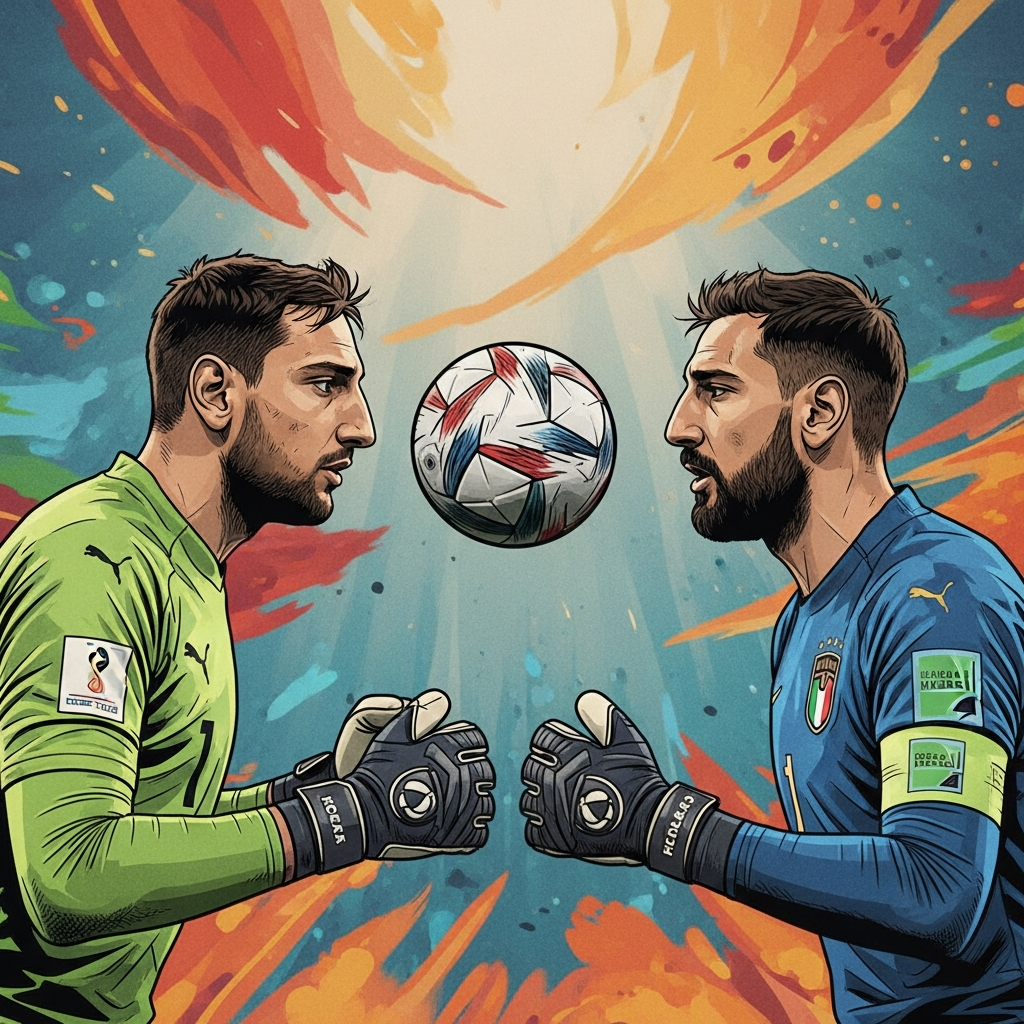
In a moment of intense football drama that saw Italy’s FIFA World Cup dreams crumble for an unprecedented third consecutive cycle, a heated confrontation between goalkeepers Gianluigi Donnarumma and Nikola Vasilj during a penalty shootout ignited a firestorm of controversy. This decisive clash, unfolding amidst the high stakes of a World Cup 2026 play-off final against Bosnia and Herzegovina, left fans and pundits questioning the limits of gamesmanship and the sheer pressure of elite competition. What exactly sparked this bizarre sideline skirmish, and what did it signify for a nation grappling with persistent World Cup heartbreak?
Italy’s Agonizing World Cup Quest Ends in Zenica
The stage was set in Zenica, Bosnia and Herzegovina, for a crucial FIFA World Cup 2026 European Qualifiers knockout play-off. Italy, already reeling from missing the 2018 and 2022 tournaments, faced immense pressure. The match itself was a tense affair, with Italy reduced to ten men shortly before half-time following Alessandro Bastoni’s sending-off. Despite the numerical disadvantage, the Azzurri battled fiercely, holding Bosnia and Herzegovina to a 1-1 draw after 120 grueling minutes. The fate of both nations, and Italy’s hopes of returning to football’s biggest stage, would then be decided by the lottery of a penalty shootout.
Unpacking the Goalkeeper Controversy: The “Cheat Sheet” Incident
As the penalty shootout commenced, the tension was palpable. Italy’s first spot-kick, taken by Pio Esposito, sailed over the bar. It was immediately after this miss that the now-infamous clash between Donnarumma, Italy’s captain and Manchester City goalkeeper, and Nikola Vasilj, Bosnia and St Pauli’s shot-stopper, erupted. Reports from multiple outlets, including Der Spiegel, Goal.com, and SportsBible, detail how Donnarumma allegedly “sneaked” towards Vasilj’s goalmouth. His objective? Vasilj’s meticulously prepared “cheat sheet,” a strategic document containing vital information on Italian penalty takers and their preferred shot placements.
Donnarumma reportedly grabbed this crucial sheet, attempting to tear it up. Though his gloves seemingly impeded a clean rip, the document was visibly damaged. This act of alleged sabotage did not go unnoticed. Vasilj, upon realizing the interference with his strategic notes, reacted with furious anger, rushing to confront Donnarumma. French referee Clément Turpin was forced to intervene, attempting to restore order. In a controversial decision, Vasilj was shown a yellow card for his complaints, while Donnarumma, despite already having received a booking earlier in the match, astonishingly escaped any further punishment for this specific act of gamesmanship. The Bosnian sports portal SportsSport harshly criticized Donnarumma, labelling his actions “a disgrace to football.”
The Psychology Behind Goalkeeper Notes
The use of “cheat sheets” or penalty notes by goalkeepers has become a sophisticated element of modern football. These detailed reference sheets are not merely scribbled guesses; they are often compiled by analysts, providing goalkeepers with data-driven insights into opponent penalty habits. Information might include typical shot directions, player tendencies under pressure, or even specific cues from a player’s run-up. For a goalkeeper, having this intelligence can offer a crucial psychological edge and inform their decision-making in high-pressure moments, potentially shaving milliseconds off their reaction time. Interfering with an opponent’s notes, therefore, is seen as a direct attack on their preparation and mental fortitude, crossing a line that many consider unsportsmanlike.
Donnarumma’s Turbulent Evening Beyond the Shootout
The “cheat sheet” controversy was not Donnarumma’s only contentious moment during the ill-fated match. His evening was fraught with confrontational incidents, further fueling the widespread criticism. In the 41st minute, after teammate Alessandro Bastoni received a red card, Donnarumma was involved in a physical altercation with Bosnian player Amar Dedić, which reportedly included a “slight head-butt.” Surprisingly, he did not receive a booking at that time. He eventually saw a yellow card in the 81st minute, shortly after Bosnia scored their equalizer, though the precise reason for this booking remained unclear from television replays. Even after the final whistle, with Italy’s World Cup hopes extinguished, Donnarumma was seen engaging in a heated verbal exchange with veteran Bosnian striker Edin Džeko. This string of incidents painted a picture of a player struggling to maintain composure under immense pressure.
Italy’s Continued World Cup Heartbreak
The penalty shootout ultimately sealed Italy’s fate. While Bosnia converted all four of their attempts, Italy managed to score only one, with Bryan Cristante also hitting the crossbar. This 4-1 defeat in the shootout meant Italy, a four-time World Cup champion, had sensationally failed to qualify for a third consecutive FIFA World Cup – a historic low for the footballing powerhouse. For Gianluigi Donnarumma, who debuted for Italy at just 16, this outcome means he likely won’t feature in a World Cup until he is at least 31 years old, a stark and painful reality for a player of his caliber.
Reactions and the Road Ahead
The aftermath was a scene of profound disappointment. Italy’s manager, Gennaro Gattuso, was visibly emotional, stating his blood was “all gone” and apologizing for the team’s failure despite their “sheer heart and determination.” Donnarumma himself later took to Instagram, expressing his immense sadness and revealing he was “reduced to tears” after the match. He acknowledged the collective disappointment but also called for courage and resilience, urging the team to “start again. Together. Once again. To bring Italy back where it deserves to be.” This emotional plea highlighted the depth of the crisis facing Italian football, which has struggled for consistent success since its Euro 2020 triumph, experiencing managerial instability and disappointing performances in subsequent tournaments.
Frequently Asked Questions
What precisely sparked the clash between Donnarumma and Vasilj during the penalty shootout?
The heated confrontation between Italian goalkeeper Gianluigi Donnarumma and Bosnian goalkeeper Nikola Vasilj stemmed from Donnarumma’s alleged attempt to interfere with Vasilj’s “cheat sheet.” This strategic paper contained crucial information about Italy’s penalty takers and their preferred shot placements. Donnarumma reportedly grabbed and tried to tear Vasilj’s sheet after Italy missed their first penalty. Vasilj’s angry reaction to this perceived act of sabotage led to the clash, which required referee intervention and resulted in a yellow card for Vasilj.
How did the match between Italy and Bosnia and Herzegovina conclude, and what were the broader implications for Italy’s World Cup hopes?
The match ended 1-1 after 120 minutes, pushing the decisive FIFA World Cup 2026 play-off final into a penalty shootout. Bosnia and Herzegovina ultimately won the shootout 4-1. For Italy, this defeat meant failing to qualify for the World Cup for an unprecedented third consecutive time, following their absences in 2018 and 2022. This result marked a historic low for the four-time World Cup champions, signaling a significant period of struggle for the Azzurri on the international stage.
What is the significance of “cheat sheets” in football penalty shootouts, and is interfering with them considered fair play?
“Cheat sheets” in football penalty shootouts are detailed notes compiled by analysts, providing goalkeepers with insights into opponents’ penalty-taking habits, such as preferred directions or tendencies. They offer a psychological and strategic advantage in high-pressure situations. However, interfering with an opponent’s notes, as Donnarumma was accused of doing, is widely considered unsportsmanlike conduct and a breach of fair play. While not always directly penalized, such actions often draw strong condemnation from fans, media, and fellow players, questioning the ethics of such gamesmanship.
A Nation’s Redemption Arc Awaits
The dramatic events in Zenica, particularly the goalkeeper clash, have etched themselves into the narrative of Italy’s World Cup woes. While the “cheat sheet” incident added a layer of controversy and unsportsmanlike conduct, it ultimately highlighted the immense pressure and desperation gripping the Azzurri. For Gianluigi Donnarumma, a player often celebrated for his composure, this match became a focal point for criticism, underscoring the fine line between competitive fire and crossing ethical boundaries. Italian football now faces a challenging period of introspection and rebuilding, as a nation united by passion awaits a long-overdue redemption arc to return to the pinnacle of global football.